


Syrian Interior Ministry: Conditions in Al-Hol Camp ‘Shocking’

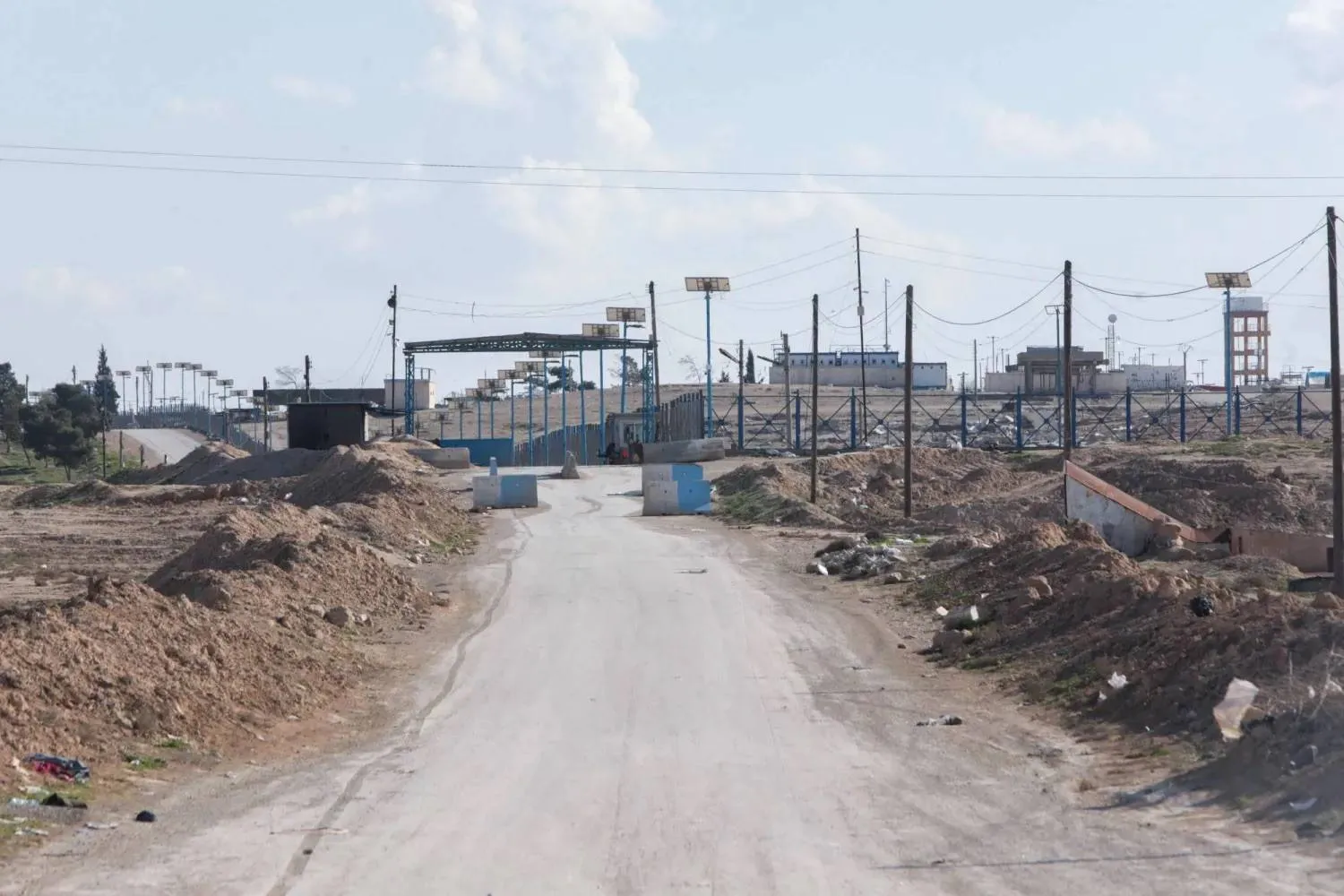
Al-Hol camp in Hasakah province, northeastern Syria, on Feb. 24, after Syrian authorities closed the camp, which had been under Kurdish control (AFP)
TT

Syrian Interior Ministry: Conditions in Al-Hol Camp ‘Shocking’

Al-Hol camp in Hasakah province, northeastern Syria, on Feb. 24, after Syrian authorities closed the camp, which had been under Kurdish control (AFP)

Interior Ministry spokesperson Noureddine al-Baba said Syrian forces were surprised by the withdrawal of the Kurdish-led Syrian Democratic Forces (SDF) from Al-Hol camp more than six hours before the Syrian army arrived to assume control.

Al-Hol, the largest camp for relatives of suspected ISIS militants in northeastern Syria, had been under the control of the SDF. But last month, Syrian troops drove Kurdish forces from swathes of the north, sparking questions over the fate of the ISIS prisoners and their families.

Al-Baba noted that much of what has been reported about Al-Hol camp requires careful verification due to what he described as “exaggerations.” He confirmed that a number of those who had fled the camp were returned and had their legal status regularized.

His remarks came as the Interior Ministry announced the launch of two security operations against ISIS cells in the provinces of Raqqa and Deir Ezzor, following several attacks by the group on Syrian forces.

Security Plan in Hasakah

At a press conference, al-Baba said the ministry had prepared a comprehensive security deployment plan to secure Hasakah province, coinciding with the entry of Syrian army units last month.

The move was part of the implementation of an agreement between the Syrian government and the SDF aimed at ensuring stability and enforcing the terms of their understanding.

However, shortly before Syrian army units reached the outskirts of Al-Hol camp, “we were surprised” by what he described as an uncoordinated SDF withdrawal more than six hours earlier.

Al-Baba said the ministry followed up on the cases of those who left the camp in an unorganized manner, adding that most had been returned and their legal status settled. The families have been transferred to an alternative site offering improved humanitarian conditions and easier access.

He added that coordination is ongoing with relevant international and local organizations to verify the identities of individuals who lost documentation, determine where the documents were lost, and match records with civil registries. Work is also underway to establish a unified national database covering all of Syria.

European Concerns

A memo, sent from the Cyprus presidency of the Council of the European Union to member states and dated February 23, said the status of third-country nationals who had fled Al-Hol remained unclear and that it was reported that a majority of them had escaped.

"This raises concerns about how terrorist groups might seek to capitalize on the current situation to increase recruitment efforts among escapees," said the memo, which was reviewed by Reuters.

Earlier, Human Rights Watch cautioned that the security vacuum had allowed suspected ISIS affiliates to escape, exposing women and children to serious risks, including trafficking, exploitation, and recruitment by armed groups.

“Children, Women and the Elderly”

Al-Baba described conditions inside the camp upon its handover as “shocking and resembling a forced detention camp,” where thousands of people had been held for years under harsh conditions in a semi-desert area lacking basic infrastructure.

He said that 70 percent of detainees were children, women and elderly people, most of them Syrians and Iraqis. “They are civilians displaced from areas of fighting and were forcibly detained on the pretext of affiliation with ISIS,” he stated.

Al-Baba added that around 6,500 detainees from 44 non-Syrian nationalities were being held at the camp, noting discrepancies between commonly circulated figures and the actual numbers.

He stressed that all information circulated about the camp requires thorough investigation and verification due to what he described as exaggerations regarding the number of residents. Accurate figures and data, he said, will be disclosed once the verification process is completed.

Background on Al-Hol

Al-Hol camp, located in Hasakah province near the Iraqi border, has been one of the main detention centers for families of ISIS fighters captured during the US-led international coalition campaign against the group in Syria.

The camp had been under SDF control from 2015 until January 20 of this year, when it was handed over to the Syrian government following its takeover of most areas in eastern and northern Syria.

Al-Baba said that from the first moment of assuming control, the Syrian government has been working to address the humanitarian situation, restore security, and prevent disorder.

He revealed that more than 138 breaches were recorded along the 17-kilometer section of the perimeter fence, adding that it will now be placed under the supervision of the relevant authorities.




Israeli Strikes Damage Hospital in Lebanon

File photo: Destroyed houses that were hit in an Israeli airstrike in Saksakiyeh village, south Lebanon, Friday, April 3, 2026. (AP Photo/Hussein Malla)
TT

Israeli Strikes Damage Hospital in Lebanon

File photo: Destroyed houses that were hit in an Israeli airstrike in Saksakiyeh village, south Lebanon, Friday, April 3, 2026. (AP Photo/Hussein Malla)

A hospital in the coastal Lebanese city of Tyre was damaged by Israeli airstrikes on nearby buildings that wounded 11 people, the health ministry said on Saturday.

The director of the Lebanese Italian Hospital told the state-run National News Agency (NNA) that it would "remain open to provide the necessary medical care" despite the damage.

Strikes destroyed two buildings nearby, an AFP correspondent saw, shattering windows and causing suspended ceilings to collapse in the hospital, the facility's management said.

A series of attacks hit the Tyre region on Saturday, including one on its port that struck a small boat and damaged others moored nearby, the AFP correspondent said.

Israel has been carrying out strikes across Lebanon and launched a ground invasion in the south after Hezbollah entered the war in the Middle East on the side of its backer Iran on March 2.

Tens of thousands of people have left Tyre, but around 20,000 remain, including 15,000 displaced from surrounding villages, despite Israeli evacuation warnings covering most of the city and a broad swathe of southern Lebanon.

The NNA also reported that Israeli forces abducted a man in Shebaa, near the Israeli border in the east, at around 3:00 am on Saturday.


Indonesia Slams 'Unacceptable' Peacekeeper Casualties in Lebanon

FILE PHOTO: UNIFIL vehicles drive on a main road in Qlayaa, amid escalating hostilities between Israel and Hezbollah, as the US-Israel conflict with Iran continues, in Qlayaa, southern Lebanon, March 27, 2026. REUTERS/Karamallah Daher/File Photo
TT

Indonesia Slams 'Unacceptable' Peacekeeper Casualties in Lebanon

FILE PHOTO: UNIFIL vehicles drive on a main road in Qlayaa, amid escalating hostilities between Israel and Hezbollah, as the US-Israel conflict with Iran continues, in Qlayaa, southern Lebanon, March 27, 2026. REUTERS/Karamallah Daher/File Photo

The Indonesian government on Saturday slammed as "unacceptable" an explosion that injured three of its peacekeepers in Lebanon within days of three other blue helmets from the Southeast Asian nation being killed.

The United Nations Interim Force in Lebanon (UNIFIL) said three peacekeepers were wounded in a blast that occurred inside a UN facility near Adaisseh on Friday afternoon, and rushed to hospital.

Two were seriously wounded.

The UN Information Center in Jakarta said the "origin of the explosion" was unknown but identified the injured soldiers as Indonesian.

"Repeated attacks or incidents of this kind are unacceptable," the Indonesian foreign ministry said in a statement.

"Regardless of their cause, these events underscore the urgent need to strengthen protection for UN peacekeeping forces amid an increasingly dangerous conflict situation."

The government urged the UN Security Council to investigate the events and "to immediately convene a meeting of troop-contributing countries to UNIFIL to conduct a review and take measures to enhance the protection of personnel serving with UNIFIL".

Friday's incident came just days after an Indonesian peacekeeper died when a projectile exploded on March 29 in southern Lebanon, where Israel and Hezbollah have been fighting since Lebanon was drawn into the Middle East war.

A UN security source told AFP on condition of anonymity Tuesday that fire from an Israeli tank was responsible for that attack.

A day later, two more Indonesian peacekeepers died after an explosion struck a UNIFIL logistics convoy, also in southern Lebanon.

The father of one of the two fallen soldiers, 33-year-old Zulmi Aditya Iskandar, said this week he was shocked that peacekeepers were losing their lives in the conflict.

"We were really sad and regretful, because this is a UN troop, a peacekeeping troop, not deployed for war," 60-year-old Iskandarudin told reporters at his house in West Java province.

The bodies of the three peacekeepers are scheduled to arrive in Jakarta on Saturday evening, according to the military.

The Indonesian National Armed Forces has said it will deploy more than 750 personnel to Lebanon next month as part of the scheduled UNIFIL peacekeeping troop rotation.


Strike Kills One Iraqi Fighter near Syria Border

Mourners attend the funeral of members of Iraq's Hashed al-Shaabi, who were killed in an airstrike in the town of al‑Qaim near the Syrian border, amid heightened regional tensions due to the US-Israel conflict with Iran, in Baghdad, Iraq, March 12, 2026. REUTERS/Stringer
TT

Strike Kills One Iraqi Fighter near Syria Border

Mourners attend the funeral of members of Iraq's Hashed al-Shaabi, who were killed in an airstrike in the town of al‑Qaim near the Syrian border, amid heightened regional tensions due to the US-Israel conflict with Iran, in Baghdad, Iraq, March 12, 2026. REUTERS/Stringer

An attack killed one fighter from the former paramilitary coalition Hashed al-Shaabi on Saturday, the alliance said, blaming the US and Israel.

Iraq has been dragged into the war between the United States, Israel and Iran, with strikes targeting both US interests and pro-Iran groups in the country, reported AFP.

"This treacherous attack resulted in the martyrdom of one PMF fighter and the wounding of four others, as well as a member of the ministry of defense," said a short statement from the group, which is also known as the Popular Mobilization Forces (PMF), adding it was a "Zionist-American attack".

The PMF is a coalition of armed groups -- formed in 2014 to fight extremists-- that is now part of Iraq's regular army, but also contains pro-Iran factions who have a reputation for acting independently.

PMF positions have been repeatedly targeted since the outbreak of war, with the group consistently blaming the attacks on the US and Israel.

According to the group's statement, the latest attack targeted a position in western Anbar province of the 45th Brigade, which belongs to the US-blacklisted, pro-Iran Kataeb Hezbollah group.

Kataeb Hezbollah is part of the umbrella movement known as the Islamic Resistance in Iraq, which has been claiming daily attacks since the start of the war on US interests in Iraq and the region.

The Pentagon has said helicopters have carried out strikes against pro-Iran armed groups in Iraq during the war.

Washington has strongly denied claims it has targeted Iraqi security forces.