
Despite repeated pledges by Kurdish leaders in Iraq’s Kurdistan region to remain neutral in the war between the United States and Israel on one side and Iran on the other, their territory has come under near-daily attacks from Iran or Tehran-aligned armed factions in Iraq.
The attacks have left Kurdish leaders facing what one Kurdish official described as an “existential dilemma,” particularly as they coincide with US pressure to open a military front in western Iran in cooperation with Iranian Kurdish opposition parties.
In recent days, US media reported that President Donald Trump spoke by phone with Kurdish leaders Masoud Barzani and Bafel Talabani, urging them to “assist the Iranian Kurdish opposition” participating in the conflict. According to those reports, the two leaders expressed reservations.
Iran has long viewed Kurdish opposition groups based in Iraq’s Kurdistan region with suspicion. In September 2023, Baghdad and Tehran signed a security agreement requiring the disarmament of those groups, the closure of their headquarters and their relocation away from the shared border. Iran had previously launched several attacks on their positions.
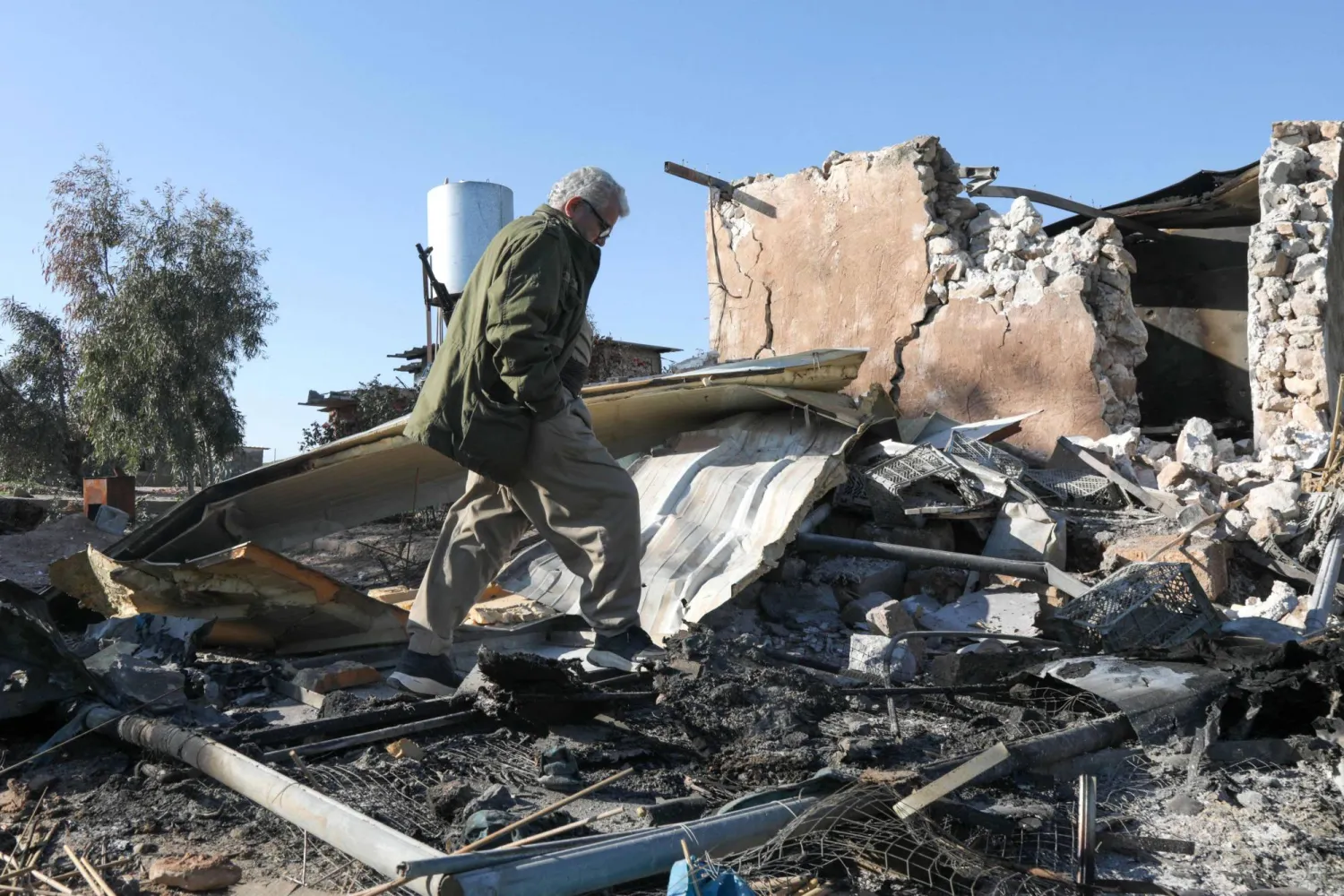
By Saturday, the Kurdistan region had faced 100 missile and drone attacks carried out by Iran and allied Iraqi factions.
A headquarters of the Peshmerga, the region’s guard forces, in Sulaimaniyah came under a drone attack late on Friday that was shot down by ground defenses. The Iran-aligned group Saraya Awliya al-Dam claimed responsibility.
Bridge, not battlefield
Reiterating Kurdish pledges to stay out of the war, Talabani, leader of the Patriotic Union of Kurdistan, restated the position in an interview with Fox News on Friday.
“Kurdistan needs to be a bridge, not a battlefield,” he said.
According to Talabani, the Kurds are in a unique position, as they are close allies of the US and at the same time neighbors of Iran. The Kurds can play a role in de-escalation when the time comes, he added.
Talabani said he currently sees a weaker Iranian regime, but added that its institutions remain intact despite differences with those in Kurdistan.
When the military objectives are achieved, diplomacy will begin, he said.
Talabani also described his call with Trump, saying the US president was very kind and very polite.
Talabani did not detail what the US president asked of Kurdish leaders, but said he understood that protecting civilians in Iraq was a priority and that Kurds in Iran deserve better treatment.
‘Existential dilemma’
A senior Kurdish official, speaking to Asharq Al-Awsat on condition of anonymity, described the situation as an “existential Kurdish dilemma.”
“Kurds often find themselves facing the same complex circumstances in conflicts across Iraq and the wider Middle East,” he said.
Today, he added, they face renewed fears about what might come next, especially as the Kurdistan region remains fragile because of internal divisions, disputes with Baghdad and hostility from Iran-aligned factions.
“Most Kurds hope the situation of their Iranian Kurdish brothers will improve, but they cannot offer meaningful assistance,” the official said. “The situation is extremely complicated, and involvement could turn into a real catastrophe for Kurdistan.”
He added that Kurdish experiences with the United States “have not been entirely encouraging,” noting that Washington recently abandoned Kurdish allies in Syria.
“Any Kurdish gamble in Iran will later backfire on Iraqi Kurdistan, especially if Washington eventually reaches some kind of settlement with Tehran,” he said.
The official also warned that the Kurdistan region is surrounded by hostile forces that could become even more antagonistic if it becomes involved in the war.
“Türkiye to the north will not allow the Iraqi Kurdistan model to be repeated in Iran,” he said.
“To the south we have the Iraqi government and Iran-aligned factions. If those factions overcome the consequences of the current war, they will vent their anger on us. I would not rule out an invasion of the region.”
Iraqi Prime Minister Mohammed Shia al-Sudani discussed the latest security developments in a phone call on Friday with Kurdistan Region President Nechirvan Barzani, according to a government statement.
Both sides reaffirmed their rejection of attacks targeting Iraqi cities, including those in the Kurdistan region, and stressed that Iraqi territory should not be used as a launchpad for attacks on neighboring countries, while supporting steps aimed at strengthening security and stability in the region.