Macron Urges Israel to Hold 'Direct Talks' with Lebanon amid More War Casualties

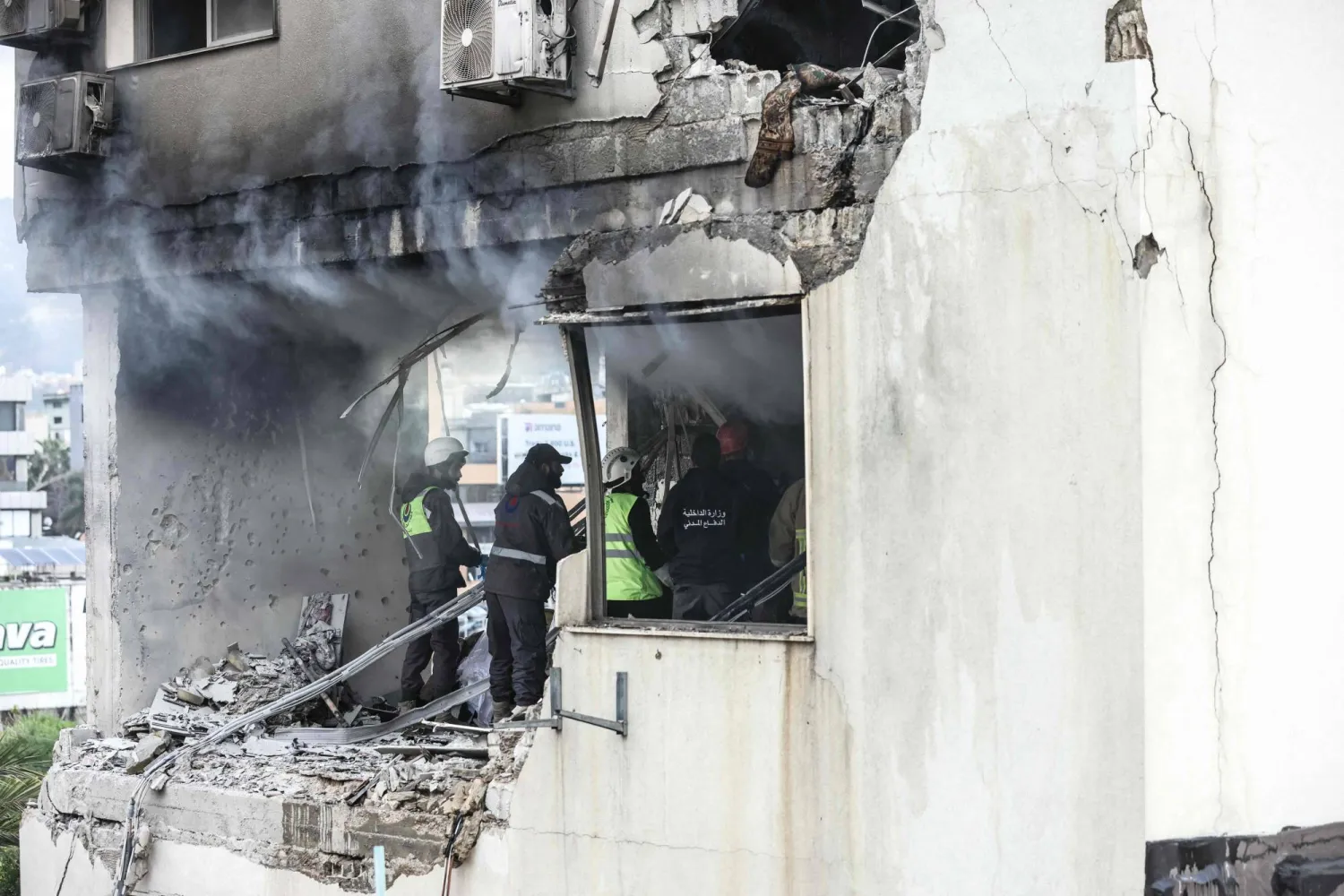
Firefighters and first aid responders work inside an apartment that was targeted by an Israeli airstrike in the Burj Hammoud area on the northern outskirts of Beirut on March 14, 2026. (Photo by IBRAHIM AMRO / AFP)
TT

Macron Urges Israel to Hold 'Direct Talks' with Lebanon amid More War Casualties

Firefighters and first aid responders work inside an apartment that was targeted by an Israeli airstrike in the Burj Hammoud area on the northern outskirts of Beirut on March 14, 2026. (Photo by IBRAHIM AMRO / AFP)

French President Emmanuel Macron on Saturday said Lebanon was ready to engage in "direct talks" with Israel and offered to host negotiations in Paris.

"The Lebanese government has signaled its willingness to engage in direct talks with Israel," he said on X.

"France is ready to facilitate these talks by hosting them in Paris," Macron said, adding he had spoken to the president and prime minister of Lebanon.

He called on Israel to "seize this opportunity ⁠to launch ceasefire discussions, to find a lasting solution and to allow the Lebanese authorities to put in place their engagements for Lebanon's sovereignty."

Macron also urged Israel ⁠to ⁠stop its offensive and on Hezbollah to stop its actions.

"Everything must be done to stop Lebanon from descending into chaos," he said.

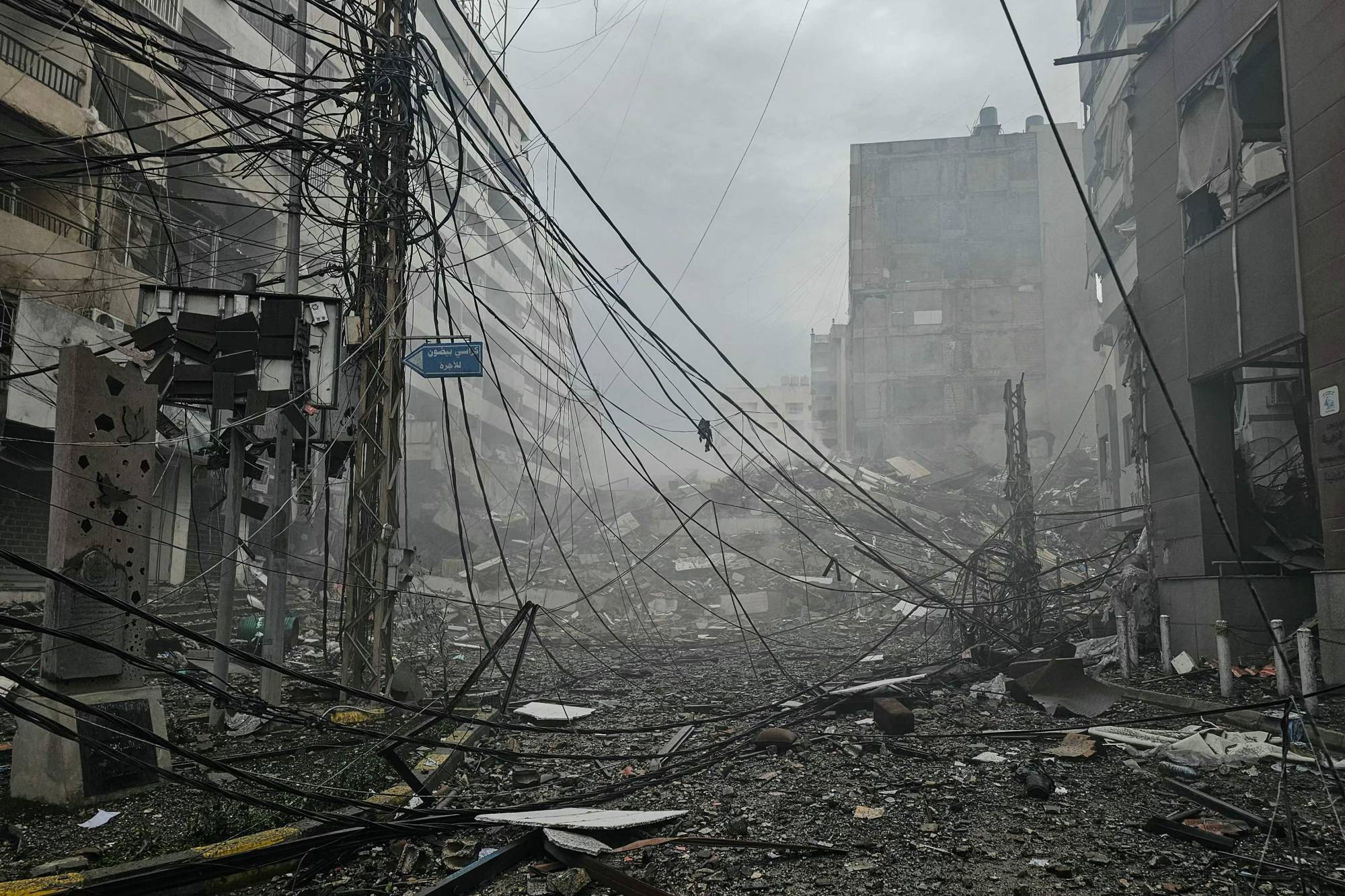
A photograph shows the site of an overnight Israeli airstrike that targeted Beirut's southern suburbs, on March 14, 2026. (Photo by AFP)

At least 12 medical personnel were killed in an Israeli strike on a healthcare center in the town of Borj Qalaouiya in southern Lebanon, the Lebanese state news agency reported on Saturday, citing the health ministry.

The Israeli army said that a day earlier it struck Hezbollah operatives "who were bringing rockets into a weapons depot" in Majdal, around seven kilometers from Borj Qalaouiya.

Also, an Israeli strike hit an apartment building in a northern Beirut suburb that had been targeted a day earlier, Lebanese state media said.

The National News Agency said "an Israeli strike targeted the Nabaa-Burj Hammoud area for a second day."

The same building had been struck on Friday without causing casualties.

The NNA also reported on Friday that Israeli shells hit a United Nations base hosting Nepali peacekeepers in the southern border town of Mais al-Jabal.


Guterres Names Envoy for Middle East… Warns of a Wider War

FILED - 14 May 2025, Berlin: United Nations Secretary-General Antonio Guterres holds a press conference at the Federal Chancellery. Photo: Kay Nietfeld/dpa
TT

Guterres Names Envoy for Middle East… Warns of a Wider War

FILED - 14 May 2025, Berlin: United Nations Secretary-General Antonio Guterres holds a press conference at the Federal Chancellery. Photo: Kay Nietfeld/dpa

UN Secretary-General Antonio Guterres on Wednesday named veteran French diplomat Jean Arnault as his personal envoy to support efforts to end the Middle East conflict, saying the “world is staring down the barrel of a wider war.”

Guterres told reporters that he had been in close contact with many in the region and around the world and that a number of initiatives ⁠for dialogue and peace were underway.

“It is time to stop climbing the escalation ladder – and start climbing the diplomatic ladder,” he said in New York.

The UN chief also warned that prolonged closure of the Strait of Hormuz was choking movement of oil, gas, and fertilizer at a critical moment in the global food planting season.

Guterres said ⁠Gulf countries are important suppliers of raw materials for nitrogen fertilizers crucial for developing countries.

“Without fertilizers today, we might have hunger tomorrow,” he noted.

Guterres said UN mediators have offered their services and Arnault would do “everything possible” to support peace efforts.

The UN says Arnault has more than ⁠30 years' experience in international diplomacy focusing on peace settlements and mediation, with a background in UN missions in Africa, Asia, Europe and Latin America.

His most recent assignment was in 2021 as Guterres' personal envoy on Afghanistan and regional issues.

Disrupted fertilizer shipments and soaring energy ⁠prices are threatening to unleash a fresh food-price surge across vulnerable nations, risking a years-long setback just as many were recovering from successive global shocks, UN and other experts warn.

An analysis released by ⁠the UN World Food Programme last week warned that tens of millions more people will face acute hunger if the Iran war continues through to June.


Israel Steps up Assassinations in Gaza

Smoke rises from a displacement camp in Deir al-Balah in central Gaza after an Israeli strike on Wednesday (AFP)
TT

Israel Steps up Assassinations in Gaza

Smoke rises from a displacement camp in Deir al-Balah in central Gaza after an Israeli strike on Wednesday (AFP)

A relative lull hangs over efforts to shape Gaza’s future, as global and regional attention shifts to the US-Israeli war against Iran.

Still, Israel has continued targeting commanders from Hamas’ armed wing, the Al-Qassam Brigades, using intelligence from collaborators and surveillance devices. One such device was recently uncovered in a displacement camp in central Gaza and self-destructed during inspection.

Israel killed Ahmed Darwish, an elite commander in the Central Brigade of the Qassam Brigades, along with his aide Nader al-Nabahin, while a third man was critically wounded. An Israeli drone struck them shortly before midnight on Tuesday into Wednesday near a football field south of the Nuseirat refugee camp in central Gaza.

Field sources told Asharq Al-Awsat that Darwish had survived several assassination attempts during the war. One source said he led an elite unit in the Oct. 7, 2023, attack and captured several Israelis.

Sources said Darwish had recently emerged as a key figure in the Central Brigade after senior commanders were killed, and had been working with others to rebuild the Qassam Brigades.

The Israeli military said it struck Hamas elite operatives during what it described as military training in central Gaza, calling them a threat. Hamas field sources denied this, saying they were gathered normally when they were hit.

Mysterious blast of a surveillance device

A blast struck near a displacement camp in Deir al-Balah in central Gaza before noon on Wednesday, causing no injuries and initially thought to be a drone strike.

Field sources said fighters had found an Israeli surveillance device and tried to dismantle it to access images and recordings. It then self-destructed, possibly due to a malfunction or remote detonation by an Israeli drone.

Hours later, a warplane hit the same site, killing one person and wounding six others, one critically.

Sources said armed factions in Gaza have found several such devices before and during the war, used to transmit live images to drones and Israeli operations rooms.

Israel has stepped up intelligence and operational activity in central Gaza, areas less damaged during the war and hit by fewer ground and air attacks than elsewhere. Hebrew media say the Qassam Brigades have largely retained their strength there.

Repeated strikes on police vehicles

On Sunday evening, the third day of Eid al-Fitr, a drone struck a Hamas-run police vehicle, killing three and wounding others. Field sources said one of the dead was Ahmed Hamdan, an elite field commander in the Nuseirat Battalion of the Qassam Brigades.

The Israeli military did not comment. The strike followed a similar attack days earlier on a Hamas police vehicle that killed at least four people, including prominent Qassam operatives, in central Gaza.

Asharq Al-Awsat monitoring shows that at least 10 field commanders, including company leaders, elite unit commanders, and deputy battalion commanders, have been killed by Israel in the past three weeks in a series of strikes.

Gaza’s Health Ministry says at least 690 Palestinians have been killed since a ceasefire took effect on Oct. 10, 2025, bringing the total death toll since the war began to more than 72,265.

The killings have come alongside continued airstrikes, artillery fire, and demolitions along both sides of the so-called “yellow line,” and bulldozing of remaining homes along the main Salah al-Din road, particularly near Khan Younis and in areas such as Shuja’iyya and Jabalia.

Foiled assassination attempt

Military activity has coincided with operations by armed gangs in areas under Israeli control.

Hamas’ Radea (Deterrence) force said it foiled an attempt to assassinate a resistance commander, arresting two suspects and seizing their weapons and equipment, while two others fled.

It said interrogations revealed details about coordination between armed gangs and Israeli intelligence, which could help dismantle the groups.

Field sources said the target was a senior faction leader. They added that tighter security measures helped thwart the plot. Silenced pistols, cameras, and communication devices with Israeli SIM cards were seized.

Armed gangs have stepped up attacks on faction leaders and senior Hamas government officials. Some attempts have been foiled, while others have succeeded in recent months.


Lebanon’s Upcoming Cabinet Session to Test Fallout of Expelling Iranian Envoy

A photo of former Secretary-General of Hezbollah Hassan Nasrallah lies amid the rubble of an Al-Qard Al-Hassan Association building destroyed by an Israeli airstrike in Beirut’s southern suburbs (EPA)
TT

Lebanon’s Upcoming Cabinet Session to Test Fallout of Expelling Iranian Envoy

A photo of former Secretary-General of Hezbollah Hassan Nasrallah lies amid the rubble of an Al-Qard Al-Hassan Association building destroyed by an Israeli airstrike in Beirut’s southern suburbs (EPA)

Lebanon’s cabinet meets on Thursday in a first test of a deepening political crisis, after a sharp split between the “Shiite duo” of Hezbollah and Amal Movement and other factions over a decision to declare Iran’s ambassador, Mohammad Reza Sheibani, persona non grata.

The government will convene at the Grand Serail to assess the fallout across political, security, and social fronts, including escalating Israeli attacks and displacement, the prime minister’s office said.

The crisis, triggered by the Foreign Ministry’s move, threatens to disrupt cabinet work. The ministry said the decision followed diplomatic violations by the Iranian envoy.

Sources familiar with the Shiite duo’s stance said their ministers could boycott the session chaired by Prime Minister Nawaf Salam if no compromise is reached.

Other sources said contacts between Parliament Speaker Nabih Berri and President Joseph Aoun were ongoing to contain the crisis, starting with ensuring attendance and putting the issue on the agenda.

Presidency silent

The presidency has not commented, awaiting Thursday’s session, as the president faces pressure from both sides. The Shiite duo is demanding a reversal, while parties opposed to Hezbollah, including the Lebanese Forces and the Kataeb Party, back the decision.

Sources close to the Shiite duo said proposed solutions center on reversing the move. Diplomatic sources dismissed that option, saying the foreign ministry is not considering a rollback.

Sources following the discussions said expelling an ambassador is a sovereign decision under Article 9 of the Vienna Convention on Diplomatic Relations, and falls within the president’s authority.

They added that the Iranian envoy had been appointed but was not yet accredited, as the war had delayed the presentation of credentials.

Political alignment

The crisis has deepened internal divisions, with ministerial sources saying Lebanon is effectively drawn into broader regional alignments.

The Amal Movement said it “will not allow the crisis to pass under any circumstances,” calling a reversal a “national virtue.”

Hezbollah escalated its stance, as senior cleric Ali al-Khatib urged the state to reverse the decision, saying it harms Lebanon’s interests.

Talks with Israel stall

The dispute also reflects the Shiite duo's wider rejection of direct talks with Israel.

Hezbollah Secretary-General Naim Qassem did not address the envoy issue, but said Lebanon faces a choice between surrender and confrontation, calling resistance a national responsibility.

Direct talks between Lebanon and Israel appear stalled. Israeli newspaper Haaretz reported contacts had stopped due to Lebanon’s lack of readiness and Israel’s continued attacks.

A European diplomat said Lebanon’s willingness to negotiate under fire has faded after the government failed to agree on a negotiating delegation.

A source also cited fears within the Lebanese government of being accused of collaborating with the enemy, as Israel continues to strike Beirut and destroy bridges over the Litani River.