


Opposition to Beirut Displacement Center Rises over Security, Sectarian Concerns

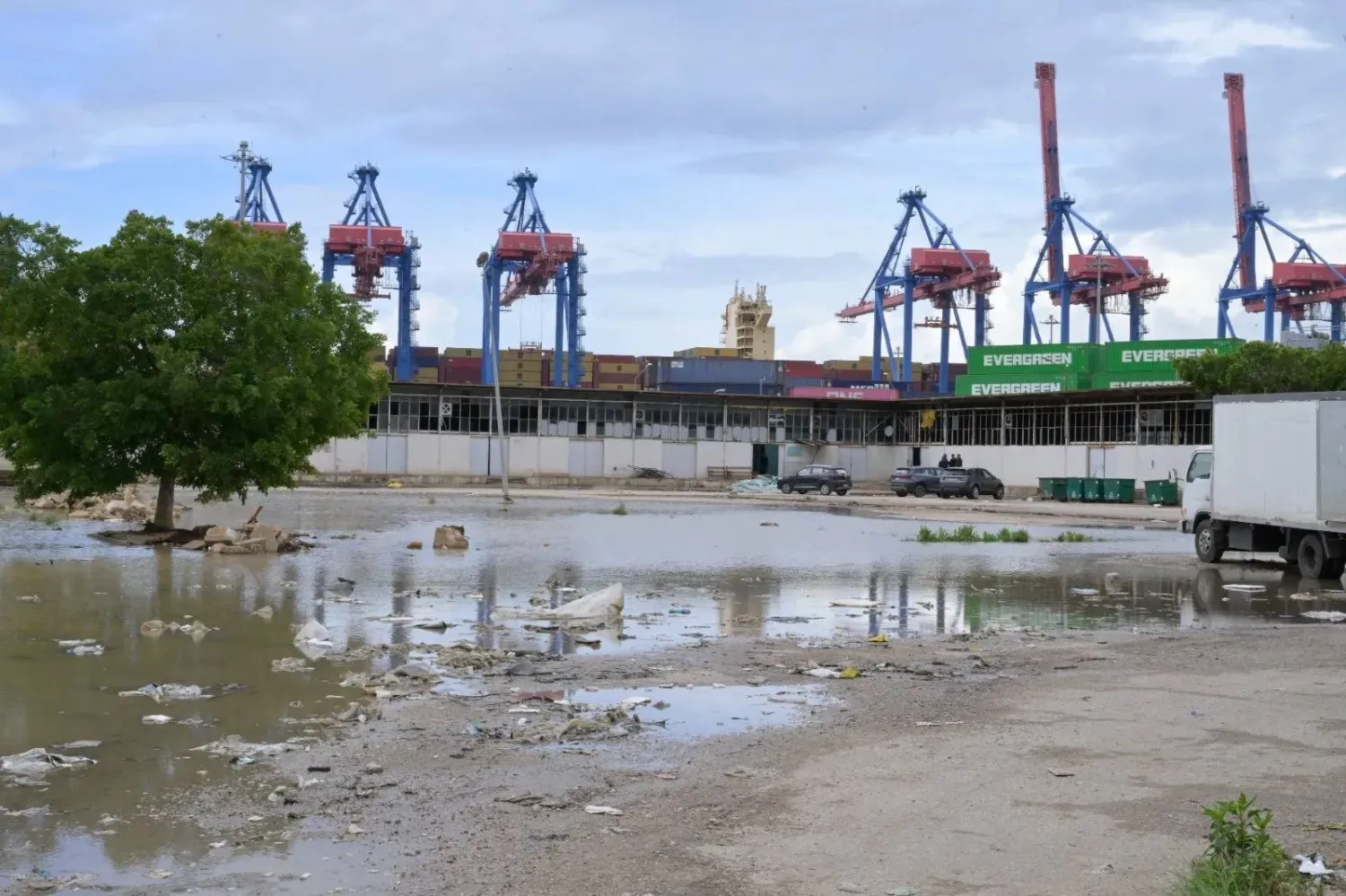
The site of a displacement shelter under construction in the Karantina area near Beirut port (Asharq Al-Awsat)
TT

Opposition to Beirut Displacement Center Rises over Security, Sectarian Concerns

The site of a displacement shelter under construction in the Karantina area near Beirut port (Asharq Al-Awsat)

Security and sectarian concerns are fueling opposition in Lebanon to plans for a displacement center in central Beirut, as ongoing conflict between Israel and Hezbollah drives new waves of displaced people.

Prime Minister Nawaf Salam has called for tighter security measures, amid growing political and public debate over establishing shelters for those displaced, most recently in the Karantina area near Beirut port.

At a security meeting at the Grand Serail, Salam stressed “the need to intensify security measures across Lebanon, particularly in Beirut, to safeguard citizens and their property,” citing developments in the south and the resulting displacement and security challenges.

A government decision to set up the displacement center in Karantina has triggered controversy, with several lawmakers urging it be scrapped on security and political grounds.

Although about 70 percent of the facility had been completed shortly after work began, informed sources said construction has been temporarily halted pending further review, without ruling out cancelling the project altogether. Funding is provided by international organizations and civil society groups.

Sources said the dispute reflects both political and sectarian sensitivities, while acknowledging that some concerns are legitimate. They added that security forces and the Lebanese Red Cross would oversee the center, with detailed registries of residents to ensure control.

The facility is intended to house around 800 people, particularly families unwilling to relocate to northern Lebanon or Mount Lebanon, preferring to remain in Beirut near their homes.

The suspension followed criticism from several political figures. MP Nicolas Sehnaoui of the Free Patriotic Movement described the project as “wrong in every sense,” calling for alternative solutions.

Lebanese Forces MP Razi Hage warned against turning the Karantina-port area into “a security and social hotspot under the pretext of a displacement center,” adding that temporary measures often become permanent.

For his part, Independent MP Waddah Sadek warned Beirut risked fragmenting into “security zones” and areas lacking oversight, while MP Fouad Makhzoumi urged the government to reconsider plans for large shelters in Karantina and Martyrs’ Square.

“While we fully recognize the humanitarian dimension, we respectfully urge reconsideration,” he said, warning of security and organizational repercussions.

The debate comes after Israeli strikes targeted areas previously considered relatively safe. Israel said it had targeted members of Hezbollah and Iran’s Revolutionary Guards in Aramoun in Mount Lebanon and areas near central Beirut.

The strikes have heightened concerns among residents in host communities, complicating efforts to respond to the growing displacement crisis.

First Israeli Civilian Killed in Lebanon Border War Was Hit by Israeli Fire

Smoke rises after an Israeli strike, following an escalation between Hezbollah and Israel amid the US-Israeli conflict with Iran, as seen from Marjayoun, Lebanon, March 22, 2026. REUTERS/Karamallah Daher
TT

First Israeli Civilian Killed in Lebanon Border War Was Hit by Israeli Fire

Smoke rises after an Israeli strike, following an escalation between Hezbollah and Israel amid the US-Israeli conflict with Iran, as seen from Marjayoun, Lebanon, March 22, 2026. REUTERS/Karamallah Daher

Israel said on Monday its own forces had misfired artillery that killed an Israeli farmer near the Lebanese frontier, the first Israeli civilian killed in a border conflict being waged in parallel with the war in Iran.

Ofer Moskovitz, 60, an avocado farmer in the town of Misgav Am, had spoken with Reuters just last week and said he was worried about the fighting at the border.

In a ⁠statement, Major General ⁠Rafi Milo, who heads the military's northern command, said: "Moskovitz was killed by our own forces’ fire during an operation whose entire purpose was to protect them."

The military had initially blamed cross-border fire from Lebanon when it first reported the incident on Sunday.

Israel has ⁠launched a major ground assault and air campaign into Lebanon to root out Hezbollah, a powerful Iran-backed militia, which fired into Israel in support of Tehran two days after the start of the Israeli-US air attacks on Iran.

Lebanese authorities say more than a thousand people have been killed and more than a million driven from their homes in Lebanon. The death of Moskovitz was the first reported in Israel. The ⁠military ⁠says two Israeli soldiers have been killed in combat.

"Every five minutes you can hear the bombs," Moskovitz told Reuters last week.

The military's statement said troops had opened fire to support soldiers operating in southern Lebanon, but "severe issues and operational errors" had taken place.

"The artillery fire was carried out at an incorrect angle and did not follow required protocols," it said. "As a result, five artillery shells were fired at the Misgav Am ridge instead of toward the enemy target."


Iraqi PM Says Accelerating Withdrawal of Anti-ISIS Coalition Forces

13 January 2023, Berlin: Iraqi Prime Minister Mohammed Shia al-Sudani speaks during a press conference. (dpa)
TT

Iraqi PM Says Accelerating Withdrawal of Anti-ISIS Coalition Forces

13 January 2023, Berlin: Iraqi Prime Minister Mohammed Shia al-Sudani speaks during a press conference. (dpa)

Iraqi Prime Minister Mohammed Shia al-Sudani said he would accelerate the dismantling of a US-led international anti-ISIS coalition, in an interview with an Italian newspaper published Monday.

The prime minister's comments come as the country finds itself unwillingly drawn into the conflict in the Middle East, which began with Israeli and US strikes on Iran on February 28.

Pro-Iran armed groups have claimed responsibility for near-daily attacks on US interests in Iraq and across the region, while strikes have also targeted these groups.

The end of the international anti-ISIS coalition's mission was initially planned for September 2026 in Iraq, with the drawdown launching in 2024.

The end of the mission was intended to pave the way for bilateral security partnerships with member countries of the alliance, formed in 2014 to fight the extremist ISIS group.

"With our allies we have now decided to bring forward the end of the international coalition, which was supposed to continue until September 2026," Sudani told Italian newspaper Corriere Della Sera.

"Once there are no more foreign military contingents on Iraqi soil, it will be easier to break up the armed factions," he said, referring to pro-Iran groups in the country.

The presence of foreign troops -- particularly American advisers -- is a long-running point of contention between the government and the pro-Iran armed factions.

Baghdad has demanded a monopoly on weapons and called for the dismantling of the groups' arsenals, which the factions justify by pointing to the presence of foreign soldiers.

Both the government and the coalition insist the coalition deploys military advisers -- who provide expertise and support, aiming to prevent a resurgence of ISIS -- to Iraq at the invitation of the authorities.

These advisers are currently only deployed in northern Iraqi Kurdistan and were scheduled to remain there until September 2026.

In January, the first phase of the coalition withdrawal agreement was completed, with personnel leaving the Iraqi military bases.

The coalition is also in the process of withdrawing from neighboring Syria, where it also deployed, having recently handed over its bases to Syrian government forces.


Indonesia Says No to $1bn Fee for Trump's 'Board of Peace' Seat

Indonesia's President Prabowo Subianto attends the 56th annual World Economic Forum (WEF) meeting in Davos, Switzerland, January 22, 2026. (Reuters)
TT

Indonesia Says No to $1bn Fee for Trump's 'Board of Peace' Seat

Indonesia's President Prabowo Subianto attends the 56th annual World Economic Forum (WEF) meeting in Davos, Switzerland, January 22, 2026. (Reuters)

Indonesia's president, under fire at home for signing up to US counterpart Donald Trump's so-called "Board of Peace", has insisted his country would not pay the $1 billion joining fee for permanent membership.

Jakarta had only committed peacekeeping troops for the initiative, Prabowo Subianto said in a statement published on the presidential YouTube channel Sunday, AFP reported.

The "Board of Peace" came together after the Trump administration, teaming up with Qatar and Egypt, negotiated a ceasefire in October to halt two years of devastating war in Gaza.

Countries that want to be permanent members must pay $1 billion -- sparking criticism the board could become a "pay-to-play" version of the UN Security Council.

Prabowo, a former general, has come under criticism from Indonesian Muslim groups for joining the board and pledging to send 8,000 peacekeeping troops to Gaza.

Prabowo attended the inaugural meeting of the "Board of Peace" in Washington last month.

But he later said he would withdraw from the board if it does not bring benefits to Palestinians or align with Indonesia's national interests.

"We never said that we wanted to contribute $1 billion," Prabowo said in statements broadcast on his YouTube channel Sunday.

He said he did not make any financial commitments "at all".

Prabowo signed a tariff deal with the US last month, but insisted Sunday that Indonesia could withdraw from any agreement if its conditions or execution threatens the national interest.

Talks with Washington about any peacekeeping mission to Gaza have been put "on hold", according to state news agency Antara, citing Foreign Ministry spokesman Vahd Nabyl Achmad Mulachela.
