
Iran Says Its Expelled Ambassador Won’t Leave Lebanon as Political Tensions Soar

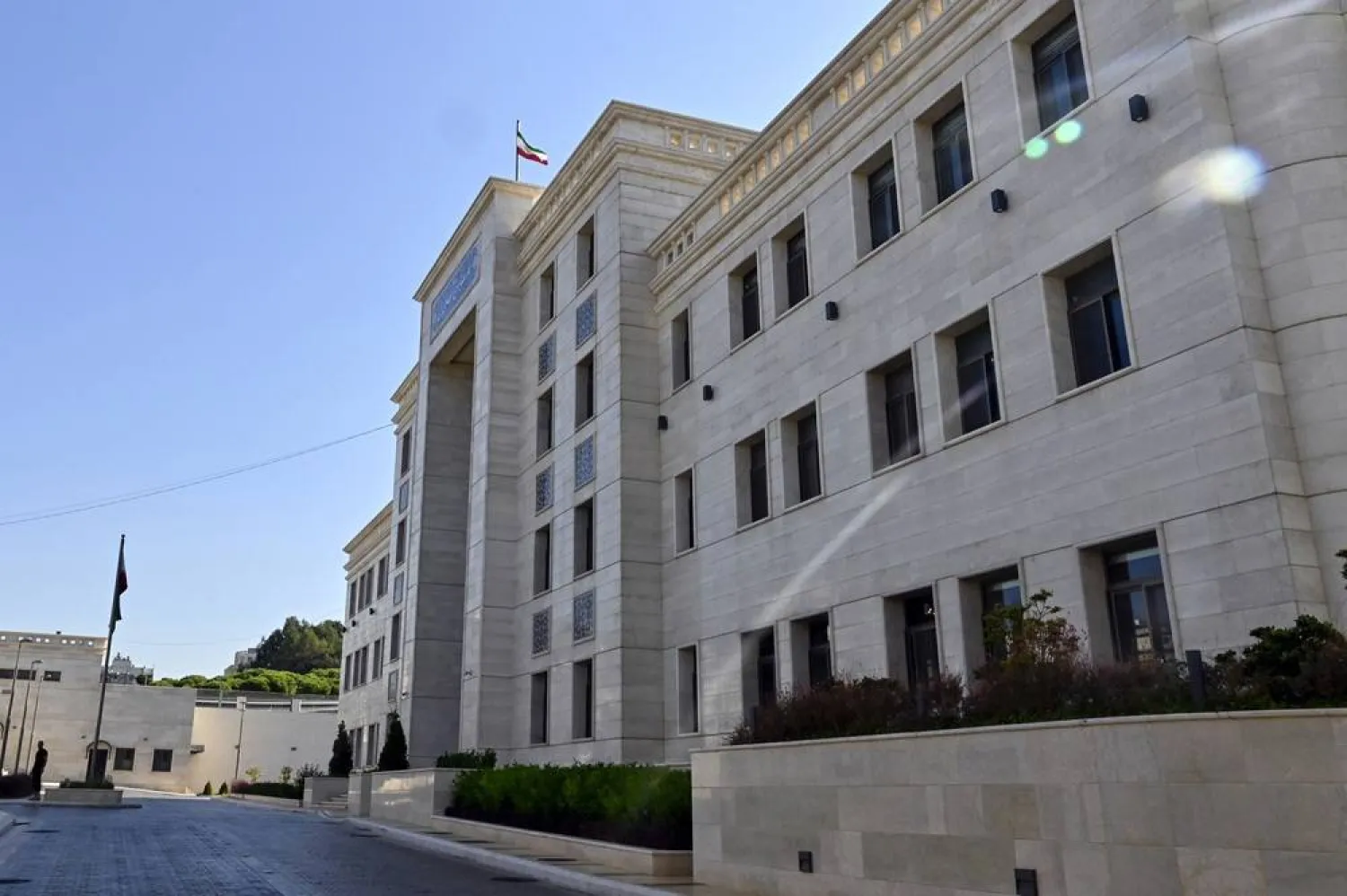
A view of the Iranian Embassy complex in Beirut, Lebanon, 14 October 2023. (EPA)
TT

Iran Says Its Expelled Ambassador Won’t Leave Lebanon as Political Tensions Soar

A view of the Iranian Embassy complex in Beirut, Lebanon, 14 October 2023. (EPA)

Iran on Monday defied Lebanon's expulsion order for its ambassador by saying he would stay, further increasing tensions in a country in the crosshairs of the latest fighting between the Iranian-backed Hezbollah and Israel. 

Lebanon had declared Ambassador Mohammad Reza Sheibani “persona non grata" in an effort to weaken Iran's diplomatic presence and have a charge d'affairs at its embassy instead. But the deadline to leave the country was Sunday. 

“Our embassy in Lebanon is active,” Iranian Foreign Ministry spokesman Esmail Baghaei told journalists. “Our ambassador, following remarks made by relevant Lebanese bodies and the conclusions reached, will continue his mission in Beirut and he is still there.” 

Lebanese officials did not immediately respond to a request for comment. It was not clear what Lebanon would might do next or how diplomatic relations might be affected. The Iranian ambassador is reportedly in the embassy, where he is believed to have diplomatic immunity. 

The Lebanese Hezbollah group entered the Iran war by firing at Israel, which has responded by invading southern Lebanon and bombing parts of the capital, Beirut. Health officials in Lebanon say over 1,200 people have been killed, with over 1 million people displaced. 

“This morning, the Iranian ambassador is drinking his coffee in Beirut and making a mockery of the ‘host’ country,” Israeli Foreign Minister Gideon Sa’ar said Monday on X. “Lebanon is a virtual country that is effectively occupied by Iran." 

Lebanon, under increasing pressure to disarm Hezbollah, earlier this month announced a ban on its military activities as well as those by Iran’s Revolutionary Guard. Then came the ambassador's expulsion order. 

Hezbollah called it a “reckless and reprehensible measure” and “a clear capitulation to external pressures and dictates.” It organized a rally near the Iranian embassy to back the ambassador. 

A Lebanese diplomatic official said that over the past week, Iran “put extreme pressure” on the government and parliament Speaker Nabih Berri, a key political ally of Hezbollah, in a bid to reverse the decision. 

Beirut is concerned that Iran’s inclusion of the war in Lebanon among its conditions for dialogue with Washington would affect Lebanon's efforts to disarm Hezbollah, the official added, speaking on condition of anonymity in line with regulations. 

Hezbollah says Iran has been a key ally of the group that claims it serves as a military deterrent to Israel while providing social services, largely for Lebanon's Shiite Muslim community. 

But critics say Hezbollah's armed presence and its independent decision-making violates Lebanese sovereignty and compromises its relationship with other Arab countries and the West. 

The rift has weakened Lebanon’s efforts to find a way to end the war. 

President Joseph Aoun and Prime Minister Nawaf Salam, while critical of Israel’s invasion, have condemned Hezbollah's firing of rockets towards Israel, in solidarity with Iran, that sparked the latest fighting. 

Even before the war, Aoun and Salam were scrambling to win trust that they could disarm Hezbollah without aggressive confrontation. The group was weakened by its previous war with Israel, and many saw a chance to act.  

Aoun and Salam came to power not long after the last war ended in November 2024, pledging to disarm Hezbollah and all non-state actors. 

But frictions inside Lebanon are worsening, especially after Foreign Minister Youssef Raggi, a staunch opponent of Hezbollah, announced the expulsion order for the Iranian ambassador. 

“Don’t play with fire because this fire will burn you, your people, and those behind you,” Mahmoud Qamati, a senior official in Hezbollah's political bureau, said in a recent fiery address aimed at Raggi, who is a cabinet pick by the Lebanese Forces party, a fierce Hezbollah critic. 


Israeli Death Penalty Bill for Palestinian Murder Convicts Faces Vote

Israel Prime minister Benjamin Netanyahu and Itamar Ben Gvir shake hands as the Israeli government approve Netanyahu's proposal to reappoint Itamar Ben-Gvir as minister of National Security, in the Knesset, Israeli parliament in Jerusaelm, March 19, 2025 REUTERS/Oren Ben Hakoon
TT

Israeli Death Penalty Bill for Palestinian Murder Convicts Faces Vote

Israel Prime minister Benjamin Netanyahu and Itamar Ben Gvir shake hands as the Israeli government approve Netanyahu's proposal to reappoint Itamar Ben-Gvir as minister of National Security, in the Knesset, Israeli parliament in Jerusaelm, March 19, 2025 REUTERS/Oren Ben Hakoon

Israel's parliament is expected on Monday to vote on a bill that would make the death penalty a default sentence for Palestinians convicted in military court of killing Israelis, a measure that Israel's European allies say would unfairly target Palestinians under military occupation.

The measure includes provisions requiring sentencing within 90 days with no right to clemency. It was devised by Itamar Ben-Gvir, the far-right national security minister who along with other ardent supporters has worn noose-shaped lapel pins in the run-up to the vote, Reuters reported.

The bill's critics say it aims at Palestinians in the West Bank by instructing military courts in the occupied territory to impose the death penalty in cases involving killings of Israelis, except in "special circumstances". Those courts only try Palestinians and have a near-100% conviction rate, rights groups say.

The vote on the bill is the latest action by members of Prime Minister Benjamin Netanyahu's right-wing coalition to cause concern among Israel's allies in Europe, who have also been critical of Jewish settler violence against Palestinians in the West Bank.

Netanyahu's Likud party was expected to vote in favor of the bill. Israeli media reported that he had previously asked for some elements of the measure to be softened to head off an international backlash.

The original bill had mandated the death sentence for non-Israeli citizens in the West Bank convicted of deadly terrorist acts. The revised legislation that is up for a vote on Monday includes the option of life imprisonment.

Even before the vote on its passage, the bill drew criticism from the foreign ministers of Germany, France, Italy and Britain, who said it had a "de facto discriminatory" character toward Palestinians.

"The adoption of this bill would risk undermining Israel's commitments with regards to democratic principles," the ministers said in a joint statement on Sunday.

A group of United Nations experts has said that the bill includes "vague and overbroad definitions of terrorist", meaning the death penalty could be meted out over "conduct that is not genuinely terrorist" in nature.

Ben-Gvir has argued that the death penalty would deter those considering an attack similar to the Hamas-led assault of October 7, 2023, that killed nearly 1,200 in Israel. Israel's subsequent military assault in Gaza has killed more than 72,000.

Amnesty International, which tracks countries imposing death penalty laws, says there "is no evidence that the death penalty is any more effective in reducing crime than life imprisonment."

Israeli rights groups have said they will challenge the bill at Israel's Supreme Court if it becomes law.

Israel abolished the death penalty for murder in 1954. The only person ever executed in Israel after a civilian trial was Adolf Eichmann, an architect of the Nazi Holocaust, in 1962.

Military courts retained the option of imposing a death sentence but have not done so so far.

Some 54 countries around the world permit the death penalty, including a handful of democracies such as the United States and Japan, according to Amnesty International. The group says that the global trend on the death penalty is toward abolition, with 113 countries having outlawed it for all crimes.

The Israeli rights group B'Tselem says that military courts in the West Bank, where Palestinians are tried for alleged crimes, have a 96% conviction rate and have a history of extracting confessions through torture.

Ben-Gvir, known for keeping a portrait in his living room of a Jewish gunman who killed 29 Palestinian worshippers in a West Bank mosque, has overseen an overhaul of Israeli prisons that have led to widespread allegations of torture, starvation, and abuse of Palestinian prisoners.

Israel denies systematic abuse of prisoners in its jails.

Abdallah Al Zughari, the head of the Palestinian Prisoner's Club, said that Palestinians in Israeli jails had already been subject to "slow killing practices" that have led to the deaths of more than 100 prisoners since October 7, 2023.

The death penalty bill, should it become law, would pose a "major threat to the lives of detainees," Zughari said.


Syrian Leader Pledges to Work with Germany on Migration, Recovery

Interim Syria President Ahmed al-Sharaa smiles during the Concordia Annual Summit in New York, Monday, Sept. 22, 2025. (AP)
TT

Syrian Leader Pledges to Work with Germany on Migration, Recovery

Interim Syria President Ahmed al-Sharaa smiles during the Concordia Annual Summit in New York, Monday, Sept. 22, 2025. (AP)

Syrian President Ahmed al-Sharaa on Monday pledged to work with Germany to enable more Syrians to return home and rebuild their country after its devastating civil war, as he made a historic visit to Berlin.

Europe's top economy is home to the largest Syrian diaspora in the European Union at more than a million, many of whom arrived during the peak of the migrant influx in 2015-2016.

After meeting Chancellor Friedrich Merz, Sharaa said that "we are working with our friends in the German government to establish a 'circular' migration model", AFP reported.

This would "enable Syrians to contribute to the reconstruction of their homeland without giving up the stability and lives they have built here, for those who wish to stay", he said.

Merz, who has made a tougher immigration policy a priority since taking office last year, also said he and Sharaa were "working jointly towards more Syrians being able to return to their homeland".

Sharaa was speaking on his first trip to Germany since ousting his country's longtime strongman Bashar al-Assad in late 2024.

He has managed to build relations with Western governments and made several overseas trips, including to the United States, France and Russia.

As a result, many international sanctions on Syria have been lifted to help the country rebuild after a bloody 14-year civil war.

Earlier, Sharaa told a foreign ministry forum in Berlin that Syria had experienced a "huge amount of destruction" during its long conflict, saying that Syrians "want to catch up with the rest of the world" as Germany did after World War II.

He pointed to investment opportunities in Syria's energy, transport and tourism sectors, describing his homeland as very diverse and with "a great wealth of human resources".

Merz said Germany wanted to "support" reconstruction in Syria as it struggles to rebuild after a long and bloody civil war, adding that a German government delegation would travel to the Middle Eastern country in the next few days.

However, Merz also said that he had stressed to Sharaa in their meeting "that many joint projects in the future will depend on our finding a state governed by the rule of law".


Lebanon Judge Completes Investigation into Port Blast

A view shows the partially collapsed grain silos, damaged in the August 4, 2020 Beirut port blast as Lebanon marks third anniversary of the explosion on Friday, in Beirut Lebanon August 2, 2023. REUTERS/Issam Abdallah
TT

Lebanon Judge Completes Investigation into Port Blast

A view shows the partially collapsed grain silos, damaged in the August 4, 2020 Beirut port blast as Lebanon marks third anniversary of the explosion on Friday, in Beirut Lebanon August 2, 2023. REUTERS/Issam Abdallah

Lebanese judge Tarek Bitar has completed his investigation into the 2020 Beirut port blast, a years-long case that involves possible charges against dozens of people, a judicial official told AFP on Monday.

Since 2023, the investigation into the massive Beirut port explosion, which killed more than 220 people on August 4, 2020, has been in jeopardy after Hezbollah led a campaign demanding the removal of Bitar, who was later hit with dozens of lawsuits to remove him from the case.

Bitar resumed his investigation last year as Lebanon's balance of power shifted following a 2023-2024 war between Israel and Hezbollah that weakened the Iran-backed militant group.

"The investigating judge in the Beirut port explosion case, Tarek Bitar, decided to conclude his investigations into the case and referred the entire file to public prosecutor Jamal Hajjar," the official told AFP.

The number of defendants in the case reached around 70 people, including politicians, security and military officials and civil servants, according to the official.

The prosecutor will study the file and present his opinion and then refer it again to Bitar "who will issue his indictment and determine the responsibility for each of the defendants".

Bitar is supposed to "make a decision regarding about 20 defendants who appeared before him since the beginning of 2025" on whether to "detain them, set them free or conditionally release them", the official said.

Bitar has already made his decision regarding the remaining 50, including politicians and judges who refused to appear before him for questioning, according to the official.

No one is currently detained in relation to the port blast.

Lebanese authorities say the explosion was triggered by a fire in a warehouse where tonnes of ammonium nitrate fertiliser had been stored haphazardly for years, despite repeated warnings to senior officials.