Yemen's Houthis Claim 3rd Missile Attack Targeting Israel

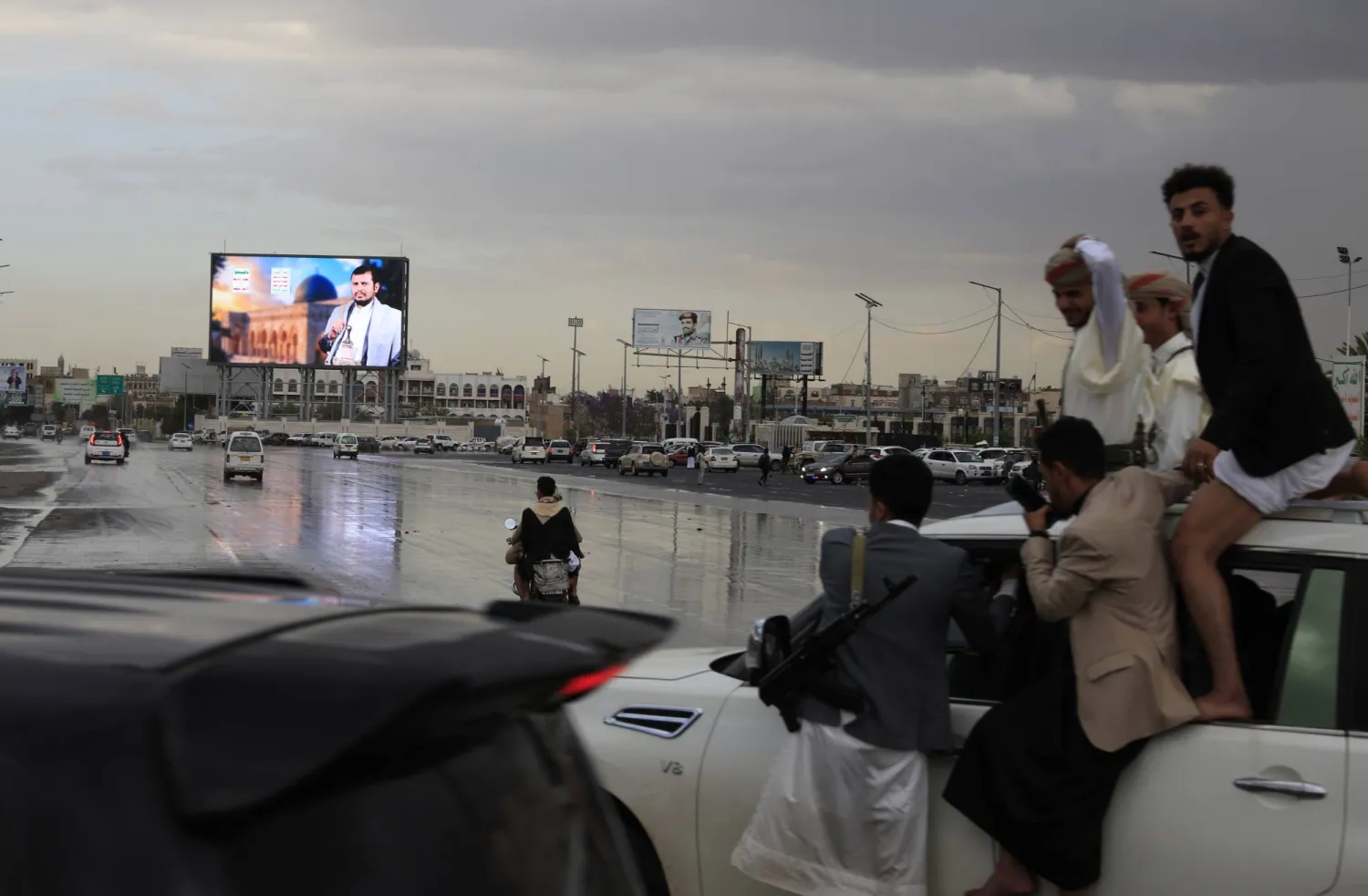
People ride in a vehicle past a digital billboard featuring Houthi leader Abdul-Malik al-Houthi in Sanaa, Yemen, 31 March 2026. EPA/YAHYA ARHAB
TT

Yemen's Houthis Claim 3rd Missile Attack Targeting Israel

People ride in a vehicle past a digital billboard featuring Houthi leader Abdul-Malik al-Houthi in Sanaa, Yemen, 31 March 2026. EPA/YAHYA ARHAB

Yemen's Houthis on Wednesday claimed a missile attack against Israel that they said was launched jointly with their backer Iran and Lebanon's Hezbollah group -- the third such attack by the militias since they entered the Middle East war.

Earlier on Wednesday, Israel's military said its air defenses had responded to a missile launched from Yemen, later announcing that residents were "permitted to leave protected spaces in all areas of the country.”

Israeli media said the missile was intercepted, and there were no reports of any casualties or damage.

The Houthis "carried out the third military operation... targeting sensitive Israeli enemy targets... with a barrage of ballistic missiles,” Houthi military spokesman Yahya Saree said in a video statement.

"This operation was conducted jointly with our mujahideen brothers in Iran and Hezbollah in Lebanon," he added.

Yemen's Houthis claimed missile and drone attacks targeting Israel over the weekend, their first in the current war.

The Israeli military also said on Monday that two drones launched from Yemen were intercepted.

From Yemen, the Houthis could potentially disrupt shipping through the Red Sea, as they did at the height of Israel's war on Gaza.

The Houthis have previously threatened shipping through the Red Sea and the Suez Canal, which requires vessels to travel through a narrow strait off Yemen's coast.


Netanyahu Rival Vows to End Hamas Rule within 18 Months if Elected

People walk past a banner featuring Israel's Prime Minister Benjamin Netanyahu (R) of the Likud party and country's former chief of the general staff and leader of the Yashar centrist political party Gadi Eisenkot in Ramat Gan on October 15, 2026. (AFP)
TT

Netanyahu Rival Vows to End Hamas Rule within 18 Months if Elected

People walk past a banner featuring Israel's Prime Minister Benjamin Netanyahu (R) of the Likud party and country's former chief of the general staff and leader of the Yashar centrist political party Gadi Eisenkot in Ramat Gan on October 15, 2026. (AFP)

Israeli opposition politician Gadi Eisenkot, Prime Minister Benjamin Netanyahu's main rival in upcoming elections, vowed Thursday to end Hamas rule in Gaza if he wins office following the October 27 vote.

"Today I give a public commitment: from the moment I enter the Prime Minister's Office, within 18 months Hamas will no longer rule the Gaza Strip," the leader of the center-right Yashar party said at a press conference near the war-ravaged Palestinian territory.

He said he would achieve this either by implementing US President Donald Trump's ceasefire plan, which provides for the gradual disarmament of Hamas and a transfer of power, or through "creative operations" by Israel's military aimed at destroying the Palestinian movement's military wing.

Hamas announced in July that it was disbanding its governing body to facilitate the transfer of Gaza's administration to a nascent technocratic Palestinian committee called the National Committee for the Administration of Gaza (NCAG).

The NCAG, currently based in Cairo, was created following the declaration of a ceasefire last October and is overseen by Trump's Board of Peace.

Later in July, Hamas announced it had agreed to a deal involving the handing over of its weapons to the NCAG.

But Israel has been skeptical, with Netanyahu demanding verifiable decommissioning of all weapons before any withdrawal of the military takes place.

Hamas has not gone ahead with disarmament, Israel has refused to reciprocate by starting to withdraw forces, and the NCAG is not operating inside the territory.

Israeli forces were allowed to stay in 53 percent of Gaza under the terms of the ceasefire, but a year later they control about 70 percent, according to official accounts.

- 'Strategic failure' -

Eisenkot's campaign pledge on Thursday is one of the strongest yet from the 66-year-old former military chief.

The close-fought election will be the first since Hamas's October 7, 2023, attack on Israel, which resulted in the deaths of more than 1,200 people.

In response to the attack, Israel launched a massive offensive in Gaza that has killed more than 74,300 people, according to the territory's health ministry, which operates under Hamas and whose figures are generally considered reliable by the United Nations.

Eisenkot on Thursday accused Netanyahu of a "strategic failure" in Gaza, where he said "Hamas is still the sovereign... armed, arming itself, and militarily active" after three years of war.

He also reiterated a pledge to establish a state commission of inquiry to identify those responsible for any security lapses leading up to October 7, a push the government has so far resisted.

"There is a way to prevent the next disaster," he said.

Eisenkot, like other opposition politicians, regularly accuses Netanyahu of bearing personal responsibility for the October 7 attack, notably by ignoring warnings from his security services, according to media reports.

Netanyahu has categorically rejected the accusations and maintains that security officials did not wake him on the morning of the attack.

Current polls show that neither Netanyahu's bloc nor that led by Eisenkot is in a position to win the 61 seats needed to control the 120-seat parliament and form a governing coalition.



Israel Says Commercial Goods Not Entering Gaza Over Hamas Tax Dispute

 Palestinians inspect a building destroyed in an Israeli airstrike late Saturday in Zawaida, central Gaza Strip, Sunday, Oct. 11, 2026. (AP)
Palestinians inspect a building destroyed in an Israeli airstrike late Saturday in Zawaida, central Gaza Strip, Sunday, Oct. 11, 2026. (AP)
TT

Israel Says Commercial Goods Not Entering Gaza Over Hamas Tax Dispute

 Palestinians inspect a building destroyed in an Israeli airstrike late Saturday in Zawaida, central Gaza Strip, Sunday, Oct. 11, 2026. (AP)
Palestinians inspect a building destroyed in an Israeli airstrike late Saturday in Zawaida, central Gaza Strip, Sunday, Oct. 11, 2026. (AP)

Israel on Thursday said commercial goods usually delivered into Gaza by private merchants had not entered the beleaguered territory for days because of Hamas threats and a taxation scheme, an accusation the group rejected.

Despite a fragile ceasefire observed since October 2025, the Gaza Strip remains engulfed in a severe humanitarian crisis and the alleged dispute between Hamas and merchants threatens to further cut off supplies to the territory.

Gaza, a tiny territory surrounded by Israel, Egypt and the Mediterranean Sea, has been under blockade even before Hamas's October 7, 2023 attack sparked the most recent war.

But COGAT, the Israeli defense ministry agency responsible for civilian affairs in the Palestinian territories, said it told senior international officials that merchants had suspended coordination for the entry of goods into Gaza "until further notice" because of what it described as Hamas coercion.

In a letter to international representatives involved in implementing the ceasefire, COGAT said merchants reported that Hamas demanded about 10,000 shekels ($3,200) for every truck into Gaza and that traders sell around 30 percent of goods in cash instead of bank transfers.

The agency also cited reports that Hamas security personnel had arrested the son of a merchant who refused to comply with the demands, prompting traders to suspend operations out of fear for their safety.

Hamas rejected the allegations in a letter addressed to mediators including Egypt, Qatar and Türkiye, saying it "categorically" denied imposing taxes or government fees on commercial trucks.

It said it had not collected taxes or fees on commercial activity in the past three years of war because of the humanitarian and economic conditions in Gaza.

Hamas said the 10,000-shekel figure referred to a "voluntary community initiative" by Gaza's businesspeople to put money into a "national fund" for relief projects, while the transaction requirement was to inject "cash liquidity" into the territory.

COGAT said the private sector accounted for roughly half of all trucks entering Gaza each week and warned the suspension could undermine the ceasefire agreement.

COGAT said Israel had not initiated the suspension of coordination, but the merchants.

Nickolay Mladenov, the Gaza representative of the US-backed Board of Peace tasked with implementing the ceasefire, said he had received COGAT's letter and condemned reported "threats and coercion" against merchants.

"Such practices are unacceptable and must end immediately," Mladenov wrote on X, adding that interference in supply chains increased the suffering of Gaza's civilians.

The International Organization for Migration (IOM) last week called for Israel to ease the "constraints" on the entry of critical supplies into Gaza.


Aoun Urges Rubio to Pressure Israel to Halt Attacks on Southern Lebanon

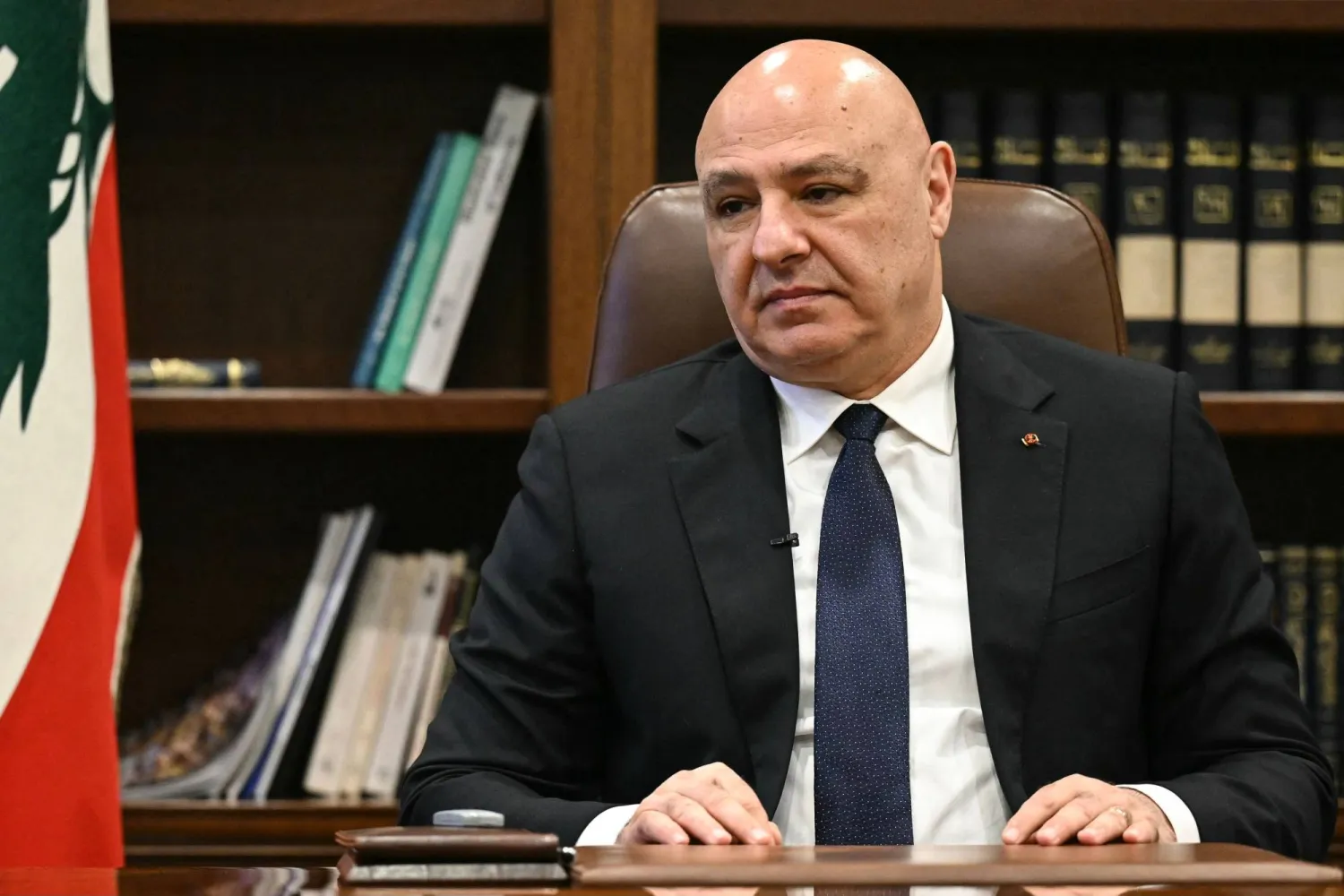
Lebanese President Joseph Aoun speaks during an interview with AFP at the Presidential Palace in Baabda on September 15, 2026. (AFP)
TT

Aoun Urges Rubio to Pressure Israel to Halt Attacks on Southern Lebanon

Lebanese President Joseph Aoun speaks during an interview with AFP at the Presidential Palace in Baabda on September 15, 2026. (AFP)

Lebanese President Joseph Aoun received a phone call on Thursday from US Secretary of State Marco Rubio, during which they discussed the general situation in Lebanon and the region in light of recent developments.

The call addressed the situation in southern Lebanon amid ongoing Israeli attacks. Aoun asked Rubio to pressure Israel to halt the attacks, commit to the framework agreement, cease bulldozing and land-clearing operations, and allow farmers to access their fields.

Aoun stressed that the Lebanese Army and security forces are fully carrying out their duties in implementing decisions related to preventing armed presence, confiscating weapons and ammunition, and combating smuggling, noting that measures taken over the past few days fall within this framework.

The president stressed that judicial authorities are following up on all files referred to them, underlining zero tolerance for perpetrators and the application of laws without favoritism.

Rubio told Aoun that he should not return several hundred kilograms of explosives seized by Lebanese authorities from Hezbollah, a US official said.

"He urged Aoun to hold accountable all those who ordered, financed, and directed the shipment, and underscored that returning explosives to Hezbollah should be out of the question," the official told reporters on condition of anonymity.

A Hezbollah MP acknowledged on Thursday that a 500-kilogram shipment of explosives seized last week by Lebanese authorities belonged to the group, a rare admission by the Iran-backed party.

"The vehicle and its cargo belong to the resistance" against Israel, lawmaker Hassan Fadlallah said.

He said Hezbollah also called for the immediate release of those arrested over the seizure.

Fadlallah demanded the return of the shipment, seized on a road linking eastern Lebanon to Beirut, saying it constituted "capabilities" used by Hezbollah against Israel.

Lebanese Prime Minister Nawaf Salam has said the state will no longer tolerate any possession of "illegal weapons".

A judicial source told AFP the explosives were seized from a vehicle that was carrying 250 kilograms of TNT and 250 kilograms of the explosive C-4.

Salam has said authorities will "identify all individuals involved in this criminal operation and those who ordered it".

He said Lebanese people would be concerned by the seizure, especially since C-4 has previously been used in political assassinations in Lebanon.

At the beginning of this decade Hezbollah was accused of carrying out several political killings.

The group, which once dominated political life in Lebanon, has been weakened by two wars it waged against Israel since 2023.