Lebanon War Toll Rises to 2,055 Dead as Israel Pounds Country's South

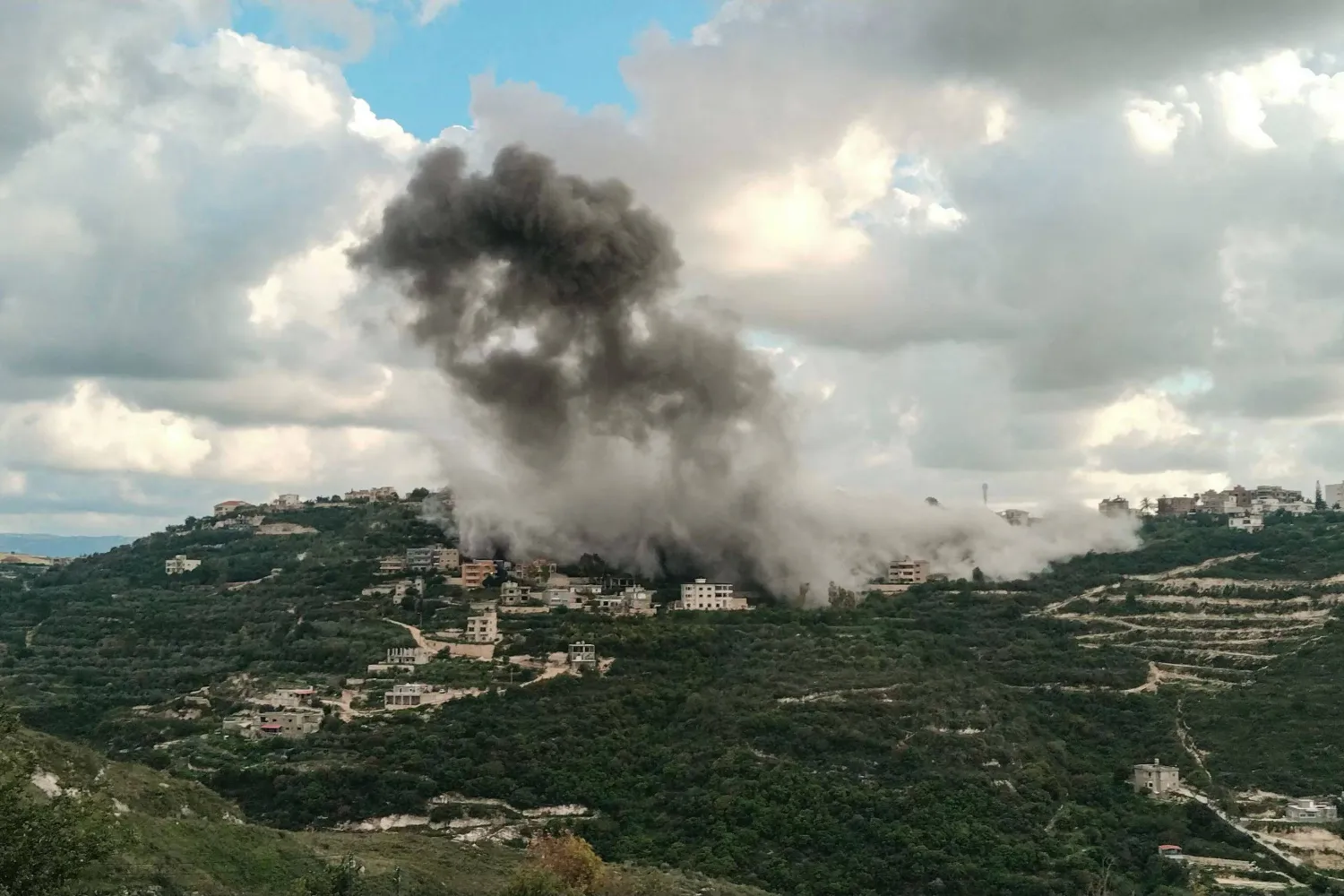
Smoke rises from the site of an Israeli airstrike that targeted the southern Lebanese village of Deik Qanoun al-Nahr on April 12, 2026. (Photo by Kawnat HAJU / AFP)
TT

Lebanon War Toll Rises to 2,055 Dead as Israel Pounds Country's South

Smoke rises from the site of an Israeli airstrike that targeted the southern Lebanese village of Deik Qanoun al-Nahr on April 12, 2026. (Photo by Kawnat HAJU / AFP)

Lebanese official media reported extensive Israeli strikes across the country's south on Sunday as the health ministry said at least five people were killed and the war's overall toll rose to 2,055 dead.

The state-run National News Agency (NNA) reported Israeli attacks on around 30 locations in the country's south on Sunday, with additional strikes on the adjacent West Bekaa area.

The health ministry said an Israeli strike on Qana killed five people, including three women, and wounded 25 others, while the NNA said the raid targeted "homes and infrastructure.”

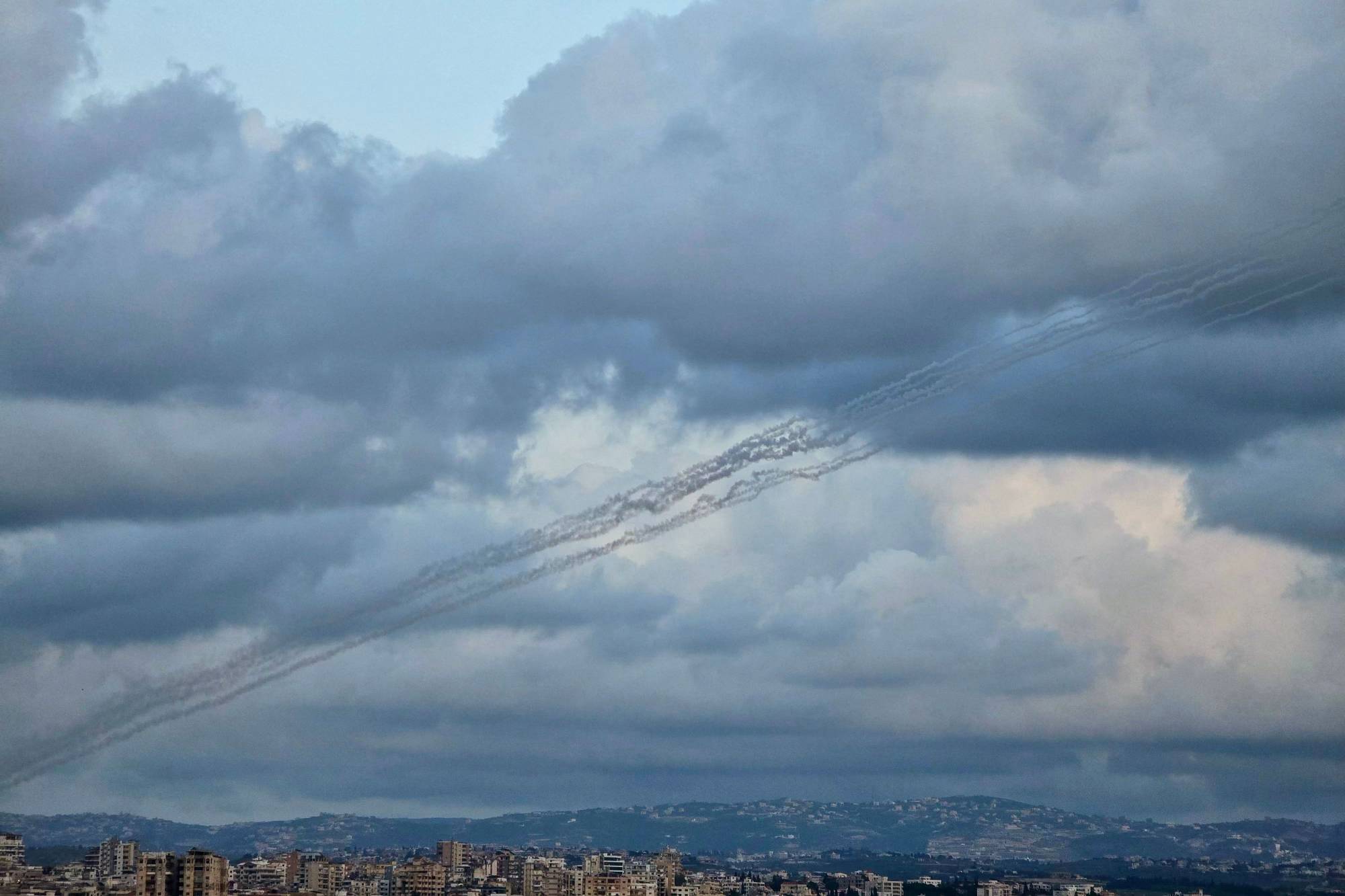
A photograph taken from the southern Lebanese area of Tyre shows rocket trails fired from Lebanon toward neighbouring Israel on April 12, 2026. (Photo by Kawnat HAJU / AFP)

An AFP photographer in the southern town saw huge destruction as an excavator worked to clear debris and first responders carried a body out from under the rubble.

The ministry raised the overall toll in Lebanon to 2,055 dead, including 165 children and 87 health workers, since war erupted on March 2.

In south Lebanon's Bazuriyeh, Hassan Berro, a rescue worker from the Risala Scout association -- which is affiliated with the Hezbollah-allied Amal movement -- said: "Our emergency center was hit and completely destroyed, along with all its contents, including beds and medical equipment."

The AFP photographer saw windows shattered and debris covering several hospital beds in the building, where walls and ceilings were also damaged.

Hezbollah said it launched attacks on Israeli targets across the border and inside Lebanon, including against troops in the southern town of Bint Jbeil, where the NNA reported heavy fighting.

Israel's army on Sunday accused Hezbollah of using the town's hospital compound "for military purposes.”

Officials from Lebanon, Israel and the United States are due to hold direct talks in Washington on Tuesday, a move Hezbollah has rejected.

Commenting on the planned talks, Israeli Prime Minister Benjamin Netanyahu said on Saturday that "we want the dismantling of Hezbollah's weapons, and we want a real peace agreement that will last for generations.”


Iran-Linked Cells Accused of Exploiting Chaos in Syria

Motorcyclists pass destruction in the al-Qadam area on the outskirts of Damascus, Syria, Wednesday, April 29, 2026 in a area that was heavily bombed by forces loyal to former Syrian president Bashar Assad during the Syrian war. (AP Photo/Omar Sanadiki)
TT

Iran-Linked Cells Accused of Exploiting Chaos in Syria

Motorcyclists pass destruction in the al-Qadam area on the outskirts of Damascus, Syria, Wednesday, April 29, 2026 in a area that was heavily bombed by forces loyal to former Syrian president Bashar Assad during the Syrian war. (AP Photo/Omar Sanadiki)

The Syrian Interior Ministry has said the assassination of a Shiite cleric, seen as close to the government, marks a “dangerous escalation,” adding it is following with “great concern” what it described as “systematic” attempts in recent days to create instability, spread chaos, and undermine civil peace.

A source in Damascus said the cleric killed on Friday was considered a partner of the government in reshaping “the landscape of stability within the Shiite community” in Syria.

That role could have made him a target for cells linked to the “Iran axis,” which, according to circles close to the Syrian government, seek to exploit instability by recruiting local agents.

However, no official Syrian statement has confirmed this scenario, and the attack could also have been carried out by ISIS cells or other parties.

Farhan al-Mansour, imam at the Sayyida Zainab shrine south of Damascus, was killed in a car bomb on Friday, Syrian state television reported.

The Interior Ministry said the assassination fits into a “dangerous escalation” targeting religious and social figures in an attempt to incite sectarian strife.

In a statement issued late Friday, the Ministry said the “crime will not go unpunished,” adding that authorities have launched investigations to uncover the circumstances, identify those responsible, and take the necessary legal measures.

It reaffirmed its commitment to protecting citizens, preserving public security, and confronting any attempts to undermine stability.

A Damascus-based source said the Ministry’s statement appears to link the attack to recent operations dismantling “terrorist” cells.

Wael Alwan, executive director of the Jusoor for Studies in Damascus, told Asharq Al-Awsat that most cells dismantled in recent months are linked to an axis connected to Iran, which “seeks to exploit chaos and recruit local agents, whether from former regime elements or newly recruited individuals.”

Alwan said many of these cells are tied to Hezbollah or Iraqi groups with local members, most of whom had links to the former regime. “They are trying to exploit chaos, because stability in Syria runs counter to Iran’s interests,” he said.

According to Alwan, al-Mansour was “fully aligned with the process of stability and social peace pursued by the Syrian government,” and had played a role in reshaping a “highly sensitive” aspect of stability concerning the Shiite community.

For that reason, he could have been targeted by cells linked to Iran or Hezbollah, although there is no confirmed information.

He added that the Interior Ministry’s framing of the incident may point to an axis in which Hezbollah remains the most influential actor in Syria.

Sheikh Hassan al-Mansour, from the village of al-Kubar in Deir Ezzor, had recently met Syrian President Ahmad al-Sharaa and played a prominent role in promoting civil peace in the Sayyida Zainab area.

He had also rejected any Iranian or Iran-backed militia influence over the shrine or the Shiite religious establishment in Syria.

Iran’s Foreign Ministry spokesman Esmaeil Baghaei strongly condemned the assassination.

Baghaei said on Saturday that such “terrorist acts” are part of “malicious conspiracies by the Zionist entity and the United States to fuel divisions and sow discord in regional countries,” according to Iran’s IRNA news agency.

He called on all parties to remain vigilant and act responsibly in confronting terrorism and extremism, while urging efforts to identify those responsible and strengthen regional cooperation to eradicate the roots of terrorism.

Since the fall of the Iran-backed government of Bashar al-Assad in December 2024, Syria’s Shiite minority, estimated at around 300,000 people and mainly concentrated in Damascus and parts of Homs, Aleppo, and Idlib provinces, has been living in a state of concern.

While the community has not faced retaliatory attacks like those targeting some Alawites on the Syrian coast or Druze in Sweida, a cleric, Rasoul Shahoud, was shot dead near Homs in July 2025.

The Sayyida Zainab area was also targeted by ISIS cells on Jan. 11, 2025, according to the Interior Ministry, which said at the time it had foiled a bombing attempt at the shrine and arrested those involved.

In April, the Ministry said it had dismantled several cells linked to Hezbollah in Damascus and Quneitra that were planning “sabotage” operations and rocket attacks.

It also announced it had thwarted an attempt to assassinate Syrian Jewish rabbi Michael Houri through an explosive device planted outside his home near the Mariamite Cathedral in Bab Touma, Damascus. It said it arrested five suspects, including a woman.

On April 27, Syrian authorities said they had dismantled a “terrorist cell” in Homs province and foiled a plot aimed at “targeting security and stability in the region.”

Two members of the cell were killed and a cache of weapons was seized.


Israeli Statements Signal Prolonged Conflict in South Lebanon

Smoke rises following Israeli strikes, as seen from Nabatieh, Lebanon, May 2, 2026. REUTERS/Stringer
TT

Israeli Statements Signal Prolonged Conflict in South Lebanon

Smoke rises following Israeli strikes, as seen from Nabatieh, Lebanon, May 2, 2026. REUTERS/Stringer

Statements made by the Israeli military on war objectives in southern Lebanon, along with battlefield developments, point to a prolonged conflict, as Israel seeks demographic change and the removal of villages to pave the way for a future occupation, while Hezbollah shows signs of preparing for a long fight by upgrading its combat tools, experts say.

Strikes have reached villages in the Nabatieh and Tyre districts, more than 30 km from the border, a move seen in Beirut as pressure on the Lebanese state and Hezbollah.

‘Yellow Line’, long-term withdrawal

Retired brigadier general Saeed Qazah told Asharq Al-Awsat that an Israeli withdrawal from the buffer zone defined by the “Yellow Line” in southern Lebanon would not come easily or unilaterally.

He said it would likely hinge on clear security arrangements similar to past agreements that set understandings between the two sides.

Israel will not give up the area without a price, he said, but will seek to use it as leverage on the Lebanese government, aiming to reach a final agreement with the Lebanese state and pressure Hezbollah to hand over its weapons.

Qazah said the situation is likely to escalate. The relative calm in some areas will not hold, he added, as any direct negotiation track between Lebanon and Israel could trigger escalation and lead to its collapse, while even a limited security incident could reignite the front.

New tools

Technological developments on the battlefield, particularly drones, are adding complexity, Qazah said. Even a limited operation could trigger wider escalation, especially if it causes heavy casualties, prompting a large-scale Israeli response.

He added that the conflict’s expansion is tied not only to developments in Lebanon but also to the regional situation. Any confrontation between Iran and the United States could directly affect the southern front and further complicate it.

He said the duration of Israeli troop presence in the buffer zone will remain subject to political and security understandings.

Without a clear agreement that ensures security in northern Israel, there will be no quick withdrawal, opening the door to a phase that may resemble, in some respects, the period before 2000.

Beyond destruction to reshaping realities

Retired brigadier general Naji Malaeb said Israeli intentions are evident despite multiple and sometimes ambiguous statements, pointing to the positions of Prime Minister Benjamin Netanyahu, especially with open US backing that allows him to use force under political cover.

“We are facing a situation that goes beyond destruction itself,” Malaeb said, adding that what is happening inside the “Yellow Line” is a process of erasing landmarks, settling scores with Hezbollah and exhausting it.

He said the main objectives are threefold. First, consolidating the “zero zone,” extending not only on land but into the sea off Naqoura, effectively stripping Lebanon of rights to the Qana field and cancelling the 2022 maritime demarcation deal, placing the area under Israeli control and allowing exploration without adhering to the agreement.

Second, there is intent to annex areas extending toward the Litani River, particularly zones within two to three kilometers of the border, as reflected by blasts hitting villages beyond the river within the Yellow Line, opening the way for a long-standing Israeli goal of controlling Litani waters.

Third, when Netanyahu speaks of an area stretching from the sea to Mount Hermon, he is referring to expanding control across that space, including areas not considered part of Hezbollah’s base and that have not seen direct fighting, within a security project placing the zone from the occupied Golan Heights to the sea under Israeli control.

Demographic concerns

Malaeb said the destruction serves no real military purpose. Destroying a few kilometers does not secure northern Israel, given the range of rockets and drones, making that logic invalid.

“What is happening is an attempt to engineer demographic change and remove villages in preparation for imposing a future occupation reality, if Israel is able to expand and entrench its presence,” he said.

Regarding the US role, he said that statements by the US embassy on restoring Lebanon’s sovereignty and on reconstruction remain conditional.

Washington links any negotiation outcomes to ending the war with Iran and halting its involvement in Lebanon through Hezbollah, meaning all promises remain tied to that track.


Lebanese Army Chief and US General Meet on Lebanon Security

 Smoke rises after Israeli strikes, as seen from Marjeyoun, Lebanon, May 2, 2026. (Reuters)
Smoke rises after Israeli strikes, as seen from Marjeyoun, Lebanon, May 2, 2026. (Reuters)
TT

Lebanese Army Chief and US General Meet on Lebanon Security

 Smoke rises after Israeli strikes, as seen from Marjeyoun, Lebanon, May 2, 2026. (Reuters)
Smoke rises after Israeli strikes, as seen from Marjeyoun, Lebanon, May 2, 2026. (Reuters)

Lebanese armed forces commander General Rodolphe Haykal and US General Joseph Clearfield met in Beirut to discuss ‌the security ‌situation in ‌Lebanon ⁠and regional developments, the ⁠army said on Saturday in a statement.

Clearfield heads ⁠a committee monitoring ‌a ‌US-backed ceasefire in ‌fighting between ‌Israel and Iran-backed Hezbollah.

The participants at the ‌meeting underlined the importance of ⁠the Lebanese ⁠army's role and the need to support it during the current phase, the statement said.