
US Hosts Lebanese and Israeli Envoys as Israel Presses War on Hezbollah

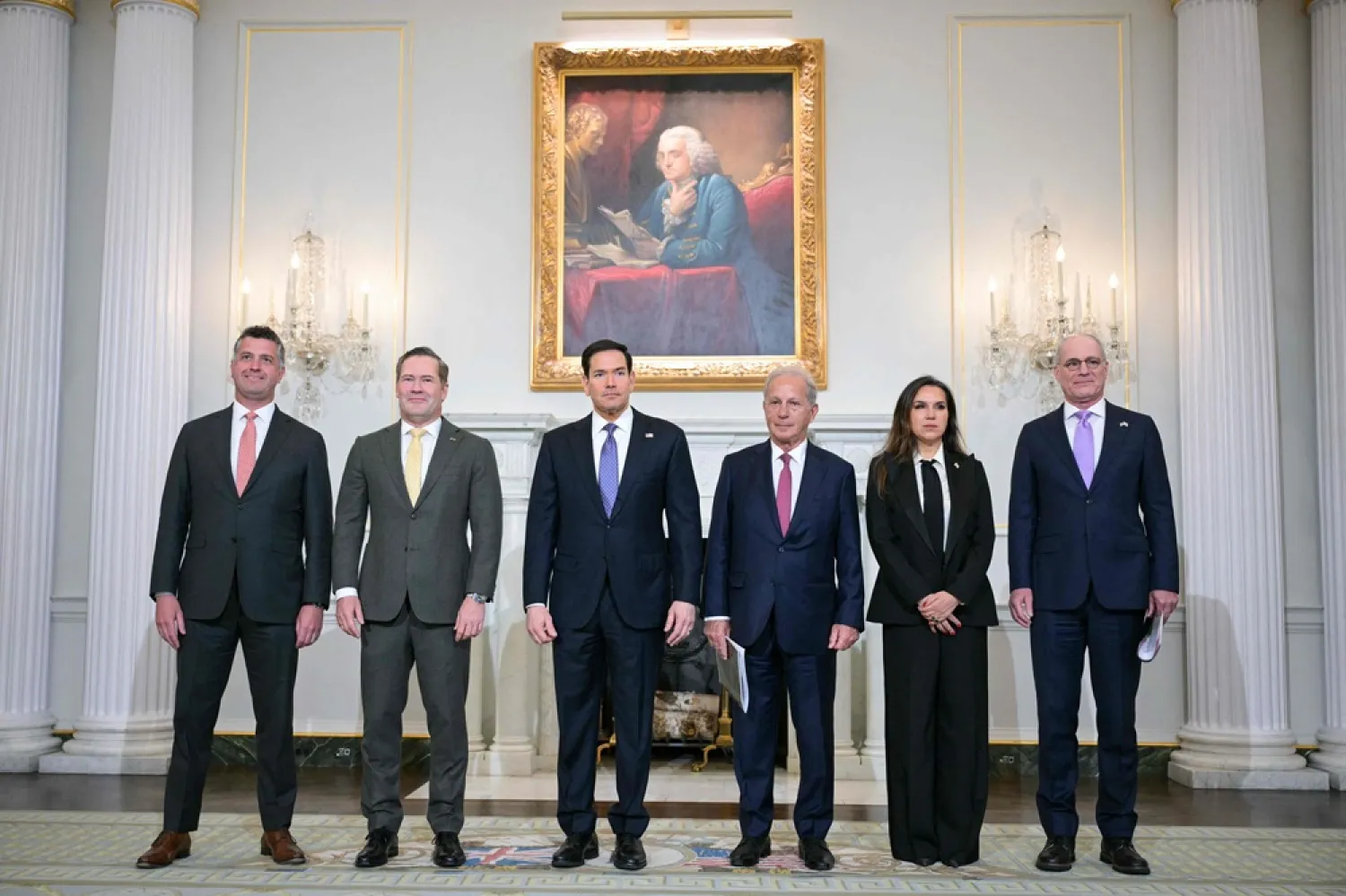
(L/R) US State Department Counselor Michael Needham, US Ambassador to the UN Mike Waltz, US Secretary of State Marco Rubio, US Ambassador to Lebanon Michel Issa, Lebanon's Ambassador to the US Nada Hamadeh Moawad, and Israeli Ambassador to the US Yechiel Leiter stand together before meeting at the State Department in Washington, DC, on April 14, 2026. (AFP)
TT

US Hosts Lebanese and Israeli Envoys as Israel Presses War on Hezbollah

(L/R) US State Department Counselor Michael Needham, US Ambassador to the UN Mike Waltz, US Secretary of State Marco Rubio, US Ambassador to Lebanon Michel Issa, Lebanon's Ambassador to the US Nada Hamadeh Moawad, and Israeli Ambassador to the US Yechiel Leiter stand together before meeting at the State Department in Washington, DC, on April 14, 2026. (AFP)

Lebanese and Israeli envoys met in Washington on Tuesday as Israel pressed its war on Iran-backed Hezbollah, a diplomatic milestone overshadowed by conflicting agendas with Israel ruling out discussion of a ceasefire and demanding Beirut disarm the group. 

The meeting comes at a critical juncture in the crisis in the Middle East, a week into a fragile ceasefire between the United States, Israel and Iran.  

Iran says Israel's campaign against Hezbollah in Lebanon must be included in any agreement to end the wider war, complicating talks mediated by Pakistan aimed at averting further economic fallout.  

The conflict has snared global energy supply and spiked oil prices, piling pressure on US President Donald Trump to find an off-ramp.  

In a sign Washington wants to see progress in the talks, Trump's top diplomat and National Security Advisor Marco Rubio appeared at the start of the meeting alongside the Israeli ambassador to the US, Yechiel Leiter, and his Lebanese counterpart, Nada Hamadeh Moawad. State Department Counselor Michael Needham, US ambassador to the United Nations ‌Mike Waltz, and ‌US ambassador to Lebanon Michel Issa, a personal friend of Trump, were also participating. 

It marks a rare ‌encounter ⁠between representatives of governments ⁠that have remained technically in a state of war since Israel was established in 1948. 

LEBANON SEEKS CEASEFIRE  

Lebanese President Joseph Aoun said in a statement on X as the meeting started that he hoped it would "mark the beginning of ending the suffering of the Lebanese people in general, and the southerners in particular." 

"The only solution lies in the Lebanese army re-deploying up to the internationally recognized border, and so being solely responsible for the security of the area and the safety of its residents, without the partnership of any other party," Aoun added. 

The Lebanese government led by Aoun and Prime Minister Nawaf Salam has called for negotiations with Israel despite objections from Hezbollah, reflecting worsening tensions between the group and its opponents. 

Hezbollah opened fire in support of Tehran on March 2, sparking an Israeli offensive that has killed more than 2,000 people and forced 1.2 million from their homes, according to Lebanese authorities. 

Lebanese officials have said Moawad ⁠only has authority to discuss a ceasefire in Tuesday's meeting. 

But Israeli government spokesperson Shosh Bedrosian said Israel ‌would not discuss a ceasefire.  

Israeli Foreign Minister Gideon Saar told reporters in Jerusalem ahead ‌of the meeting that talks would focus on the disarmament of Hezbollah, which he said must take place before Israel and Lebanon could sign ‌any peace agreement and normalize relations. 

He said Hezbollah was a problem for Israel's security and Lebanon's sovereignty "and this problem needs ‌to be addressed in order to move to a different phase." 

"We want to reach peace and normalization with the state of Lebanon," he said. 

The Lebanese state has been seeking to disarm Hezbollah peacefully since a war between the group and Israel in 2024. Any move by Lebanon to disarm it by force risks igniting conflict in a country shattered by civil war from 1975 to 1990. Moves against Hezbollah by a Western-backed government in 2008 prompted armed ‌clashes. 

The current government banned Hezbollah's military wing after it opened fire on Israel last month. 

'AT WAR WITH HEZBOLLAH, NOT LEBANON' 

Israel and the US have said the campaign ⁠against Hezbollah was not part of ⁠the Iran-US ceasefire, though Pakistan's prime minister had said the truce would include Lebanon, as Iran had demanded. 

While Israel has pressed attacks in Lebanon, it has launched no airstrikes in Beirut since last Wednesday, when it pounded the capital during a 10-minute barrage that killed hundreds of people across Lebanon. 

The following day, US President Donald Trump, in an interview with NBC News, said Israeli Prime Minister Benjamin Netanyahu had told him he would "low-key it" in Lebanon. 

A US State Department official said that Israel was at war with Hezbollah, not Lebanon, and so there was no reason they should not talk, describing the talks as direct, high-level and the first of their kind since 1993. 

The conversation would "scope the ongoing dialogue about how to ensure the long-term security of Israel's northern border and to support the Government of Lebanon's determination to reclaim full sovereignty over its territory and political life". 

Hezbollah leader Naim Qassem on Monday called on the government to cancel the meeting, saying Hezbollah would continue to confront Israeli attacks on Lebanon. 

In Lebanon, the dead include 252 women and 166 children, the health ministry says. Sources familiar with the matter said on March 27 that more than 400 Hezbollah fighters have been killed. Since March 2, 13 Israeli soldiers have been killed in Lebanon, while Hezbollah attacks have killed two Israeli civilians. 

'SEIZE THIS OPPORTUNITY' 

Foreign ministers from 17 countries, including the UK, Tuesday urged Israel and Lebanon to "seize this opportunity" in a statement ahead of the talks in Washington.  

Britain's foreign ministry posted the ministers' joint statement saying "direct negotiations can pave the way to bring lasting security for Lebanon and Israel as well as the region".  

The statement called "upon all parties to urgently deescalate and seize the opportunity offered by the ceasefire between the United States and Iran".  

It was signed by ministers from Britain and Australia and European countries such as France, Belgium, the Netherlands and Spain, but not Germany, Austria, Hungary or Italy.  

The statement said that signatories "condemn in the strongest terms" both attacks by Hezbollah on Israel and "massive Israeli strikes on Lebanon".  

The countries said they welcomed the initiative by President Aoun to open direct talks and were "ready to support" discussions. 


Damascus to Take Over Prisons under SDF Control

People gather as prisoners from the Syrian Democratic Forces (SDF) arrive after being released under an agreement between the SDF and the Syrian government, in Hasakeh, Syria, April 11, 2026. (Reuters)
TT

Damascus to Take Over Prisons under SDF Control

People gather as prisoners from the Syrian Democratic Forces (SDF) arrive after being released under an agreement between the SDF and the Syrian government, in Hasakeh, Syria, April 11, 2026. (Reuters)

Syrian authorities are set to take control of prisons run by the Syrian Democratic Forces (SDF), a government official said, as part of efforts to resolve the detainee issue under an agreement reached on January 29.

Ahmad al-Hilali, spokesman for the presidential team overseeing implementation of the deal, said all SDF-run prisons would be handed over to the justice and interior ministries.

He noted that detainees held by the SDF are being released without conditions, with a new batch expected next week.

“The SDF is committed to the full release of detainees linked to the uprising,” Hilali said, adding that the Justice Ministry would review the cases of those accused of criminal offenses.

He revealed that about 1,500 detainees had already been released, while around 500 others would have their cases examined.

Hilali said the transfer of prisons, particularly in Hasakeh province, would ensure that no detentions remain outside state oversight. He described the issue as humanitarian and said the SDF is moving toward integration into state institutions.

The presidential team, headed by Brig. Gen. Ziad al-Ayesh, arrived on Saturday at the Melbiya Regiment base in the Hasakeh countryside to oversee the release of a third batch of detainees under the agreement. The process included releases by both sides.

On Monday, the SDF freed a fourth group of detainees, according to Hasakeh’s media directorate, in a move carried out under the supervision of the presidential team, Syria TV reported.

Hilali said the government is moving to take over management of SDF-run prisons to end what he described as unregulated and ad hoc releases in recent months.

In a separate development, Hilali said a convoy carrying 800 families displaced from the Afrin region set off from Hasakeh province on Wednesday toward their home areas.

He described it as the largest organized return so far, reflecting progress in preparing conditions and basic services for returns, and underscoring what he said was the state’s commitment to addressing displacement.


International Airlines Resume Beirut Flights with US Assurances

Middle East Airlines aircraft sit on the tarmac at Beirut's Rafic Hariri airport on April 10, 2026. (AFP)
TT

International Airlines Resume Beirut Flights with US Assurances

Middle East Airlines aircraft sit on the tarmac at Beirut's Rafic Hariri airport on April 10, 2026. (AFP)

Beirut’s Rafic Hariri International Airport began recovering on Tuesday from the fallout of the Iran war, as international airlines resumed flights to the Lebanese capital after a roughly 40-day suspension caused by ongoing war, amid US pressure on Israel to spare the airport.

The airport schedule showed the arrival of a Qatar Airways aircraft and another operated by Iraq’s UR Airlines, for the first time since the outbreak of the war. The conflict had disrupted airport operations in Lebanon and several Arab countries and prompted European carriers to cancel services to Beirut.

Qatar Airways had previously announced it would operate one daily commercial flight to Beirut.

Mohammad Aziz, head of Lebanon’s Civil Aviation Authority, said the airport “was not closed; airlines themselves suspended flights to Beirut due to risks posed by military operations to aviation safety.”

Speaking to Asharq Al-Awsat, Aziz said he hoped all other carriers would soon resume flights, aiding the airport’s recovery. He added that airlines that halted services due to recent developments were likely to return.

A Qatar Airways plane carrying humanitarian aid landed in Beirut last Friday, before the airline resumed commercial flights on Tuesday alongside UR Airlines.

Their services join those of Lebanon’s national carrier, Middle East Airlines, which maintained operations throughout the war, as well as regular flights by Royal Jordanian and intermittent services by other carriers.

Aziz said no new guarantees or procedures had been introduced.

“The security assurances are the same ones the Lebanese state received through the United States to spare the airport any bombardment,” he said.

He added that agreements between the Civil Aviation Authority and airlines operating in Beirut remain in force. The airport stayed open, while canceled flights listed on schedules reflected airline decisions rather than any change in agreements.

Lebanon received assurances from the United States at the start of the war that Washington was pressing Israel not to target Beirut airport, the country’s only functioning airport.

Aziz said there had been no changes to takeoff and landing procedures, adding that security measures remain strict and in line with international safety standards to ensure the safety of passengers, facilities and flights.

Passenger traffic at Beirut airport has fallen by between 60 and 70 percent since the war began in late February, amid the closure of some regional airports and the suspension of European flights.

Aziz said traffic was “normal” in the sense that arrivals roughly matched departures. On Monday, 2,266 passengers departed Lebanon, compared with 2,241 arrivals, most traveling on Middle East Airlines.


Khartoum Streets Bear Deep Scars as Sudan War Enters Fourth Year

A street in Khartoum. (Asharq Al-Awsat)
TT

Khartoum Streets Bear Deep Scars as Sudan War Enters Fourth Year

A street in Khartoum. (Asharq Al-Awsat)

Sudan’s war enters its fourth year on Wednesday after three years of bitter fighting that have reshaped life for millions, not only in casualty figures but in daily stories of loss, endurance, and shattered hopes for safety and stability.

The conflict, which erupted between the Sudanese army and the Rapid Support Forces on April 15, 2023, and continues across large parts of the country, has upended daily life, leaving behind fear, grief, and deep social scars.

In Khartoum, streets that once bustled with life are now eerily quiet. Burned buildings, cracked facades, and abandoned, rusting cars line roads where only a few people pass.

Near total paralysis

Across the capital, daily life has been severely disrupted. Markets that once drove economic activity are largely paralyzed, while disease spreads, electricity cuts stretch for hours, and prices surge. Those who remain survive on the bare minimum.

Entire neighborhoods reflect the scale of the crisis. Many homes stand empty after residents fled, while others lie in ruins. Schools and hospitals have been damaged, triggering a sharp decline in education and health care services.

Yet amid the devastation, small signs of resilience persist. Volunteers clean streets, reopen modest shops, and assist those in need, reflecting a determination to reclaim what remains.

Deferred dream

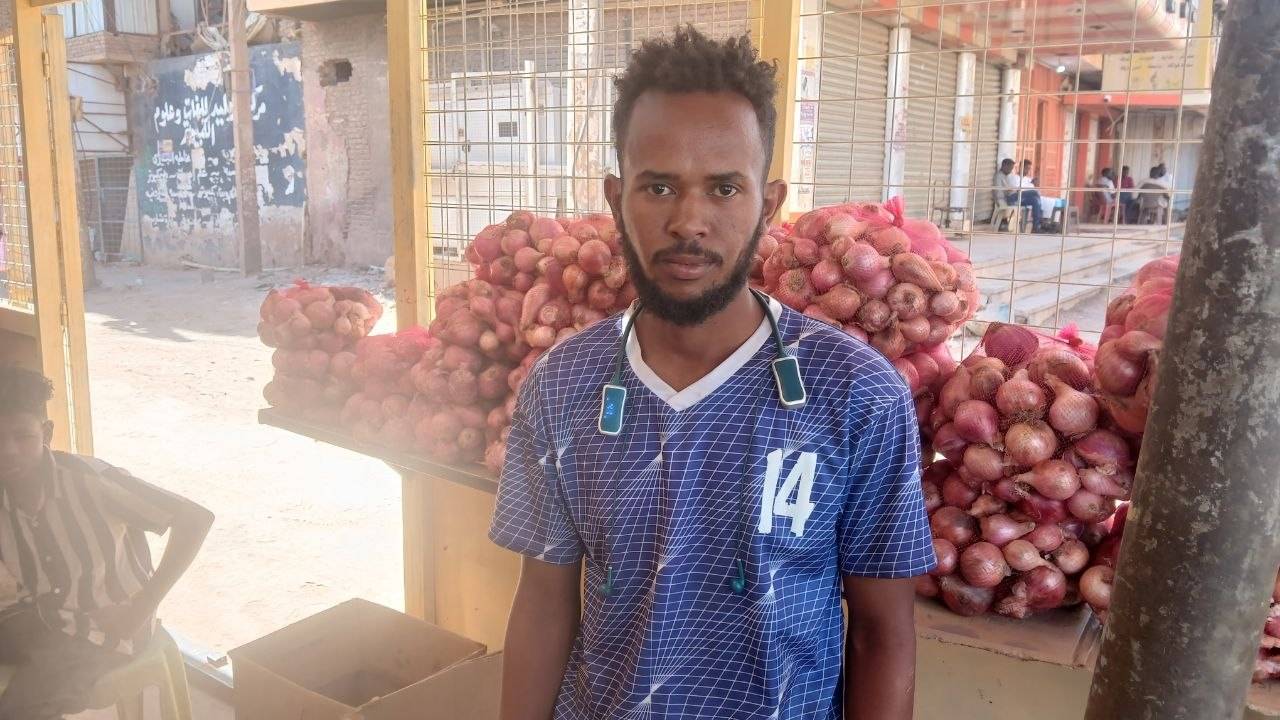
Ali al-Tayeb, a university student, once had a clear path: studying chemical engineering. The war abruptly derailed those plans.

He said panic in the early months forced him and his family to flee from White Nile state to Talodi in South Kordofan.

“The suffering was not just a geographical move; it was the collapse of an entire educational path because of the harsh economic conditions,” he said.

“Now I work as a salesman in a small shop after my studies stopped, and I live day by day, hoping that one day I will return to university.”

Awatif Abdelrahman, a tea seller, carries a deeper loss. Her son disappeared in the chaos after leaving to buy bread.

Her home in Omdurman’s Wad Nubawi district was shelled, forcing her to flee north to al-Thawra. When she returned months later, she found only rubble, her house destroyed and looted.

“All I want is for the war to end, and for my son to return safely,” she said.

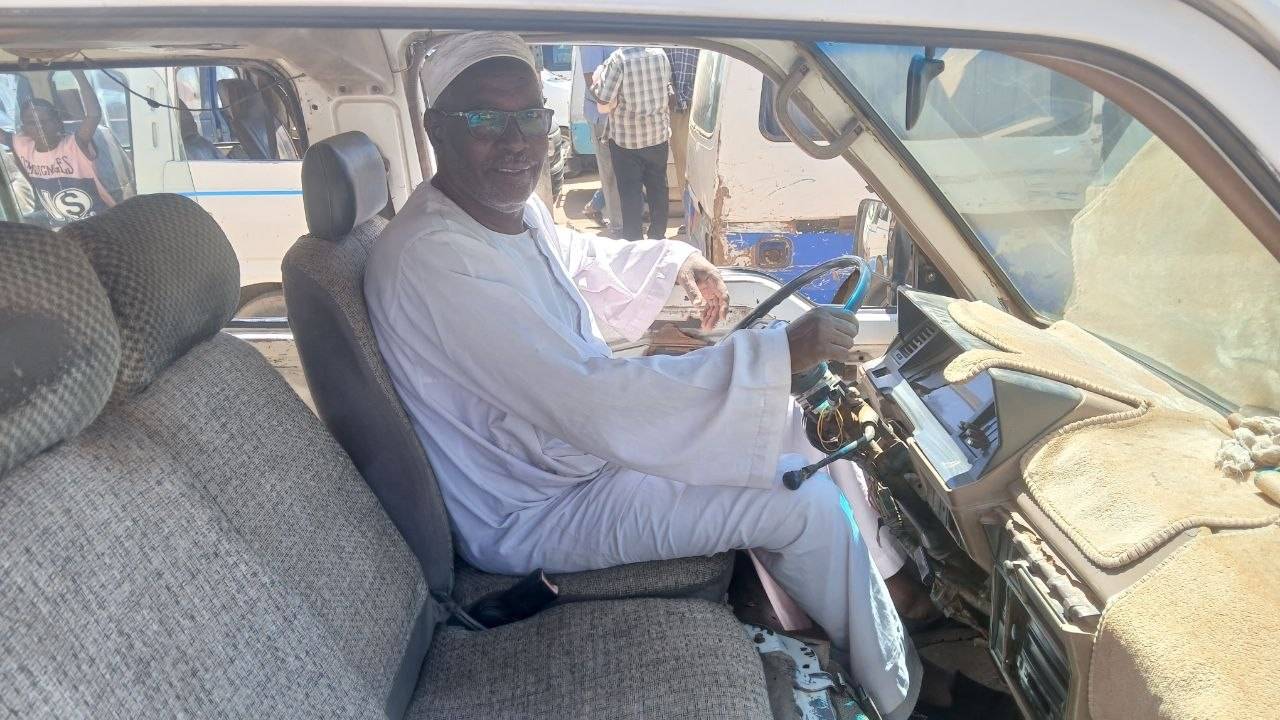
Public transport bus driver Magdi Khalifa, who lost loved ones during the war. (Asharq Al-Awsat)

Resilience and hope

Khartoum stands at a crossroads between a past marked by destruction and an uncertain future. Despite deep wounds, the city endures.

Public bus driver Magdi Khalifa lost not only his livelihood but also relatives and friends, some killed in the war, others due to the collapse of health care.

“They are unforgettable days of cruelty, and they have left their mark on every detail of our lives,” he said.

Elsewhere, butcher Mohamed Darwish is trying to rebuild after heavy financial losses forced him to start from scratch.

“We live on hope, and we only want a safe life without fear,” he said.

Their stories converge on one point: war not only takes lives, it erases stability, security, and the future itself, while exposing a fragile but persistent hope.

Rising hunger and poverty

Poverty has surged during the war, with 70% of the population now living below the poverty line, according to Luca Renda, the United Nations Development Program’s resident representative in Sudan, speaking to AFP.

Before the war, about 38% of the population lived below the poverty line; now the UNDP estimates that figure has reached around 70%,” said Renda, adding that one in four Sudanese lives on less than $2 a day.

In conflict zones such as Darfur and Kordofan, poverty rises to around 75%.

The World Food Program recently described Sudan as facing the world’s largest hunger crisis, with more than 19 million people experiencing acute food insecurity.

A UNDP report released Tuesday said average income has fallen to levels not seen since 1992, while extreme poverty has exceeded levels recorded in the 1980s.

After three years of this conflict, it’s not just that Sudan is facing a crisis, but that the international community is witnessing the systematic erosion of the future of an entire country, according to Renda.

These figures reflect families torn apart, children out of school, and livelihoods lost.

The war has killed tens of thousands and displaced at least 11 million people, creating the world’s largest hunger and displacement crisis.

An accurate death toll remains elusive due to limited information, communications blackouts, and restricted movement across a country where much of the infrastructure has been destroyed.

Engineering student Ali Al-Tayeb, whose education was disrupted by the war, now works as a salesman in a small shop. (Asharq Al-Awsat)

The missing

The International Committee of the Red Cross said at least 11,000 people have gone missing since the war began, highlighting deep psychological suffering among families.

The number of missing persons cases has risen by more than 40% over the past year alone.

These figures most likely represent only a fraction of the real number, and show the human cost of protracted conflicts, noted James Reynolds, the ICRC’s deputy director for Africa.

The ICRC added that 70 to 80% of health infrastructure in conflict areas is either out of service or severely lacking resources.

Berlin is hosting a donors conference on Wednesday aimed at making tangible progress toward ending the war and addressing urgent humanitarian needs, after similar meetings in London and Paris over the past two years failed to produce a diplomatic breakthrough.