


Sudan Enters a Fourth Year of War as Officials Lament an 'Abandoned Crisis'

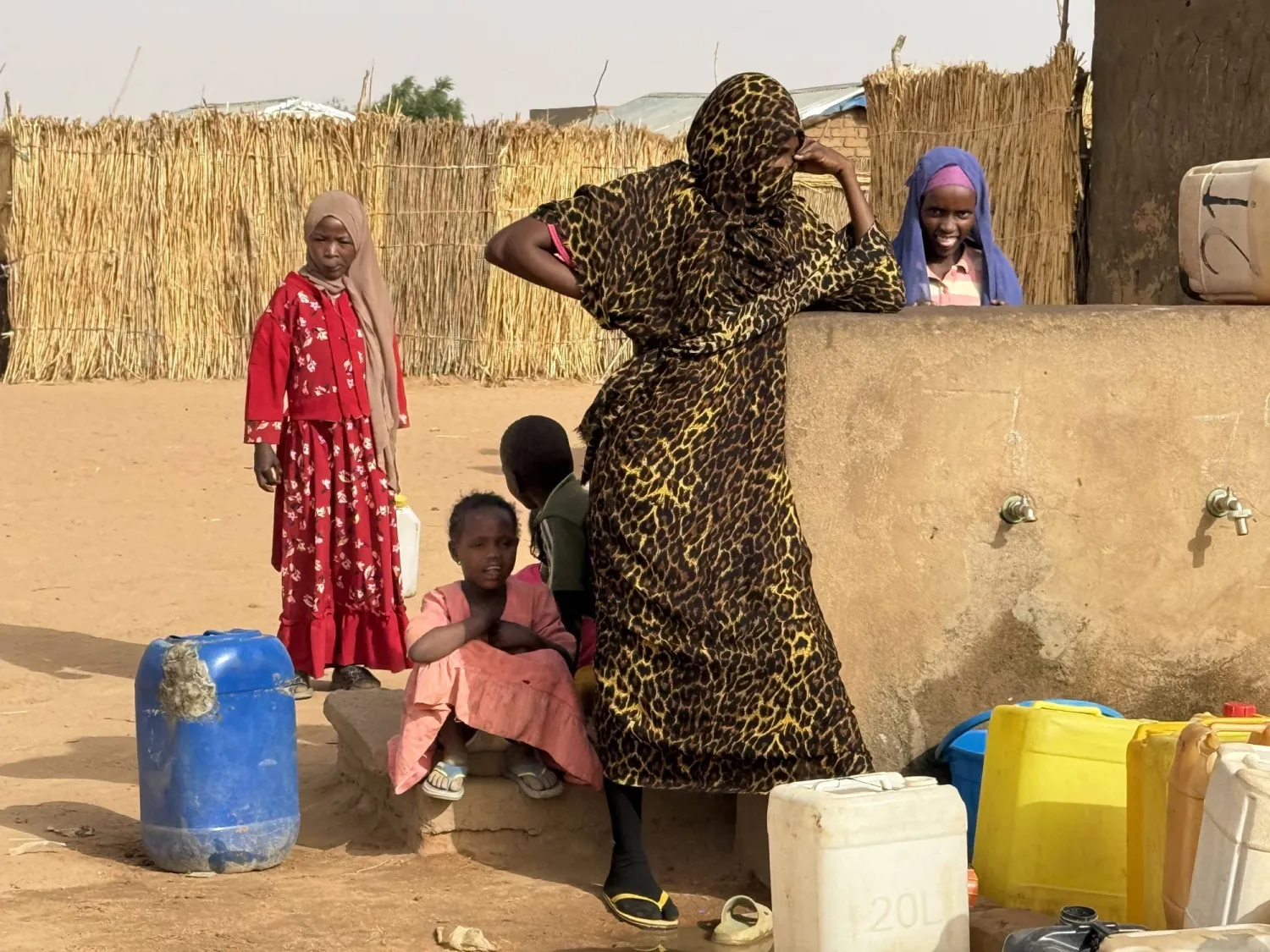
 08 April 2026, Chad, Aboutengye: Women and girls wait for water distribution at the Aboutengue refugee camp in eastern Chad near the border with Sudan. Photo: Eva Krafczyk/dpa
08 April 2026, Chad, Aboutengye: Women and girls wait for water distribution at the Aboutengue refugee camp in eastern Chad near the border with Sudan. Photo: Eva Krafczyk/dpa
TT

Sudan Enters a Fourth Year of War as Officials Lament an 'Abandoned Crisis'

 08 April 2026, Chad, Aboutengye: Women and girls wait for water distribution at the Aboutengue refugee camp in eastern Chad near the border with Sudan. Photo: Eva Krafczyk/dpa
08 April 2026, Chad, Aboutengye: Women and girls wait for water distribution at the Aboutengue refugee camp in eastern Chad near the border with Sudan. Photo: Eva Krafczyk/dpa

Famine. Massacres. And now badly needed food and other supplies are under strain. Sudan on Wednesday entered a fourth year of war that's been called an “abandoned crisis,” as a new Middle East conflict throws into shadow the fighting that has forced 13 million people to flee their homes.

The North African country is described as the world's largest humanitarian challenge, notably in terms of displacement and hunger. There is no end in sight to the fighting between the military and the paramilitary group Rapid Support Forces, or RSF, which witnesses and aid groups say has laid waste to parts of the vast Darfur region.

“We’ve lost so many people in this war,” said Hussein Mohamed Shareef, running his fingers over the scar on his head where he said an RSF sniper had shot him in the city of Omdurman, near Khartoum, Sudan's capital. He said at least 10 friends have been killed.

Numbers tell a tale of pain

At least 59,000 people have been killed. At least 6,000 died over three days as the RSF rampaged through the Darfur outpost of el-Fasher in October, according to the United Nations, with UN-backed experts concluding that the offensive bore “the defining characteristics of genocide.” More than 11,000 people have gone missing over the course of the war, the Red Cross says.

The war has pushed parts of Sudan into famine. The number of people with severe acute malnutrition, the most dangerous and deadly kind, is expected to increase to 800,000, the world's foremost experts on food security, the Integrated Food Security Phase Classification, said in February.

About 34 million people, or almost two out of three Sudanese, need assistance, the UN says. Only 63% of health facilities remain fully or partially functional amid disease outbreaks, including cholera, according to the World Health Organization.

At a center for malnourished children in the Red Sea city of Port Sudan, health staff weighed crying babies and fed some through a tube in their nose.

The number of severely malnourished children entering the 16-bed center has doubled since the war began, to 60 a week, staff said. Several children often must share a mattress.

“I don’t know what will happen in the coming days,” Dr. Osman Karrar said.

Now fuel prices in Sudan have increased by more than 24% because of the Iran war and its effects on shipping, driving up food prices.

“A plea from me: Please don’t call this the forgotten crisis. I’m referring to this as an abandoned crisis,” the top UN official in Sudan, Denise Brown, said Monday, criticizing the international community for failing to focus on ending the fighting.

War could spread beyond Sudan

The conflict exploded from a power struggle that emerged following Sudan’s transition to democracy after an uprising forced the military ouster of longtime autocratic President Omar al-Bashir in April 2019.

Tensions boiled over three years later, in April 2023 between Sudan's military chief Gen. Abdel-Fattah Burhan, who chairs the ruling sovereign council, and RSF commander Gen. Mohamed Hamdan Dagalo, who was Burhan’s deputy.

Neither side can achieve a decisive victory, said Shamel Elnoor, a Sudanese journalist and researcher, adding that Sudanese “have become powerless and are subjected to foreign dictates.”

Germany was hosting a Sudan conference in Berlin on Wednesday for governments, UN agencies and aid groups. The aim was to rally humanitarian donors and “promote an immediate ceasefire," the German Development Ministry said.

The Sudanese government in Khartoum, however, slammed the conference as an “unacceptable” interference and said Germany didn't consult with Sudan before convening it.

Sudan is now essentially divided between a military-backed, internationally recognized government in Khartoum and a rival RSF-controlled administration in Darfur.

The military has established control over the north, east and central regions, including Sudan’s Red Sea ports and its oil refineries and pipelines. The RSF and its allies control Darfur and areas in the Kordofan region along the border with South Sudan. Both regions include many of Sudan’s oil fields and gold mines.

The Yale School of Public Health’s Humanitarian Research Lab, which tracks the war through satellite imagery, said this month that the RSF had received military support from a base in Ethiopia. The RSF didn't comment on the allegation.

Josef Tucker, senior analyst for the Horn of Africa at the International Crisis Group, told The Associated Press that the war could spill over Sudan’s borders, making the conflict “even more intractable.”

Experts look at possible war crimes

Three years of fighting have seen widespread atrocities such as mass killings and rampant sexual violence, including gang rapes.

Hospitals, ambulances and medical workers in Sudan have been attacked, with more than 2,000 people killed, WHO has said.

The International Criminal Court has said that it was investigating potential war crimes and crimes against humanity, particularly in Darfur, a region that two decades earlier, during al-Bashir's rule, became synonymous with genocide and war crimes.

Most of the latest atrocities have been blamed on the RSF and their Janjaweed allies — militias that were notorious for atrocities in the early 2000s against people identifying as East or Central African in Darfur. The RSF grew out of the Janjaweed.

The military's seizure of Khartoum and other urban areas in central Sudan in early 2025 did allow the return of about 4 million people to their homes, the UN migration agency said in March. But they struggle with damaged infrastructure and other challenges.

“It’s not really a return to normal. It is trying to survive amid a new normal,” said Tjada D’Oyen McKenna, CEO of aid group Mercy Corps.



Israel Says Soldier Killed in South Lebanon Fighting

An Israeli military vehicle operates by the Israeli‑Lebanese border, in northern Israel, May 14, 2026. REUTERS/Shir Torem
TT

Israel Says Soldier Killed in South Lebanon Fighting

An Israeli military vehicle operates by the Israeli‑Lebanese border, in northern Israel, May 14, 2026. REUTERS/Shir Torem

Israel's military said Friday that one of its soldiers died in combat in southern Lebanon, bringing its losses to 20 personnel since the war with Hezbollah began in early March.

Staff Sergeant Negev Dagan, 20, "fell during combat in southern Lebanon", the military said, without providing additional information.

Since the war began, 19 Israeli soldiers and one civilian contractor have been killed.


War Worsens Lebanon's Economic Crisis with Job Losses, Price Gouging and Slow Business

A man inspects his damaged car amid the rubble of shops destroyed in previous Israeli airstrikes in the Hosh neighborhood of Tyre, southern Lebanon, April 19, 2026. (AP Photo/Bilal Hussein)
TT

War Worsens Lebanon's Economic Crisis with Job Losses, Price Gouging and Slow Business

A man inspects his damaged car amid the rubble of shops destroyed in previous Israeli airstrikes in the Hosh neighborhood of Tyre, southern Lebanon, April 19, 2026. (AP Photo/Bilal Hussein)

Ayman al-Zain watched on a recent afternoon as a bulldozer cleared the rubble of what used to be his sports clothing store, which was one of dozens of buildings destroyed in Israeli strikes against the Hezbollah militant group.

With a nominal truce in place that has reduced but not halted the fighting, Al-Zain tried to assess whether to rebuild the shop in Beirut’s southern suburbs that he once hoped to pass down to his kids. But it's unlikely he will be able to do so anytime soon, and not only because of the fear of more airstrikes.

“Everything is expensive,” he told The Associated Press. “If I want to open a new store and get mannequins, hangers and some accessories, the prices are very different than before.”

The US-Israeli war with Iran, and the closure of the Strait of Hormuz, have sent economic shock waves across the Mideast. In Lebanon, those woes have been compounded by the country's existing economic problems and by largely unregulated markets that are vulnerable to price gouging.

“This continues to be a major economic shock, one of honestly an existential nature,” said Economy Minister Amer Bisat, who is part of the Lebanese Cabinet that came into office over a year ago on a reformist agenda.

Problems have piled up for years

Since 2019, the tiny Mediterranean country has been in the throes of an economic crisis that pulverized the value of its local currency and its banking system.

That's when Lebanese banks collapsed, which evaporated depositors’ savings and plunged about half of the population of 6.5 million into poverty, after decades of rampant corruption, waste and mismanagement. The country suffered some $70 billion in losses in its financial sector, further compounded by about $11 billion in the 2024 war between Israel and Hezbollah, according to the World Bank. The Lebanese pound has since lost over 90% of its value against the US dollar.

The cash-strapped state electricity company provides only a few hours of power a day, and most Lebanese rely on diesel generators to make up the difference. That makes the economy particularly vulnerable to fuel price increases.

Lebanon was already “grappling with multiple rounds of crises,” said Mohamad Faour, professor of finance at the American University of Beirut. "So this round of war only made an already fragile situation more fragile.”

With this new war, 1.2 million Lebanese have been displaced, largely from southern Lebanon and Beirut's southern suburbs. Many are sheltering in schools with no work or draining whatever money they have renting out apartments or hotel rooms.

Economy suffers job losses and crippling inflation

In an interview with the AP from his office, Bisat estimated that the country faces an economic loss of around 7% of its gross domestic product due to the war because “companies are closing, people are losing their jobs, tourists are not showing up.”

Evidence of inflation abounds.

In the usually bustling produce market in Sabra, south of Beirut, vendor Ahmad al-Farra looked dejected as an elderly woman shopping for watermelon, tomatoes and potatoes walked away without buying anything after checking the price tags.

Prices have spiked since the US and Israel launched a war against Iran on Feb. 28, followed quickly by a resurgence of war between Israel and Hezbollah.

“We're keeping our prices low so we can sell, and even then we're not selling,” al-Farra said as the sound of an Israeli drone whizzed overhead.

Even consumers who can afford to spend are anxious and cutting back on nonessential purchases, leaving many businesses empty.

Riad Aboulteif, who runs several restaurants and bars in the capital, said his revenue has dropped by some 90% since the war began, as Lebanon’s shrinking middle class cuts costs.

People are saving more money for their survival and not making plans to celebrate birthdays or other special occasions, he said at one of his bars in the bustling Hamra district of Beirut, where the loud chatter of customers once overpowered the jazz music coming through the sound system.

That night, only a few tables were occupied. He's had to downsize his staff and restructure his menus to offer more affordable items.

War fuels price gouging

Meanwhile, the country’s bankrupt government has struggled to crack down on unfair and illicit profiteering and the hoarding of fuel and other essential items.

Many agricultural areas in southern and eastern Lebanon are no longer accessible because of airstrikes and clashes, but al-Faraa believes suppliers have raised prices beyond what is necessary to cover cost increases.

Some of the starkest increases have been in generator bills.

Families and businesses for years have paid multiple utility bills to cover privately supplied electricity and water in the absence of government services. Neighborhood generator owners charge a monthly fee, and some landlords have their own generators and charge the cost to tenants.

Frustrated business owners have said that generator bills have doubled at times, forcing them to shorten their hours of operation or even close on some days to cut costs.

“If we didn’t take these measures, we cannot continue,” Aboulteif said.

Bisat said his ministry has conducted over 4,000 inspections of private generators, gas stations and shops across the country since the start of the war in March and lodged dozens of complaints to the courts. But the issue will not be quickly resolved.

In the meantime, the government has little ability to crack down on the handful of companies that import and distribute fuel and other goods.

No sign of relief on the horizon

With no end to the war in sight, the economic situation shows no sign of easing.

A tenuous ceasefire is in place between the US and Iran, but talks between Washington and Tehran are gridlocked. A nominal truce between Israel and Hezbollah has reduced but not stopped the fighting in Lebanon.

For now, Lebanese families and business owners are confronting the challenges day by day and hoping for the best.

“Only God knows how we’ve been trying to manage ourselves," al-Farra said.


US Casts Israel-Lebanon Talks on Thursday as ‘Positive and Productive’

Smoke rises from the site of an Israeli airstrike that targeted the southern village of Al-Halloussiyah on May 13, 2026. (AFP)
TT

US Casts Israel-Lebanon Talks on Thursday as ‘Positive and Productive’

Smoke rises from the site of an Israeli airstrike that targeted the southern village of Al-Halloussiyah on May 13, 2026. (AFP)

The United States cast Israel-Lebanon talks held in Washington on Thursday as "productive and positive" and a State Department official said more discussions aimed at ending their conflict will continue on Friday.

A senior Lebanese official said earlier that Lebanon will demand that US ally Israel cease fire in the face-to-face talks, as Israel and Iran-backed Hezbollah continued to trade blows despite a US-backed truce declared last month.

An Israeli government spokesperson said the talks were taking place with the goal of disarming Hezbollah and reaching a peace agreement.

A State Department official said a meeting of Lebanese and Israeli envoys, along with US officials, started at about 9 a.m. EDT (1300 GMT) and ended eight hours later.

The US official said there was a "full day of productive and positive talks" on Thursday that will continue on Friday.

The talks are the sides' third meeting since Israel intensified air attacks on Lebanon after Hezbollah fired missiles at Israel on March 2, three days into the US-Israeli ‌war on Iran. ‌Israel had widened its ground invasion into Lebanon's south last month. Beirut is attending despite strong ‌objections ⁠from Hezbollah.

Fought ⁠in parallel to the US-Iran conflict, Israel's war in Lebanon has rumbled on since US President Donald Trump declared a ceasefire on April 16, though hostilities have largely been contained to southern Lebanon since then.

The fragile ceasefire is due to expire on Sunday.

With Lebanon's health ministry reporting 22 people killed in Israeli strikes on Wednesday, including eight children, the senior Lebanese official said the Lebanese delegation would seek "a ceasefire that Israel implements".

The Israeli military said an explosive drone launched by Hezbollah fell within Israeli territory near the border and injured several Israeli civilians. Israel has kept troops in a self-declared security zone in south Lebanon, saying this aims to shield northern Israel from attack by Hezbollah, which ⁠fired hundreds of rockets and drones at Israel during the war.

The Israeli military said it ‌carried out a new wave of attacks on Hezbollah sites in southern Lebanon on ‌Thursday.

Hezbollah said it carried out 17 attacks on Israeli troops in the south on Wednesday.

LEBANON, ISRAEL BROADEN DELEGATIONS

Lebanese President Joseph Aoun's decision to ‌pursue the talks reflects deep divisions in Lebanon over Hezbollah, founded by Iran's Revolutionary Guards in 1982. The Beirut government has sought ‌its disarmament since last year.

When the April 16 ceasefire was announced, Israeli Prime Minister Benjamin Netanyahu said Hezbollah's disarmament would be a fundamental demand in peace talks with Lebanon.

The Washington meetings mark the highest-level contact between Lebanon and Israel in decades.

Both Lebanon and Israel are broadening their delegations for this round, after the sides were represented by their ambassadors to Washington in the previous two meetings.

Lebanese Presidential Special Envoy Simon Karam and ‌Israel's Deputy National Security Adviser Yossi Draznin were participants in the talks, as well as senior Israeli military representatives, a State Department official said.

The US-led mediation between Lebanon and Israel has emerged ⁠in parallel to diplomacy aimed at ⁠ending the US-Iran conflict. Iran has said that ending Israel's war in Lebanon is one of its demands for a deal over the wider conflict.

Trump hosted the last meeting between the Lebanese and Israeli ambassadors to Washington at the Oval Office, saying at the time he looked forward to hosting Netanyahu and Aoun in the near future, and that he saw "a great chance" the countries would reach a peace deal this year.

Aoun later said the timing was not right for a meeting with Netanyahu, and that Lebanon must first secure "a security agreement and a halt to the Israeli attacks, before we raise the issue of a meeting between us".

Lebanese Prime Minister Nawaf Salam, in a May 10 interview with the pan-Arab broadcaster Al Arabiya, said Lebanon's principles in negotiations were shoring up the ceasefire, securing a timetable for Israeli withdrawal, and winning the release of Lebanese prisoners held by Israel.

The Lebanese health ministry says Israeli attacks have killed 2,896 people in Lebanon since March 2, including 589 women, children and medics.

Some 1.2 million people have been driven from their homes in Lebanon, many of them fleeing from the south.

Israel says 17 of its soldiers have been killed in southern Lebanon, along with two civilians in northern Israel.