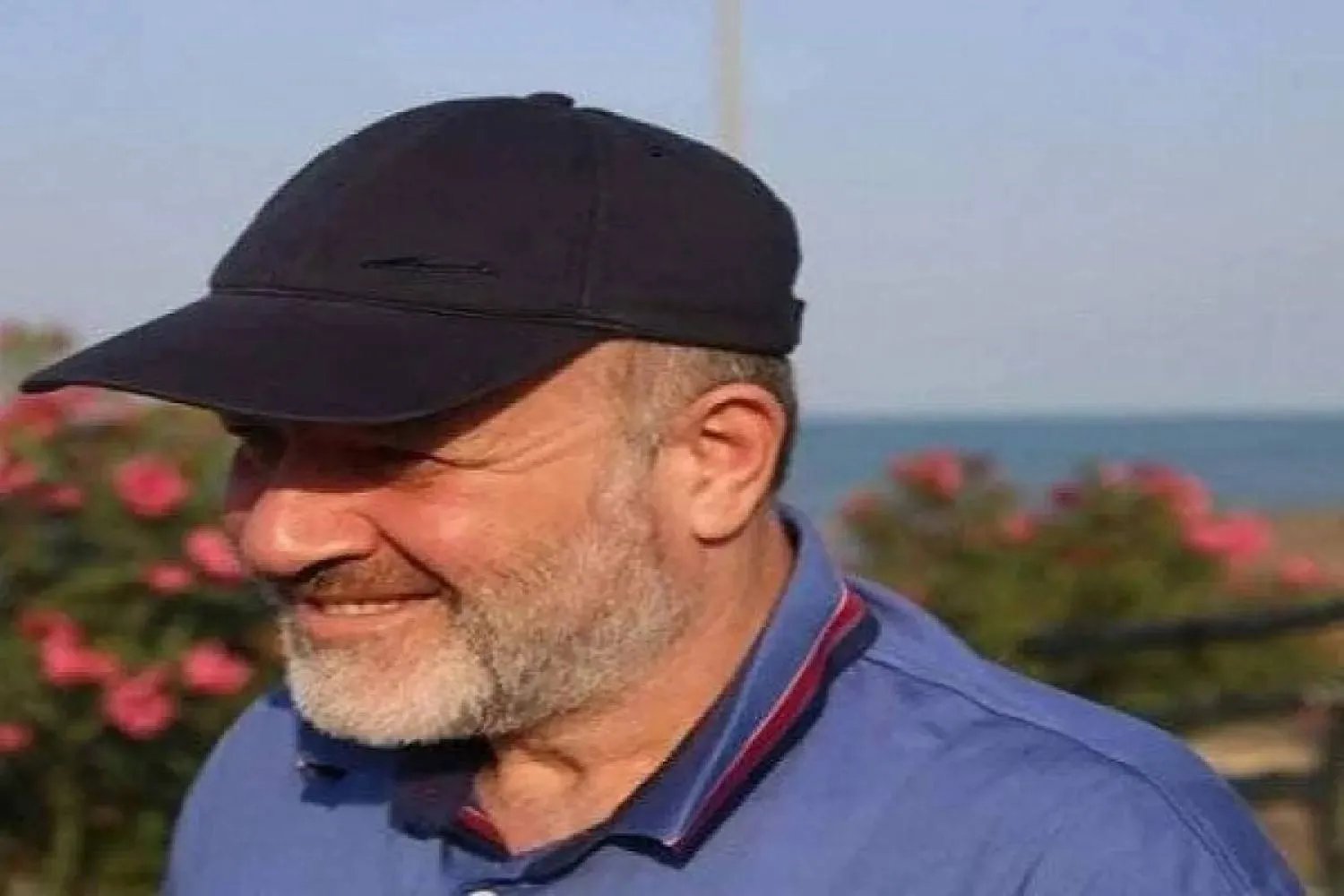

Three sources in the Palestinian Islamic Jihad said a member of its political bureau and head of its military wing, Akram al-Ajouri, survived an Israeli airstrike that targeted him in Iran about a month ago.
Two senior sources in the group, based in Lebanon where al-Ajouri had lived in recent years, said the site where he was expected to be in the Iranian city of Qom was struck in mid-March, but he escaped along with those who were with him.
The military wing led by al-Ajouri, who is in his sixties, is the highest authority within the Al-Quds Brigades, the armed wing of Islamic Jihad. He has overseen it since the early days of the Second Intifada, which erupted at the end of 2000, and rose to prominence in late 2002 and early 2003.
One source said al-Ajouri was not at the targeted site at the time, having left “a day or perhaps hours before the strike for routine security reasons, as he frequently changed locations under the protection of intelligence from the Quds Force of Iran’s Revolutionary Guards.”
The source added that the targeted location in Qom belonged to Mohammad Saeed Izadi, known among Palestinian factions and Lebanon’s Hezbollah as “Hajj Ramadan.”
Izadi was assassinated by Israel on June 21 last year in an apartment in the same city.
Islamic Jihad is considered the Palestinian faction most closely aligned with Iran, which is its main source of funding and support.
Izadi was responsible for coordinating with Palestinian factions, including Hamas and Islamic Jihad, as well as Hezbollah, in his role as a representative of the Quds Force.
He maintained close ties with the group’s leadership, particularly its Secretary-General Ziyad al-Nakhalah and al-Ajouri.
The second source did not confirm or deny whether al-Ajouri had changed locations, saying only that “al-Ajouri is fine,” a statement echoed by a third source inside the Palestinian territories.
The two Lebanon-based sources said Palestinian leaders in Iran, including al-Ajouri and faction representatives, have adopted strict security precautions in anticipation of possible assassination attempts, particularly if the war resumes.
Islamic Jihad has not issued any official comment confirming the attempted assassination or al-Ajouri’s survival.
Israeli media had reported in March, citing an Israeli military source, that al-Ajouri and the group’s deputy secretary-general Mohammad al-Hindi had been targeted in Iran. Informed sources later told Asharq Al-Awsat that al-Hindi was not in Iran at the time, and he subsequently appeared in a televised interview.
Who is Akram al-Ajouri?
Al-Ajouri is regarded as a key figure within Islamic Jihad, not only in operational matters related to arming the Al-Quds Brigades in Gaza, but also for maintaining strong ties with Hezbollah’s leadership and previously with the government of ousted Syrian president Bashar al-Assad.
Sources in the group say al-Ajouri is highly important to the IRGC due to his role in carrying out missions and drafting plans related to military operations and the transfer of weapons to the Gaza Strip and other areas. He is also responsible for forming several militant cells in the West Bank.
Al-Ajouri has managed the group’s armed wing for many years. In addition to overseeing armament in Gaza and the West Bank, he is credited with building the group’s military presence in Lebanon and Syria, and deploying fighters from both countries in attacks launched from Lebanon in support of Hezbollah since Oct. 8, 2023, during the latest war.
Al-Ajouri has survived several assassination attempts, including two in Syria, one in 2014 and another in 2019 that targeted his home and killed his son and others. At the time, estimates suggested he was in Lebanon, where he also survived at least one assassination attempt.
Sources said that shortly before the war involving Iran, al-Ajouri had been preparing to leave Lebanon, but several Arab and Islamic capitals refused to receive him despite efforts by al-Nakhalah, citing his inclusion in cases before local courts.