


ISIS Shifts Priorities, Seeks to Raise Cost of Rule in Syria

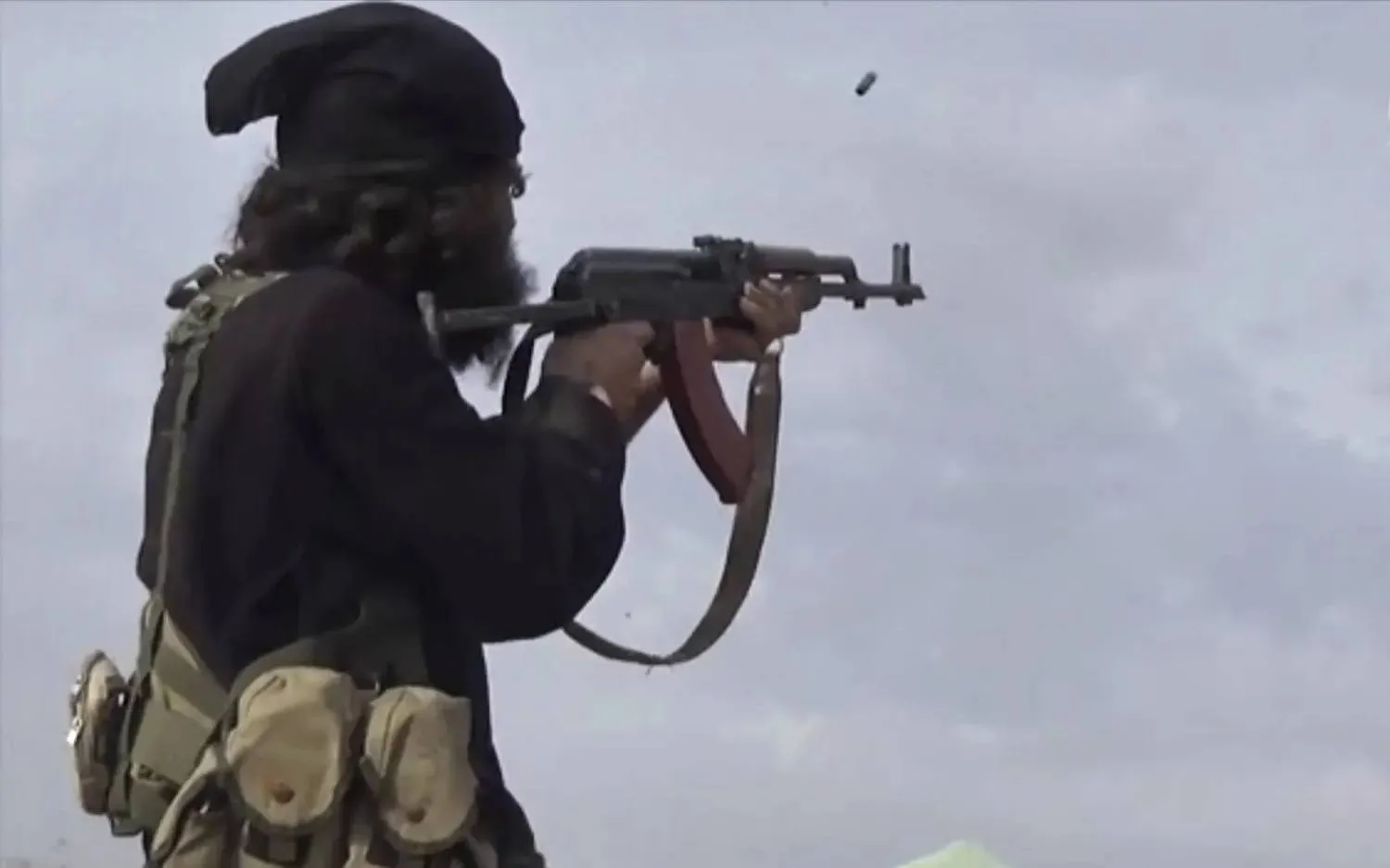
An ISIS fighter in Baghouz, Syria, in 2019, in a photo released by the group’s Amaq agency (AP)
TT

ISIS Shifts Priorities, Seeks to Raise Cost of Rule in Syria

An ISIS fighter in Baghouz, Syria, in 2019, in a photo released by the group’s Amaq agency (AP)

Syria has moved since early this year from internal unrest in the northeast, the coast, and the south to relative calm and attempts to impose a new security and political order, most clearly seen in the security file and in an agreement with the Syrian Democratic Forces.

But the shift has set up an undeclared race with ISIS across multiple regions and social environments.

ISIS has re-emerged as a destabilizing force, seeking to regain a foothold by exploiting gaps in security control. It is leaning on an aggressive narrative and targeted attacks that intensified from mid-February, eased in early March, then picked up again.

The Jazira region, spanning Deir al-Zor, Raqqa and Hasaka, is the main test ground for the group in 2026. Damascus’s takeover of areas east of the Euphrates in late January, after a US troop repositioning and full withdrawal, along with the earlier pullback of SDF forces, created a new security landscape that ISIS is trying to exploit.

The US withdrawal and repositioning at bases such as Kharab al-Jir and Rmelan caused temporary disruption along control lines.

ISIS’s weekly al-Nabaa newsletter reported a rise in attacks on government checkpoints and positions, using roadside bombs and direct assaults. The group carried out about 22 attacks across Syria in March 2026 alone, targeting military sites and civilians.

Ability to hit high-value targets

An attack on Syria’s 86th Division in Deir al-Zor, and on its positions near the Panorama area at the city’s southern entrance, underscored ISIS’s ability to strike deep inside government-held territory and hit sensitive targets.

The group has fully shifted to guerrilla warfare, deploying small, mobile units across vast desert areas that still offer cover despite heavy US airstrikes.

Its messaging, including a Feb. 5 speech by spokesman Abu Hudhayfah al-Ansari, signals an effort to recast itself as the “only legitimate resistance” to the new order. Content in al-Nabaa shows a shift from monitoring to a broad ideological offensive.

The spokesman declared a “new phase of operations” targeting governance in Damascus, signaling a move from defending desert pockets to a war of attrition in cities. Al-Nabaa has stepped up attacks on the new government, branding it an “updated version of apostasy,” and focusing on Syrian President Ahmed al-Sharaa, still referred to by his former nom de guerre.

Undermining military credibility

ISIS casts al-Sharaa’s shift from jihadist leader to head of state as a “great betrayal.” It is trying to draw in fighters from Hayat Tahrir al-Sham and other factions frustrated by integration into the “new Syrian army” or by perceived leniency toward former regime officials.

It also questions Syria’s role in the US-led coalition, framing it as a concession.

By escalating attacks since mid-February, ISIS appears intent on undermining the government’s ability to enforce security and stability, while casting doubt on the military effectiveness of newly formed forces. It promotes a narrative that al-Sharaa serves US interests, presenting itself as a more ideologically rigid alternative.

Exploiting fault lines

ISIS is betting on social tensions as Damascus reasserts control over areas once run by autonomous authorities or foreign-backed factions, especially in the northeast and parts of the north.

It taps into tribal concerns over central rule, positioning itself as a fallback or covert ally against perceived abuses. At the same time, the state’s focus on remnants of the former regime and opposition militias on the coast and in Sweida gives ISIS more room to move in the east.

Despite losing territory, ISIS retains the ability to survive through flexibility, continued recruitment and enough funding to sustain operations.

Its strength lies in decentralization. Regional branches now operate with autonomy after the weakening of central leadership following the killing of its fourth “caliph,” Abu al-Hussein al-Husseini al-Hashimi. Cells can recruit and act without waiting for orders.

The group has also rebuilt small support hubs in rugged parts of the Homs desert, some hit by US strikes this year, including raids on Jabal al-Amour near Palmyra, making full clearance difficult.

The United States said it carried out 10 airstrikes between Feb. 3 and 12 on more than 30 targets across Syria, many in Homs province, including the Sukhnah desert and gas field areas, raising fresh concerns after the US withdrawal.

Recruiting a new generation

ISIS is targeting teenagers and young men raised in displacement camps or economic hardship, using encrypted platforms to avoid detection. It also exploits sectarian and political narratives to reinforce a sense of marginalization among Sunni communities.

But it faces mounting pressure. Coordination between Damascus and the international coalition has tightened, limiting ISIS’s ability to exploit divisions. Advances in surveillance and drone technology have also reduced the advantage of desert terrain.

Still, the group is betting on potential economic failure or weak public acceptance of the government in newly retaken areas. It is also trying to destabilize tribal dynamics in Deir al-Zor by exploiting arrests of local figures or disputes over oil resources.

Momentum shifts

A security campaign launched in late February by the Interior Ministry, with army support, shifted the balance on the ground. Operations swept eastern Hama, the central desert, and areas around Aleppo and the coast.

In early March, authorities said they foiled a major attack targeting military sites in Aleppo and dismantled three sleeper cells on the coast and in the Homs countryside, disrupting ISIS’s internal networks and communications.

By mid-March, attacks had dropped to levels not seen since late 2024. Small groups were seen moving to the rural edges of Raqqa and Deir al-Zor to regroup.

Some fighters reportedly sought settlements with authorities amid funding shortages and a lack of basic supplies.

Researcher Zain al-Abidin al-Akeidi said ISIS had previously exploited Arab tribal resentment toward the SDF, but areas still under SDF control are now mostly Kurdish, limiting the group’s reach.

He warned of continued recruitment despite the government's experience in tracking ISIS cells, noting that resolving the al-Hol camp issue and restoring state control east of the Euphrates could weaken ISIS propaganda.

But he said security conditions in the Jazira region remain “very difficult,” citing poor living conditions, weak services and drug trade as factors ISIS exploits.

A Syrian army colonel, Mohammed al-Amer, said “tribal fronts” in eastern Syria have links to ISIS and have mediated with some fighters to leave the group after ideological reviews.

He said some were detained and others monitored, adding, “We use all methods to end ISIS’s presence in Syria, especially through security and intelligence work.”

Harassment over control

ISIS no longer aims to seize territory, but to raise the cost of governing. It retains the ability to harass Damascus, even if at a limited level.

Attacks in late March were largely defensive, targeting small patrols or abandoned positions on desert fringes, reflecting weaker planning capacity and a shift toward symbolic presence.

Lying low

By early April, ISIS appeared to enter a “dormancy” phase, pulling back from frontlines, reorganizing and reassessing. This likely precedes a familiar strategy of hiding and rebuilding after losses, as seen in Iraq in 2007.

Worsening economic conditions could aid recruitment, but Damascus's progress in building a unified army and stabilizing living conditions could undermine the group.

ISIS may have lost its aura of dominance in 2026, but not its will to fight. Its attacks on the president and government reflect recognition of the threat posed by the new state.

A dual test

The drop in ISIS activity reflects a mix of security, military and economic pressures. Campaigns have disrupted its structure, forced a partial withdrawal, and triggered internal reorganization and a shift away from direct attacks.

Small cells remain active along desert edges and at the frontlines between Deir al-Zor and Raqqa, suggesting a temporary phase of regrouping.

Past patterns show ISIS exploits downturns to reposition and capitalize on instability. Regional conditions could help it reopen supply lines or reconnect with affiliates.

The coming months will test whether Syrian forces can hold recent gains, and whether ISIS can endure sustained pressure. It may either fade into a marginal threat or re-emerge through sporadic, targeted attacks to signal its presence without entering open conflict.

Either way, the next phase will be decisive in shaping the security landscape in northern and central Syria and defining the trajectory of the fight between the state and ISIS.


Formation of Lebanese-Syrian Higher Business Council to Revive Economic Relations

Syrian President Ahmed al-Sharaa and Lebanese Prime Minister Nawaf Salam in Damascus (Lebanese Prime Minister’s Office)
TT

Formation of Lebanese-Syrian Higher Business Council to Revive Economic Relations

Syrian President Ahmed al-Sharaa and Lebanese Prime Minister Nawaf Salam in Damascus (Lebanese Prime Minister’s Office)

Lebanon and Syria are expected in the coming weeks to translate the agreements and understandings reached during the recent visit of the Lebanese prime minister to Damascus into a series of measures and decisions to be issued successively, underscoring a clear decision by both states to move their relationship to a new level of cooperation and coordination after years of a strained relationship that negatively affected both sides.

Among the most prominent steps already under way is the formation of the “Lebanese-Syrian Higher Business Council,” aimed at revitalizing economic and trade relations between the two countries and involving the private sector.

Economy and Trade Minister Amer Bisat explained that “talks on establishing this council began some time ago, and it was agreed that its first meeting would be held at the end of June.” He noted that “it will comprise representatives from the private sector, while the Economy Ministry will oversee it, support and monitor its work, help set its agenda, and provide guidance.”

Bisat stressed to Asharq Al-Awsat the “importance of Lebanese-Syrian relations given that the two countries are bound by geography and history, and therefore advancing these relations is a strategic objective for our government.”

He added: “Institutional economic relations with Syria require modernization, or even a rebuild from scratch. It can now be said that matters have been placed on the right track, and we have embarked on a path that may be long.”

Bisat said the Syrian state had met Lebanon’s desire to improve bilateral relations with “welcome, commitment, and positive will,” explaining that “both sides are convinced that Syria’s success is part of Lebanon’s success, and vice versa, and that the relations being built today are based on shared interests, new and healthy foundations, and mutual respect.”

Abolishing the Higher Council

In October 2025, Syria announced the suspension of the Lebanese-Syrian Higher Council, a body established under the “Treaty of Brotherhood, Cooperation and Coordination” between Lebanon and Syria, signed in 1991. The treaty marked “a major turning point” in relations between the two countries, as it entrenched “Syrian tutelage” over Lebanon, which continued until the withdrawal of Syrian troops in 2005.

According to an official Lebanese source, the treaty and the council “are effectively no longer in existence, although legal steps are still expected to be taken in this regard.”

Professor Maroun Khater, a writer and researcher in financial and economic affairs, said that “talk of establishing a new higher business council between Lebanon and Syria goes beyond the technical economic dimension to reopening the broader question of the nature of bilateral relations themselves.”

He noted that “Lebanon’s experience with the Lebanese-Syrian Higher Council, which emerged under the Brotherhood, Cooperation and Coordination Agreement signed in 1991, remained highly controversial in Lebanon because of the major imbalance in power relations and the political and security overlap that, in most cases, undermined the concept of a normal relationship between two independent states.”

“Based on that,” he added, “no new economic or institutional framework can succeed unless it begins with a deep critical review of the experience of those agreements and the flaws that accompanied their implementation.”

He continued: “Any attempt to conclude new agreements or establish modern frameworks for cooperation will remain incomplete unless the issue of revoking and abolishing the Brotherhood, Cooperation and Coordination Agreement in its current form, which is unfair to Lebanon, is clearly addressed.”

Organizing Economic Relations

Khater stressed to Asharq Al-Awsat that “the need to organize economic relations between the two countries is realistic and necessary given geography and the deep strategic economic interconnection.”

He explained that “higher business councils are usually established to provide a permanent institutional platform for dialogue between the public and private sectors and to follow up on issues related to trade, investment, energy, transport, border crossings, and customs coordination, in addition to removing obstacles to the movement of goods and capital.”

As for the outstanding economic issues between the two countries, Khater said they are “numerous and accumulated, foremost among them the smuggling of weapons, goods, and money, as well as illicit trade through illegal crossings and tunnels, which has drained the Lebanese economy for decades.”

He added that the issue of overland transit, which represents a vital artery for Lebanese exports to the Gulf, also remains key.

“Energy, and the imports of gas and electricity through Syrian territory, also stands out, in addition to customs cooperation, fees, and financial coordination, which has become complicated and opaque following the international sanctions previously imposed on Syria,” he said.

“Among the most prominent issues are the exchange of security information and the issue of Syrian refugees, which remains one of the most sensitive matters given the heavy economic, social, and financial repercussions it has imposed on Lebanon,” he added.


Israel Strikes Southern Lebanon, 8 Dead in Attacks on Cars South of Beirut

Lebanese rescuers and army soldiers inspect the wreckage of a vehicle that was hit in an Israeli strike in Jiyeh town, south of Beirut, Lebanon, 13 May 2026. EPA/WAEL HAMZEH
TT

Israel Strikes Southern Lebanon, 8 Dead in Attacks on Cars South of Beirut

Lebanese rescuers and army soldiers inspect the wreckage of a vehicle that was hit in an Israeli strike in Jiyeh town, south of Beirut, Lebanon, 13 May 2026. EPA/WAEL HAMZEH

The Israeli military said it launched a new wave of strikes across southern Lebanon Wednesday, despite a truce with the Lebanese government to halt fighting with Hezbollah.

"The IDF has begun striking Hezbollah terror infrastructure in several areas in southern Lebanon," the military said, hours after issuing fresh evacuation warnings for six villages in the Tyre region.


Smoke billows from the site of an Israeli airstrike that targeted the southern area of Burj al-Shamali, as seen from the city of Tyre on May 13, 2026. (Photo by KAWANT HAJU / AFP)


Israeli strikes also targeted several cars on a major highway linking Beirut to southern Lebanon, state media reported.

The attacks took place near Jiyeh and Barja. Eight people, including a woman and her child, were killed in the attacks, the Public Health Emergency Operations Center said.

On Saturday, similar strikes targeted two other cars in the same area.

Israel has kept up airstrikes in Lebanon against Hezbollah despite a truce since April 17 aimed at halting the fighting.

On Tuesday, 13 people were killed in attacks on towns in the south, according to Lebanon's health ministry, which said a total of 380 people had been killed since the start of the ceasefire.

The violence came with Lebanon and Israel due to hold a new round of direct negotiations in Washington on Thursday, brokered by the United States.


Defections Hit Sudan’s RSF … Has the Breakup Phase Begun?

Sudanese Army Commander Abdel Fattah al-Burhan welcoming Major General Al-Nour Al-Qubba, who defected from the Rapid Support Forces (Sovereignty Council)
TT

Defections Hit Sudan’s RSF … Has the Breakup Phase Begun?

Sudanese Army Commander Abdel Fattah al-Burhan welcoming Major General Al-Nour Al-Qubba, who defected from the Rapid Support Forces (Sovereignty Council)

Sudan’s Rapid Support Forces (RSF) are facing a growing wave of defections, raising questions over the future of the paramilitary group’s military cohesion and tribal alliances as the conflict with the Sudanese army enters its fourth year and turns into a prolonged war of attrition.

The latest and most prominent defection came from senior field commander Ali Rizqallah, known as “Al-Safana,” one of the RSF’s leading battlefield commanders in Darfur and Kordofan.

His departure follows a series of similar moves in recent months, including the defection of Major General Al-Nour Ahmed Adam, known as “Al-Nour Al-Qubba,” and field commander Bishara Al-Huwaira, who left RSF ranks in North Kordofan weeks ago. Before them, Abu Aqla Keikel, commander of the Sudan Shield Forces, became one of the first high-profile defectors in late 2024.

Observers say Al-Huwaira’s defection carries particular military significance because of his position in the Bara area near El-Obeid, the Sudanese army’s main stronghold in North Kordofan. The area is a strategic junction linking western Sudan with the east and center of the country and serves as a key corridor for supplies, fuel and fighters.

Local reports said Al-Huwaira joined the Sudanese army with a force of between 11 and 15 fully equipped combat vehicles, in what was seen as another blow to the RSF despite efforts by its leadership to downplay the impact.

After Al-Nour Al-Qubba defected in April, there was speculation that Al-Safana would be the next commander to leave, especially after reports emerged that he had withdrawn from the battlefield and traveled abroad. He later appeared in a video denying those reports before formally announcing his defection weeks later.

Sources said Al-Safana had left the frontlines for Uganda before traveling to India for medical treatment. He later appeared in a video from an undisclosed location believed to be in India, announcing he had left the RSF.

Although Al-Safana said he was not aligning himself with any armed faction, sources close to the Sudanese army expect him to formally join the military. RSF sources, meanwhile, insisted that the move posed no real threat to the force or to the “Sudan Founding Alliance” project run by the RSF in areas under its control.

RSF leaders say the departure of some commanders has not altered the balance of power on the ground, stressing the group still controls territories it captured during the war and that field units linked to those commanders continue to fight under its banner.

But analysts say the defections carry significance beyond their immediate military effect because of the RSF’s structure, which relies heavily on tribal loyalties, local alliances and influential field commanders, particularly in Darfur.

Unlike conventional armies with centralized command structures, the RSF has relied since its inception on tribal alliances and armed groups with overlapping loyalties. While that structure helped it expand rapidly, it also left it vulnerable to internal divisions and shifting allegiances as the war dragged on.

Analysts also attribute the defections to growing tensions within the RSF leadership, where commander Mohamed Hamdan Dagalo, known as Hemedti, and his brother Abdel Rahim Dagalo control military decision-making, reportedly sidelining some field commanders.

While the defections are unlikely to immediately shift the military balance, observers say they could deepen internal instability within the RSF and gradually weaken its military and tribal cohesion.