Did Israel’s War on Lebanon Drive Syrian Refugees Back Home?

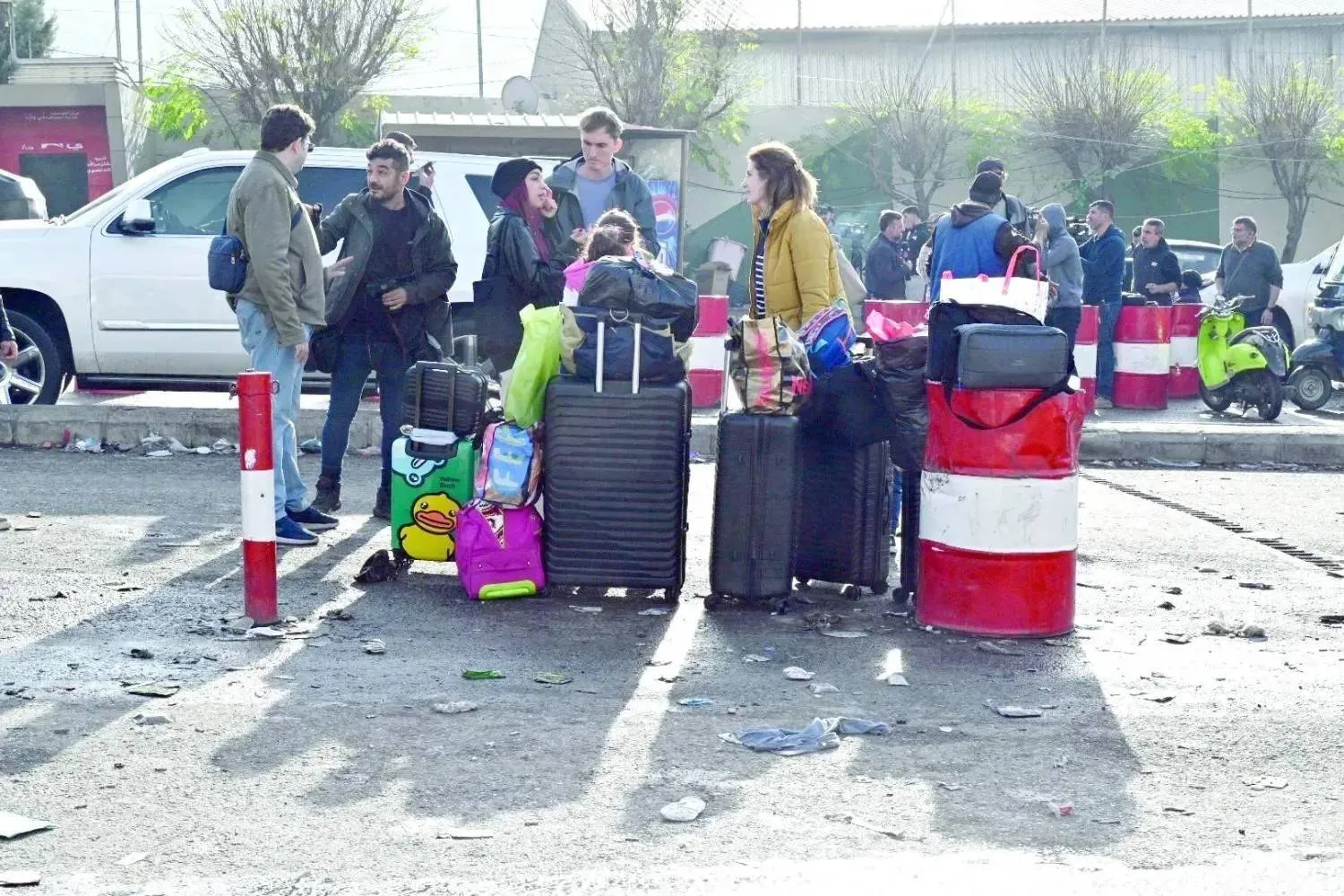
Syrian refugees in Lebanon return to their country through the Masnaa crossing after the fall of the Syrian regime in December 2024. (EPA)
TT

Did Israel’s War on Lebanon Drive Syrian Refugees Back Home?

Syrian refugees in Lebanon return to their country through the Masnaa crossing after the fall of the Syrian regime in December 2024. (EPA)

Israel’s war on Lebanon has accelerated the return of Syrian refugees, but officials and aid agencies say it has not by itself resolved, or fundamentally transformed, the displacement crisis.

Nearly one million Syrians remain in Lebanon despite Israel’s wars on Lebanon when Hezbollah opened a “support front” in solidarity with Hamas in 2023. Many refugees, meanwhile, still view remaining in Lebanon as preferable to returning to a country where homes and jobs may no longer exist.

Others have left. According to the UN refugee agency (UNHCR), more than 593,000 Syrian refugees have returned from Lebanon since January 2025, while Syrian authorities estimate around 260,000 crossed back between March 2 and April 20, 2026 as hostilities intensified.

Official figures show 95 Syrians were killed and 130 wounded in the latest round of fighting between March 2 and April 17.

For some, however, war has not changed the situation.

Faisal, a 41-year-old construction worker from Deir Ezzor living in Mount Lebanon for a decade, said returning to Syria remains too uncertain.

“Going back now means returning to the unknown,” he told Asharq Al-Awsat. “Here, despite the risks, I can still support my family.”

Lebanese Social Affairs Minister Haneen Sayed argued the rise in returns cannot be attributed mainly to war.

She told Asharq Al-Awsat that a government return plan adopted in June 2025 marked the real turning point, supported by administrative facilitations, financial incentives and coordination between Lebanese General Security and the UN refugee agency.

According to Sayed, 581,107 Syrians had returned before the latest conflict erupted in early March, while another 198,404 left during the war.

“That shows return was already under way before the fighting,” she stated, noting that many refugees could have moved to safer parts of Lebanon but instead chose Syria, suggesting the government’s strategy was gaining traction.

She said Syrian authorities had also contributed through policies intended to facilitate return and reintegration. Still, she stopped short of calling it a lasting solution.

“The displacement crisis is on its way to being resolved, but it has not reached a final settlement,” she underlined, noting Lebanon was preparing a review of the return plan later this year.

At the same time, she warned the war had created a new Lebanese internal displacement crisis, adding another humanitarian burden.

Lisa Abou Khaled, spokeswoman for the UNHCR in Lebanon, said decisions to return still depend less on war than on conditions inside Syria, including shelter, healthcare, education and livelihoods.

The current hostilities may have hastened returns for some, she told Asharq Al-Awsat, but often as a forced response rather than a voluntary shift.

“When refugees feel they have no alternative but to return, our role is to reduce risks and support them through the process,” she remarked.

UNHCR provides returnees with information, transport support and a $100 grant per person to help cover immediate needs.


EU Urges ‘Immediate, Unimpeded’ Flood Aid to Gaza

 Displaced Palestinians walk through a rain-soaked tent camp following heavy rainfall in Deir al-Balah, central Gaza Strip, Saturday, Nov. 7, 2026. (AP)
Displaced Palestinians walk through a rain-soaked tent camp following heavy rainfall in Deir al-Balah, central Gaza Strip, Saturday, Nov. 7, 2026. (AP)
TT

EU Urges ‘Immediate, Unimpeded’ Flood Aid to Gaza

 Displaced Palestinians walk through a rain-soaked tent camp following heavy rainfall in Deir al-Balah, central Gaza Strip, Saturday, Nov. 7, 2026. (AP)
Displaced Palestinians walk through a rain-soaked tent camp following heavy rainfall in Deir al-Balah, central Gaza Strip, Saturday, Nov. 7, 2026. (AP)

The European Union on Saturday demanded Israel grant urgent access for aid groups to Gaza to help the victims of devastating floods there.

"We urge Israel to allow immediate, unimpeded access and sustained distribution of humanitarian assistance and early recovery support at scale, and to reopen all Gaza border crossings," it said in a statement.


Israeli Drone Strike Kills 2 Palestinians in Gaza

 Palestinians walk through a tent camp housing displaced people amid buildings destroyed by Israeli strikes during the Israel-Hamas war in Gaza City, Sunday, Nov. 8, 2026. (AP)
Palestinians walk through a tent camp housing displaced people amid buildings destroyed by Israeli strikes during the Israel-Hamas war in Gaza City, Sunday, Nov. 8, 2026. (AP)
TT

Israeli Drone Strike Kills 2 Palestinians in Gaza

 Palestinians walk through a tent camp housing displaced people amid buildings destroyed by Israeli strikes during the Israel-Hamas war in Gaza City, Sunday, Nov. 8, 2026. (AP)
Palestinians walk through a tent camp housing displaced people amid buildings destroyed by Israeli strikes during the Israel-Hamas war in Gaza City, Sunday, Nov. 8, 2026. (AP)

An Israeli drone strike killed two Palestinians in the Gaza Strip on Saturday, hospital officials said.

The drone struck two Palestinians walking down a street in Jabaliya, on the northern edge of Gaza City, said Mohamed Abu Selmiya, director of Shifa Hospital in Gaza City, where the casualties were taken.

The American field hospital said several other people were wounded but did not provide a number.

Asked about the attack, the Israeli military said it had struck two Hamas fighters in the area.

Near-daily Israeli fire and airstrikes have continued in Gaza more than a year after Israel and Hamas reached a ceasefire deal.

At least 1,600 Palestinians have been killed since the ceasefire, according to Gaza’s Health Ministry. The ministry, part of the Hamas-run government, maintains detailed records and is seen as generally reliable by UN agencies and independent experts. It does not distinguish between civilians and combatants in its toll but says women and children make up around half the dead.


Thousands Mourn al-Alwani as Lebanese Probe Awaited

Relatives receive former MP Ahmed al-Alwani's coffin upon its arrival at Baghdad airport on Saturday. (X)
TT

Thousands Mourn al-Alwani as Lebanese Probe Awaited

Relatives receive former MP Ahmed al-Alwani's coffin upon its arrival at Baghdad airport on Saturday. (X)

Thousands of Iraqis on Saturday escorted the body of former MP Ahmed al-Alwani from Baghdad Airport to Ramadi in Anbar Governorate, where tribespeople and residents from across the province awaited his arrival amid scenes of grief and anger.

Meanwhile, the circumstances surrounding his killing in Beirut remain under investigation, even as Lebanese authorities have made progress in identifying two suspects.

A private jet carrying al-Alwani's body from the Lebanese capital landed at Baghdad Airport in the morning, with large crowds of mourners gathering at the airport.

Local media reported that Iraqi politician Khamis al-Khanjar, head of the Sovereignty Alliance, covered the cost of transporting the body aboard the private aircraft.

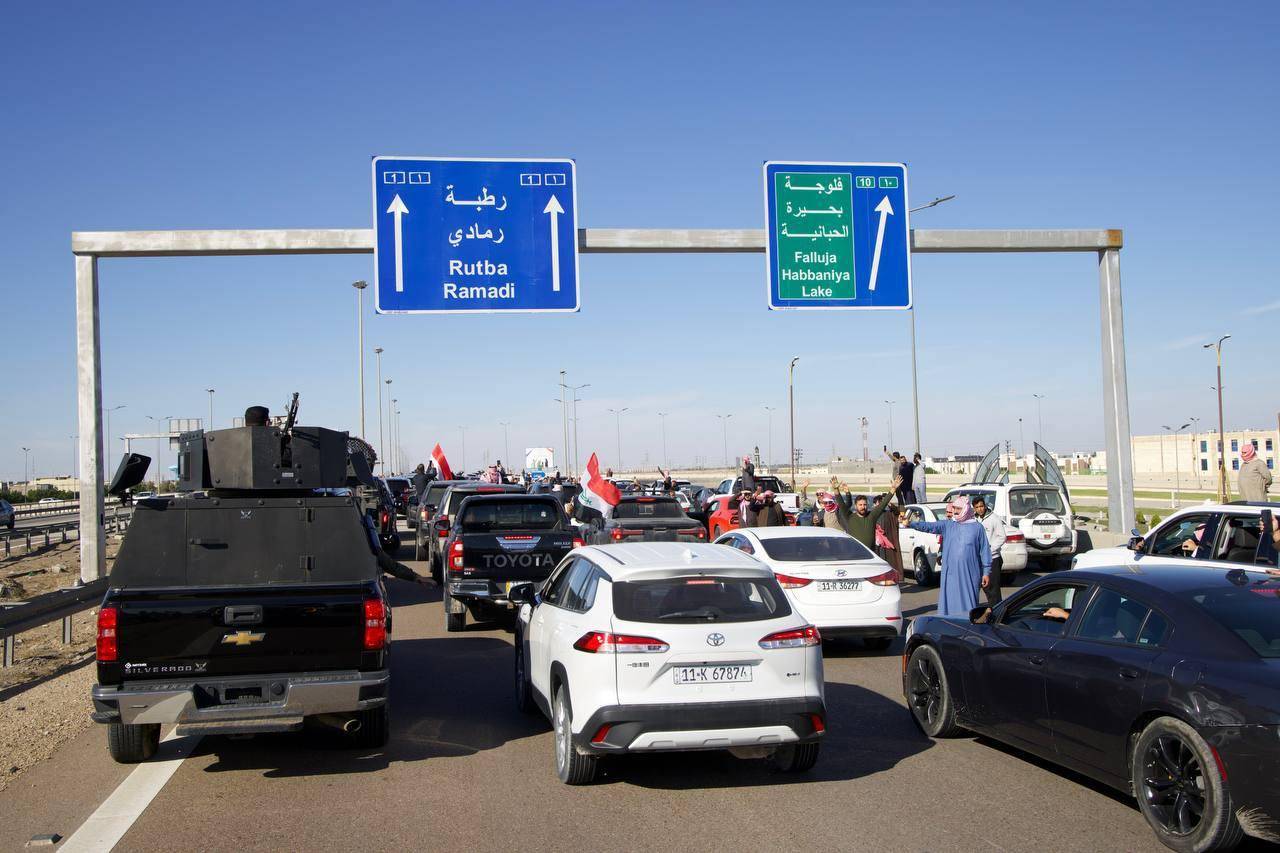
The funeral procession traveled toward Ramadi, located 110 kilometers from Baghdad, under heavy security and accompanied by military vehicles.

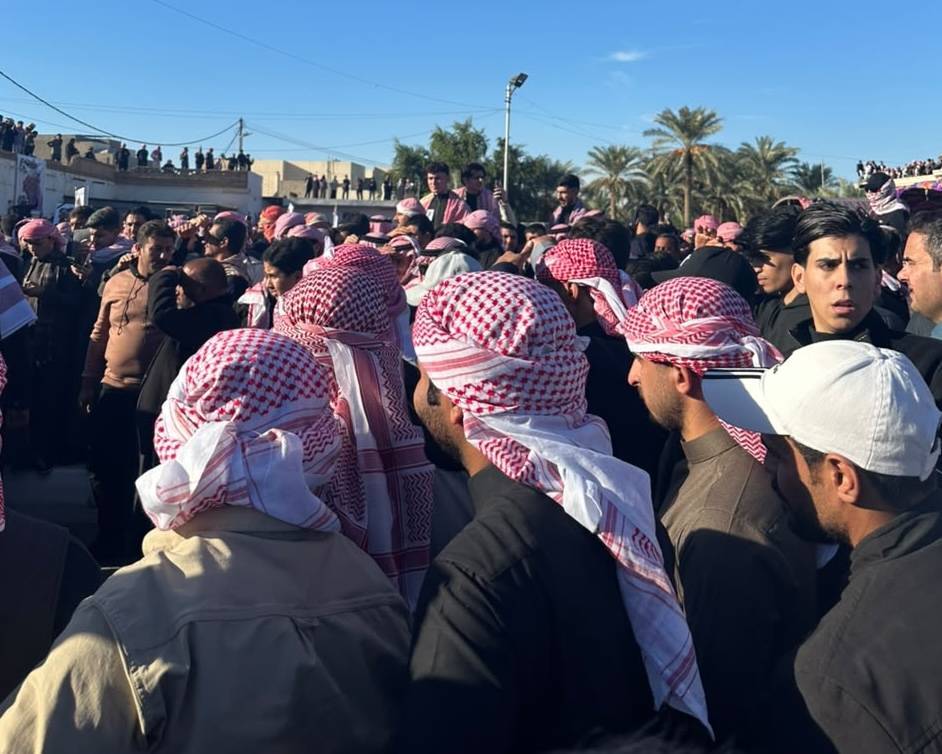
Mourners are seen at al-Alwani's funeral on Saturday. (Asharq Al-Awsat)

The Security Media Cell had urged the public to await the investigation's findings and refrain from reading broader motives into the case before it concludes, noting the ongoing coordination between the Iraqi Embassy in Beirut, Lebanese judicial and security authorities, and the Iraqi National Intelligence Service.

Al-Alwani's killing has sparked uproar across Iraq, particularly in his home province of Anbar. Discussion of the case has been accompanied by political debates and sectarian commentary on social media, amid demands to identify those responsible for his death.

Kamel al-Dulaimi, former head of the Iraqi Presidential Diwan, told Asharq Al-Awsat that the circumstances and motives behind the crime still require clear and transparent disclosure to the public, underscoring the Iraqi state's responsibility to uncover the truth.

The funeral procession traveled toward Ramadi, located 110 kilometers from Baghdad, under heavy security and accompanied by military vehicles. (Asharq Al-Awsat)

He added that the case requires security and judicial cooperation among Iraq, Lebanon, and Syria to track down the perpetrators and those behind them, particularly if the investigation calls for cross-border coordination.

He warned that the sectarian rhetoric surrounding the incident reflects a persistent tendency to view national issues through a narrow lens, emphasizing that the matter concerns the sanctity of Iraqi blood and must not be reduced to the affiliation of an individual or a governorate.

Legal researcher Saif al-Saadi, who hails from Anbar, said al-Alwani was not merely a former lawmaker, but a prominent tribal, social, and political figure in the province, adding that the funeral reflects the depth of grief and anger across Anbar's cities.

Al-Alwani, who rose to prominence during the late 2013 Anbar protests, was arrested in December of that year and sentenced to death in 2014 after being convicted of killing two soldiers during clashes accompanying his arrest.

He was released in April 2025 after spending more than 11 years in prison, following the withdrawal of a complaint by one of the victims' families and his inclusion under the General Amnesty Law.