
Lebanon Civil Defense Says Israeli Strike Kills Rescuer in South

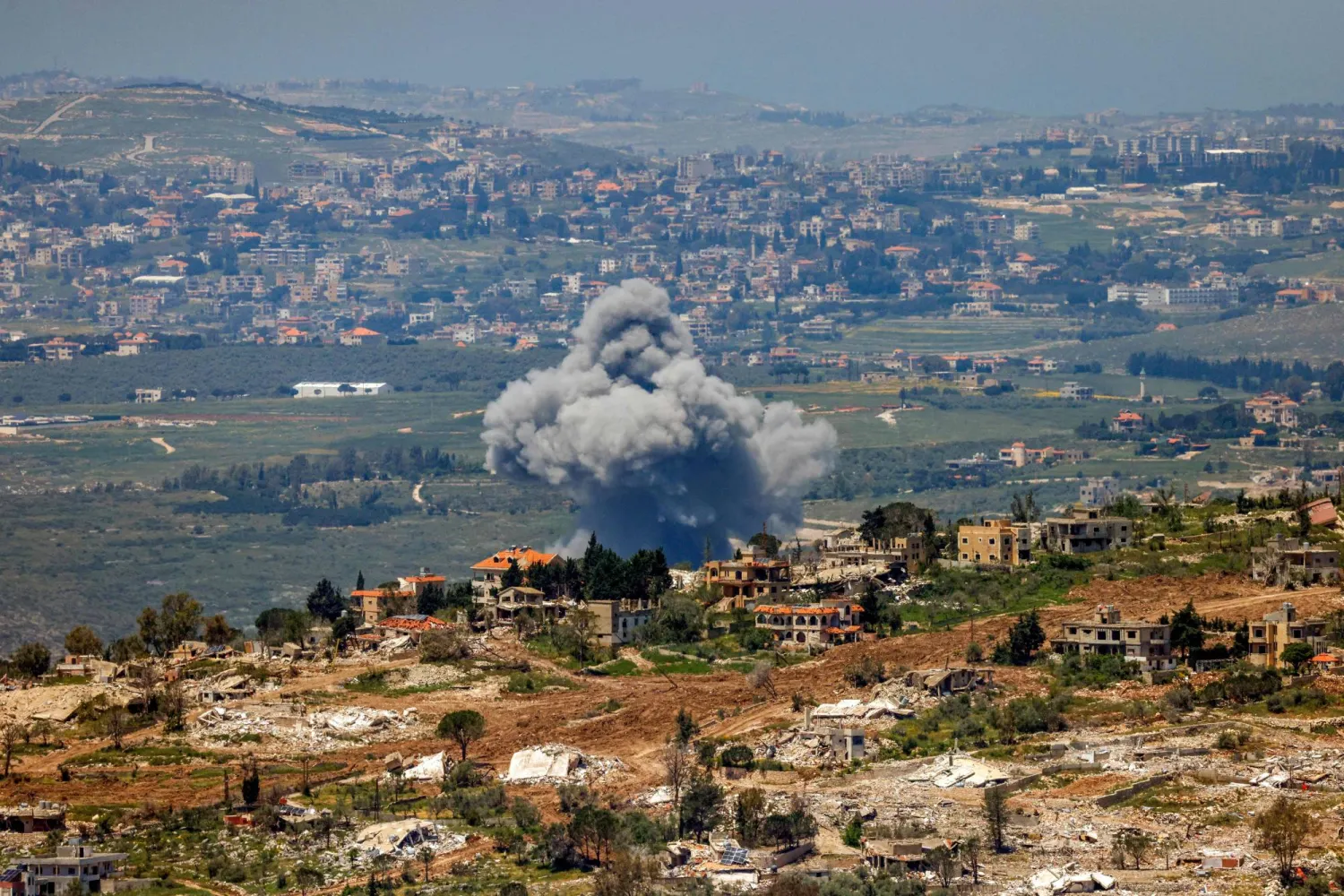
Smoke rises following Israeli bombardment in southern Lebanon as seen from a position across the border in the Upper Galilee in northern Israel on May 7, 2026. (Photo by Jalaa MAREY / AFP)
TT

Lebanon Civil Defense Says Israeli Strike Kills Rescuer in South

Smoke rises following Israeli bombardment in southern Lebanon as seen from a position across the border in the Upper Galilee in northern Israel on May 7, 2026. (Photo by Jalaa MAREY / AFP)

An Israeli strike on south Lebanon killed a member of Lebanon's civil defense, the rescue organization said Friday, a day after another strike killed a rescuer from the Hezbollah-affiliated Islamic Health Committee.

In a statement, the civil defense said their rescuer was killed "as a result of an Israeli strike that targeted him" on the road between two southern towns, despite the truce in effect.

World Health Organization chief Tedros Adhanom Ghebreyesus said on Wednesday it had "verified 152 attacks on healthcare that resulted in 103 deaths and 241 injuries" in Lebanon since the war began on March 2.


Who Are the Radwan Commanders Israel Has Killed in Lebanon?

Rescue workers search through the rubble of a building destroyed in an Israeli airstrike targeting Beirut’s southern suburbs, a day after the attack that took place on the evening of Wednesday, May 7, 2026 (AP). 
TT

Who Are the Radwan Commanders Israel Has Killed in Lebanon?

Rescue workers search through the rubble of a building destroyed in an Israeli airstrike targeting Beirut’s southern suburbs, a day after the attack that took place on the evening of Wednesday, May 7, 2026 (AP). 

Israel’s announcement that it had killed Ahmad Ghaleb Ballout in a strike targeting the Haret Hreik area of Beirut’s southern suburbs on Wednesday renewed focus on the series of assassinations targeting commanders of Hezbollah’s Radwan Force since the outbreak of the Gaza war.

The strikes seem to be a concentrated campaign aimed at weakening the leadership structure of the group’s elite unit.

Since the early months of the confrontation, the Radwan Force has become a primary target of Israeli strikes, both in south Lebanon and Beirut’s southern suburbs, as Israel pursued field and military commanders responsible for offensive operations and oversight of drone, assault and combined operations units.

Israeli army spokeswoman Ella Waweya said the military “carried out a strike on Wednesday and eliminated Ahmad Ghaleb Ballout, a commander in the Radwan Force, Hezbollah’s elite commando unit, in Beirut’s southern suburbs.”

According to the Israeli account, Ballout held several positions within the Radwan Force over the years, most notably operations commander, where he was responsible for the unit’s “combat readiness and mobilization against the Israeli army.”

Waweya said Ballout also played a role in “efforts to restore the capabilities of the Radwan Force,” particularly what Israel refers to as the “plan to occupy the Galilee,” long viewed by Israel’s military establishment as one of the main threats posed by Hezbollah’s elite unit.

Over recent months, details have gradually emerged about commanders who played central roles within the force before becoming direct targets in the ongoing assassination campaign.

Wissam al-Tawil: The first major target

Wissam Hassan al-Tawil was the first prominent Radwan commander whose killing was announced by Israel after the start of the confrontation linked to Hamas’ Oct. 7 attack on Israel. Born in 1970 in Tyre, he joined Hezbollah at a young age and rose through the group’s military ranks.

According to the Israeli announcement, Tawil “was known as one of the overseers of the external operations and military manufacturing portfolio” and was also a member of Hezbollah’s central Shura Council, making him one of the influential military figures within the organization.

On Jan. 8, 2024, an Israeli drone targeted the vehicle carrying him in the southern town of Khirbet Selm, in what marked the beginning of a new phase in the targeting of Radwan commanders.

Mohammad Nasser: Commander of the western sector

Mohammad Nasser emerged as one of the leading commanders of the Aziz Unit, part of the Radwan Force and responsible for the western sector of the southern front.

Born in 1965 in the southern town of Haddatha, he joined Hezbollah in 1986 and participated in operations against the Israeli army during the occupation period. His military role later expanded to include fighting alongside Syrian government forces between 2011 and 2016.

After the killing of commander Hassan Mohammad al-Hajj in Syria in 2015, Nasser took command of the Aziz Unit and oversaw operations involving drones, rockets and combined attacks during Hezbollah’s campaign of support for Hamas.

In July 2024, Israel announced it had killed him in a strike targeting his vehicle in Tyre.

Ibrahim Aqil and Ahmad Wahbi: Targeting the most experienced circle

While the assassination of field commanders placed operational pressure on the Radwan Force, targeting leaders involved in planning and training appeared even more sensitive for Hezbollah, as reflected in the killings of Ibrahim Aqil and Ahmad Wahbi.

Aqil, who served as commander of the Radwan Force and was among the founding figures of Hezbollah’s military wing, joined the group in the 1980s before becoming one of its leading military commanders.

His name was linked to sensitive security and military files. The United States accuses him of involvement in the 1983 bombing of the US Embassy in Beirut and the attack on the US Marine barracks the same year. Within Hezbollah, he was a member of the Jihad Council and played a major role in developing the Radwan Force’s military capabilities. He also helped oversee operations in Syria after Hezbollah became involved in the conflict there.

On Sept. 20, 2024, Israel killed him in an airstrike targeting a meeting of Radwan Force commanders that he was chairing in the Jamous area of Beirut’s southern suburbs. Several senior commanders in the unit were also killed in the strike.

Ahmad Wahbi: Architect of training and ambushes

Ahmad Wahbi was regarded as one of the key architects behind the training of Radwan Force fighters. He joined Hezbollah shortly after its founding and took part in operations against the Israeli occupation before being captured by Israel in 1984.

His name later emerged as one of those involved in the 1997 Ansariya ambush targeting Israel’s Shayetet 13 naval commando unit, before he assumed responsibilities related to central training within Hezbollah.

According to the Israeli military, Wahbi had overseen training for the Radwan Force since 2012 and played a pivotal role in developing its manpower and military capabilities. He also assumed additional responsibilities after the killing of Wissam al-Tawil.

In the same strike that killed Ibrahim Aqil in September 2024, Wahbi was killed alongside several Radwan commanders, in what was described as one of the heaviest blows suffered by the force since its establishment.


France Says Sending Envoy Back to Algeria to Ease Relations

File Photo: Algeria has suspended its 20-year-old treaty of friendship, good neighborliness and cooperation with Spain. (AFP)
TT

France Says Sending Envoy Back to Algeria to Ease Relations

File Photo: Algeria has suspended its 20-year-old treaty of friendship, good neighborliness and cooperation with Spain. (AFP)

Paris will return its ambassador to Algeria and send a senior envoy to ceremonies marking a colonial-era massacre in its former colony to improve frayed relations, the French presidency said on Friday.

Ties between France and Algeria have been fraught since 2024, when Paris officially backed Moroccan sovereignty over the disputed Western Sahara region, where Algeria supports the pro-independence Polisario Front, said AFP.

On Friday, French Deputy Minister of the Armed Forces Alice Rufo will attend ceremonies in Algeria to mark the 1945 violent put-down of pro-democracy protesters by French troops, the Elysee said in a statement.

She will be accompanied by Ambassador Stephane Romatet, who will resume his duties, more than a year after being recalled from his post, it said.

The move by French President Emmanuel Macron "reflects the President of the Republic's determination to address relations between France and Algeria with honesty, while respecting all the memories connected to them" and "to restore an effective dialogue", the Elysee said.


Lebanon, Israel to Hold First Direct Talks Next Week

President Joseph Aoun meets with Lebanese chief negotiator Ambassador Simon Karam (File photo: Lebanese Presidency)
TT

Lebanon, Israel to Hold First Direct Talks Next Week

President Joseph Aoun meets with Lebanese chief negotiator Ambassador Simon Karam (File photo: Lebanese Presidency)

Lebanon and Israel are set to hold their first round of direct talks in Washington next week aimed at establishing a framework for bilateral negotiations, based on five key demands put forward by Beirut, as Lebanon urges the United States to pressure Israel to uphold the ceasefire agreement.

Official Lebanese sources told Asharq Al-Awsat that Lebanon’s chief negotiator, Ambassador Simon Karam, will take part in the meeting scheduled for next week. Israeli Strategic Affairs Minister Ron Dermer, a close adviser to Prime Minister Benjamin Netanyahu, is also expected to attend.

A US State Department official said “representatives of Lebanon and Israel will meet at the US Department of State in Washington next Thursday and Friday.”

The meeting will mark the first direct bilateral negotiations between Lebanon and Israel. It follows two ambassador-level meetings in Washington under US sponsorship.

US Secretary of State Marco Rubio attended the first meeting, while the second was held in the Oval Office at the White House in the presence of President Donald Trump.

Lebanese official sources said the meeting would “lay the foundations for negotiations between Lebanon and Israel” and seek to establish a framework agreement. The talks will be held in Washington, while the venue for subsequent sessions has yet to be determined.

The five points insisted upon by Lebanon include consolidating the ceasefire, a full Israeli withdrawal from Lebanon and resolving border disputes, the release of prisoners, the return of displaced residents to their villages, and reconstruction of areas devastated by the war.

The sources said Beirut had asked Washington to pressure Israel to reduce military escalation in Lebanon in preparation for consolidating the ceasefire, which remains the main challenge facing the negotiations, amid an expansion of Israeli military operations and evacuation warnings extending to areas about 40 kilometers (25 miles) from the border.

Israeli strikes also intensified, reaching Beirut’s southern suburbs on Wednesday, where Israel said it had killed the commander of Hezbollah’s elite Radwan Force. Beirut and its southern suburbs had previously been considered exempt from bombardment and fighting following the latest ceasefire and US guarantees.

While Lebanon insists on implementing the ceasefire agreement, Israel is seeking to negotiate under military pressure and maintains what it describes as its “right to self-defense” and “freedom of action to thwart planned attacks.”

Since the ceasefire took effect, evacuation warnings have expanded to 61 towns and villages, prompting tens of thousands of southern residents to flee again, while fears of strikes on Beirut’s southern suburbs have discouraged residents from returning.

The Lebanese government, which met on Thursday at the Grand Serail, did not discuss negotiations with Israel. Information Minister Paul Morcos said the issue was being coordinated between President Joseph Aoun, Parliament Speaker Nabih Berri and Prime Minister Nawaf Salam.