Libya Launches ‘Large-Scale’ Crackdown on Crime in Major Oil City

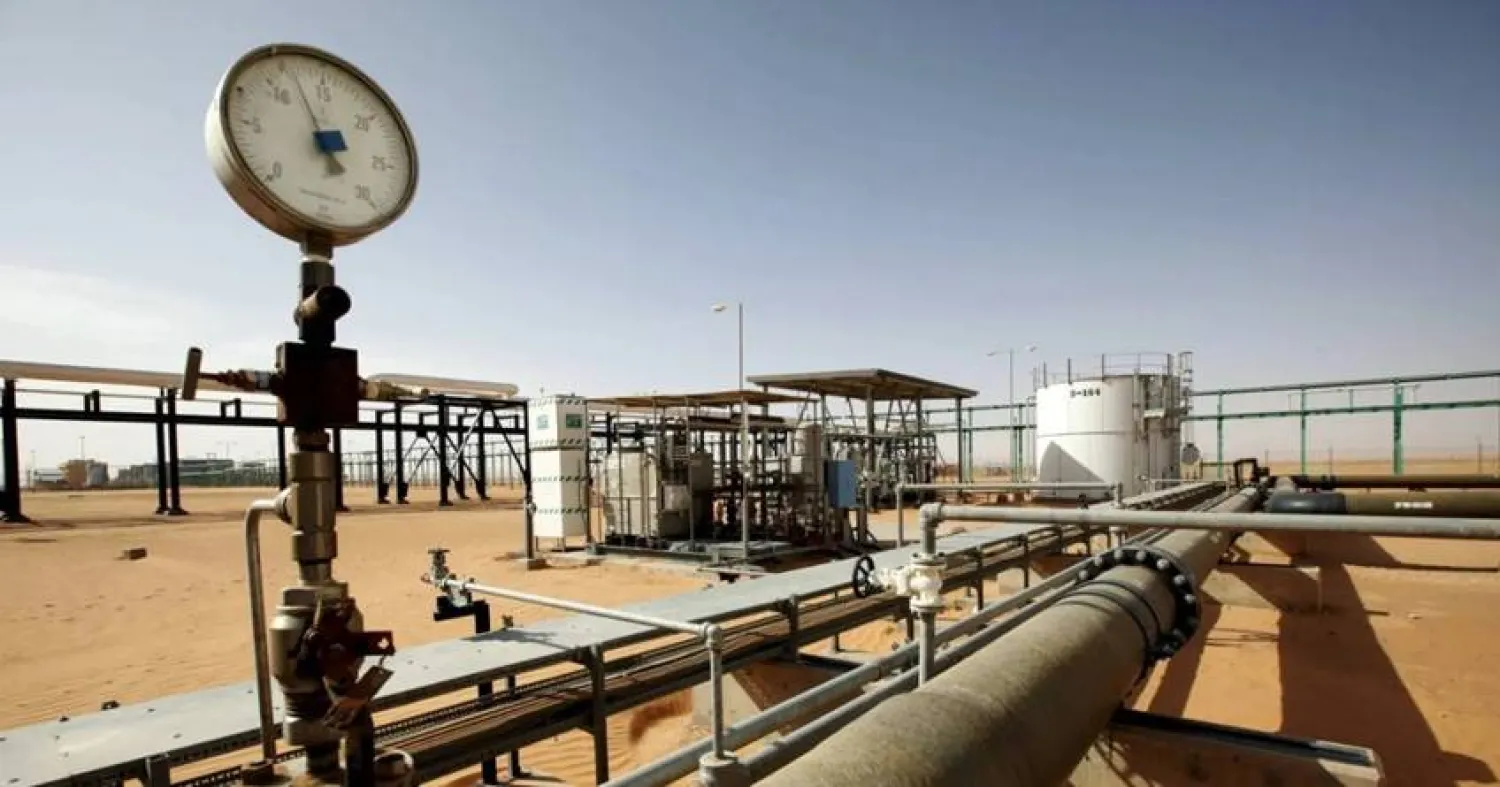
Reuters file photo of Libya's Sharara oilfield
TT

Libya Launches ‘Large-Scale’ Crackdown on Crime in Major Oil City

Reuters file photo of Libya's Sharara oilfield

Authorities in western Libya's city of Zawiya, which houses a major oil terminal and a large refinery, said on Friday they had launched a "large-scale operation" against criminal groups, as clashes and explosions were heard. 

Security forces and military units carried out raids and arrests from dawn across the city west of the capital, Tripoli, by just some 45 kilometers (28 miles), an official statement said. 

The operation went after "criminal hideouts and wanted individuals" who were "involved in serious acts", the authorities said, citing "murder and attempted murder, kidnapping and extortion, drug, arms and human trafficking, and illegal migration". 

Videos circulating on social media, which AFP could not independently verify, appeared to show armed clashes in residential neighborhoods and near the refinery complex -- one of Libya's most important -- on the western outskirts of the city. 

A Zawiya resident reached by AFP by phone said "the first clashes began in the early hours of Friday", adding that they heard "explosions across the city". 

Local emergency services urged residents to remain indoors while midday Friday prayers -- when large numbers of worshippers go to mosques -- were set to take place. 

The city of some 250,000 people has experienced repeated fights between armed groups. 

In addition to housing important oil infrastructure, Zawiya has been notorious for smuggling networks involved in fuel and other smuggling across the nearby Tunisian border. 

It is also a key departure point for irregular migrants seeking to reach Europe by crossing the Mediterranean. 


Houthi Escalation Threatens Yemen's Imports, Deepens Humanitarian Crisis

Shipping disruptions threaten the flow of imports into Yemen. (Local media)
TT

Houthi Escalation Threatens Yemen's Imports, Deepens Humanitarian Crisis

Shipping disruptions threaten the flow of imports into Yemen. (Local media)

Concerns are mounting over a worsening humanitarian crisis in Yemen as renewed military escalation by the Houthis coincides with the fallout from the resumption of the war involving Iran, which has begun to disrupt trade flows and commodity supplies to the country. At the same time, the United Nations has warned of expanding hunger and a declining ability of aid agencies to respond because of severe funding shortages.

Government and commercial sources told Asharq Al-Awsat that importers are facing growing difficulties in delivering shipments to Yemen as disruptions to regional maritime traffic persist.

The sources said hundreds of containers have remained stranded at regional ports for months due to disruptions affecting shipping routes linked to the Strait of Hormuz, while concerns are growing over delays to new shipments and further increases in freight costs.

The situation is directly affecting commodity prices in a country that relies on imports for about 90 percent of its food needs, at a time when Yemenis are already grappling with declining purchasing power, currency depreciation, and rising poverty.

According to the sources, prices of several essential goods rose by more than 20 percent during the first round of the war. Price increases were even steeper in Houthi-controlled areas after the group imposed customs duties exceeding 100 percent on wheat and flour shipments entering through government-controlled ports. The measures drove up flour prices, despite flour being the main staple for most Yemenis, particularly in the country's mountainous governorates.

UN Warnings

These developments come as the United Nations says Yemen continues to face one of the world's worst humanitarian crises amid the ongoing conflict, worsening economic conditions, and expanding food insecurity.

According to a recent UN report, the continuation of the conflict, declining funding, deteriorating infrastructure, and rising import costs are pushing millions of Yemenis toward deeper poverty and hunger unless additional resources are secured to sustain humanitarian operations.

The report said 18.3 million people are experiencing acute food insecurity, with more districts expected to slip into the emergency phase of food insecurity and some areas facing catastrophic levels of hunger.

It also estimated that 22.3 million people, more than two-thirds of Yemen's population—will require humanitarian assistance and protection services this year, including 5.2 million internally displaced people, as well as migrants, refugees, and asylum seekers.

Funding Shortfall

The United Nations warned that Yemen's humanitarian response is facing an unprecedented funding crisis. As of the end of May, only 12.7 percent of the $2.16 billion required under the 2026 Humanitarian Response Plan had been secured, forcing aid agencies to scale back operations and focus assistance on those with the most urgent needs.

The report said children and women remain the hardest-hit groups. It projected that 2.2 million children under the age of five will suffer from acute malnutrition, including more than 500,000 with severe acute malnutrition. Another 1.3 million pregnant and breastfeeding women are also expected to face malnutrition.

The UN report added that around 40 percent of Yemen's health facilities are either completely or partially out of service. It warned that continued outbreaks of cholera, measles, and diphtheria, coupled with deteriorating water and sanitation services, are increasing the risk of large-scale public health emergencies. Meanwhile, 14.4 million people require water, sanitation, and hygiene (WASH) services.


Israeli Families Move into New West Bank Settlement Near Nablus

06 May 2026, Palestinian Territories, Sa-Nur: An aerial view shows rebuilt structures at the Sa-Nur settlement south of Jenin in the Israeli-occupied West Bank. Photo: Gil Cohen-Magen/dpa
TT

Israeli Families Move into New West Bank Settlement Near Nablus

06 May 2026, Palestinian Territories, Sa-Nur: An aerial view shows rebuilt structures at the Sa-Nur settlement south of Jenin in the Israeli-occupied West Bank. Photo: Gil Cohen-Magen/dpa

Israeli families moved into a new settlement on a mountain towering over the city of Nablus in the occupied West Bank on Thursday, the settler regional council for the area said.

"This morning, families from the Ebal founding group are transferring their equipment and moving into caravans in the new Ebal settlement, established in Samaria," the Samaria Regional Council said, using the Biblical name for the north of the West Bank.

Excluding east Jerusalem, more than 500,000 Israelis live in settlements in the West Bank, which Israel has occupied since 1967, among some three million Palestinians.

All Israeli settlements are illegal under international law.

In a video shared by the council, a dozen Israeli settlers were seen carrying moving boxes and furniture into mobile-homes typical of new settlements.

A newly paved road lined with Israeli flags on the mountain was lined with around 10 mobile homes.

Mount Ebal is one of the highest peaks in the West Bank. In the valley below, residents of Nablus' Old City told AFP they could see the settlement's homes.

"Palestinian citizens used to go to Mount Ebal to stroll and breathe fresh air, but today they have cut off our air by encircling Nablus from all sides with settlements and attacks," said Ghassan Daghlas, governor of the Nablus region.

He said that a military camp and parts of a settlement on the other mountain near Nablus, Mount Gerizim, had already made Palestinian residents feel encircled.

Samaria Regional Council head Yossi Dagan said that 600 families were expected to live at Ebal settlement in the future.

"We are establishing here a thriving settlement that will illuminate the entire region, and this is a huge step on the way toward expanding our presence throughout the northern Samaria area," Dagan said at the site.

Since taking office, Prime Minister Benjamin Netanyahu's government, one of the most right-wing in the country's history, has approved the establishment of 102 settlements in the West Bank, according to Israeli anti-settlement watchdog Peace Now.


Israel's Latest Strikes Kill a Dozen People in Gaza, Including Police Officers

Palestinians mourn victims killed in an Israeli strike on a residential building in central Gaza on Wednesday. (AP)
TT

Israel's Latest Strikes Kill a Dozen People in Gaza, Including Police Officers

Palestinians mourn victims killed in an Israeli strike on a residential building in central Gaza on Wednesday. (AP)

Israeli airstrikes have killed at least a dozen people in Gaza over the past two days, local health officials said Wednesday, as strikes continue almost daily despite a months-old ceasefire with Hamas.

On Wednesday, three members of a family were killed in central Gaza, Al Aqsa Hospital officials said.

On Tuesday, woman and six police officers were among those killed in an airstrike on a police station in the densely populated Jabaliya refugee camp in northern Gaza, hospital officials said. A man died in the bombing of a tent camp in Khan Younis in the south, Nasser Hospital officials said. And Israeli forces shot and killed a child in the Muwasi area outside the southernmost city of Rafah, according to hospital officials.

The Israeli military did not immediately comment on the strikes in central and southern Gaza. In a statement on the attack in Jabaliya, it claimed that four of the slain police officers were Hamas militants, without providing evidence on how those killed were involved in planning or carrying out attacks.

One of the officers, Col. Mohamad Marwan Salem, was a senior police commander and head of the Jabaliya police station, the Hamas-run Interior Ministry said.

Hamas, which ruled Gaza for years, maintains an armed wing as well as civilian police and security services that are overseen by its Interior Ministry. Throughout the war, Israel has targeted local police, including those guarding humanitarian aid convoys.

Israel's military has claimed it considers police stations legitimate targets if they're “being used to advance military activities, or if those present are military operatives involved in advancing terrorist activities.”

It did not say what military activities it believed were taking place at the Jabaliya police station, nor did it provide evidence that attacks were being planned. Hamas says the police force is engaged in maintaining law and order.

Israeli attacks on Gaza’s police have been condemned by the United Nations human rights office, which said last month that police personnel had been attacked at least a dozen times in 2026, including “during ordinary law enforcement operations, including directing traffic and patrolling streets and markets.”

“The pattern of attacks raises concerns that Israeli forces apply no distinction between police personnel and fighters belonging to armed groups in Gaza,” it said in a June 3 statement.

Ofer Guterman, a researcher at Israel’s Institute for National Security Studies, said Israel’s targeting suggests that it regards parts of Hamas' policing apparatus as closely integrated with its military infrastructure, including through dual-role personnel and the use of facilities for weapons storage, operations and logistics.

The fragile ceasefire deal in October attempted to halt a two-year-long war between Israel and Hamas.

The heaviest fighting has subsided but at least 1,123 people have been killed in Gaza since the ceasefire took effect, according to the territory’s Health Ministry. The ministry, which has been part of the Hamas-led government, maintains detailed casualty records that are seen as generally reliable by UN agencies and independent experts. It does not give a breakdown of civilians and militants but says women and children make up most of the dead.

Militants have carried out shooting attacks on troops, and Israel says its strikes are in response to that and other violations. Five Israeli soldiers have been killed since the ceasefire.

The war began after the Hamas-led attack on southern Israel on Oct. 7, 2023, killed around 1,200 people and saw 251 taken hostage. Israel’s retaliatory offensive in Gaza has killed more than 73,264 Palestinians, including those killed since the ceasefire, Gaza’s Health Ministry said.