
The ceasefire in southern Lebanon has not really ended the fighting between Israel and Hezbollah. Israel has continued its raids on southern villages and the Iran-backed party continues to launch attacks against Israeli forces.
The ceasefire has effectively turned into open combat that is gradually expanding from border areas towards Lebanon’s interior as Israel widens the scope of its attacks and warnings to include regions north of the Litani River. The latest warnings covered Mashghara and Qlaia in the western Bekaa.
It appears that Israel is shifting the battle from “containing the southern front” to reshaping maps across the south and western Bekaa.
Israeli media, meanwhile, reported that the military was planning “a wide ground operation in Lebanon to address Hezbollah’s ongoing violations of the ceasefire.”
A local source told Asharq Al-Awsat that Israel is effectively fully occupying 35 Lebanese towns and villages, seven others are until total siege and 82 have received evacuation warnings since the ceasefire took effect.
Retired general Naji Malaeb told Asharq Al-Awsat that the developments on the ground in Lebanon “cannot be separated from the geopolitical conflict, meaning geography is being used to serve Israel’s political and military goals.”
Israeli Prime Minister Benjamin Netanyahu wants to extend the yellow line from the Naqoura to Jabal al-Sheikh, increasing Israeli military pressure beyond the areas covered by United Nations resolution 1701 that only covers regions south of the Litani, he added.
The repeated attacks on the western Bekaa and the destruction of bridges along the Litani aim to empty these regions of inhabitants and control how the displaced return to them later, he explained.
Attacks on the towns of Mashgara, Zlaya and Sohmor are also attempts to apply direct pressure on Hezbollah’s support base, he went on to say.
“Israel views the western Bekaa as a source of logistic and human support for Hezbollah,” Malaeb said, noting that the region has long served as a transit point for weapons smuggled from Syria to the Bekaa and then the south.
“So, Tel Aviv wants to sever the link between the Bekaa and south,” he explained.
On the military escalation, he highlighted Israeli Chief of Staff Eyal Zamir’s recent remarks that Israel was not in a truce with Lebanon. “This reflects an Israeli conviction that the confrontation will remain open as long as Hezbollah retains its weapons,” said Malaeb.
“It is unfortunate that the party has not respected the Lebanese state’s decision to cease attacks, because its continued drone or rocket attacks weaken Lebanon’s diplomatic position,” he added.
“Iran is trying to tie the situation in Lebanon to the broader confrontation in the region by demanding that a ceasefire cover all fronts,” he continued. If it is successful, “then Iran would have restored its control over the south and Hezbollah’s role on the border with Israel, destroying Lebanese efforts to separate the Lebanese file from the Iranian negotiations.”
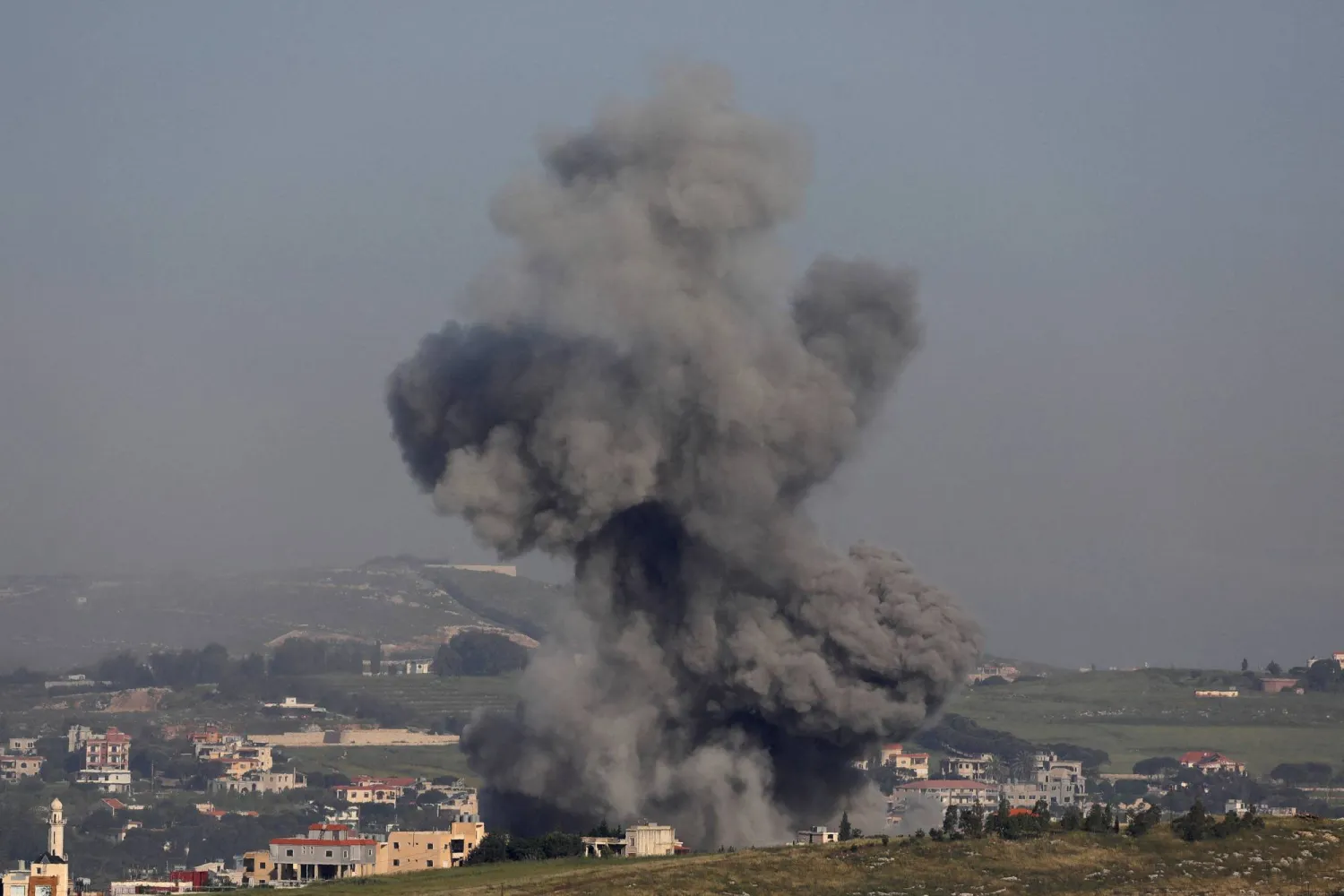
Israeli strikes on a town in southern Lebanon killed six people and wounded seven others, state media said Tuesday, as fighting continued despite a ceasefire agreement.
Lebanon's state-run National News Agency (NNA) reported that Israeli strikes Monday night hit a house in Kfar Dounine, a town about 95 kilometers (59 miles) from capital Beirut.
Israel has intensified its attacks in south Lebanon as it trades fire with Hezbollah despite an April 17 ceasefire between Lebanon and Israel that aimed to halt the fighting.
More than 2,800 people have been killed in Lebanon since the country was dragged into the Middle East war on March 2, according to health authorities.