
Field data gathered since the Lebanon-Israel ceasefire took effect on April 17 shows the truce has brought little calm on the ground. Southern areas have remained under strikes, evacuation warnings and continued destruction, reinforcing the view that the military operations have shifted from broad confrontation to sustained military and security pressure.
Asharq Al-Awsat documented around 41 villages and border points that Israel still controls, occupies or maintains positions in or around since the latest war and the ensuing field arrangements. More than 100 evacuation warnings were issued during the period, including 104 alerts targeting villages and towns across the South, Nabatieh and Bekaa governorates.
The warnings extended beyond southern border areas into the western Bekaa, including Sohmor, Yohmor, Mashghara, Zellaya and Eliya, reflecting the widening geographic scope of military pressure.
Researcher and writer Mohammad Shamseddine said field data recorded between April 17 and May 13 pointed to a continuing heavy toll in southern Lebanon despite the declared truce.
Shamseddine told Asharq Al-Awsat that 970 homes were completely destroyed during the period, while 545 sustained severe damage and around 3,400 suffered minor damage.
The figures underscore not only the scale of material losses, but also the continuing impact of the war despite the ceasefire, with direct consequences on residents, returns and reconstruction efforts.
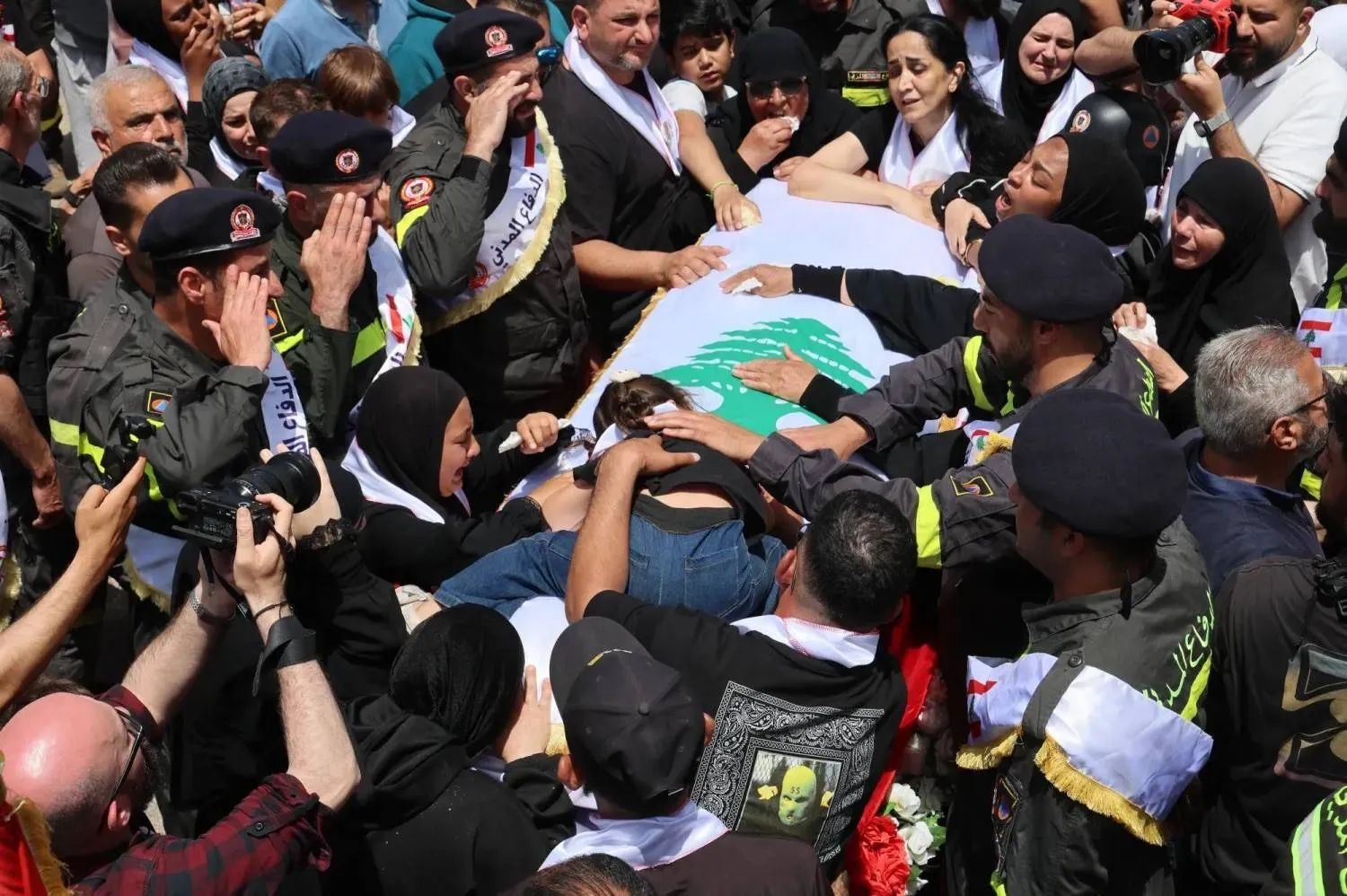
The human toll has also continued to rise. According to Lebanon’s Ministry of Public Health operations room, 694 people were killed and 1,666 wounded between midnight on April 16 and May 17.
Fears of a New Security Belt
Retired Brig. Gen. Naji Malaeb said recent Israeli movements point to an attempt to establish new security realities inside Lebanese territory rather than carry out limited military operations.
“Recent developments in southern Lebanon suggest Israel is pursuing an approach that goes beyond localized operations toward imposing a new security reality through control of hills and strategic high ground inside Lebanese territory,” Malaeb told Asharq Al-Awsat.
He stressed that developments following the truce, particularly in recent days in areas stretching between Deir Siryan, Deir Aames and villages opposite the Shaqif area, showed a clear focus on strategically important terrain.
“There appears to be an effort to recreate the model Israel adopted in late November 2024, when it advanced toward several hills and highlands and established positions and defensive lines inside Lebanese territory,” he remarked.
Malaeb warned of Israeli attempts to shift the defensive line to new locations along a chain of hills and natural elevations, potentially creating a security belt or buffer zone that would provide strategic military advantages.
He said a key issue after the ceasefire announcement was the differing interpretations of the agreement itself. A statement issued by the US State Department after meetings with envoys, he noted, treated Israel’s actions as self-defense rather than direct hostile acts.
“Israel relies on this interpretation in its approach on the ground, presenting its operations as preemptive measures to prevent future threats rather than conventional offensive operations,” he said. “This is highly sensitive because it leaves the door open to continued military operations under different labels.”