


Iraq’s ‘Heist of the Century’ Returns to Spotlight with $5 Billion Figure

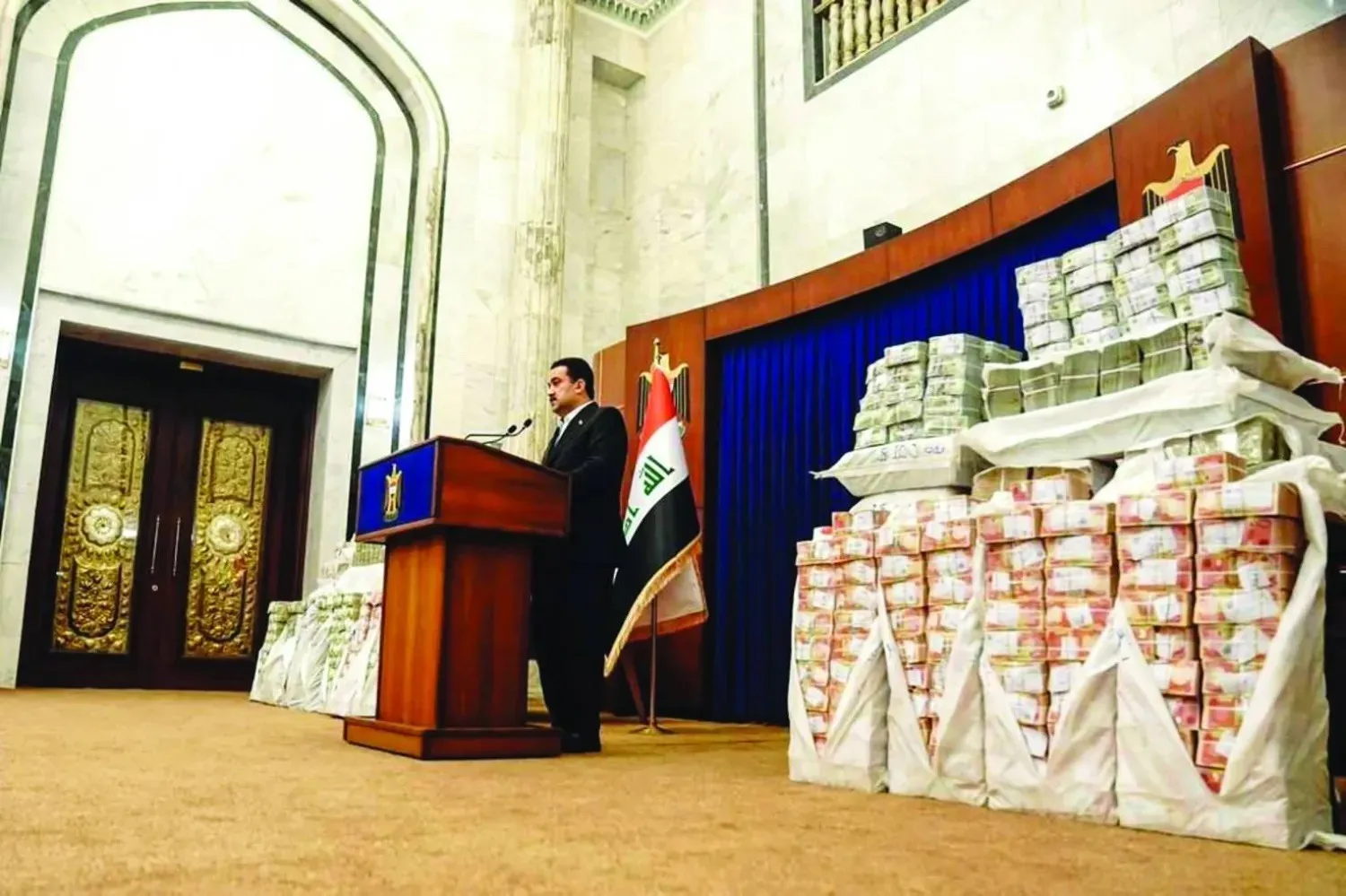
Former Iraqi Prime Minister Mohammed Shia al-Sudani announces the recovery of funds linked to the “Heist of the Century” scandal. (AFP)
TT

Iraq’s ‘Heist of the Century’ Returns to Spotlight with $5 Billion Figure

Former Iraqi Prime Minister Mohammed Shia al-Sudani announces the recovery of funds linked to the “Heist of the Century” scandal. (AFP)

Iraq’s massive tax embezzlement scandal - widely known as the “Heist of the Century” - has resurfaced with a dramatically higher estimated value of 8 trillion Iraqi dinars (about $5 billion), nearly double the amount originally announced when the scandal first erupted in October 2022.

The new figure was disclosed Tuesday by Talib al-Baidhani, a member of parliament’s Integrity Committee, who also revealed that about 30 additional individuals are now suspected of involvement in the case.

The latest development comes just days after parliament approved a new government led by Prime Minister Ali al-Zaidi, a businessman with no political background who has pledged to strengthen the economy and fight corruption - promises repeated by successive Iraqi governments since 2003.

The scandal dates back roughly four years and centers on the theft of tax deposit funds through five shell companies allegedly working with officials from the General Commission for Taxes and Rafidain Bank, as well as senior state officials, lawmakers, contractors, and brokers.

Speaking to Iraq’s state newspaper, al-Baidhani said parliament’s Integrity Committee is determined to recover Iraqi stolen funds and continue pursuing the case in coordination with the Federal Integrity Commission.

The scandal first became public on October 18, 2022, when former Prime Minister Mustafa al-Kadhimi confirmed an investigation into the theft of tax trust funds and accused some parties of exploiting the case to shield corrupt figures.

Two months later, former Prime Minister Mohammed Shia al-Sudani announced the recovery of more than 300 billion dinars, an amount critics described as negligible compared with the scale of the theft. Sudani promised the rest would be recovered, but his government later failed to do so.

Al-Baidhani, who belongs to the Asaib Ahl al-Haq movement, said some funds have already been recovered, while large sums remain outside Iraq and require coordinated efforts between parliament and al-Zaidi’s government to retrieve them.
He described the recovery effort as “the real beginning” of holding all those involved accountable for stolen public funds and suspicious deals.

Al-Baidhani added that the scandal was initially estimated at around 2.5 trillion dinars, but subsequent investigations by the Federal Integrity Commission uncovered much larger embezzlement operations, pushing the total to nearly 8 trillion dinars. He did not explain when or how those investigations were conducted.

In late October 2022, Iraqi authorities arrested the case’s main suspect, Nour Zuhair, chairman of one of the companies implicated in the scheme. He was later released on bail after Sudani announced the recovery of 5 percent of the stolen funds in exchange for Zuhair’s pledge to return the remaining money within days.

Shortly after his release, however, Zuhair fled Iraq and has remained missing ever since.

For years, Iraqi courts have continued issuing prison sentences against individuals linked to the tax theft, but without recovering the missing funds or apprehending the key suspects. The failure has fueled public criticism and accusations that the case is being used for political blackmail while influential political actors implicated “behind the scenes” remain protected.

Separately, al-Baidhani urged Iraq’s Foreign Ministry to recover properties tied to Saddam Hussein’s former regime through coordination with countries that have treaties with Iraq.

After Saddam Hussein’s fall in 2003, several Western governments froze Iraqi assets linked to the former regime and Hussein’s family under UN Security Council Resolution 1483, including bank accounts, real estate, and investments in countries such as France and Switzerland.


Yemen Dismantles Houthi Network That Plotted to Destabilize Security, Target Security and Military Leaders

Yemeni Interior Minister and Aden Governor during the press conference (Yemeni Interior Ministry)
TT

Yemen Dismantles Houthi Network That Plotted to Destabilize Security, Target Security and Military Leaders

Yemeni Interior Minister and Aden Governor during the press conference (Yemeni Interior Ministry)

Yemen's Interior Ministry arrested members of and dismantled Houthi-affiliated terrorist cells in the temporary capital Aden and the governorates of Lahj and Abyan in September. The ministry said the cells had been planning to target security and military leaders and vital facilities, as well as military reinforcements and supply lines heading to the battlefronts.

Yemeni Interior Minister Staff Maj. Gen. Ibrahim Haidan said at a press conference in Aden on Monday that the most prominent of these cells was an 18-member network apprehended in Lahj governorate on September 26. He said the network operated under the supervision of Houthi leaders and that its members had received specialized training in several areas under the group's control, including Saada, Dhamar and Al-Hawban in Taiz governorate.

Haidan said investigations revealed that the network's members had been trained to plant explosive devices, use booby traps and carry out attacks against security and military figures and sites. He added that the network was divided into two groups, one responsible for surveillance, monitoring and intelligence gathering, and the other for carrying out bombings and attacks.

The minister confirmed that security and intelligence agencies had thwarted the plots before they could be carried out. He said the cells had sought to undermine security and stability in the liberated governorates, disrupt conditions on the battlefronts and create conditions that would enable the Houthis to seize control of cities.

"The security agencies are waging a continuous battle that has not stopped for a single moment against the terrorist plots of the Iran-backed Houthi militia in order to strengthen security and stability," he said.

He stressed that the successes achieved by all security units in securing the home front constitute a fundamental pillar and a genuine starting point toward completing the battle for liberation and achieving the long-awaited victory that the Yemeni people have eagerly anticipated for more than a decade.

Haidan added: "We are fighting our battle against the Houthi militia, which has made terrorism part of its ideological doctrine and abandoned the teachings of our true Islamic faith. Its terrorism has gone beyond targeting communities in the liberated governorates to targeting Islamic holy sites, Makkah and Madinah, the holiest places for Muslims, which hold a special place in the hearts of more than a billion Muslims around the world and are deeply connected to their faith and religious identity."

He said the Houthi militia had abandoned all customs, traditions and deeply rooted societal values, resorting to what he described as despicable methods, including recruiting children, women, African migrants and the elderly to pursue its terrorist and extremist objectives of undermining security and stability and disturbing public peace and tranquility in the liberated governorates.

Haidan stressed that despite what he described as unlimited support provided by the terrorist Houthi militia to these cells, along with direct supervision of their training by experts from Iran's Islamic Revolutionary Guard Corps (IRGC) and Hezbollah, the preparedness, vigilance and courage of Interior Ministry personnel, working alongside their intelligence counterparts, had helped dismantle the cells one after another and deal them severe blows in recent months.

He said these operations had thwarted the militia's reliance on the cells to spread chaos, undermine security and stability, disrupt conditions on the battlefronts in the liberated governorates, particularly Aden, Lahj and Abyan, and create conditions for the Houthis to seize control of cities.

In Aden, security forces in the Dar Saad district arrested a member of the cell who, according to the ministry, was found in possession of explosive devices and materials linked to a plot to target security and military leaders and vital facilities. Investigations also uncovered other targets the cell had intended to attack within the city.

The ministry also announced the arrest of an all-female cell in Lahj on September 22, saying its members had been tasked with surveillance, tracking, recruitment and sabotage activities.

In addition, security forces apprehended a two-member cell in the Lawdar district of Abyan governorate earlier that month on suspicion of planning attacks against security and military forces and citizens.

Haidan praised Saudi Arabia's support for Yemen, particularly in the security sector, highlighting its role in strengthening the capabilities of security agencies and contributing to successes in combating terrorist cells.

For his part, Minister of State and Aden Governor Abdulrahman Sheikh said local authorities had taken security and precautionary measures to address the consequences of a wave of displacement caused by Houthi escalation in the governorates of Hodeidah and Taiz.

He explained that the governorate had set up 800 tents equipped with the necessary services and facilities, accommodating around 7,000 displaced people over half a month.

Meanwhile, Lahj Governor Murad Al-Halimi said coordination between security agencies in the governorates and the Interior Ministry had contributed to apprehending the cells and thwarting the terrorist and sabotage operations they had planned.

He called on everyone to recognize their responsibilities and work diligently to safeguard security in the liberated governorates and prevent them from falling victim to Houthi militia plots.

The Interior Ministry confirmed that the suspects would be referred to the relevant judicial authorities once investigations and evidence collection were completed, ahead of their trials.


Lebanese Judiciary Widens Probe into Hezbollah Explosives Shipment

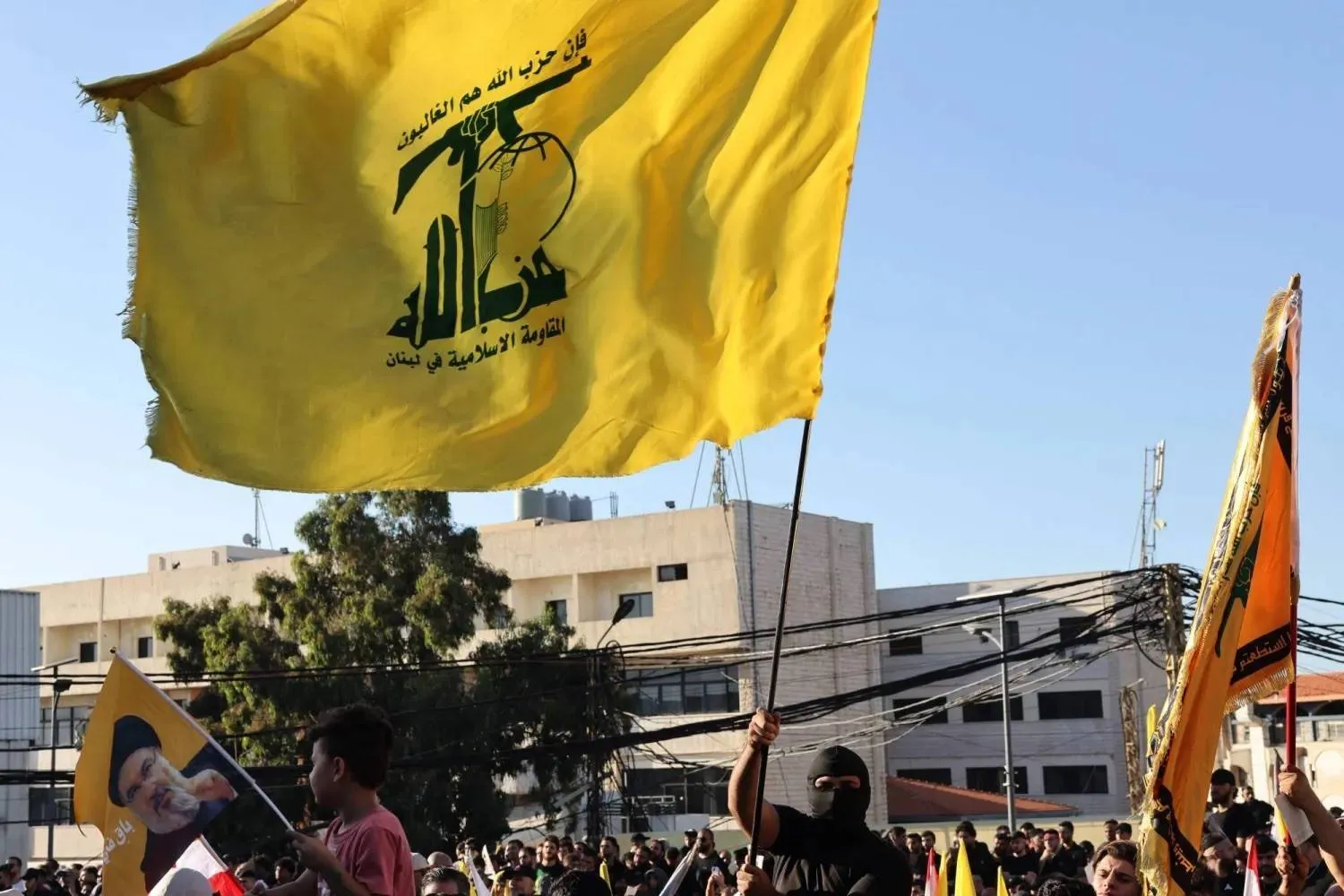
Hezbollah supporters wave the group’s flags in Beirut’s southern suburbs (AFP).
TT

Lebanese Judiciary Widens Probe into Hezbollah Explosives Shipment

Hezbollah supporters wave the group’s flags in Beirut’s southern suburbs (AFP).

Lebanese judicial authorities have expanded their investigation into a shipment of explosives seized in Dahr al-Baydar, on the Bekaa-Beirut highway, seeking to establish its origin, intended recipients and purpose amid renewed fears of political assassinations.

The investigation is being overseen by Prosecutor General Ahmad Rami al-Hajj and Military Court Government Commissioner Judge Claude Ghanem.

Ghanem returned the preliminary investigation files of two detainees, identified as Ali K. and Haitham A., to military police investigators, requesting further questioning about the explosives and their intended destination.

He also ordered security agencies to identify two individuals known as Sajed and Zulfiqar, described by the detainees as Hezbollah officials.

A senior judicial source told Asharq Al-Awsat that preliminary confessions indicated Sajed had handed over the shipment in the Bekaa Valley, while Zulfiqar was awaiting its delivery in Beirut’s southern suburbs.

The source, speaking on condition of anonymity, identified Ali K. as the son of a Resistance Brigades official in central Bekaa. Both detainees admitted belonging to Hezbollah, the source added.

Investigators were instructed to identify other suspects, amid suspicions that a larger group trained in handling explosives was involved.

“The quantity and dangerous nature of the shipment suggest the operation involved more than those responsible for handing over, receiving and transporting it,” the source explained.

Fears of Renewed Assassinations

Identifying the two alleged Hezbollah officials could help determine whether the seized explosives were part of a broader weapons trafficking operation.

According to the judicial source, the shipment is believed to have contained more than 500 kilograms of explosives, packed in cardboard boxes alongside small metal balls and nails designed to penetrate vehicle bodywork when propelled by an explosion.

The discovery has revived fears of a return to the wave of assassinations Lebanon experienced between 2005 and 2012, the source warned.

However, the official cautioned that establishing the existence of a security plot would require evidence beyond the seizure itself.

Calls to Disband Hezbollah’s Military Structure

The case has prompted political demands for the dismantling of Hezbollah’s military and security apparatus.

Lebanese Kataeb Party leader MP Sami Gemayel urged the state to dismantle Hezbollah’s military and security infrastructure immediately, warning against a recurrence of the assassinations that struck Lebanon between 2004 and 2008.

Gemayel recalled the 2005 explosives truck case, arguing that the failure to intercept it had led to the assassination of former Prime Minister Rafik Hariri.

MP Ashraf Rifi, a former senior security official, described the seizure as an extremely serious development and a test of state authority and institutional credibility.

He demanded that investigators uncover the entire network, prosecute everyone involved, including any implicated leaders, and examine possible links to previous assassinations without political interference or compromise.

Rifi also called for eliminating Hezbollah’s military and security structures operating outside state authority.

Justice Minister Adel Nassar, meanwhile, pledged that the investigation and all related inquiries would continue to their conclusion.

In a post on X, he stressed that disarming unauthorized groups and combating terrorism were non-negotiable objectives, adding that efforts to achieve them would be stepped up.


‘Dawn of Yemen’ Offensive Intensifies Pressure on Houthis by Land and Air

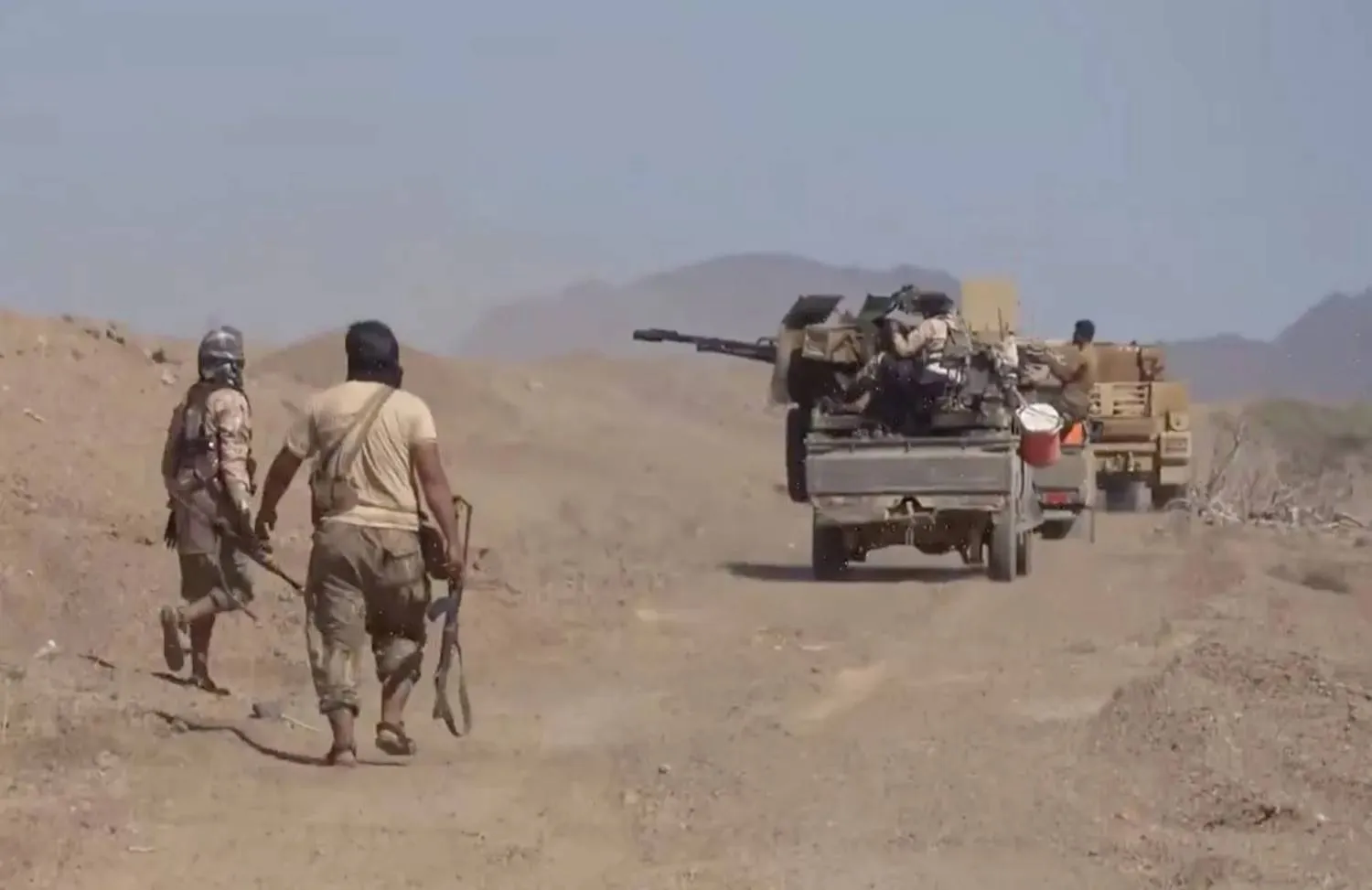
Fighters from the Yemeni government’s Southern Giants Brigades near the Bab al-Mandab Strait (AP) 
TT

‘Dawn of Yemen’ Offensive Intensifies Pressure on Houthis by Land and Air

Fighters from the Yemeni government’s Southern Giants Brigades near the Bab al-Mandab Strait (AP) 

The Dawn of Yemen military offensive entered its seventh day on Sunday, with intensified airstrikes targeting Houthi positions and reinforcements in Taiz and along the western coast, as government forces pressed their ground assault and surrounded Houthi groups near the Bab al-Mandab Strait.

Military estimates put Houthi casualties at around 12,000 killed and wounded during the operation’s first six days.

Airstrikes extended beyond the Taiz frontlines to military targets in Houthi-held areas of Sanaa, Saada, Hajjah and Ibb, while government forces received air support as the Houthis attempted to recapture positions along the western coast.

On the western coast, the Southern Giants Brigades announced the destruction of five Houthi armored vehicles, killing their occupants, during an attempted advance toward Dhubab Airport. The brigades also reported repelling an attack north of the airport as airstrikes targeted Houthi reinforcements.

Government forces are seeking to consolidate control over recaptured areas around Bab al-Mandab, Mayyun Island and the Kahbub Mountains, preventing the Houthis from retaking strategic positions overlooking the strait.

More Than 1,900 Strikes in 24 Hours

The armed forces announced more than 1,900 direct precision strikes over 24 hours across the eastern, western and southwestern fronts.

Military spokesman Col. Majed al-Nuzaili explained that the strikes targeted weapons and ammunition depots, fortifications, military camps, strategic hilltop positions, troop concentrations, artillery emplacements and supply vehicles.

He added that high-value military targets deep inside Houthi-held territory were also struck.

Preliminary field estimates indicated that more than 1,150 Houthi fighters had been neutralized and over 180 combat, transport and supply vehicles destroyed or disabled during the same period, according to Nuzaili. Ground forces also advanced, recapturing additional positions and securing strategic heights.

In Taiz, military sources reported continued clashes southeast and west of the city, with government troops and Popular Resistance fighters repelling Houthi attacks and striking their positions and movements.

Government Vows to Restore State Authority

Presidential Leadership Council Chairman Rashad al-Alimi reaffirmed the leadership’s determination to continue the offensive until the Houthi threat is eliminated and state institutions restored, regardless of the sacrifices required.

Prime Minister Shaya Mohsen al-Zindani maintained that the operation was steadily achieving its objectives, with the Southern Giants Brigades and Nation’s Shield Forces advancing with support from the Saudi-led coalition to secure Bab al-Mandab, Dhubab and the Kahbub Mountains.

He described the gains as reflecting Yemenis’ determination to end the Houthi takeover and restore state authority.

Zindani accused the Houthis of targeting civilians and civilian infrastructure, citing the recent attack on Aden International Airport and violations in Taiz. He also praised Saudi support as crucial to restoring state institutions and protecting national security.

Meanwhile, the cabinet warned that the Houthis’ expanding siege of Taiz threatened the lives, security and livelihoods of more than six million residents.

It instructed civilian, security and military authorities to coordinate efforts to protect residents, maintain essential services, ensure humanitarian aid deliveries and address security threats while respecting international humanitarian law.

The cabinet urged the United Nations and international community to pressure the Houthis to halt their attacks and lift the siege, reaffirming its commitment to restoring state authority and achieving the offensive’s objectives.