



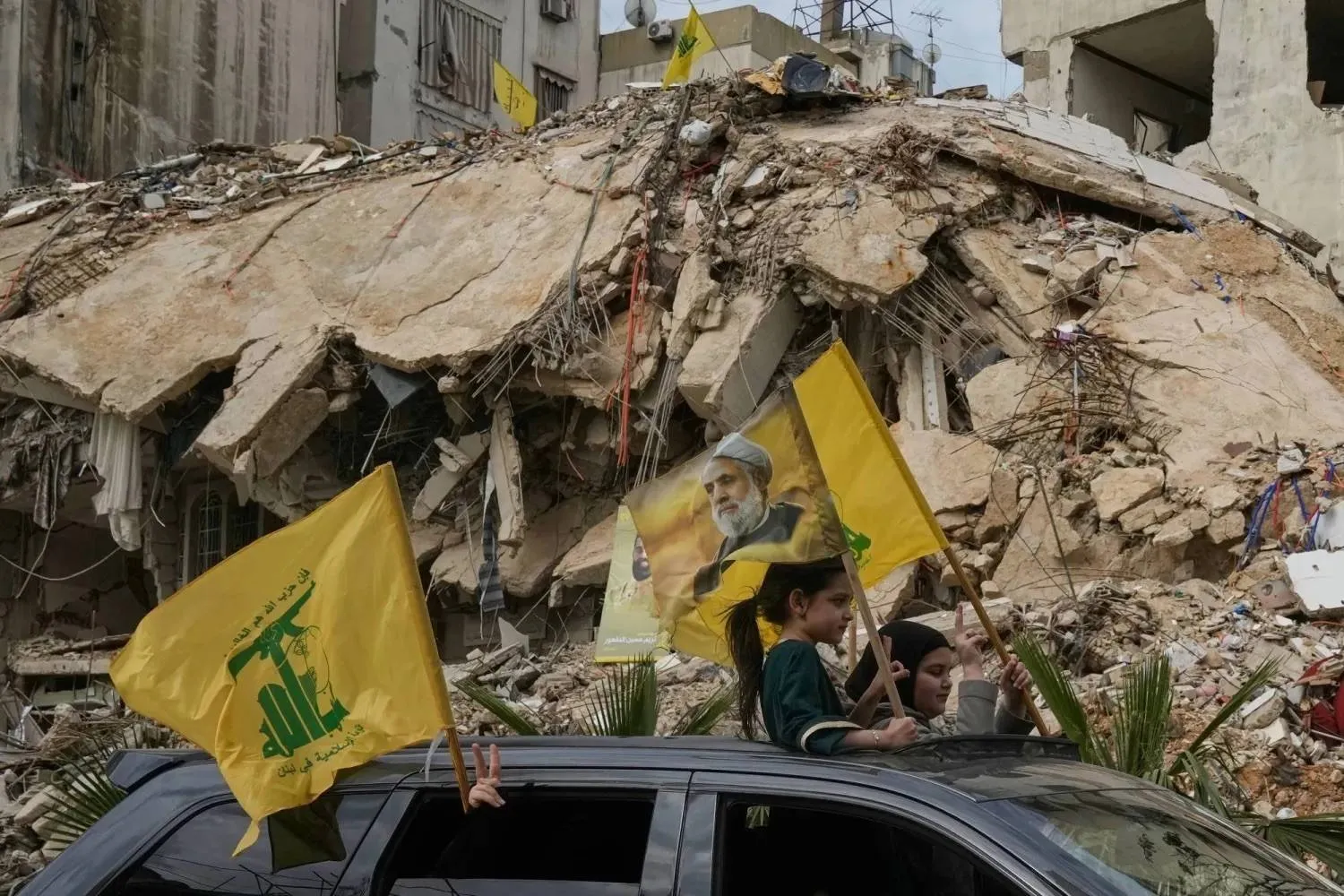

Hezbollah’s position on negotiations tied to the war in Lebanon has exposed a growing contradiction - the group fiercely opposes direct talks between the Lebanese state and Israel, yet supports Iranian-American negotiations that Tehran says include Lebanon.
The discrepancy has fueled political debate over whether Hezbollah truly rejects negotiations in principle or simply opposes talks led by the Lebanese state that could threaten its weapons and influence inside Lebanon.
The issue resurfaced Tuesday after Iranian Deputy Foreign Minister for Legal and International Affairs Kazem Gharibabadi said Tehran’s proposal includes “ending the war on all fronts, including Lebanon.”
His remarks revived questions about Lebanon’s role in any broader regional settlement and Hezbollah’s selective approach to diplomacy.
Different Standards for Beirut and Tehran
Hezbollah has repeatedly condemned direct Lebanese-Israeli negotiations as a dangerous path leading to concessions. At the same time, it has portrayed Iranian-American talks as a possible route to ending the war.
Hezbollah Secretary-General Sheikh Naim Qassem previously described a potential Iran-US agreement that includes Lebanon as “perhaps the strongest card” for stopping Israeli attacks, while thanking Iran for its support of Lebanon.
Hezbollah MP Hassan Fadlallah similarly praised what he called the “Islamabad track,” saying Iran had suspended negotiations “for Lebanon’s sake,” even as he denounced direct Lebanese negotiations with Israel as “a dead-end.”
Another Hezbollah lawmaker, Hussein al-Hajj Hassan, argued that direct talks conducted by Lebanese authorities had placed the government “in a deadlock that will produce only concessions without results.”
The discrepancy has raised a main question in Lebanon: Is Hezbollah opposed to negotiations themselves, or only to talks carried out by the Lebanese state?
A ministerial source close to the Lebanese presidency described Hezbollah’s position as “clearly contradictory,” arguing that “what is permitted for Iran appears forbidden for Lebanon,” despite the fact that Beirut is negotiating exclusively over Lebanese sovereignty and Israeli occupation.
Speaking to Asharq Al-Awsat, the source said Lebanon’s negotiations concern practical issues imposed by Israeli occupation, including withdrawal from Lebanese territory and restoring state authority. The source stressed that President Joseph Aoun and the government have maintained one principle from the outset: “No one but the state negotiates on behalf of Lebanon.”
Responding to arguments that Iran negotiates with the United States rather than directly with Israel, the source said Lebanon’s situation is fundamentally different because Israeli forces occupy Lebanese land. “Any country facing occupation negotiates to secure withdrawal and end that occupation,” the source underlined.
Hezbollah’s Deeper Concern
Imad Salamey, head of the Department of Political and International Studies at the Lebanese American University, said Hezbollah fears that any direct negotiations led by the Lebanese state, particularly with Arab and international backing, would gradually shift control of the conflict with Israel away from the party and back to state institutions.
He noted that such a process would likely involve tighter border controls, security arrangements, and ultimately limiting arms to the state while placing decisions on war and peace exclusively in official hands.
“That would effectively end Hezbollah’s independent military status and reduce Iranian influence inside Lebanon,” Salamey remarked.
By contrast, Hezbollah accepts Iranian-American negotiations because Tehran approaches them as part of a broader regional framework linking Lebanon, Gaza, Iraq, and Yemen to wider security and US interests.
According to Salamey, Hezbollah believes Iranian-led negotiations are more likely to preserve its role within Lebanon and the region, whereas direct Lebanese negotiations could place the group against a growing domestic and international consensus favoring a stronger Lebanese state with a monopoly on arms.


