
Israel Kills 8 in Lebanon, a Day After Trump Said Israel and Hezbollah Will De-Escalate

An Israeli strike hit near a hospital in south Lebanon's city of Tyre. KAWNAT HAJU / AFP
TT

Israel Kills 8 in Lebanon, a Day After Trump Said Israel and Hezbollah Will De-Escalate

An Israeli strike hit near a hospital in south Lebanon's city of Tyre. KAWNAT HAJU / AFP

Israeli drone strikes on southern Lebanon on Tuesday killed eight people, including two children and their father, a day after US President Donald Trump said Israel and Hezbollah agreed to dial back fighting. Hezbollah, which is backed by Iran, continued launching dozens of projectiles and drones toward Israeli soldiers in southern Lebanon and civilians in Israel. 

The ongoing hostilities — despite Trump's announcement and a nominal ceasefire that began in April — are deepening displacement for Lebanon's conflict-weary population. They also are a significant sticking point in negotiations to extend a ceasefire in the US-Israeli war in Iran, as Tehran wants any such deal to end fighting in Lebanon, too. 

Two semiofficial Iranian news agencies reported Tuesday that the country cut off communication with mediators facilitating the ceasefire talks. 

Another round of talks between Israel and Lebanon began Tuesday in Washington, where Lebanese negotiators are set to seek a full ceasefire that will prevent future attacks. The talks began in April and were the first in more than three decades between the countries, which have no formal diplomatic relations.  

Hezbollah has rejected direct talks, counting on pressure from Iran. 

The planned talks come days after Israeli ground troops made their deepest incursion into Lebanon in 26 years and Israel then threatened to strike Beirut’s southern suburbs, causing panic in the Lebanese capital as thousands fled. 

Israel says it will keep attacking if Hezbollah does  

Trump said Monday he had spoken with Israeli Prime Minister Benjamin Netanyahu and had communicated with Hezbollah through mediators, and that no troops would be “going to Beirut." But the intensity of attacks between Israel and Hezbollah continued. 

Israeli Defense Minister Israel Katz said Tuesday that Israel previously refrained from attacking Beirut out of deference for negotiations between the US and Iran. But he said Netanyahu informed Trump in a phone call late Monday that Israel will attack Beirut's southern suburbs if Hezbollah continues targeting northern Israel, echoing comments from the prime minister the previous day. 

An Israeli drone strike hit a car on the road linking the southern town of Marjeyoun with the city of Nabatieh, killing James Karam, a dentist from the nearby town of Qlayaa, along with his daughter and son, Lebanon’s state-run National News Agency reported Tuesday. 

The Lebanese army said two soldiers were lightly wounded when a separate drone targeted them on a road outside the city. 

Drone strikes killed two Syrians working at a plant nursery in the village of Jibchit and two people in the nearby village of Toul, the news agency reported.  

A third strike hit a car near the village of Harouf, killing one person. The Israeli military said it wasn't aware of any Israeli strikes in that area. 

NNA also reported that an Israeli airstrike on Monday killed six in the southern village of Marwaniyeh. 

Hezbollah said Tuesday its fighters fired anti-tank missiles on Israeli troops who were pushing into the southern village of Hadatha, about 7 kilometers (4 miles) from the Israeli border. 

Sirens sounded in several areas in northern Israel, its military said in a statement. It added that “a suspicious aerial target" was identified in the area where Israeli soldiers are operating in southern Lebanon, but that no injuries were reported. 

More than 3,400 people have been killed in Lebanon 

The latest round of fighting between Israel and Hezbollah has killed 3,433 people in Lebanon and displaced more than 1 million people.  

According to Netanyahu’s office, at least 27 Israeli soldiers and a defense contractor have been killed in or near southern Lebanon. Two civilians have also been killed in northern Israel. 

Israel’s military said late Monday that a soldier was killed in southern Lebanon. It added that seven more soldiers were wounded in the incident, three of them severely. 

Hezbollah’s use of hard-to-detect fiber-optic drones has been deadly for the Israeli military, which is struggling to respond. 


Iraq’s Asaib Ahl Al-Haq Says It Will Start Handing Its Weapons to the State

Members of the Iraqi Popular Mobilization Forces parade of the Asaib Ahl al-Haq, participate in a Quds Day march in Baghdad, Iraq, Friday, July 1, 2016. (AP)
TT

Iraq’s Asaib Ahl Al-Haq Says It Will Start Handing Its Weapons to the State

Members of the Iraqi Popular Mobilization Forces parade of the Asaib Ahl al-Haq, participate in a Quds Day march in Baghdad, Iraq, Friday, July 1, 2016. (AP)

One of Iraq’s most powerful Iran-backed armed groups said Tuesday it would begin putting its weapons under government control, a major step in the new government’s effort to bring armed factions that have long operated on their own under state command.

Asaib Ahl al-Haq said it had formed a committee to oversee the move, including an inventory of its fighters, weapons and equipment, and to coordinate with the commander-in-chief of the armed forces. The group cast the decision as a response to calls by Iraq’s top Shiite religious authority and the Iran-aligned Coordination Framework, the largest bloc in parliament that dominates Iraqi politics.

The war in the Middle East has exposed the fragility of Iraq’s state institutions and their limited ability to restrain these groups. A parallel confrontation between Washington and the factions has deepened the crisis, with factions acting as an extension of Iran’s regional campaign and escalating attacks on US assets in Iraq before a tenuous ceasefire deal was reached in April.

The first significant move came a week ago, when the influential Shiite cleric Moqtada al-Sadr said his Saraya al-Salam faction would split from his political movement and integrate into state institutions.

Under pressure from Washington, Prime Minister Ali al-Zaidi has been working to assert state authority over weapons.

Zaidi, a 40-year-old banker sworn in last month has made a state monopoly on arms a centerpiece of his program. The Trump administration has warned against any government influenced by Iran-linked factions and tied defense cooperation and funding to efforts to curb them.

Many Iran-backed factions are funded through the Iraqi state budget and embedded within the security apparatus, although not under the government's control. This has drawn criticism from the United States and other countries that have borne the brunt of their attacks and say Baghdad has failed to take a tougher stance.

Several armed factions aligned with Iraq’s Coordination Framework have taken a different stance on efforts to bring weapons under state control. Two important groups, Kataib Hezbollah and Harakat al-Nujaba, have rejected disarmament, tying the issue to Iraq’s sovereignty and the presence of foreign troops.

Kataib Hezbollah welcomed moves by other factions to place weapons under state authority but said its own armed activity will continue as part of what it describes as “resistance work." In a recent statement attributed to its Abu Mujahid al-Assaf, the group said it would offer coordination with the Popular Mobilization Forces rather than surrendering arms.

The PMF, a state-backed umbrella of armed groups, was formed in 2014 to fight the ISIS group. Many of its groups still keep their own command and ties to Iran.


Lebanon’s Berri to Guarantee Hezbollah Respect for ‘Global’ Truce with Israel, Says Adviser

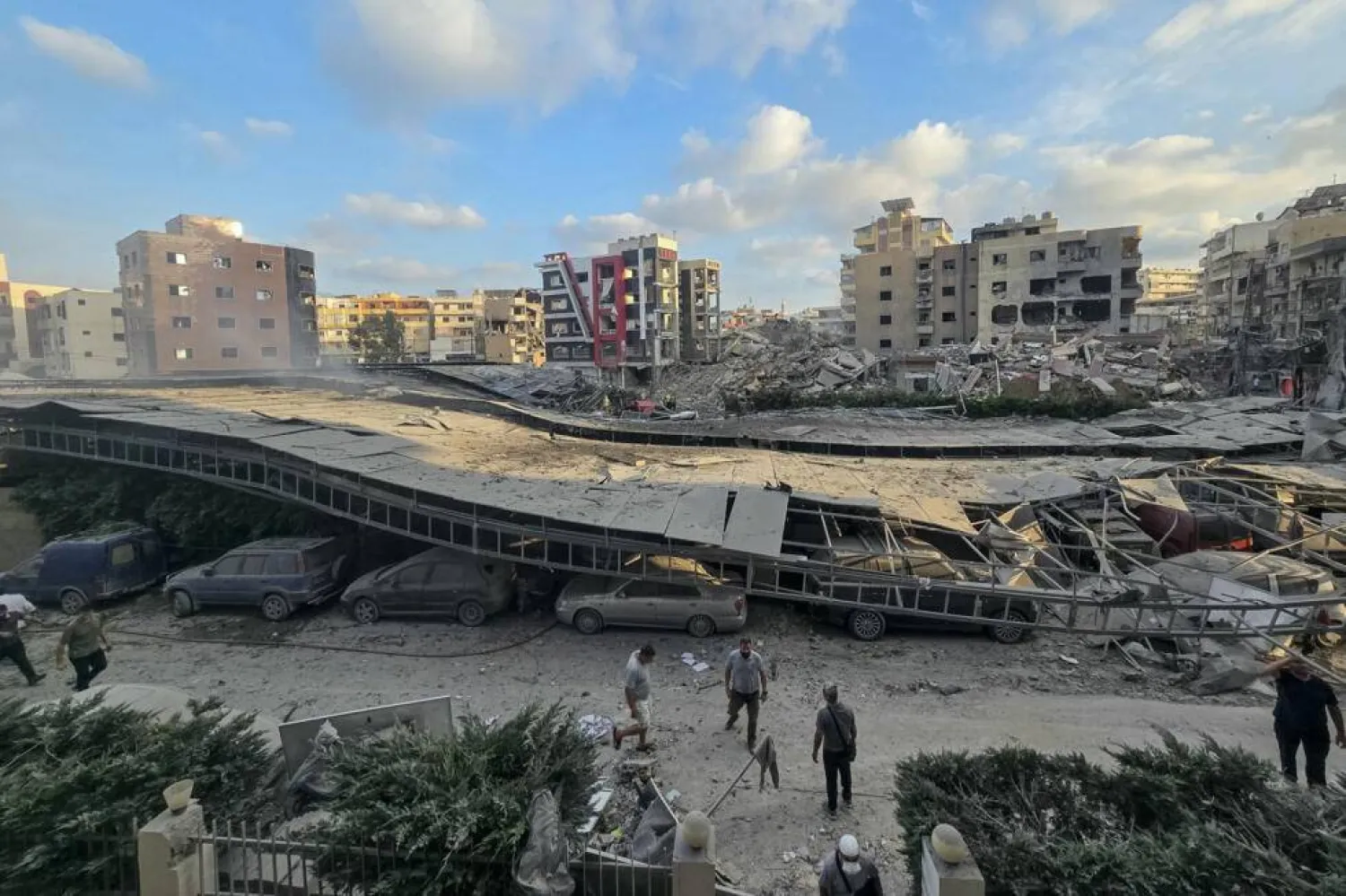
 Rescue workers use excavators, as they search for victims under the rubble of a building that was hit Monday in an Israeli airstrike in the southern port city of Tyre, Lebanon, Tuesday, June 2, 2026. (AP)
Rescue workers use excavators, as they search for victims under the rubble of a building that was hit Monday in an Israeli airstrike in the southern port city of Tyre, Lebanon, Tuesday, June 2, 2026. (AP)
TT

Lebanon’s Berri to Guarantee Hezbollah Respect for ‘Global’ Truce with Israel, Says Adviser

 Rescue workers use excavators, as they search for victims under the rubble of a building that was hit Monday in an Israeli airstrike in the southern port city of Tyre, Lebanon, Tuesday, June 2, 2026. (AP)
Rescue workers use excavators, as they search for victims under the rubble of a building that was hit Monday in an Israeli airstrike in the southern port city of Tyre, Lebanon, Tuesday, June 2, 2026. (AP)

Lebanese parliament Speaker Nabih Berri, a key Hezbollah ally, will guarantee the Iran-backed group's adherence to a "global ceasefire" with Israel, his adviser told AFP on Tuesday.

Berri, who heads the Hezbollah-allied Amal party, has long acted as an intermediary between the group and the United States, which considers Hezbollah a "terrorist" organization.

US President Donald Trump said late Monday that Israeli Prime Minister Benjamin Netanyahu had agreed to call off a military raid on Beirut while Hezbollah agreed "all shooting will stop".

Despite the announcement Israeli drone strikes on southern Lebanon on Tuesday killed eight people, including a father and his son and daughter.

Adviser Ali Hamdan told AFP that "speaker Berri's main demand is a global ceasefire. If a global ceasefire deal is reached, he will guarantee Hezbollah's respect for it."

Hamdan said a "global ceasefire means a halt to Israeli strikes by air, land or sea, and that it will not carry out detonations or demolitions" in the south, where Israel is accused of razing entire villages.

Trump had said that "through highly placed Representatives, I had a very good call with Hezbollah, and they agreed that all shooting will stop -- That Israel will not attack them, and they will not attack Israel."

Netanyahu said late Monday that he had told Trump "that if Hezbollah does not cease attacking our towns and our citizens, Israel will strike terrorist targets in Beirut".

Hezbollah has not released a statement on the announcement.

Lebanon's embassy in the United States said on Monday that Hezbollah had accepted a US proposal on a "mutual cessation of attacks".

"Under the proposed arrangement, Israeli strikes on Dahieh would cease in exchange for Hezbollah refraining from launching attacks against Israel, with the ceasefire framework to be expanded to encompass all Lebanese territory," the embassy statement released by the Lebanese presidency added, referring to Beirut's southern suburbs.

Iran has insisted that a ceasefire in Lebanon remains a key condition for any deal with the United States to end the Middle East war.

Iran's parliament speaker Mohammad Bagher Ghalibaf, who is also the country's chief negotiator, said on Monday night that he and Berri had spoken by phone.

Ghalibaf told his Lebanese counterpart that "if the Israeli aggression on Lebanon continues, we will not just stop the negotiation process, but we will be in a direct confrontation with the enemy", he said on X, referring to Israel.

Iran's Tasnim news agency reported on Monday that Tehran was no longer engaging in talks with Washington because of Israel's offensive on Lebanon, although there was no official confirmation of this.


Israeli Fire Kills Three People in Gaza, Medics Say

Palestinians inspect a vehicle hit by an Israeli airstrike in Deir al-Balah, in the central Gaza Strip, Tuesday, June 2, 2026. (AP)
TT

Israeli Fire Kills Three People in Gaza, Medics Say

Palestinians inspect a vehicle hit by an Israeli airstrike in Deir al-Balah, in the central Gaza Strip, Tuesday, June 2, 2026. (AP)

Israeli ‌fire killed at least three Palestinians in separate incidents across the Gaza Strip on Tuesday, Gaza health officials said.

Medics said at least one person was killed and four were wounded when an Israeli airstrike hit a vehicle east of Deir al-Balah in the central Gaza Strip. The blast left ‌the vehicle ‌a mangled skeleton.

Another strike earlier ‌in ⁠the day killed ⁠one person and wounded another in the nearby Zawayda town, they added, while Israeli gunfire killed one man in northwest Khan Younis, south of the enclave.

The Israeli military did not immediately ⁠comment on either of the ‌incidents.

An October ceasefire, ‌brokered by US President Donald Trump, has ‌failed to halt Israeli attacks in ‌Gaza.

Israel and Hamas are deadlocked in indirect talks over implementing the second phase of the deal, which includes the group's disarmament ‌and Israeli army withdrawals.

The ceasefire left Israel in control ⁠of ⁠more than half of Gaza, with Hamas controlling a sliver of coastal territory.

Some 930 Palestinians have been killed in Israeli strikes since the truce came into effect, according to figures from Gaza health officials that do not distinguish between combatants and civilians.

Four Israeli soldiers have been killed by fighters during the same period, the country's military has said.