



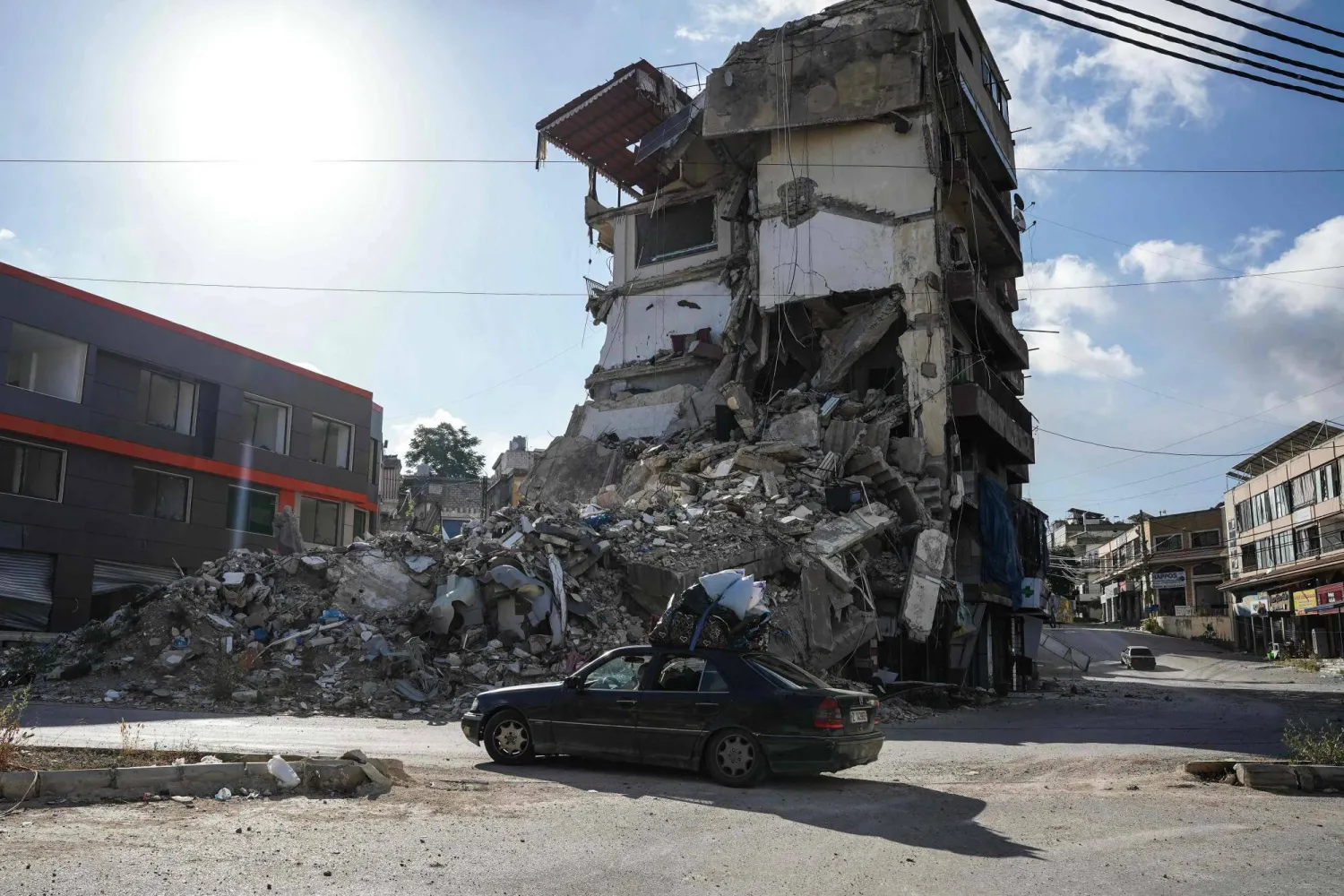

Israel’s defense minister said Monday that Israel won’t withdraw from land occupied in Lebanon as the interim deal between Iran and the United States is pending.
Israel Katz’s remarks were the first official Israeli comments after the announcement of the interim deal. The two sides plan to meet Friday in Geneva to sign it, Pakistan has said.
Katz said Israel plans to stay “indefinitely” in lands it holds in Lebanon, as well as Syria and the Gaza Strip.
Iran has tied the interim deal over the war to halting Israel’s attacks on Hezbollah in Lebanon.
Katz also threatened that if Iran attacks Israel over Israeli strikes in Lebanon, Israel will strike Iran with “great force.”
Over the past two and a half years, Israel has taken control of areas in Gaza, Lebanon, and Syria amounting to 1,000 square kilometers (386 square miles) of territory — an area that is slightly smaller than New York City.
- 'Bad for Israel' -
Meanwhile, two Israeli far-right ministers denounced the deal between the United States and Iran.
"Trump's agreement does not bind us... we are not party to this agreement. It does not safeguard our security," National Security Minister Itamar Ben-Gvir said on his Telegram channel.
"We must not settle for anything less than the dismantling of Hezbollah. We must not withdraw from a single inch of territory that our soldiers have captured and cleared of terrorist infrastructure," he said.
Finance Minister Bezalel Smotrich also echoed the sentiment, calling the deal "bad for Israel".
"The joint (US-Israel) campaign achieved many successes in weakening Iran, and those achievements have not been in vain," Smotrich said.
"We will have to continue the campaign to bring down the regime ourselves, using creative means, and ensure that Iran never acquires nuclear weapons."
Smotrich also called for a stronger campaign in Lebanon.
"We will be judged in Lebanon. This is our war, our soldiers, and the immediate security of our northern residents," he said.
"I will continue working to ensure that we stand firm on our position and allow the Israeli army complete freedom of action to continue pushing Hezbollah farther away."
US and Iranian officials said they had reached an agreement to end their war and reopen the Strait of Hormuz, a preliminary pact that sent oil prices falling but leaves the fate of Tehran's nuclear program to further negotiations.
While still a framework, the deal marked the biggest breakthrough towards resolving the conflict that has killed thousands and upended energy markets since it began with joint US-Israeli strikes on Iran in February.
The precise terms of the deal were not immediately known. Pakistani Prime Minister Shehbaz Sharif said in a post on X that the pact called for "the immediate and permanent termination of military operations on all fronts, including in Lebanon."
Lebanon has been a sticking point in negotiations, with Israel and Hezbollah ignoring calls from Trump and others to stop their attacks on each other in recent weeks.
- 'Dangerous turn' -
Opposition figures also condemned the agreement, criticizing Prime Minister Benjamin Netanyahu's handling of the war and its aftermath.
The deal marked a "dangerous turn for Israel's security", said Naftali Bennett, a former prime minister and a leading contender in Israel's upcoming election.
"In the past 1,000 days, we have discovered time and again the greatness of our nation and the weakness of the government," he said in a statement.
"We have a clear strategic plan to collapse the Iranian regime," said Bennett.
"With one hand, we will not allow Iran to break out to a nuclear weapon, and with the other hand, we will bring about the disintegration of the regime through combined diplomatic, intelligence, economic, technological, and military means."
Yair Golan, head of the left-wing Democrats Party, argued that the deal effectively wiped out Israel's military gains.
"With the stroke of a pen, enormous military achievements -- achieved through the courage of our pilots and the sacrifice of our soldiers -- have been erased, while Netanyahu stood on the sidelines: weak, ill, isolated, and without influence," Golan said in a statement.
"Trump is signing an agreement that pours billions into the mullahs' regime, leaves the nuclear infrastructure intact, leaves the ballistic threat unresolved, and provides a lifeline to the murderous regime in Tehran," he added.


