


Lebanese, Int’l Contacts Contain South Lebanon Security Deterioration

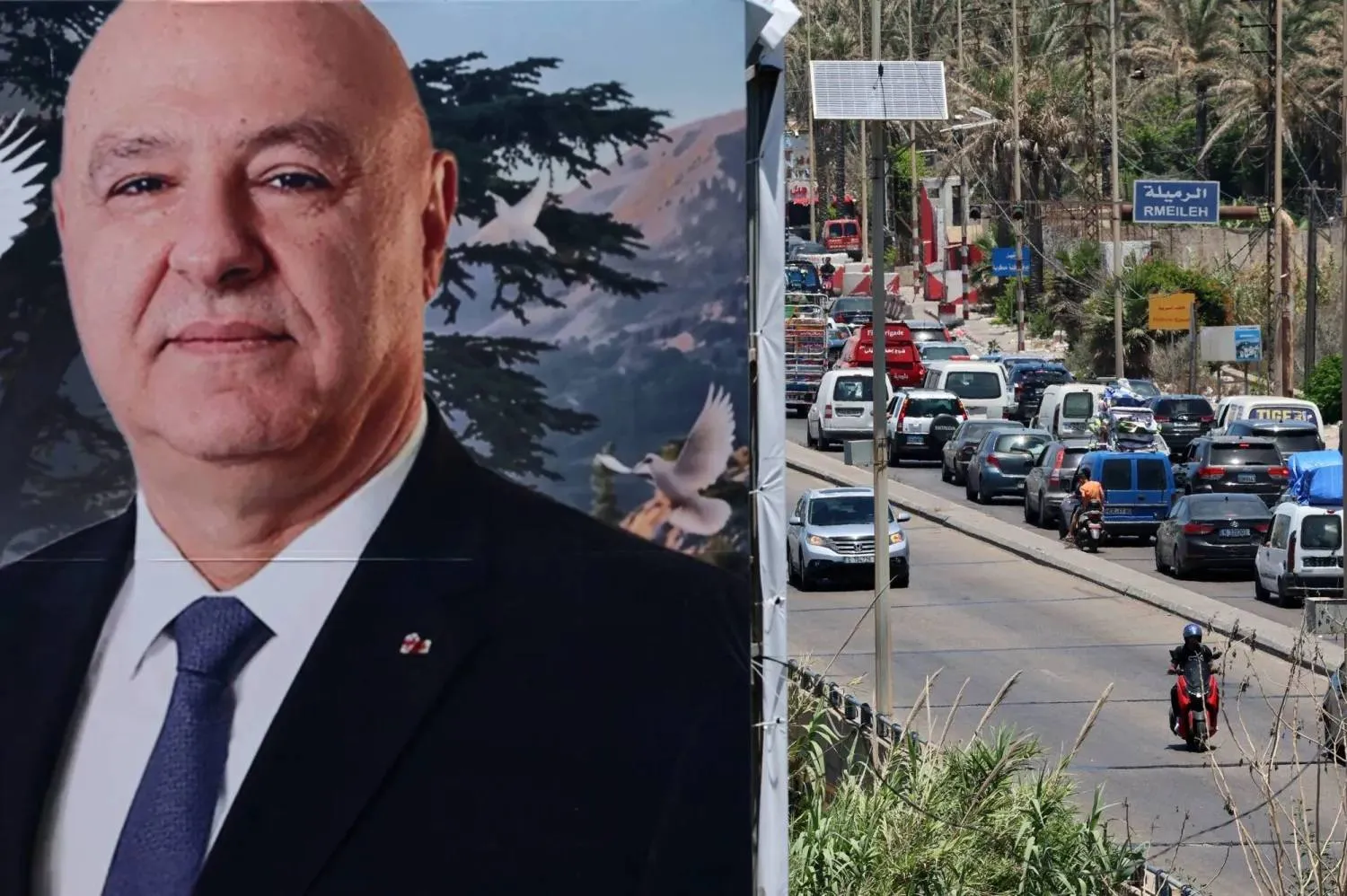
A giant portrait of Lebanese President Joseph Aoun hangs at the northern entrance to Sidon, as cars carrying displaced people from southern Lebanon head toward Beirut. (EPA)
TT

Lebanese, Int’l Contacts Contain South Lebanon Security Deterioration

A giant portrait of Lebanese President Joseph Aoun hangs at the northern entrance to Sidon, as cars carrying displaced people from southern Lebanon head toward Beirut. (EPA)

Lebanese and regional contacts contained a sharp deterioration in Lebanon’s security situation after a major military escalation between Israel and Hezbollah, and threats by Tel Aviv to escalate further.

Lebanese sources said Israel was seeking to undermine the ceasefire agreement, pressure Lebanese negotiators ahead of a fifth round of talks with Lebanon in Washington, and secure gains on the ground.

Reuters quoted a US official as saying Israel and Hezbollah had agreed to a ceasefire starting at 4 p.m. local time, after a major escalation that killed 47 Lebanese, including children and civilians, and four Israeli soldiers in clashes with Hezbollah in southern Lebanon. The Israeli air force carried out more than 150 strikes in southern and eastern Lebanon.

“Hezbollah and Israel agreed to a ceasefire,” the US official said, adding that US and Qatari negotiators reached the agreement with help from Iran.

“We understand that after the exchange of fire earlier today, Israel and Hezbollah are now in a ceasefire,” the official said.

Israel and Hezbollah both said they were ready to respect the ceasefire and respond to violations.

Lebanese and international contacts

The security deterioration triggered a flurry of regional, international and local contacts.

Official sources told Asharq Al-Awsat that Lebanese President Joseph Aoun “began a series of international contacts in the morning with influential countries to lower the escalation, prevent further deterioration and ensure commitment to the ceasefire.”

The contacts focused mainly on the United States and Qatar.

Aoun also condemned “the continuing Israeli escalation.”

“What we are witnessing today in the south and the Bekaa, with the expansion of Israeli attacks and further killing and destruction, is a dangerous and condemnable escalation, especially as it has affected dozens of innocent people, including women and children,” Aoun said.

He said the escalation “effectively targets all ongoing efforts to consolidate the ceasefire and end the war, especially after the latest developments between the US and Iran.”

“But this will not prevent work to achieve a comprehensive ceasefire as quickly as possible. This is what I instructed the Lebanese negotiating delegation to pursue in the next round in Washington,” he said.

“There can be no leniency on this issue because a comprehensive ceasefire is the entry point for discussing other issues, most importantly the Israeli withdrawal, the deployment of the army and the return of prisoners.”

On the international level, Hezbollah parliamentary bloc member MP Hassan Fadlallah said Iran had informed the group that negotiations with the United States could not continue without the implementation of a comprehensive ceasefire.

Fadlallah urged the Lebanese government to reject any direct negotiations with Israel while Israeli attacks on Lebanon continue. He said Washington was responsible for ensuring Israel stops its attacks and implements the terms of the agreement.

Geographic expansion and pressure on Lebanon

The sudden deterioration appeared to signal an Israeli attempt to bypass the agreement that took effect last Monday.

Sources in the Shi’ite duo told Asharq Al-Awsat that Israel was “pressuring to strike the agreement directly and target it.” They said Tel Aviv was also trying to pressure the Lebanese negotiator before the fifth round of direct negotiations with Israel opens in Washington next Tuesday. The talks are due to run for three days.

The sources said Israel was trying to “seize additional cards with which to pressure Lebanon.”

They cited “an Israeli desire for geographic expansion after its failure to achieve a major expansion during 110 days of war.” The area where Israel made significant advances in the first weeks of the war, they said, was the same area Hezbollah evacuated and where it committed to restricting weapons to the Lebanese state.

But attempts to expand beyond that area “met fierce resistance that slowed the push,” the sources said.

The source said a fourth reason was “an internal crisis linked to the rising far-right mood in Israel,” adding that “military failure is driving it to target civilians in Lebanon.”

Ceasefire before any arrangements

Lebanese observers say Israel’s failure to abide by the ceasefire agreement is not driven only by Prime Minister Benjamin Netanyahu’s sense of being “sidelined” after the agreement was signed.

They say Israel is also trying to reach an agreement with the Lebanese state in exchange for withdrawal from occupied territory, and to begin disarming Hezbollah in exchange for halting the escalation.

Hezbollah rejects this. The group is relying on US-Iranian understandings and continues to criticize the Lebanese state’s negotiating track.

Still, Lebanese authorities are proceeding with the sessions scheduled to begin Tuesday.

Lebanese ministerial sources told Asharq Al-Awsat that the instructions to the negotiating delegation are clear: demand a full and comprehensive ceasefire before discussing any other arrangements.

The sources said Beirut “is holding to its demands.”

Singling out Lebanon

Hezbollah, however, rejects the direct negotiating track.

Sources following Hezbollah’s escalation against the track said the group “believes there is an overlap of interests between Tel Aviv and the state within the framework of the track on which the state is relying to achieve withdrawal and a ceasefire.”

The sources said Hezbollah believes the direct negotiating track rests on the view that Israel is uncomfortable with US performance in the agreement with Iran, while Lebanon is uncomfortable with Iran’s performance.

They said Hezbollah had “sensed that Lebanon was being singled out” through the US statement issued after the first negotiating session. This, they said, was reinforced in the declaration of intent paper in the fourth round, which appeared to show bias toward Israel in the negotiations.

Hezbollah MP Hussein Hajj Hassan said: “The authorities agreed to a joint statement with the Americans and Israelis containing language to the effect that Hezbollah is a common enemy of Israel, America and Lebanon. This was stated by US Secretary of State Marco Rubio, while the Lebanese delegation did not utter a word. No Lebanese official in power objected to this language. Therefore, what is required from them is a position clarifying whether they agree with this language or not.”

He called on Lebanese officials “to bridge the gap they created with the resistance and its public, and to bridge the gap they created with the Islamic Republic of Iran, for Lebanon’s interest and not for Iran’s interest.”



Hezbollah Says Explosives Shipment Seized by Authorities Belongs to Group

Hezbollah members take part in a military exercise during a media tour organized for the occasion of Resistance and Liberation Day, in Aaramta, Lebanon. REUTERS/Aziz Taher/File photo
TT

Hezbollah Says Explosives Shipment Seized by Authorities Belongs to Group

Hezbollah members take part in a military exercise during a media tour organized for the occasion of Resistance and Liberation Day, in Aaramta, Lebanon. REUTERS/Aziz Taher/File photo

A Hezbollah MP acknowledged Thursday that a 500-kilogram shipment of explosives seized last week by Lebanese authorities belonged to the group, a rare admission by the Iran-backed militants.

"The vehicle and its cargo belong to the resistance" against Israel, lawmaker Hassan Fadlallah said. He said Hezbollah also called for the immediate release of those arrested over the seizure.

A Hezbollah official and a Lebanese security source told Reuters that the explosives seized in the car last week were intended to be used in explosive drones targeting Israeli troops.

Fadlallah said Hezbollah had immediately contacted security agencies to clarify that it owned the vehicle and the cargo, and to demand the materials be returned and those detained be released.

Fadlallah's acknowledgment reflects Hezbollah's efforts to continue transporting weapons across Lebanon despite the government's vow to bring all arms in the country under state control.

On March 2, the government specifically banned Hezbollah's military activities hours after the movement launched rockets at Israel in solidarity with Tehran, pulling Lebanon into the regional war that erupted following US and Israeli strikes on Iran.

The government decisions were an attempt to reverse the relative freedom Hezbollah had enjoyed for years in transporting military equipment across Lebanon.

The group's main arms supply route through Syria was severed when its ally, then-president Bashar al-Assad, was ousted in late 2024. The new Syrian authorities have regularly announced seizures of weapons along their border with Lebanon that they say are intended for Hezbollah.

Throughout 2025, Lebanese troops seized and destroyed Hezbollah weapons depots in southern Lebanon in line with the government's plan to exert state control over all weapons, but that roadmap was put on pause when the new war erupted.

Under a deal reached through US-brokered talks between Lebanon and Israel this year, Beirut has vowed to disarm Hezbollah, which would in turn lead to Israeli troops gradually withdrawing from Lebanon.

But Hezbollah has refused to disarm as long as Israeli forces remain on Lebanese land and Israel has continued carrying out strikes across southern Lebanon.


Ali Kayali, Main Suspect in 2013 Baniyas Massacre, Arrested

A Syrian army officer puts on his blast suit during a demining operation, by the Syrian Ministry of Defense's military engineering department, to clear land mines in Qarah in the Damascus countryside on August 23, 2026. (Photo by Bakr ALkasem / AFP)
TT

Ali Kayali, Main Suspect in 2013 Baniyas Massacre, Arrested

A Syrian army officer puts on his blast suit during a demining operation, by the Syrian Ministry of Defense's military engineering department, to clear land mines in Qarah in the Damascus countryside on August 23, 2026. (Photo by Bakr ALkasem / AFP)

Syria's General Intelligence Service has arrested Ali Kayali, also known as Mihrac Ural, the main suspect in the 2013 Baniyas massacre, as he attempted to flee across the border, according to the Syrian Arab News Agency (SANA).

The agency did not specify where he was arrested or which country he was attempting to enter. Syrian sources say he had been spotted crossing the border into Lebanon several times.

However, according to Lebanon's MTV television, the Syrian-Turkish national known as Ali Kayali, or Mihrac Ural, and nicknamed the "Butcher of Baniyas" in Syria, was the same person reportedly abducted from his home in Mansourieh, in Lebanon's Metn district, after his wife and son were tied up.

Asharq Al-Awsat could not independently verify the accuracy of the report.

Who Is Mihrac Ural?

Mihrac Ural was born in 1956 in Türkiye's Hatay province, formerly known as the Sanjak of Alexandretta. He joined a far-left extremist party and was imprisoned several times in Türkiye before fleeing to Syria in the early 1980s.

There, he received special privileges, including Syrian citizenship, which was granted to him by then-President Hafez al-Assad.

Ural later adopted the Syrian name Ali Kayali and led an armed group known as the Syrian Resistance, which fought alongside forces loyal to Bashar al-Assad throughout the Syrian war.

The group has been linked to the massacres in al-Bayda and Baniyas and participated alongside Assad's forces in suppressing the Syrian uprising. Ural's name has also been associated with the 2012 Houla massacre and the bombings in Reyhanli, Türkiye.

According to the Syrian Network for Human Rights (SNHR), the al-Bayda massacre claimed the lives of 264 civilians, including 36 children and 28 women. The Ras al-Nabaa massacre killed another 195 civilians, including 56 children and 43 women.

Testimonies and reports documenting the two massacres described bodies scattered across streets, shops and even basements, as well as summary executions carried out with firearms and bladed weapons. Homes and bodies were also reportedly burned.

Militias affiliated with Kayali were also accused of carrying out massacres against Syrians in the countryside of Latakia, Aleppo and Idlib, leaving hundreds dead and wounded.

Human Rights Watch, in a report published in September 2013, documented the execution of at least 248 people, including 167 in al-Bayda and 81 in Baniyas, warning that the actual death toll could be higher.

Based on survivor testimonies and video evidence, the organization concluded that the vast majority of the victims had been killed after fighting had ended and opposition fighters had withdrawn from the two areas.

Following news of Kayali's arrest, chants of "Allahu Akbar" rang out from mosques in al-Bayda, a town near Baniyas in Syria's western Tartus province, on Thursday.

Videos circulating online showed mosques broadcasting the chants, which those sharing the footage said were in celebration of Ural's reported arrest, nearly 13 years after the massacre.

Marking the occasion, Fadel Abdul Ghany, executive director of the Syrian Network for Human Rights, wrote on X on Thursday:

"On May 10, 2013, we published our report documenting the killing of 459 civilians, including 92 children and 71 women. We named Ali Kayali in the report, based on testimonies from residents who identified him as one of the leaders of the massacre."

He described the killings as a massacre with a sectarian character, recalling the painstaking work of documenting the names of children, women and men, families that had lost several members or had been wiped out entirely, and survivors whose testimonies remained unforgettable.

"More than 13 years later, I feel how important it is that this case has finally reached a stage where one of its most prominent suspects can be investigated. Today, I am thinking especially of the victims' families, who have waited all these years," he added.

Ahmad Muwaffaq Zaidan, media adviser to the Syrian presidency, also welcomed the arrest in a post on X.

"We congratulate our people on the arrest by Syrian intelligence, in cooperation with the Interior Ministry, of the criminal Mihrac Ural, known as Ali Kayali, who carried out massacres against our people during the Syrian revolution, including the al-Bayda massacre in Baniyas," he wrote.

He vowed that those responsible for killings would be pursued regardless of how much time had passed, stressing that perpetrators would not escape Syria's security agencies.

Syrian authorities had previously announced on October 4 the arrest of Jamal Trabulsi, whom they identified as Ural's deputy, on suspicion of involvement in the same massacre.

Syrian authorities are pursuing individuals implicated in abuses against civilians during Assad's rule as part of their stated efforts to achieve transitional justice and hold those responsible for crimes accountable.

On December 8, 2024, Syrian rebels entered Damascus and announced the overthrow of Bashar al-Assad's regime, ending the rule he had inherited from his father, Hafez al-Assad.


Contaminated Gasoline Sparks Fears Over Diesel Quality in Syria

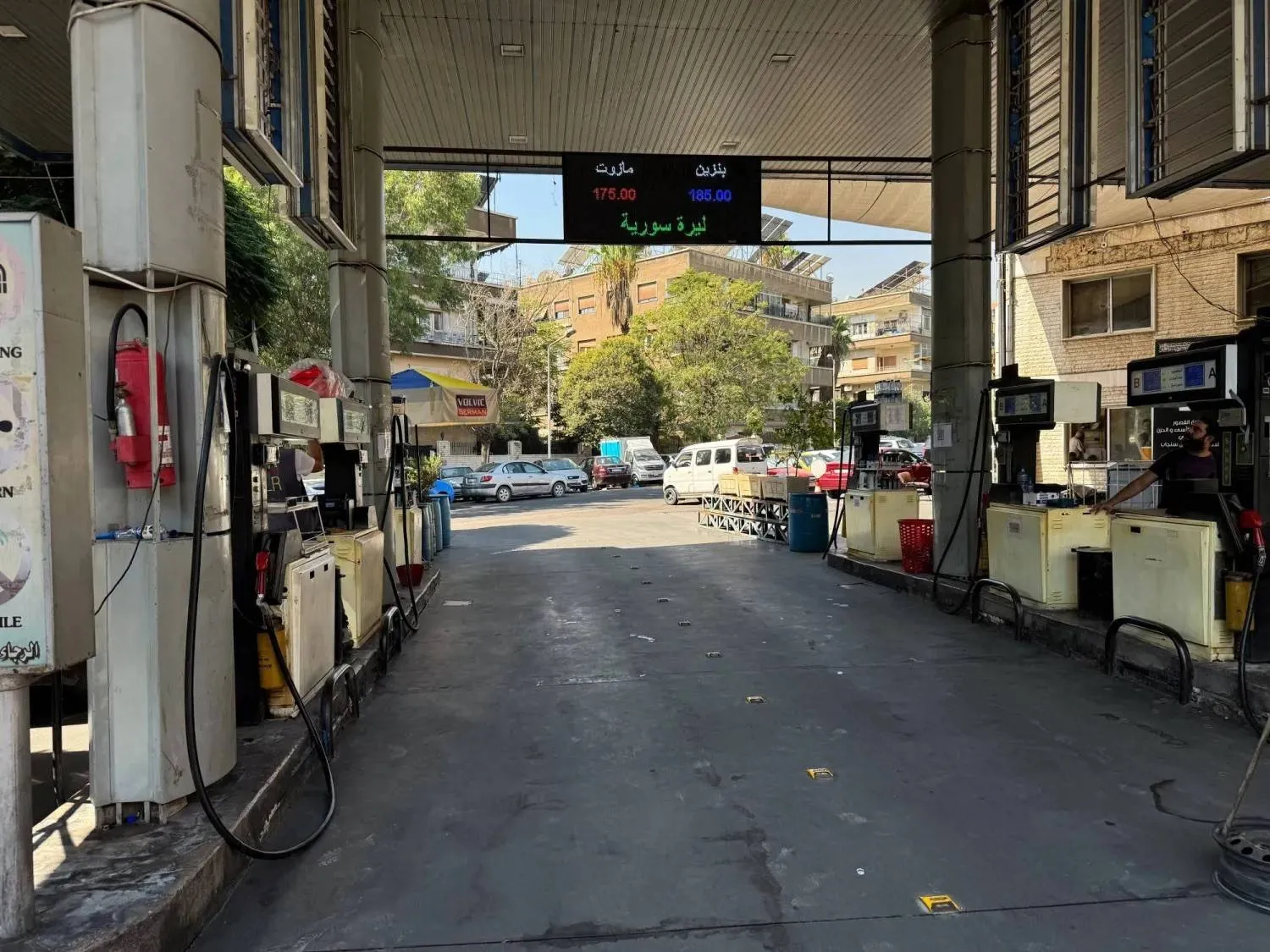
A gas station in Damascus displays fuel prices following the latest increase, which sparked protests in several Syrian cities (Reuters). 
TT

Contaminated Gasoline Sparks Fears Over Diesel Quality in Syria

A gas station in Damascus displays fuel prices following the latest increase, which sparked protests in several Syrian cities (Reuters). 

A video of a young girl collecting animal dung for heating in northeastern Syria has revived memories of bitter winters during the war, as rising fuel prices, a weakening currency and a scandal involving contaminated gasoline fuel concerns over a worsening cost-of-living crisis.

The widely circulated footage shows the girl gathering dung from farmland in rural Hasakah to make "jalla", a traditional fuel used for heating. With winter approaching, she explains that diesel is too expensive to obtain.

The images brought back painful memories for Fatima Hamid, 49, who fled Deir Ezzor for Sahnaya, near Damascus, where she spent several years living with her three children in a cold, dark basement.

For Hamid, the recent increase in diesel prices and plans to introduce a cheaper, lower-quality heating fuel have revived fears of the hardships she endured.

“Under Assad, they used to sell us tiny quantities of black diesel, thick as mud, for our heaters. Its smell would suffocate us,” she recalled.

“Today, we fear the cheaper diesel they’re talking about will be like the red gasoline that damaged cars.”

Fuel prices rise as pound weakens

Syria’s Energy Ministry raised diesel and other petroleum product prices by 40% in September, increasing the price of diesel from 125 to 175 Syrian pounds per liter.

Authorities subsequently introduced a lower-quality, subsidized diesel for heating and agricultural use at 115 pounds per liter.

The Syrian pound weakened against the dollar on Tuesday, with the exchange rate exceeding 141 pounds to the dollar after several months of stability at around 130.

Economists linked the depreciation to inflationary pressures resulting from higher fuel prices.

Meanwhile, the Syrian Petroleum Company recently refused to unload two diesel tankers because their cargoes failed to meet required specifications.

Oday al-Sattouf, the company’s media department director, announced that a tanker carrying 16,000 tons of diesel had begun docking and unloading at storage facilities in the port of Baniyas, while a second vessel was awaiting its turn.

The shipments are intended to meet growing demand ahead of winter.

Speaking to the official SANA news agency, al-Sattouf outlined measures to address shortages, including coordinating with the Homs refinery to increase production and supply diesel to all provinces at 150 pounds per liter.

Additional quantities priced at 115 pounds per liter would be produced at Hasakah refineries, while remaining stocks at the Tishreen and Baniyas storage facilities would also be used.

He expected supplies to stabilize as deliveries became regular and the Baniyas refinery resumed operations.

Contaminated gasoline sparks anger

The controversy over contaminated gasoline distributed in Syrian markets has continued since the beginning of October.

It followed fuel shortages and widespread confusion after authorities raised the price of 90-octane gasoline to 185 pounds per liter and 95-octane gasoline to 195 pounds.

An employee at a Damascus filling station told Asharq Al-Awsat that the adulterated fuel had been withdrawn from all government-run Sadcop stations.

Supplies of gasoline meeting the required specifications began reaching those outlets early Tuesday, following quality checks at both the source and delivery points in Damascus.

The additional inspections delayed deliveries to filling stations in several provinces, the employee explained.

He denied that there was a gasoline shortage and advised motorists to use government stations until the remaining contaminated fuel had been removed from private-sector outlets.

Khaled Jamal al-Khalaf, a member of the Syrian People’s Assembly’s fuel committee, has called for the dismissal and prosecution of Syrian Petroleum Company director Youssef Qablawi.

Speaking on Syria’s state news channel on Sunday, al-Khalaf held Qablawi fully responsible for what he described as the “contaminated gasoline disaster,” citing extensive damage to motorists’ vehicles.

At a car repair workshop in Damascus, Fadi al-Akram was trying to drain the contaminated gasoline from his vehicle and assess the damage to its fuel pump.

He estimated his initial loss at two million Syrian pounds for the gasoline alone, while repairs could cost another five million.

Al-Akram questioned who would compensate him for the damage.

Investigation results pending

Authorities have yet to announce the findings of an investigation into the contaminated gasoline.

The Syrian Company for the Storage and Distribution of Petroleum Products, Sadcop, previously announced an inquiry into the source of the substandard fuel and how it had reached filling stations.

In a statement issued amid mounting complaints, the company reported that tests on samples collected at different stages of the supply chain showed compliance with approved specifications.

It nevertheless acknowledged that cases of fuel failing to meet quality standards had been detected in the domestic market.