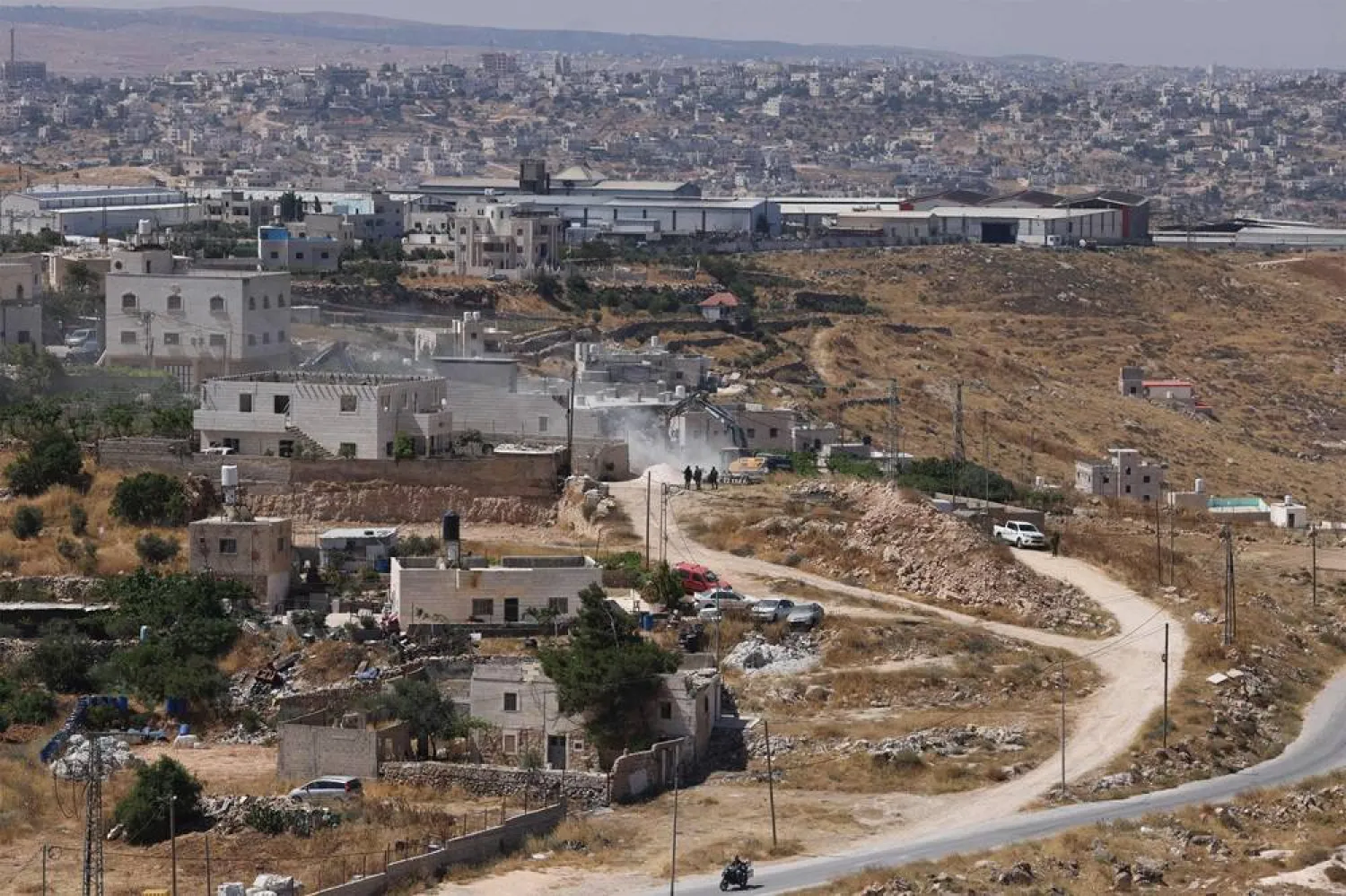
Residents of border villages in southern Lebanon face growing risks as Israeli forces continue firing at village entrances and surrounding roads, raising fears that entire communities could become effectively isolated without their access routes being formally closed or Israeli troops being stationed inside them.
The repercussions extend beyond daily travel, affecting residents' ability to reach their farmland and medical facilities amid continued Israeli military movements and aerial surveillance.
Lebanese President Joseph Aoun discussed the issue with US Secretary of State Marco Rubio during a telephone call on Thursday evening.
Last week, Israeli forces prevented residents of Kfar Shouba from reaching their fields on Thursday. Two days earlier, Israeli gunfire had swept the Marjayoun-Ebel El Saqi road, coinciding with shelling on the outskirts of Haris and Baraachit and gunfire directed toward the entrances of Mansouri.
Controlling Access Through Firepower to Prevent Residents' Return
Retired Brig. Gen. Dr. Hisham Jaber told Asharq Al-Awsat that Israel had learned from its previous military experiences and was therefore seeking a different approach.
"Israel does not want to occupy the southern villages beyond the Yellow Line and station its forces inside them this time. Instead, it seeks to occupy strategic positions overlooking those villages, allowing it to control surrounding areas from a distance while avoiding the risks its troops would face if they entered the villages," he said.
Jaber explained that Israel's current tactics rely on controlling main and secondary roads connecting the villages through firepower deployed from Israeli military positions, alongside continuous aerial surveillance using drones.
"Israeli drones constantly monitor movements, and whenever they detect activity on a road, the types of vehicles involved are examined," he said.
"Some vehicles may be targeted simply because they arouse suspicion. Motorcycles, for example, are frequently targeted, while other vehicles, such as vans, may also be at risk depending on their movements and Israeli suspicions."
Jaber warned that roads connecting border villages would become dangerous even without a direct Israeli military occupation.
Indeed, several roads have become so dangerous and isolated that they are effectively impassable, despite not being under direct occupation.
These include the Nabatieh-Marjayoun road through Khardali, where vehicles can no longer pass, as well as roads around Nabatieh al-Fawqa, Kfar Tebnit and the outskirts of Kfar Rumman.
The restrictions stem from artillery shelling, intense sweeping gunfire, and strikes carried out by artillery and drones.
On October 2, a delegation from the Deir Mimas municipality met President Joseph Aoun and requested guarantees that roads leading to the village would remain open, essential services would be maintained, and farmers would be able to reach their land for the olive harvest.
Artillery Shelling to Deter Residents from Returning
Assessing the continued Israeli shelling of southern villages, Jaber said such attacks do not necessarily signal a new military escalation each time they occur.
"Israel already maintains a continuous level of attacks and repeatedly uses artillery to strike specific areas and villages," he said.
He explained that intermittent artillery shelling of villages, including Kfar Rumman, serves a political and security objective: preventing residents from returning to their homes, stopping communities from reestablishing themselves and deterring any activity Israel might perceive as a threat to its forces.
"Israel does not need to conduct large-scale ground operations to achieve this objective. It can keep villages under pressure through occasional artillery shelling, discouraging residents from returning and making normal life difficult," he said.
Retired Brig. Gen. Said Kazah, meanwhile, told Asharq Al-Awsat that roads linking southern Lebanon's border villages, as well as areas under Israeli occupation or facing Israeli military positions, remain unsafe because of continued military movements and gunfire.
He warned that it was impossible to know the intentions of Israeli forces or the nature of the operations they might undertake.
"The danger is not limited to the roads. It also extends to residents who continue to remain in their border villages," he said.
Border Roads and Villages Remain Unsafe
Kazah explained that the presence of a foreign army occupying territory leaves roads and surrounding areas under constant threat.
"When a foreign army occupies territory, all roads and areas within or facing the occupied zone remain vulnerable because we cannot know the intentions of the occupying forces or the operations they may be planning," he said.
"As a result, the presence of civilians in southern villages remains fraught with danger."
He added that wars invariably involve collateral damage resulting from gunfire, a possibility taken into account when military operations are planned.
This, he said, helps explain the risks faced by civilians living in or near areas where military operations are taking place.
"Border roads are not entirely safe. All border areas under Israeli occupation, and even those facing them, remain exposed to danger, whether from direct military operations or bullets that may reach them during exchanges of fire," Kazah said.
"This makes both civilian movement and residence in these areas subject to constant risks."
Fears that villages could become isolated are grounded in previous incidents.
In March, Israeli shelling disrupted traffic along the Khardali road and the Marjayoun-Hasbaya route before both were reopened.
On June 4, the Lebanese Army announced the reopening of the Marjayoun-Dibbin-Ebel El Saqi road after removing Israeli earth barriers.
At the time, however, the army warned civilians against approaching the area until troop deployments were completed and checks for unexploded ordnance had been carried out.