


Could Hezbollah Launch a New War in Support of Iran?

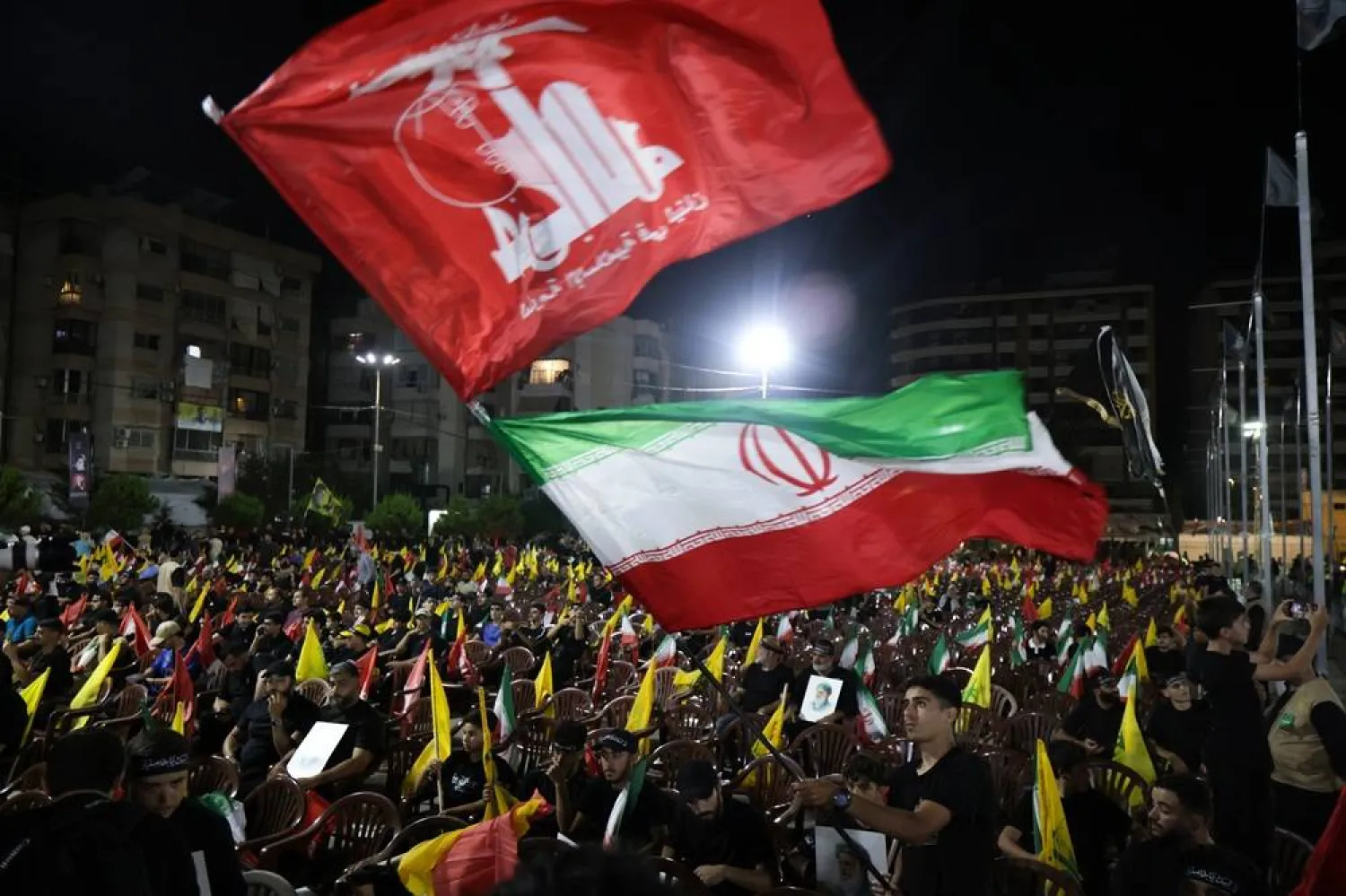
Supporters of Hezbollah carry Iranian and Hezbollah flags during a memorial ceremony for slain Supreme Leader Ali Khamenei in the southern suburbs of Beirut, Lebanon, 08 July 2026. (EPA)
TT

Could Hezbollah Launch a New War in Support of Iran?

Supporters of Hezbollah carry Iranian and Hezbollah flags during a memorial ceremony for slain Supreme Leader Ali Khamenei in the southern suburbs of Beirut, Lebanon, 08 July 2026. (EPA)

Amid deteriorating regional conditions and faltering US-Iranian understandings, Lebanese people fear that Hezbollah may once again launch a new round of war in support of Iran. This follows the party’s previous interventions, including its 2023 campaign backing Gaza and its retaliation for the late Iranian Supreme Leader Ali Khamenei in March this year.

Lebanon has witnessed a drop in Israeli military operations, which have reached their lowest levels in weeks, despite Israel's continued occupation of a security zone extending up to ten kilometers deep inside Lebanese territory. Hezbollah has also halted all military operations since the ceasefire was announced in mid-June.

However, the resumption of attacks between the US and Iran leads observers to believe that Tehran could once again request its regional proxies, including Hezbollah, to reignite all fronts in its support, should it perceive that the situation is heading toward a major escalation against it.

These fears are compounded by past statements by Hezbollah lawmakers and leaders. Most recently, MP Ali Ammar pledged to stand behind Iran in the event of a new war.

Conversely, during his latest appearance, Hezbollah Secretary-General Naim Qassem insisted on maintaining the diplomatic track between the US and Iran, while fiercely attacking the path of direct negotiations between Lebanon and Israel.

Political analyst Qassem Qassir, who is close to Hezbollah's positioning, noted that “no one can definitively determine the red lines drawn by Hezbollah, which, if crossed, would prompt a return to resistance in its broadest sense.”

“However, it is expected that a broad Israeli assault on the Ali al-Taher hill would naturally compel the group to defend it,” he told Asharq Al-Awsat.

“The same applies if attacks target other Lebanese areas still outside direct Israeli control, or if the enemy resumes wide-scale offensives and attacks against Nabatieh, Tyre, the southern suburbs of Beirut or other regions,” he added.

“Ultimately, the decision rests with Hezbollah's leadership, which has confirmed through its Secretary-General that it will not accept a return to the status quo prior to March 2” when the war with Israel erupted, he said.

“Consequently, matters remain contingent upon favorable conditions on the ground as well as the political climate. For instance, should direct Lebanese-Israeli negotiations hit a dead end, it could prompt the resistance [Hezbollah] to resume direct military operations,” he remarked.

Security and defense analyst Dr. Riad Kahwaji said: “The red lines that could prompt Hezbollah to resume fighting are determined by Iran, not the party's own leadership.”

Speaking to Asharq Al-Awsat, he added: “Tehran alone decides when the party will reopen the support front.”


Syria Arrests Assad-era Officer who Fled Austria after Conviction

A man walks past heavily-damaged and destroyed buildings in the Jobar suburb northeast of Damascus on August 12, 2026. (Photo by LOUAI BESHARA / AFP)
TT

Syria Arrests Assad-era Officer who Fled Austria after Conviction

A man walks past heavily-damaged and destroyed buildings in the Jobar suburb northeast of Damascus on August 12, 2026. (Photo by LOUAI BESHARA / AFP)

Syrian security forces have arrested a former Assad-era security officer who fled Austria after being sentenced to eight years in prison for abusing detainees and returned to his hometown in southern Syria, state news agency SANA said on Tuesday night.

Lieutenant Colonel Musab Abu Rukba was arrested in the city of Nawa in Daraa province by internal security forces in coordination ⁠with the counter-terrorism ⁠department, SANA said, citing the security forces.

Abu Rukba had been convicted by a Vienna court last month of bodily harm, aggravated coercion and sexual assault against detained opponents of former President Bashar al-Assad while he headed the police’s criminal investigations department in the northern city of Raqqa more than a ⁠decade ago.

He had pleaded not guilty.

Reuters reported on Friday that Abu Rukba had left Austria while challenging his eight-year sentence on appeal and arrived in Nawa in early August, where his family held a reception to celebrate his return.

SANA said on Tuesday that Abu Rukba had entered Syria illegally after fleeing Austria and that authorities had tracked him down in Nawa. He had been referred to the relevant authorities to complete legal procedures ahead of prosecution, it said.

It was ⁠not immediately ⁠clear what charges Abu Rukba could face in Syria or whether Austria had requested his arrest or extradition.

A spokesperson for the Austrian court that convicted him told Reuters at the time that Abu Rukba had not been considered a flight risk before his trial because he had lived in Austria since 2014 and was seeking asylum there with his family.

He was not held in custody during the trial or subjected to other restrictions, and his departure from Austria did not breach Austrian laws or court orders while the appeals process remained underway, the spokesperson said.


Israel Says It Recovered Remains of Soldier Killed in Lebanon in 1982

Destruction is pictured in the village of Arnoun as seen from nearby Marjeyoun in southern Lebanon on August 11, 2026. (AFP)
TT

Israel Says It Recovered Remains of Soldier Killed in Lebanon in 1982

Destruction is pictured in the village of Arnoun as seen from nearby Marjeyoun in southern Lebanon on August 11, 2026. (AFP)

The Israeli military said on Tuesday it had repatriated the remains of Sgt First Class Yehuda Katz, a soldier killed in Lebanon 44 years ago, in a joint operation with the Mossad intelligence agency.

Katz was the last Israeli soldier declared missing in the Sultan Yacoub battle against Syrian forces in eastern Lebanon in 1982.

"His return to Israel was made possible through efforts based on accurate intelligence... that lasted more than four decades," the military said in a statement.

It is not clear where his body was found.

Israeli Prime Minister Benjamin Netanyahu commended the security forces and said that "for many years, I approved numerous clandestine operations to locate the missing soldiers of Sultan Yacoub. I promised their families that we would never stop working to bring them home."

In a separate statement, President Isaac Herzog said that "the circle that remained an open and bleeding wound from the Battle of Sultan Yacoub is finally closed," and that he had kept a photograph of Yehuda Katz hanging in his office as "a daily reminder of our sacred duty to bring our sons home and leave no one behind".

Katz's remains were brought to Israel and identified at an institute for the identification of fallen soldiers under the military rabbinate, the military said.

Three Israeli soldiers had been missing for decades after the Sultan Yacoub battle. In 2019, the military announced the repatriation of the remains of Sgt First Class Zachariah Baumel, while in May 2025 it said it had recovered the body of Sgt First Class Tzvika Feldman "in the heart of Syria".


Lebanon Mulls Removing Restrictions Against 600,000 Syrians

Lebanese soldiers are seen at the Masnaa border crossing with Syria in wake of the collapse of the Syrian regime. (AP file)
TT

Lebanon Mulls Removing Restrictions Against 600,000 Syrians

Lebanese soldiers are seen at the Masnaa border crossing with Syria in wake of the collapse of the Syrian regime. (AP file)

Lebanese authorities began reviewing security restrictions against some 600,000 Syrians in the latest move that reflects Beirut’s desire to open a new chapter in relations with Damascus based on clear security and legal foundations.

The restrictions are among the thorniest issues in Lebanon and that emerged during the wave of Syrian displacement sparked by the civil war. The restrictions led to hundreds of thousands of Syrians being barred entry to Lebanon.

Addressing the issue would pave the way for Lebanese-Syrian relations that are based on security coordination and respect for the law.

Asharq Al-Awsat learned that Lebanon’s General Directorate of the General Security has kicked off the legal procedures to lift security restrictions against over 600,000 Syrians that barred their entry to Lebanon for years.

A prominent security source revealed that General Security chief Hassan Choucair has formed a committee that will study the file of Syrians who have security warrants against them that have prevented them from entering Lebanon.

The warrants are tied to residency or entry violations.

The source told Asharq Al-Awsat that authorities are now examining the file of every Syrian who has been barred entry to Lebanon over residency violations, such as entering Lebanon illegally or violating residency rules or exceeding the duration of their stay.

The source said the committee has already completed tens of thousands of files.

The General Security will issue a statement upon completion of the procedures. It will inform the Syrian authorities of its results.

The move is not limited to building trust between Beirut and Damascus, but it also aims to crack down on people smuggling across the Lebanese-Syrian border.

The latest procedures will allow Syrians to enter Lebanon with their identification papers or through travel agencies as long as they meet the necessary requirements.

Syrians wishing to work in Lebanon must obtain work and legal residency permits from the General Security.

“Lebanon welcomes anyone who wants to reside on its territory as long as they are doing so legally,” said the source.

“Syria is a sisterly country and organizing the movement of people in and out of both countries benefits them both,” he added.
