


Egypt’s New Administrative Capital Gains Official Momentum, but Residential Occupancy Remains Limited

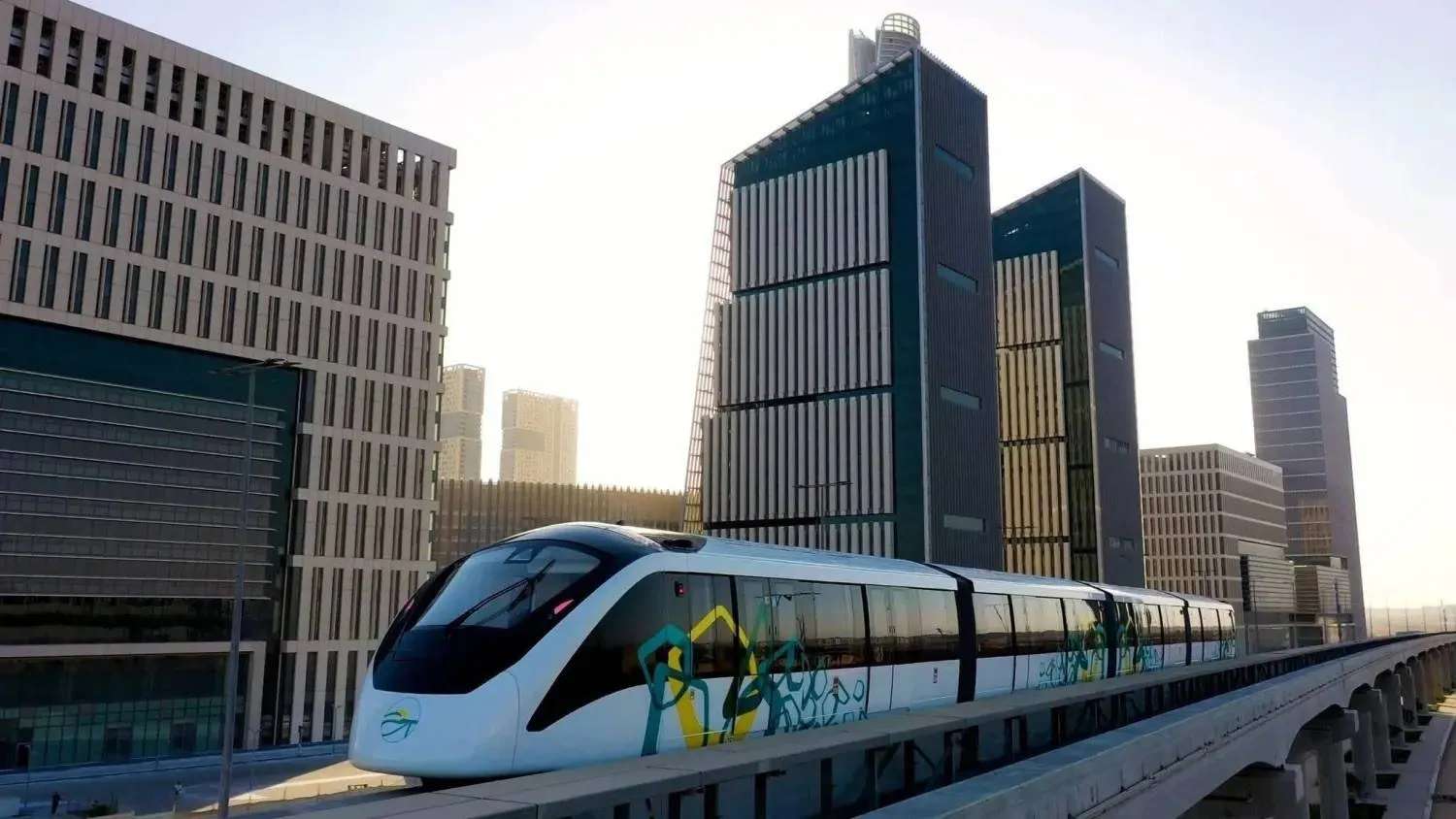
The East Nile Monorail passes alongside high-rise buildings in Egypt’s New Administrative Capital (Egyptian Ministry of Transport) 
TT

Egypt’s New Administrative Capital Gains Official Momentum, but Residential Occupancy Remains Limited

The East Nile Monorail passes alongside high-rise buildings in Egypt’s New Administrative Capital (Egyptian Ministry of Transport) 

Egypt’s New Administrative Capital is steadily gaining political momentum through a growing number of official events that reinforce its standing both officially and publicly, although residential occupancy remains limited.

According to Khaled Abbas, chairman and CEO of the Administrative Capital for Urban Development (ACUD), more than 30,000 people now live in the city, with the number of residents increasing daily. Speaking on television last month, Abbas said the population is expected to reach between 50,000 and 60,000 by the end of the year, based on applications for utility meter installations received by the company.

The project dates back to March 2015, when it was launched to ease pressure on Cairo by building a new city covering about 700 square kilometers (roughly 170,000 feddans) in three phases. The first phase spans 168 square kilometers (about 40,000 feddans), nearly half the size of Cairo, which covers about 90,000 feddans.

The capital was originally scheduled to become operational in 2020, but the COVID-19 pandemic and the geopolitical tensions that followed delayed its official launch until 2024. Ministries then began relocating to the Government District, followed by parliament and other state institutions.

Despite major investments in roads and transportation networks, residential occupancy remains limited compared with the government’s presence, even as authorities continue to hold high-profile events aimed at enhancing the capital’s stature. Most recently, President Abdel Fattah al-Sisi inaugurated the Strategic Command Headquarters, which official statements said is modeled on the world’s most advanced command-and-control centers.

Ahmed Abdel Fattah, head of Partner Business Development at Bold Routes Egypt, told Asharq Al-Awsat that the occupancy rate is “normal despite being limited,” noting that residential populations in new cities typically grow gradually as services expand and more activities are held.

“Years ago, people considered cities such as New Cairo and 6th of October City too far away,” he said. “Today, properties are marketed according to their proximity to the American University in Cairo’s Fifth Settlement, which has effectively become the new downtown.”

Abbas defended the occupancy figures, saying they are “not low.” He noted that the first phase alone is four times the size of either Sheikh Zayed City or El Shorouk City. “The capital is not just a handful of buildings in the middle of the desert, as some imagine,” he stated, adding that infrastructure for the first phase has been completed and about 70 percent of the city’s land has been sold to real estate developers.

Egypt sees the new capital as “a pivotal step” toward reorganizing state institutions within a modern urban environment built on advanced infrastructure and technology, according to official statements.

The city now hosts cabinet meetings, government press conferences, official meetings with senior officials, and major conferences. It recently opened a dedicated “Fan Zone” for World Cup broadcasts and has hosted several official conferences.

To improve access, Egypt recently began operating the East Nile Monorail, linking Cairo with the new capital.

Abdel Fattah said demand for residential units remains lower than demand for comparable units in New Cairo, though interest is increasing. He noted that many projects in the capital are still in the planning and construction stages, with many buyers reserving units on installment plans for future residence.

“The average price per square meter for apartments is about EGP50,000 ($1 equals about EGP50), rising to EGP85,000 for villas,” he said, adding that prices remain lower than in New Cairo because services and projects are not yet fully completed. He described the capital as “the future of housing in Egypt’s real estate market” and predicted demand would continue to grow.

The first phase is designed to accommodate about 500,000 residents. Former senator and strategic analyst Abdel Monem Said, however, expects the population to reach 1 million by 2030. He told Asharq Al-Awsat that the official momentum generated by recent inaugurations and the relocation of ministries and state institutions has strengthened the capital’s profile, while major events and conferences have increased its public appeal.

He continued that the current occupancy level is “natural, especially for a newly built city,” and predicted that both its population and its official and political role would expand gradually over time, following the experience of other countries that have established new capitals.


Iraq Sentences US-Sanctioned Oil Official to Prison

The sun sets behind apartment buildings in Baghdad, Iraq, Friday, Aug. 28, 2026. (AP)
TT

Iraq Sentences US-Sanctioned Oil Official to Prison

The sun sets behind apartment buildings in Baghdad, Iraq, Friday, Aug. 28, 2026. (AP)

Iraq sentenced a US-sanctioned oil official to seven years in prison after he was arrested as part of a government-led anti-corruption campaign, the country's anti-graft body said on Sunday.

Deputy oil minister for distribution affairs Ali al-Bahadli is among dozens of officials who were detained in June during anti-graft raids that took place in several areas, mostly in Baghdad's fortified Green Zone.

The Commission of Integrity said in a statement that an anti-corruption court sentenced Bahadli to seven years in prison for "illicit gains".

The ruling requires Bahadli to return to the state an amount equivalent to more than $20 million in ill-gotten gains, in addition to paying a fine of the same amount.

The United States imposed sanctions on Bahadli in May, accusing him of fraudulently mixing Iraqi and Iranian oil as part of a scheme to help Iran avoid sanctions.

At the time, Iraq's oil ministry denied the accusations against Bahadli, who was then arrested during the anti-graft raids.

Iraqi authorities said that the raids were part of new Prime Minister Ali al-Zaidi's campaign to fight the corruption that has plagued Iraq for decades.

But several Iraqi officials told AFP that the raids were also part of al-Zaidi's campaign against funding for pro-Iran armed groups and the smuggling of Iranian oil.

Iraq has been under mounting pressure from the United States to curb Tehran's influence and rein in Iran-backed armed factions, which Washington designates as terrorist groups.

Al-Zaidi, who took office this year with the blessing of the United States, has pledged to ensure the armed factions that emerged after the US-led invasion hand over their weapons to the state.

In Iraq, corruption is especially rampant across public institutions, but convictions typically target mid-level officials or minor players and rarely those at the top of the power hierarchy.


US News Agency Says Crew Attacked by Israeli Settlers in West Bank

 Israeli settlers look out through a metal fence, as an Israeli flag flutters nearby, on the day of their weekly tour in Hebron, in the Israeli-occupied West Bank, August 29, 2026. (Reuters)
Israeli settlers look out through a metal fence, as an Israeli flag flutters nearby, on the day of their weekly tour in Hebron, in the Israeli-occupied West Bank, August 29, 2026. (Reuters)
TT

US News Agency Says Crew Attacked by Israeli Settlers in West Bank

 Israeli settlers look out through a metal fence, as an Israeli flag flutters nearby, on the day of their weekly tour in Hebron, in the Israeli-occupied West Bank, August 29, 2026. (Reuters)
Israeli settlers look out through a metal fence, as an Israeli flag flutters nearby, on the day of their weekly tour in Hebron, in the Israeli-occupied West Bank, August 29, 2026. (Reuters)

Israeli settlers attacked an NBC crew in the central West Bank Saturday, as they were interviewing a Palestinian woman who said she’d been driven out of her house by settlers, the network said.

NBC’s American correspondent Matt Bradley, two other crew members and the woman they were interviewing were all treated for injuries sustained during the attack, NBC said. There were no further details on their injuries.

The assault was caught on video and shared by NBC, with footage showing masked settlers approaching the crew with sticks and beating the crew’s vehicles.

Israel’s military said it was “aware of reports of Palestinian injuries, including a Palestinian woman who sustained non-life-threatening injuries and was evacuated by the Red Crescent for medical treatment.” It did not comment on the attack on the NBC crew.

It was the latest in a growing wave of violence by West Bank settlers. Prime Minister Benjamin Netanyahu issued a rare condemnation of the violence on Saturday. The Israeli leader has come under heavy US criticism for the settler attacks.

Settlers seized British activist and held him locked in shed

Israeli settlers seized a British activist from a Palestinian village in the West Bank and locked him in a shed before turning him over to police, his lawyer said Sunday.

The lawyer, Inbar Shaked Vardi, said settlers held her client, Finn Joughin, for half an hour Saturday before turning him over to Israeli police. Joughin was set to appear before a Jerusalem court later Sunday, she said.

Video showed two settlers, one armed, restraining Joughin and marching him away from the village.

It was not immediately clear what led to his capture. Settlers say he assaulted a child, accusations Vardi vehemently denied.

Settlers point to a video where the activist uses his body in an apparent attempt to block a settler boy from passing through a fence. Vardi said the video shows he was trying to protect the village.

Police said they were investigating and holding Joughin in custody on suspicion of committing an indecent act against a minor.


Libya Rivals Agree Roadmap for Elections Within 24 Months at UN-Led Talks

People wave Libyan flags during a demonstration in Benghazi February 7, 2014. (Reuters)
TT

Libya Rivals Agree Roadmap for Elections Within 24 Months at UN-Led Talks

People wave Libyan flags during a demonstration in Benghazi February 7, 2014. (Reuters)

Representatives of ‌Libya's rival political parties on Sunday signed an agreement on holding long-delayed national elections within two years to resolve contentious issues over electoral laws and reform the national elections body.

The political process to resolve more than a decade of conflict in Libya has been stalled since an election scheduled for December 2021 collapsed following disputes over the eligibility of the main candidates.

Sunday's signing ceremony was held at the United Nations Support Mission in Libya, UNSMIL, in ‌the Libyan capital ‌Tripoli.

It followed talks in a ‌smaller ⁠format, known as ⁠the 4+4, that involved two representatives of each of Libya's four main institutions: the Government of National Unity, the High Council of State, the House of Representatives and the Libyan National Army.

Walid Ellafi, state minister of political affairs and communications in the Government of National Unity, said legislative and ⁠presidential elections should be held "within a period not ‌exceeding 24 months" under a ‌single executive authority and unified national institutions.

Shibani AbuHamoud, head ‌of the army's general command, said the 4+4 would work ‌with UNSMIL "to develop a framework within one month of the signing of the agreement to follow up on all matters related to its implementation".

The agreement says that if Libya's House ‌of Representatives and High Council of State fail to approve the deal within a month, the ⁠parties ⁠will seek to adopt it nationally as a constitutional document through broad national mechanisms and secure international backing through the UN Security Council.

Libya has had little stability or security since a 2011 NATO-backed uprising.

It split in 2014 between warring eastern and western factions but there has been little major warfare since a 2020 ceasefire.

All Libya's major political players have repeatedly called for elections, but many Libyan people have voiced doubts that they would want a vote that could push most of them from positions of authority.
