
Transport Costs: A Daily Burden Weighing on Khartoum Residents

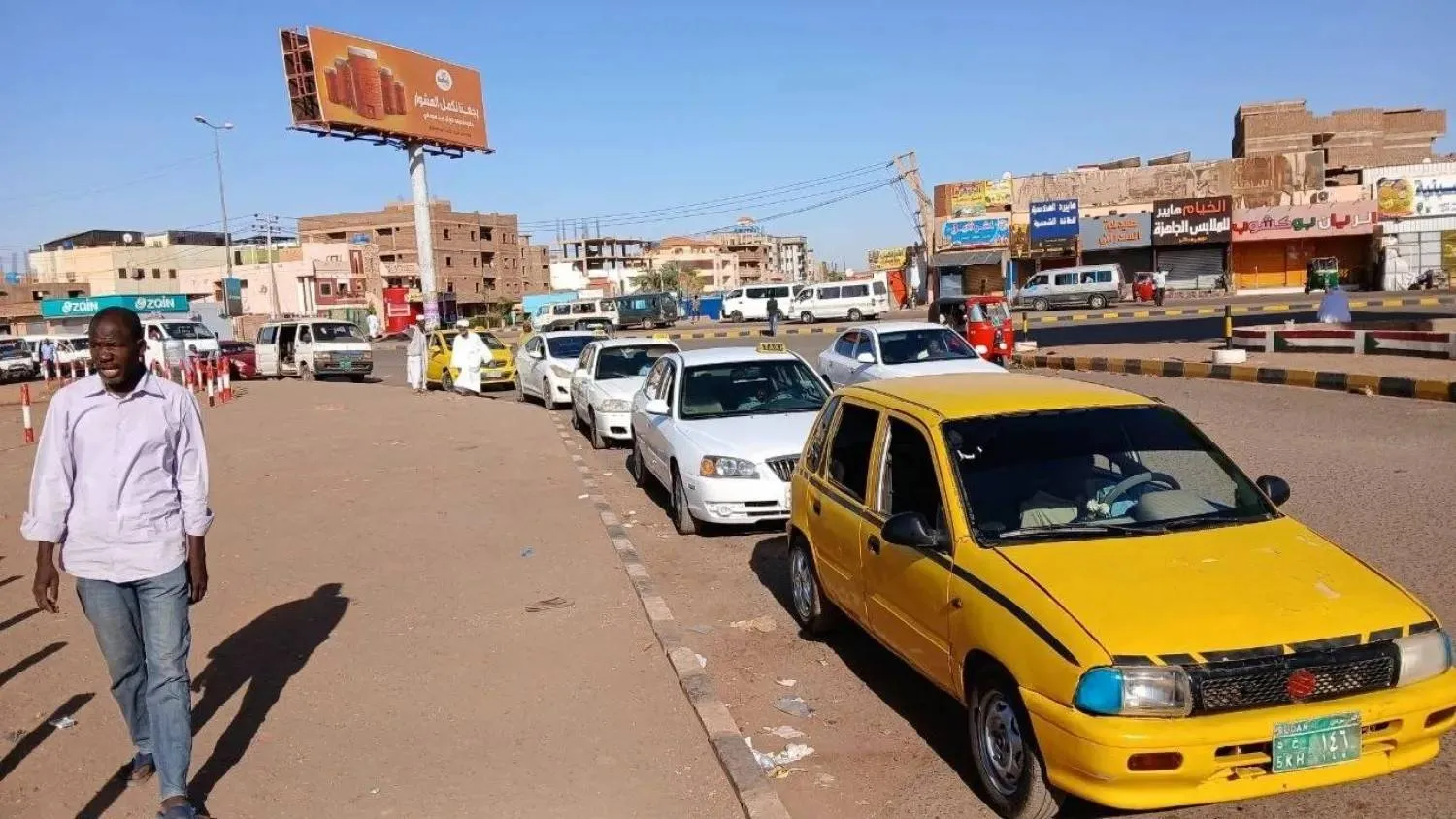
A general view of a public transport terminal in Khartoum (Asharq Al-Awsat)
TT

Transport Costs: A Daily Burden Weighing on Khartoum Residents

A general view of a public transport terminal in Khartoum (Asharq Al-Awsat)

Getting to work, hospital or university in Sudan’s capital, Khartoum, has become a test of survival in a city battered by war.

As transport fares rise, incomes fall and unemployment spreads, thousands of families are being forced to choose between commuting and paying for food, medicine and education.

The crisis has deepened as displaced people return to Khartoum and its three cities while services remain limited and the number of operating vehicles falls far short of demand. Higher fuel, spare parts and operating costs have pushed fares up further.

Passengers face long waits, frequent fare changes and shortages of vehicles on several routes. Damaged infrastructure and road closures have altered routes, lengthened journeys and forced many commuters to use more than one vehicle, sharply increasing daily costs.

Official figures reflect the wider economic strain. Gold export revenues reached about $370 million in the first quarter of this year, while fuel imports exceeded $697 million over the same period, highlighting the gap between export earnings and the cost of essential imports as large parts of the economy remain shut by the war.

For bus driver Abdullah Ali, 50, the transport crisis mirrors his personal losses. His bus was stolen when fighting began, and he was wounded by shrapnel in his right hand before fleeing to Gezira state, then Atbara and Shendi.

After returning to Khartoum about six months ago, he began working as a hired driver on a bus he does not own.

Ali told Asharq Al-Awsat that his income barely covered his daily needs and was not enough to renew his driver’s license. Many drivers were also unable to pay licensing and maintenance fees as fuel, oil, tire and spare-parts prices continued to rise, he said.

Moussa al-Safi, a laborer supporting four children, said transport consumed much of his daily income.

“The war has not only raised prices, but also reduced job opportunities,” he told Asharq Al-Awsat. “A worker pays to travel there and back without any guarantee of finding work or earning money by the end of the day.”

Private-sector employee Sami Abdel Qayoum said he often used more than one vehicle to reach work, taking up a large part of his monthly salary. To save money, he gets off before his destination and walks long distances.

University student Shehab Othman said some students arrived late or missed lectures because they could not afford transport, while others walked long distances to cut daily expenses.

Ezzedine Jaber, a member of the bus union, said short-route fares were about 2,000 Sudanese pounds, while some longer routes cost up to 6,000 pounds. Lower fuel prices were the main way to reduce operating costs and ease the burden on passengers, he said.

The impact extends beyond passenger transport.

“The price of a gallon of diesel has exceeded 40,000 pounds, raising the cost of transporting goods from Port Sudan and production areas to markets and export ports,” economist Mohamed al-Nayer told Asharq Al-Awsat. “That is ultimately reflected in the prices of goods and services.”

In Khartoum, where displaced people and refugees continue to return, transport fares have become part of the cost of survival.

Each increase can mean one less meal for a family, delayed medicine for a patient, a missed lecture for a student or kilometers of walking for a worker trying to protect what remains of their income.

Libya’s Zawiya Pays Growing Price for Stray Gunfire

A victim of clashes in Libya’s Zawiya in early May (Emergency Medicine and Support Center)
TT

Libya’s Zawiya Pays Growing Price for Stray Gunfire

A victim of clashes in Libya’s Zawiya in early May (Emergency Medicine and Support Center)

Gunfire tore through a neighborhood near Jazirat al-Muaskar in Libya’s western city of Zawiya after an intoxicated militiaman opened fire on the headquarters of a rival armed group, adding to the blood toll in a city already weighed down by militia violence.

Zawiya, long under the grip of armed factions, has grown used to burying residents killed by stray bullets. The city barely emerges from one round of fighting before another begins, leaving more dead and wounded.

Amjad al-Kilani, known as “al-Zir” and affiliated with the Zawiya-based 103rd Battalion, also known as al-Salla, was seen staggering with a machine gun over his shoulder as he fired indiscriminately toward a base of the al-Far militia, led by Mohammed Bahrun, and at nearby shops.

Witnesses in Zawiya said the clash stemmed from a dispute involving Kilani, who was previously affiliated with the Rabi al-Fanouta militia and runs a business on the coastal road.

After he recently joined al-Far, members of al-Salla, led by Othman al-Lahab, attacked him and forced him out of the market, the witnesses said.

Entrance to the city of Zawiya (from Zawiya-related social media pages)

Libyan businessman Ismail al-Shtaiwi condemned the footage of the intoxicated gunman firing wildly, posting a video of the incident on Facebook.

“No country in the world, no matter how wealthy, can take a single step toward success and stability while drowning in a militia swamp,” Shtaiwi wrote on Friday.

“Stability cannot be achieved, nor can development and economic reform move forward, while the country remains at the mercy of illegal guns and militias that dictate decisions,” he said.

“It is painful and shameful that this criminal and absurd scene continues to be exported to the world, reducing Libya to a state held hostage by chaos, uncontrolled weapons and outlaw gangs, instead of one known for its enormous capabilities, opportunities and resources.”

Shtaiwi said ordinary Libyans were paying the price through restrictions on travel and movement, damage to their image and the erosion of their country’s standing abroad.

“What is also painful and regrettable is that billions are spent every year under the headings of security and defense, while the results are there for everyone to see,” he said.

Violence in Zawiya often flares and then subsides, but only after leaving behind dead and wounded. One question continues to haunt the city: When will the threat from armed groups that endanger lives and drain the country’s resources finally end?

Several young men from Zawiya were killed in armed skirmishes in late May, prompting UN envoy Hanna Tetteh to warn against escalation and call for restraint.

Nasser Ammar, commander of the Support Force within the Tripoli authorities’ Operation Volcano of Rage, said Kilani’s random gunfire and intimidation of civilians while intoxicated was “an insult to the city and its history.”

“Zawiya has never lacked, and will never lack, free men who will not allow a reckless man to violate the sanctity of their homes and property,” Ammar said. “Protecting our people and uprooting this corruption is a duty for every honorable person.”

Security forces near Tripoli following clashes between armed militias (file photo from pages affiliated with security agencies)

Since the overthrow of late leader Muammar Gaddafi in 2011, Libya has seen a pattern of random or unexplained assassinations, often driven by armed rivalries, militia struggles for influence and revenge for earlier killings.

Local media tracking the violence in Zawiya have counted 62 deaths since the start of this year.

A security source at the Zawiya Security Directorate told Asharq Al-Awsat, however, that the true toll was higher because no official count existed.

Moatasem Ambiya was killed early on Thursday after being shot in the Jodayem area east of Zawiya by people described as “outlaw gunmen,” according to human rights groups.

The National Institution for Human Rights called on the Interior Ministry, the Zawiya Security Directorate, the Criminal Investigation Department and the prosecutor’s office at the Zawiya Court of Appeal to open a full investigation into Ambiya’s killing.

The group expressed “deep concern over the rising rates and indicators of kidnapping, arbitrary detention and extrajudicial killings in numerous cities, regions and municipalities.”

It blamed what it called “security chaos” caused by the absence of the relevant security authorities.

Like embers beneath the ashes, Zawiya remains on edge, bracing for violence that could erupt at any moment.

The widely shared video of the intoxicated gunman has come to reflect the growing reach of militias, fueling anger among Libyans over the security situation.

With armed groups tightening their grip, bloggers and activists in Zawiya have found little recourse beyond social media hashtags such as “Zawiya Is Bleeding,” “Stop the Killing” and “Enough Silence.”

They hope to make their voices heard by the authorities in Tripoli, whom they accuse of appeasing the city’s armed groups, supporting their presence and inviting their leaders to official gatherings.


US-Backed Oil Pipeline to Link Iraq, Syria

Vantive CEO Chris Toth, second from right, is joined by from left, Excelerate Energy President and CEO Steven Kobos, Commercis CEO Alan Afrasiab, left, and Roger Martella, GE Vernova Chief Corporate Officer and US-Iraq Business Council Chairman, during the US Iraq Business Summit at the US Chamber of Commerce, Friday, July 17, 2026, in Washington. (AP Photo/Rod Lamkey, Jr.)
TT

US-Backed Oil Pipeline to Link Iraq, Syria

Vantive CEO Chris Toth, second from right, is joined by from left, Excelerate Energy President and CEO Steven Kobos, Commercis CEO Alan Afrasiab, left, and Roger Martella, GE Vernova Chief Corporate Officer and US-Iraq Business Council Chairman, during the US Iraq Business Summit at the US Chamber of Commerce, Friday, July 17, 2026, in Washington. (AP Photo/Rod Lamkey, Jr.)

Iraqi Oil Minister Bassem al-Abadi signed an agreement with Syria on Friday to build a new oil pipeline, part of a package of economic deals reached during Prime Minister Ali al-Zaidi’s visit to the United States.

Asharq Al-Awsat had earlier reported, citing Syrian, Western, and Iraqi sources, that Baghdad and Damascus were preparing to sign a US-backed oil-link agreement during al-Zaidi’s visit to Washington.

The sources said the project could mark the start of a new economic alliance in the Arab Mashreq.

The pipeline would revive Iraqi oil exports through Syria and replace the historic Kirkuk-Banias route, which has been out of service for years.

A Syrian oil-sector official said the two countries were close to signing a preliminary agreement. The new pipeline would carry about 2 million barrels per day and take roughly 30 months to complete after the final deal is signed.

Tom Barrack, the US ambassador to Türkiye and special presidential envoy to Syria and Iraq, speaks at the US Iraq Business Summit at the U.S. Chamber of Commerce, Friday, July 17, 2026, in Washington. (AP Photo/Rod Lamkey, Jr.)

Diversifying export routes

The move comes as Iraq seeks to diversify its oil export routes and reduce its reliance on Gulf shipping lanes amid security threats that affect traffic through the Strait of Hormuz, the main outlet for Iraqi crude exports.

US Energy Secretary Chris Wright said at a ceremony for the signing of the economic agreements that President Donald Trump’s administration wanted to turn the Middle East from a region of conflict into a hub for trade and investment.

Greater investment was the best route to stability, peace, and job creation across the region, Wright said.

He praised al-Zaidi for choosing the United States as his first foreign destination, about 60 days after taking office, saying the decision underscored the importance of the US-Iraqi partnership in the next phase.

Wright said expanding Iraq’s energy sector and increasing oil output would require US companies to provide investment, technology, and expertise.

Their involvement would help improve efficiency and reduce Iraq’s dependence on some neighboring countries, he said.

Iraqi Prime Minister Ali al-Zaidi, center, attends the US Iraq Business Summit at the US Chamber of Commerce, Friday, July 17, 2026, in Washington. (AP Photo/Rod Lamkey, Jr.)

US oil deals in Iraq

Alongside the Iraqi-Syrian pipeline agreement, US oil producer ConocoPhillips said it had agreed to acquire a 42% stake in BP’s giant Kirkuk oilfields complex in Iraq.

ConocoPhillips said the deal was among several contracts signed during the Iraqi prime minister’s visit to the US.

The project holds reserves of more than 3 billion barrels and includes future exploration opportunities.

Financial terms were not disclosed, though estimates put the deal’s value at about $400 million.

The agreement was among the major oil deals cited by Trump during al-Zaidi’s White House visit, as Baghdad pushes to attract fresh foreign investment into its energy sector.


Egypt’s Greece, Cyprus Partnerships Do Not Hinder Ties With Türkiye

Egyptian President Abdel Fattah al-Sisi stands between Cypriot President Nikos Christodoulides and Greek Prime Minister Kyriakos Mitsotakis (Egyptian Presidency)
TT

Egypt’s Greece, Cyprus Partnerships Do Not Hinder Ties With Türkiye

Egyptian President Abdel Fattah al-Sisi stands between Cypriot President Nikos Christodoulides and Greek Prime Minister Kyriakos Mitsotakis (Egyptian Presidency)

Growing cooperation between Cairo and Ankara, which has expanded into defense and military coordination, is raising questions about its impact on the strategic partnership linking Egypt with Greece and Cyprus since 2014.

The development comes as Türkiye’s relations with Athens and Nicosia remain constrained by long-standing disputes over maritime boundary demarcation and energy issues in the Eastern Mediterranean.

Egyptian experts who spoke to Asharq Al-Awsat acknowledged that balancing Cairo’s regional relationships was no easy task. They stressed, however, that the Egyptian-Turkish rapprochement was not directed against Cyprus or Greece and could also serve their interests.

They said Egypt could play a role in bringing the sides closer together, given its determination to maintain balanced relations with all three countries.

Established partnership

Egypt, Greece and Cyprus have maintained a strategic partnership since the first presidential-level meeting of their trilateral cooperation mechanism in 2014.

At the time, relations between Cairo and Ankara were deeply strained following the fall of Muslim Brotherhood rule after the June 30 uprising. Some analyses suggested that Egypt had turned to partnerships with Cyprus and Greece to balance Türkiye.

Egypt, Cyprus and Greece launched a summit-level trilateral cooperation mechanism, holding its first meeting in Cairo in November 2014.

The three countries have since taken turns hosting their meetings annually, with the 10th round held in Cairo in January 2025.

Earlier this year, Cairo hosted political consultations among the foreign ministers of Egypt, Greece and Cyprus.

Egyptian Foreign Minister Badr Abdelatty highlighted “the special nature of the relations linking Cairo with Athens and Nicosia, which contributed to a convergence of views on establishing the trilateral summit mechanism.”

He described the mechanism as “a model for cooperation and regional integration.”

The latest step in the growing relationship between Egypt and Türkiye was the signing of a letter of intent on defense cooperation during Egyptian Defense Minister Ashraf Salem Zaher's visit to Ankara last Sunday.

It was the first visit of its kind since President Abdel Fattah al-Sisi traveled to Ankara on May 8, 2013, when he was serving as defense minister.

Greek caution

Greek newspaper eKathimerini examined the growing Egyptian-Turkish rapprochement in a report published on July 15.

It said that while the rapprochement did not directly threaten Greek interests so far, it was increasing concerns amid broader regional geopolitical shifts.

Rakha Ahmed Hassan, a member of the Egyptian Council for Foreign Affairs and a former ambassador, said Egypt stressed on all occasions and in its meetings with Türkiye, Greece and Cyprus that there was no way to resolve their disputes except through dialogue and negotiation.

“Egypt seeks to maintain a balance in its relations with the three countries,” Hassan told Asharq Al-Awsat.

“Egypt’s task in achieving this balance is not easy because of the difficulty of the situation itself,” he said.

“Türkiye does not recognize the international law of the high seas concerning the division of maritime boundaries and the economic maritime zone in the Eastern Mediterranean, while Greece and Cyprus insist on its application. Egypt is also a signatory to this 1982 law.”

The main disputes between Türkiye, on one side, and Greece and Cyprus, on the other, center on complex geopolitical and economic issues.

Chief among them is the Cyprus conflict, the oldest of these disputes. It dates back to 1974, when Turkish forces intervened in the northern part of the island following a coup backed by the military council then ruling Greece.

Ankara says its intervention was intended to protect Turkish Cypriots, while Cyprus and Greece consider it an occupation of the northern part of the island.

The disputes also include disagreements over maritime boundary demarcation, airspace, the continental shelf and exclusive economic zones in the Aegean Sea and the Eastern Mediterranean.

These disputes intensified with natural gas discoveries and competition over the exploitation of energy resources in the Eastern Mediterranean.

Egypt as a bridge

Bashir Abdel Fattah, an Egyptian academic and international relations researcher, said Egypt had begun paying greater attention to the Mediterranean dimension of its foreign relations a decade or more ago, focusing on Cyprus and Greece.

“Egypt demarcated its maritime borders with them and entered into security arrangements, regular military exercises and high-level security and strategic coordination,” Abdel Fattah told Asharq Al-Awsat.

“The two countries also play an important role in strengthening Egypt’s relations with the European Union. At the same time, Egypt restored momentum to its relationship with Türkiye after a period of political disagreements.”

Abdel Fattah said there was no contradiction between Egypt’s rapprochement with Türkiye and its close relations with Greece and Cyprus.

“Cairo is keen to diversify its relationships, and this is its sovereign right,” he said.

“Contrary to any concerns, Egypt could serve as a bridge for rapprochement between Türkiye, Greece and Cyprus and help resolve disputes over maritime boundary demarcation and the sharing of Eastern Mediterranean resources.”

Relations between Egypt and Türkiye have grown rapidly since 2023, as ties between the two countries returned to normal and Sisi and Turkish President Recep Tayyip Erdogan exchanged visits.

This was reflected in military cooperation, particularly in training and cooperation in the defense industries.

Amr el-Shobaki, an adviser at the Al-Ahram Center for Political and Strategic Studies, said the Egyptian-Turkish rapprochement, particularly in the military field, could understandably concern Israel.

“But it will never be directed against Greece and Cyprus,” Shobaki said.

“On the contrary, through this rapprochement with Türkiye, Egypt could play a major role in easing tensions between Türkiye, Greece and Cyprus because of its strong and distinguished relations with all three countries.”

Shobaki told Asharq Al-Awsat that it was natural for Greece and Cyprus to monitor developments in the rapprochement between Egypt and Türkiye, given the sensitivity of their position toward Türkiye.

“But they undoubtedly have strong confidence in Egypt because of the strength of their relations with it,” he said.