


Guarantees Demanded from Israel, Hezbollah over Proposed Int’l Force in South Lebanon

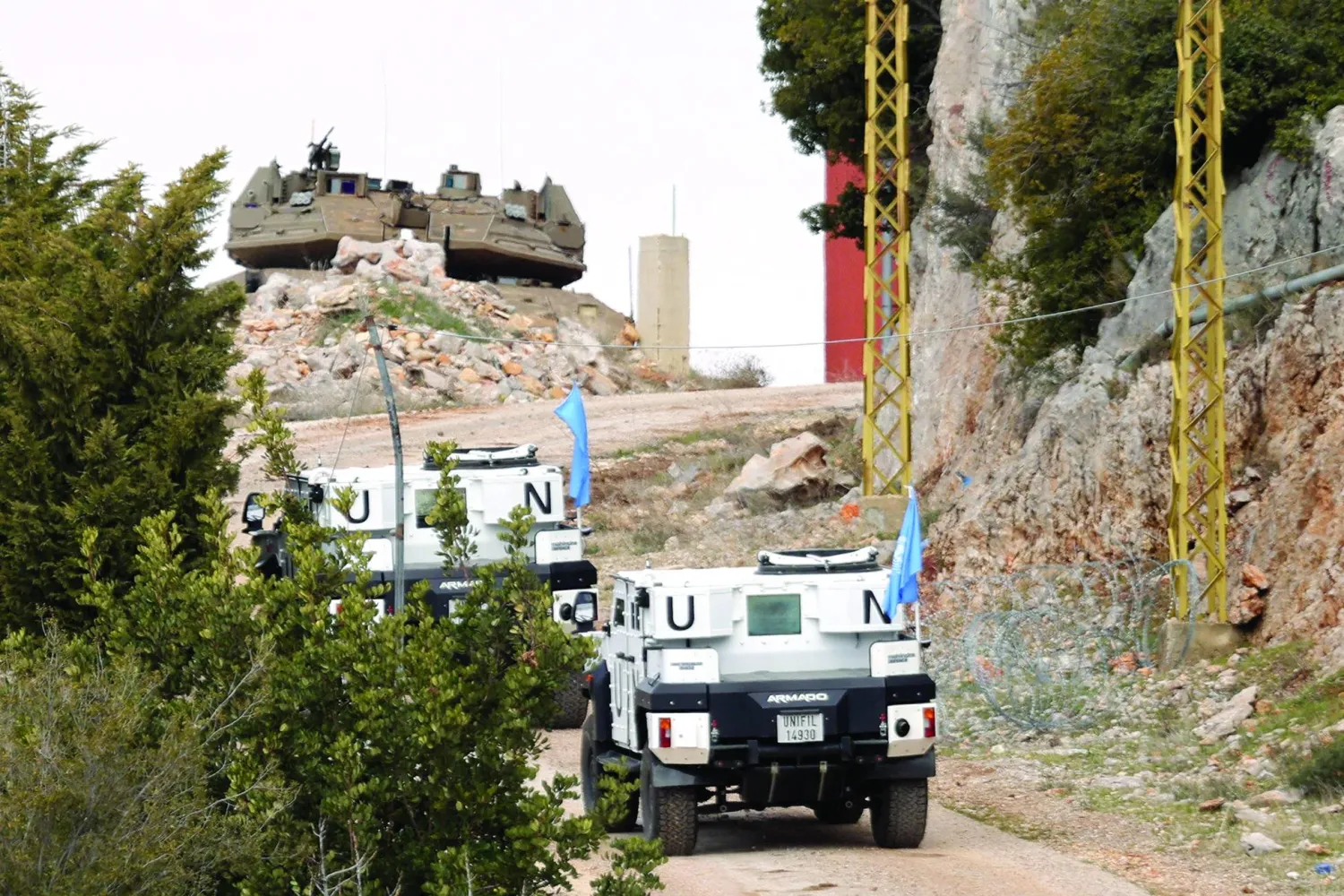
A photo taken from the southern Lebanese area of Marjeyoun, shows UNIFIL forces driving towards an Israeli army position in the southern Lebanese village of Kfar Shouba on February 15, 2025. (AFP)
TT

Guarantees Demanded from Israel, Hezbollah over Proposed Int’l Force in South Lebanon

A photo taken from the southern Lebanese area of Marjeyoun, shows UNIFIL forces driving towards an Israeli army position in the southern Lebanese village of Kfar Shouba on February 15, 2025. (AFP)

Countries being considered for a possible international mission to replace the United Nations Interim Force in Lebanon (UNIFIL), or as members in a verification mechanisms in proposed pilot zones in South Lebanon, are seeking security guarantees from both Israel and Hezbollah, Lebanese sources familiar with discussions with European countries told Asharq Al-Awsat.

Continued Israeli attacks and military violations in the South are blocking progress on both tracks, the sources said.

Lebanese President Joseph Aoun discussed the post-UNIFIL phase with Italian Prime Minister Giorgia Meloni during a visit to Rome on Friday, including Italy’s readiness to participate in a verification mechanism in the pilot zones and provide military support to the Lebanese Army.

Lebanese Army Commander Gen. Rodolphe Haykal, who headed to Rome on Sunday, is continuing those discussions, focusing on technical and military details.
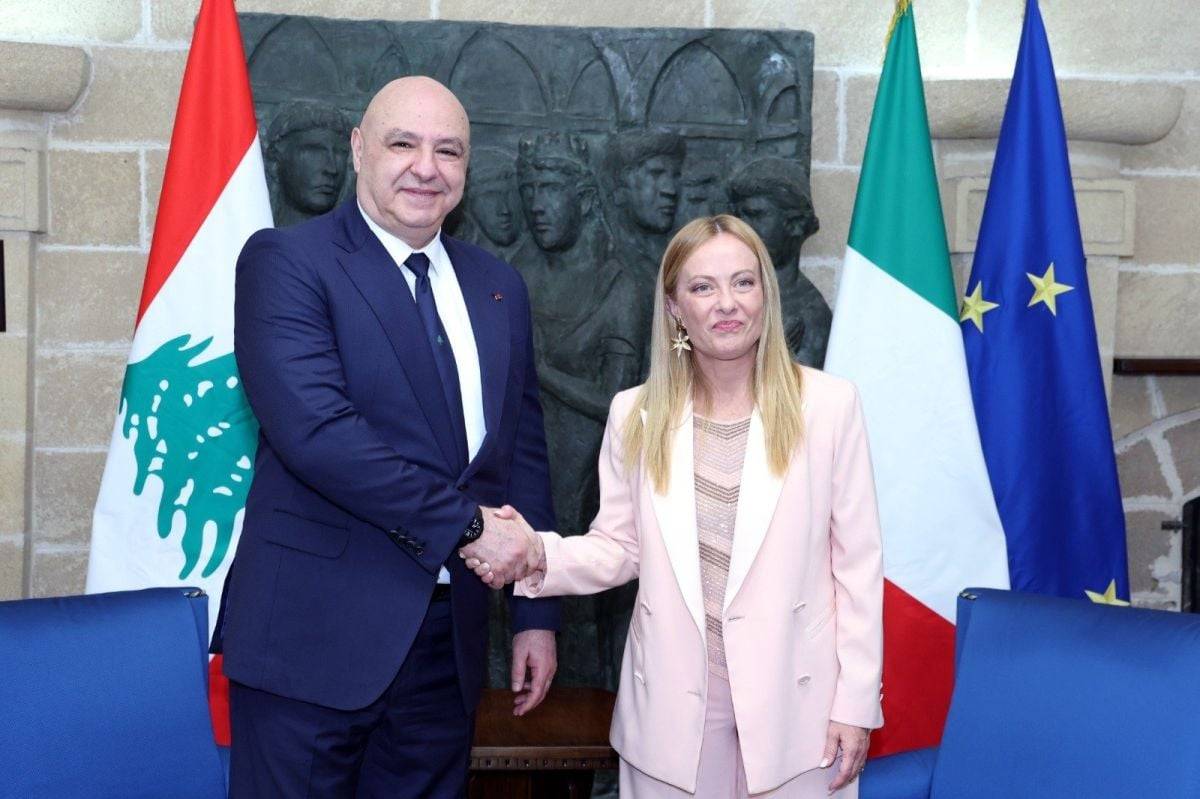
Lebanese President Joseph Aoun meets with Italian Prime Minister Giorgia Meloni in Rome on Friday, Aug. 21, 2026. (Lebanese presidency on X)

Security guarantees

Military sources told Asharq Al-Awsat that Haykal’s agenda includes support for the army, preparations for the expiration of UNIFIL’s mandate at the end of this year, a proposed joint European force to replace it and a monitoring mechanism for the pilot zones.

The details are being discussed so they would be ready for implementation if political progress is made and obstacles are removed.

“Nothing is final at this point amid the Israeli escalation,” the sources said, referring to daily strikes and violations of the ceasefire agreement.

Protecting international personnel deployed in South Lebanon remains a key concern. Lebanese sources following the talks noted that countries being considered for any mission are demanding security guarantees for their personnel from both Israel and Hezbollah.

They are seeking Hezbollah’s prior approval for their participation and assurances that the party will not oppose their deployment. They also require Israel to halt attacks on Lebanese territory within their areas of operation.

“With the attacks continuing, there is no progress on any of the proposed files,” the sources underlined, adding that UNIFIL itself is struggling with the current military escalation in the South.
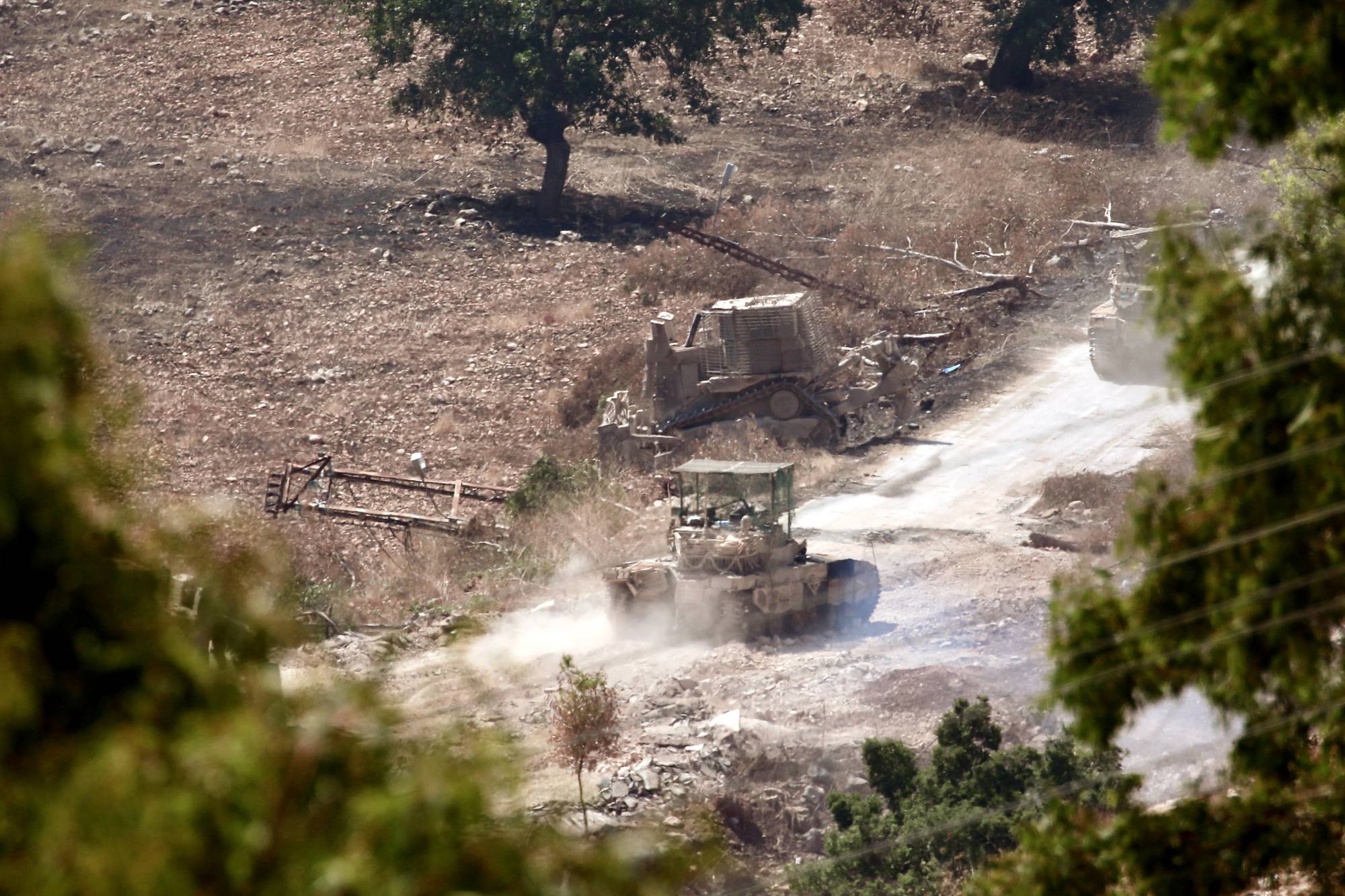
Israeli armored vehicles drive through the Wadi al-Slouki area, as seen from Chaqra village, in southern Lebanon, 21 August 2026. (EPA)

Italy seen as leading candidate

The proposed monitoring mechanism for the pilot zones also remains unresolved, with Israel objecting to the participation of some countries.

Italy appears the most likely candidate to secure approval from the United States, Lebanon and Israel, although no final decision has been made. Unlike France, Italy has not faced an Israeli veto, the sources remarked.

Military sources accused Israel of obstructing proposals for a verification mechanism because “it does not want anyone monitoring it,” citing human rights violations and other actions in the South that could be documented and potentially used against the Israeli military in the future.

Italy is considered the leading candidate to undertake the verification mission once political obstacles are removed, given its active role in several missions in Lebanon. Rome is also hosting US-sponsored Lebanese-Israeli negotiations.

Italy contributes 738 troops to UNIFIL, making it the mission’s largest European contingent. UNIFIL is also currently commanded by Italian Maj. Gen. Diodato Abagnara.

Italy also leads the Military Technical Committee for Lebanon (MTC4L), an international body coordinating multinational military assistance to the Lebanese Army. The Italian Bilateral Military Mission in Lebanon (MIBIL) has also provided training to the Lebanese Army since 2015.
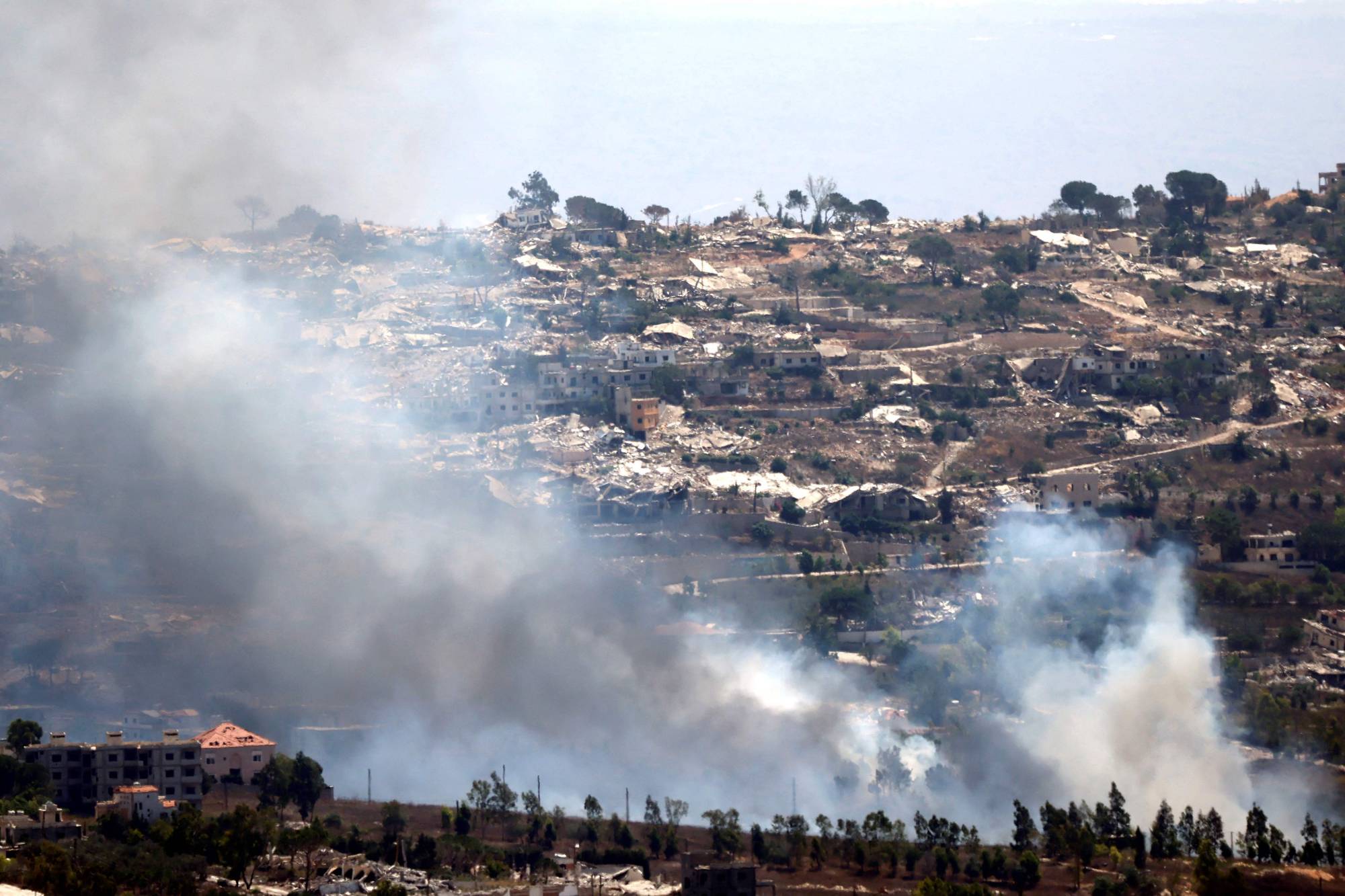
A photograph taken from the southern Lebanese area of Marjeyoun shows smoke as it rises from torched houses in the border village of Khiam on August 24, 2026. (AFP)

Israeli operations continue

Meanwhile, the Israeli military continued to violate the ceasefire agreement in the South, carrying out major explosions in Kfar Tebnit, Yohmor al-Shaqif, Majdal Zoun and Khiam.

Israeli forces also carried out bulldozing and demolition work on the western outskirts of Mays al-Jabal, destroying a temporary school complex built and opened by the municipality after the latest war in cooperation with the Council for South Lebanon and the Jabal Amel Union of Municipalities.

Israeli troops also brought in a truck carrying explosives and began rigging several homes for demolition.

Airstrikes targeted the outskirts of Majdal Zoun in the Tyre district, Houla in the Bint Jbeil district, and areas around Deir Seryan-al-Qusayr and Dawhet Kfar Rumman in Nabatieh.

An Israeli armored force advanced toward an area between Hadatha and Haris, where bulldozers carried out operations.

Israeli forces positioned between Beaufort Castle and Kfar Tebnit, through the towns of Arnoun and Zawtar al-Sharqiyeh, opened heavy- and medium-machine-gun fire as several explosions were heard. Israeli artillery also struck the outskirts of Mayfadoun.

The escalation followed a night of airstrikes targeting Ali al-Taher hill, Dawhet Kfar Rumman and Nabatieh al-Fawqa, accompanied by intermittent artillery fire.



Egypt Seeks Regional, International Support for Political Solution in Sudan

Egyptian President Abdel Fattah al-Sisi meets with Sudanese Sovereign Council Chairman Abdel Fattah al-Burhan in New Alamein. (Egyptian Presidency) 
TT

Egypt Seeks Regional, International Support for Political Solution in Sudan

Egyptian President Abdel Fattah al-Sisi meets with Sudanese Sovereign Council Chairman Abdel Fattah al-Burhan in New Alamein. (Egyptian Presidency) 

Egypt is seeking stronger regional and international efforts to advance a political solution to the war in Sudan, saying an end to the conflict is essential to easing the suffering of the Sudanese people and restoring stability.

Egyptian President Abdel Fattah al-Sisi reiterated that position during talks with General Abdel Fattah al-Burhan, chairman of Sudan’s Transitional Sovereign Council, on the sidelines of the 8th African Union Mid-Year Coordination Meeting.

Al-Sisi stressed the need to “exert all efforts at the regional and international levels to advance a political solution to the internal war,” while reaffirming his country’s longstanding support for Sudan and its people, according to the Egyptian presidency.

Since fighting erupted in mid-April 2023, Cairo has backed Sudan’s legitimate state institutions, foremost among them the army, while pressing for an end to the war and an inclusive political process bringing together the various components of Sudanese society.

During the meeting, al-Sisi pledged to continue Egypt’s regional and international efforts to promote a political settlement that could end the fighting and alleviate the humanitarian crisis. Such a solution, he noted, would allow Sudan to regain security and stability and begin the process of reconstruction and development.

Egypt has been involved in several diplomatic initiatives since the war began. It backed the Jeddah talks between the Sudanese army and the Rapid Support Forces (RSF) and, in July 2023, hosted a summit of Sudan’s neighboring countries aimed at advancing political solutions to the crisis.

A year later, Cairo hosted Sudanese political forces for talks aimed at developing a road map for an intra-Sudanese dialogue and overcoming the country’s internal divisions.

Al-Burhan, for his part, praised Egypt’s support for Sudan, including its political and humanitarian assistance and its hosting of large numbers of Sudanese forced to flee the war.

About 1.2 million Sudanese have fled to Egyptian cities because of the conflict, according to official figures, joining thousands of others who had already been living in the country for years.

Turning to prospects for a political settlement, al-Burhan stressed that Sudan’s legitimate state institutions should not be equated with “rebel militias or parallel entities,” and praised Egypt’s “clear and consistent” position on the issue.

Egypt considers the RSF an “armed militia” and has repeatedly rejected accusations that it is intervening in Sudan’s internal conflict.

The talks also covered bilateral ties, with al-Sisi reaffirming Egypt’s commitment to supporting Sudanese citizens in various fields and expanding cooperation between the two countries to serve their shared interests and development goals.

Cooperation on Sudan’s eventual reconstruction has also featured in recent bilateral discussions.

A joint statement issued after talks between Egyptian Prime Minister Mostafa Madbouly and his Sudanese counterpart Kamil Idris in February said Cairo had welcomed Khartoum’s request to draw on Egyptian expertise in establishing a new administrative city.

The project would be modeled on Egypt’s experience in the field and form part of efforts to support Sudan’s reconstruction, the statement said.


Israeli Army Takes Logistical Steps to Entrench Presence in South Lebanon

Israeli soldiers on an operational mission in a village in South Lebanon (Israeli military) 
TT

Israeli Army Takes Logistical Steps to Entrench Presence in South Lebanon

Israeli soldiers on an operational mission in a village in South Lebanon (Israeli military) 

The Israeli army is taking logistical steps to prepare for a prolonged presence in South Lebanon, fortifying positions and improving road networks while expanding scorched areas north of what it calls the “Yellow Line.”

Israeli strikes have also extended deeper into Lebanon, reaching Wadi Zibqin in the western sector and the vicinity of Mayfadoun in the east, in what local sources described as an expansion of depopulated areas through gunfire, artillery shelling, airstrikes and drone activity.

The expansion comes amid operational challenges reported by Israeli media, particularly fiber-optic-guided explosive drones. Ynet reported that the Israeli military has yet to find a comprehensive solution to the threat and is testing various systems, focusing on protection, early detection and warning.

Long-term preparations

The measures offer no indication that Israeli forces intend to withdraw from South Lebanon in the foreseeable future.

Ynet reported that the military was fortifying positions and improving access roads even after the 55th Reserve Paratroopers Brigade completed its mission and handed over its positions to replacement forces.

The brigade completed about 100 days of mobilization, including 80 days of operations in Lebanon, concentrated between the border and what the Israeli military calls the “Yellow Line,” reaching depths of about 12 kilometers (7.5 miles).

Forces from the Bislamach Brigade and the Gefen Battalion of the officers’ course are replacing the 55th Brigade, conducting drills and improving positions that provide observation and fire control over areas farther inside Lebanon.

Israeli security officials cited by Ynet indicated that troops would spend the winter in protected compounds inside villages. Buildings were equipped over the summer with generators, air conditioning, and sanitary facilities, while access routes were prepared in advance.

The report also cited concerns that limiting operations to securing the deployment line could erode readiness and increase the risk of attacks on Israeli forces in South Lebanon.

Second line of villages

Alongside fixed military positions established by the Israeli army since May, now numbering 17, according to southern Lebanese security sources who spoke to Asharq Al-Awsat, Israeli forces are expanding their fire zone toward a second line of villages bordering the “Yellow Line,” with the aim of turning them into depopulated, hazardous areas.

Local sources reported intensified gunfire and artillery shelling in recent days, accompanied by persistent drone flights. The attacks have reached the outskirts of Wadi Zibqin and Mayfadoun, southeast of Nabatieh, where residents remain, and some displaced people have returned over the past three months.

Lebanon’s official National News Agency reported an Israeli airstrike on Kfar Tibnit after artillery shelling between Arnoun and Kfar Tibnit. Israeli artillery also struck near the public school in Mayfadoun and Dawhat Kfar Roummane, as well as the outskirts of Haris and Haddatha.

A Merkava tank fired several shells at Houla, while Israeli fire targeted the outskirts of Shaqra and Kounine woodland. A series of strikes hit Kfar Tibnit and Wadi al-Hujair, with explosions heard in Sidon and surrounding areas.

In the western sector, Israeli artillery intermittently shelled Mansouri from Bayyada and Tayr Harfa, south of Tyre, with fire extending to Wadi Hassan near Majdal Zoun. Israeli forces also carried out a powerful explosion in Mansouri that was heard as far as Mount Lebanon, following another blast near Baraachit in the Bint Jbeil district. A suspicious object left from previous Israeli attacks also exploded on the outskirts of Srifa.

Soldiers injured

Separately, the Israeli military announced Sunday that a soldier was seriously wounded and an officer moderately injured Friday in Majdal Zoun after a grenade was improperly thrown.

Eight other Israeli soldiers were injured Friday in a separate incident in South Lebanon involving a collision between two vehicles.


Yemeni Army Continues Strikes Against Houthis

Yemeni Armed Forces Spokesperson Majid Al-Nazili (SABA)
TT

Yemeni Army Continues Strikes Against Houthis

Yemeni Armed Forces Spokesperson Majid Al-Nazili (SABA)

Yemeni army spokesman Colonel Majid Al-Nazili said the Yemeni armed forces carried out 1,122 operations targeting the Houthi militias as part of a campaign to “liberate” the country, restore state institutions and end the Houthi coup.

In a statement posted on X he said that the armed forces were “continuing military operations across various fronts and battlefields in line with approved plans.”

He added that the Yemeni army carried out 1,122 precision strikes against Houthi targets, including weapons positions, fortifications, supply routes, reinforcements and command-and-control centers, across the Saada, Jawf, Taiz and coastal fronts.

He said the strikes involved fighter jets, drones, artillery, missiles, rocket launchers and snipers.

According to field figures, the operations resulted in the neutralization of 1,747 militia members and the destruction or disabling of 364 military vehicles, equipment, and transport and supply assets.

He said the armed forces would continue military operations to liberate state territory, restore state institutions, assert national sovereignty, and fulfil their assigned missions.