What Outcomes Will Hezbollah MP’s Visit to Tehran Have on Lebanon?

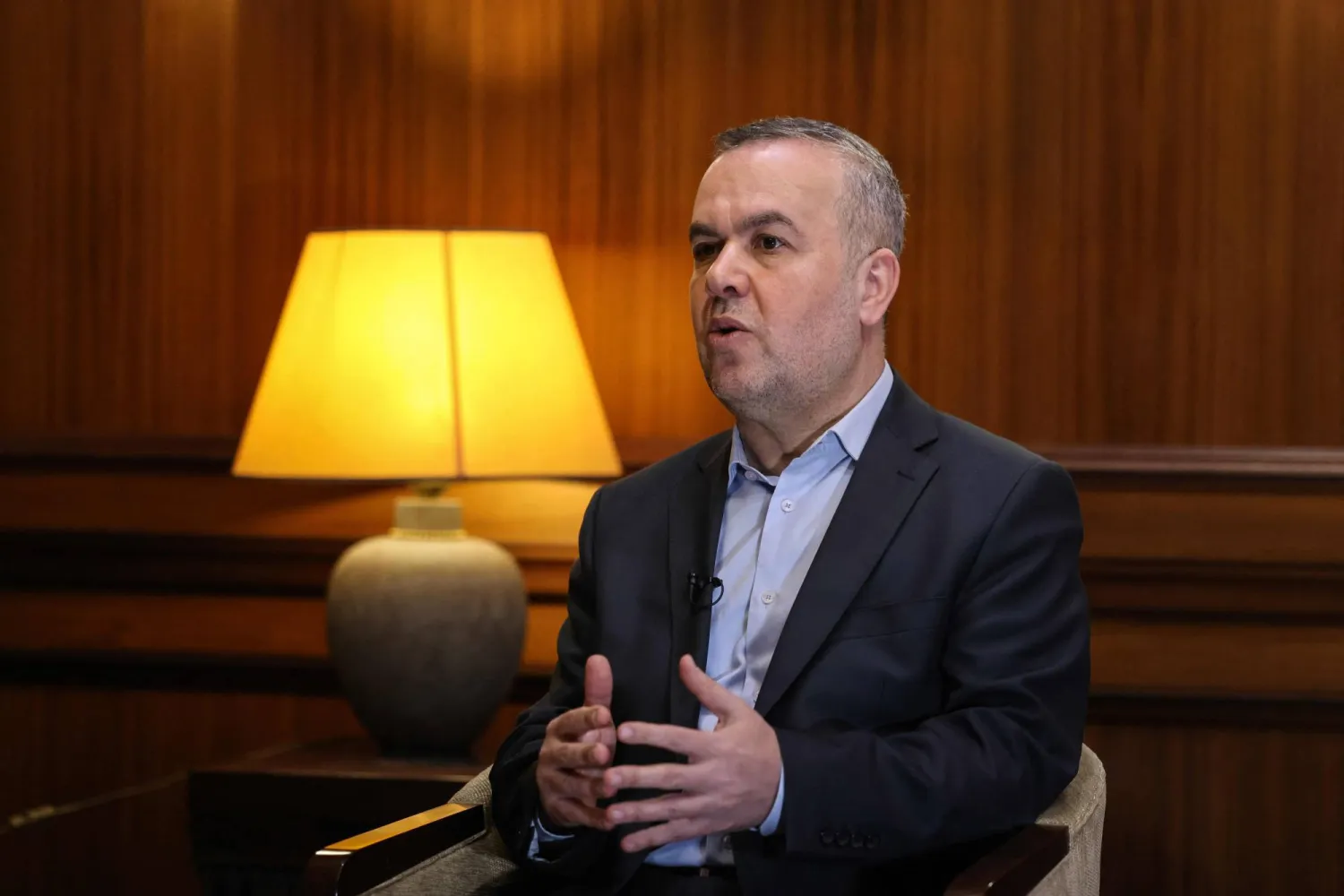
Lebanese lawmaker Hassan Fadlallah, a member of Hezbollah’s parliamentary bloc. (AFP)
TT

What Outcomes Will Hezbollah MP’s Visit to Tehran Have on Lebanon?

Lebanese lawmaker Hassan Fadlallah, a member of Hezbollah’s parliamentary bloc. (AFP)

The importance of Lebanese lawmaker Hassan Fadlallah’s latest visit to Tehran lies not in the trip itself. Hezbollah’s alliance with Iran is public and well established. What stands out is its timing and the way it was announced.

Iran’s Foreign Ministry disclosed the visit as the Lebanese state seeks to chart a political course free from regional rivalries and assert that decisions concerning Lebanon must run through state institutions.

Iran’s Foreign Ministry said two days ago that Foreign Minister Abbas Araghchi received Fadlallah, a member of Hezbollah’s parliamentary bloc, in Tehran. Hezbollah’s representative in Iran, Abdallah Safieddine, attended the meeting.

The ministry said the talks covered the latest developments in Lebanon and Israeli attacks. Araghchi reaffirmed Iran’s support for Lebanon and its “defense of its territorial integrity, dignity and national sovereignty.”

Fadlallah praised Iran’s position and what he called its strong diplomacy, urging a unified Islamic stand against Israel.

Outcomes of the visit

Ministerial sources said Hezbollah’s relationship with Iran “requires no interpretation. It is an alliance both sides openly take pride in.”

“At a time when Lebanese officials are working to separate the two tracks, this visit again raises questions about whether the party respects the role of the state and the positions of its officials,” they said.

The sources told Asharq Al-Awsat: “This is certainly not the first time a Hezbollah official has visited Tehran, nor will it be the last. But it may be the first time such a visit has been announced in this way — through an official statement from the Iranian Foreign Ministry.”

“That gives the meeting an official character that goes beyond receiving a Lebanese lawmaker. It appears almost as a meeting between officials of two states.”

Still, the sources said the key question was what the visit would produce: whether it would ease the process now underway or make it even more difficult, particularly because Fadlallah is responsible for negotiations with the Lebanese presidency.

“Will Hezbollah cooperate with the state in the process it is managing, particularly over negotiations with Israel? Or will it continue rejecting decisions made by state institutions and escalate further?” they asked.

The question is even more pressing as Iranian-American negotiations falter and threaten repercussions in Lebanon, they warned.

Communications cut

The sources said communications between President Joseph Aoun and Hezbollah had been cut, with no recent contact. The only remaining channel is with Parliament Speaker Nabih Berri, Hezbollah’s key ally.

The visit came days after the United States imposed new sanctions on Hezbollah, targeting 10 individuals and a network Washington accused of moving funds between Iran’s Revolutionary Guards’ Quds Force and the Lebanese group.

Hezbollah responded by declaring its pride in its relationship with Iran and reaffirming its commitment to the “path of resistance.”

El Hage: They challenge the state every day

Lebanese Forces parliamentary bloc member Razi El Hage said there was “nothing unusual” about Fadlallah’s visit to Tehran.

Hezbollah has never let a day pass without treating Iran as the foundation of the equation. The group opposed the state and sought to place Lebanon within the framework of Iranian-American negotiations, he told Asharq Al-Awsat.

“This is not a new challenge to the state. They challenge it every day through their positions and their insistence on keeping Lebanese decision-making tied to foreign powers,” El Hage said.

“They must understand that the clock will not be turned back. The state has embarked on a course from which there can be no retreat.”

“They are making the decision to slaughter Lebanon,” El Hage added.

“Our position will remain firm. We will not retreat from our demand that the state alone hold decision-making authority and continue along the path it has begun.”

El Hage also called on the government to enforce its decisions more firmly, saying the state must prove it can assert its authority and protect Lebanon from attempts to keep it an arena for other countries’ conflicts.

Lebanese decisions first

Fadlallah’s visit came as President Joseph Aoun and Prime Minister Nawaf Salam have taken clear positions on keeping Lebanon out of other countries’ conflicts.

Aoun previously said Iran was “using Lebanon as a bargaining chip” in its negotiations with the United States.

He said he was working to implement a policy of distancing Lebanon from regional conflicts and insisted that decisions affecting the country’s sovereignty and security must rest exclusively with the Lebanese state.

Salam previously said: “Once again, the South and its people are paying the price for a decision they did not take. If I may address Iran directly: have mercy on our south and stop treating it as a bargaining chip in your negotiations.”

“Lebanon is not a mailbox for others’ messages, nor a battlefield for their wars,” he stated.


UNICEF Stresses Need to Allow Humanitarian Aid into Gaza to Save Children

A Palestinian evacuates with their belongings from the remains of their homes, where they had been living near the Yellow Line, east of the Zeitoun neighborhood in eastern Gaza City, 14 November 2026.EPA/MOHAMMED SABER
TT

UNICEF Stresses Need to Allow Humanitarian Aid into Gaza to Save Children

A Palestinian evacuates with their belongings from the remains of their homes, where they had been living near the Yellow Line, east of the Zeitoun neighborhood in eastern Gaza City, 14 November 2026.EPA/MOHAMMED SABER

The United Nations Children’s Fund (UNICEF) Middle East and North Africa Regional Office said the international community must exert pressure on the Israeli occupation to allow more humanitarian aid into the Gaza Strip and ensure access to children throughout the territory. It stressed that children in Gaza are deprived of the most basic necessities of life.

The office said that despite a year having passed since the announcement of the ceasefire, children in the Gaza Strip continue to suffer, SPA reported.

It noted that 360 children had been killed and more than 1,700 seriously injured since the ceasefire was announced, describing this as a flagrant violation of the ceasefire.

It added that conditions in the Gaza Strip are tragic, particularly with the onset of winter and heavy rainfall. The office also indicated that UNICEF had expanded its humanitarian response since the ceasefire and was working to provide healthcare and safe water to more than one million people. However, humanitarian needs in the Gaza Strip remain far greater than the assistance being provided.

The office stressed that the Israeli occupation continues to tighten restrictions and prevent the entry of some essential supplies, including spare parts for water and sewage systems and shelter materials.


Lebanese, Syrian Interior Ministers Hold 'Special' Meeting in Damascus

Syrian Interior Minister Anas Khattab welcomes Lebanese Interior Minister Ahmad al-Hajjar (Lebanese Interior Ministry)
TT

Lebanese, Syrian Interior Ministers Hold 'Special' Meeting in Damascus

Syrian Interior Minister Anas Khattab welcomes Lebanese Interior Minister Ahmad al-Hajjar (Lebanese Interior Ministry)

Lebanese and Syrian officials continued efforts to strengthen communication and coordination on Sunday as Lebanon's Interior and Municipalities Minister Ahmad al-Hajjar visited Damascus and met his Syrian counterpart, Anas Khattab.

The visit marked another step toward reorganizing relations between the two countries, particularly on security and border issues, amid shared challenges and a growing need for cooperation between their respective agencies.

Al-Hajjar met Khattab at the Syrian Interior Ministry headquarters in the first official meeting between the two ministers. Their talks focused on priorities for bilateral cooperation and mechanisms to improve coordination between the relevant authorities.

Syria's Interior Ministry said Minister Anas Khattab had received his Lebanese counterpart and that the meeting reviewed bilateral relations and explored ways to strengthen security cooperation and coordination between the two ministries, serving the interests of both countries and their peoples while reinforcing regional security and stability.

Al-Hajjar arrived at the Syrian Interior Ministry headquarters on Sunday morning, where Khattab welcomed him at an official reception ceremony.

The Lebanese minister was accompanied by Brig. Gen. Sami Nassif, secretary of the Central Internal Security Council, and a delegation from the Ministry of Interior and Municipalities.

Khattab: Committed to Strengthening Relations

Syrian Interior Minister Anas Khattab described the meeting as special, saying the discussions addressed ways to enhance cooperation and coordination on issues of mutual interest.

According to the Syrian Arab News Agency (SANA), Khattab wrote on X that the two sides had reaffirmed the depth of Syrian-Lebanese relations and their shared commitment to developing ties across all fields in ways that would serve the security and stability of both countries and their peoples.

Sources at Lebanon's Interior Ministry said the meeting lasted more than an hour and a half and covered a range of shared issues, particularly security matters.

These included border control, official and unofficial crossings, measures being implemented along the border and the issue of detainees.

Lebanese Interior Minister Ahmad al-Hajjar also wrote on X that he had been honored to accept an invitation from his Syrian counterpart, Anas Khattab, to visit historic Damascus.

He described stops at the Interior Ministry, the streets of Old Damascus, Bab Touma, the Umayyad Mosque and Mount Qasioun as giving the visit a special character.

Al-Hajjar said the trip had provided an opportunity to discuss cooperation and coordination on several issues, particularly security matters.

He reaffirmed that Lebanon and Syria were brotherly countries and expressed his determination to strengthen cooperation in ways that would serve their shared interests.

The visit follows a series of Lebanese-Syrian contacts and meetings in recent months aimed at developing practical mechanisms to address outstanding bilateral issues.

In August, a joint delegation from Syria's Interior and Foreign Ministries met Al-Hajjar and several senior Lebanese officers in Beirut to discuss major issues of mutual concern and ways to strengthen security cooperation between the two countries.

On the eve of his visit to Damascus, Al-Hajjar stressed the importance of improving relations and coordination between Lebanon and Syria, noting that security cooperation had produced positive results in combating drug trafficking and terrorism.

His visit also followed a Lebanese ministerial delegation's trip to Damascus on November 2, led by Deputy Prime Minister Tarek Mitri.

The delegation included Labor Minister Mohammad Haidar, Education and Higher Education Minister Rima Karami, and Social Affairs Minister Hanine El Sayed, along with a technical delegation from the Interior Ministry.

The Lebanese officials discussed several shared issues with their Syrian counterparts, notably Syrian displacement and the return of refugees, regulating the presence of Syrian nationals in Lebanon, and border control, alongside educational, social and labor matters.

Al-Hajjar had initially been scheduled to join the November 2 visit but postponed his trip to Damascus after an emergency prevented his planned meeting with the Syrian interior minister from taking place.


Yemeni Presidency: Redeployment of Forces Near Bab Al-Mandab a 'Calculated Military Move'

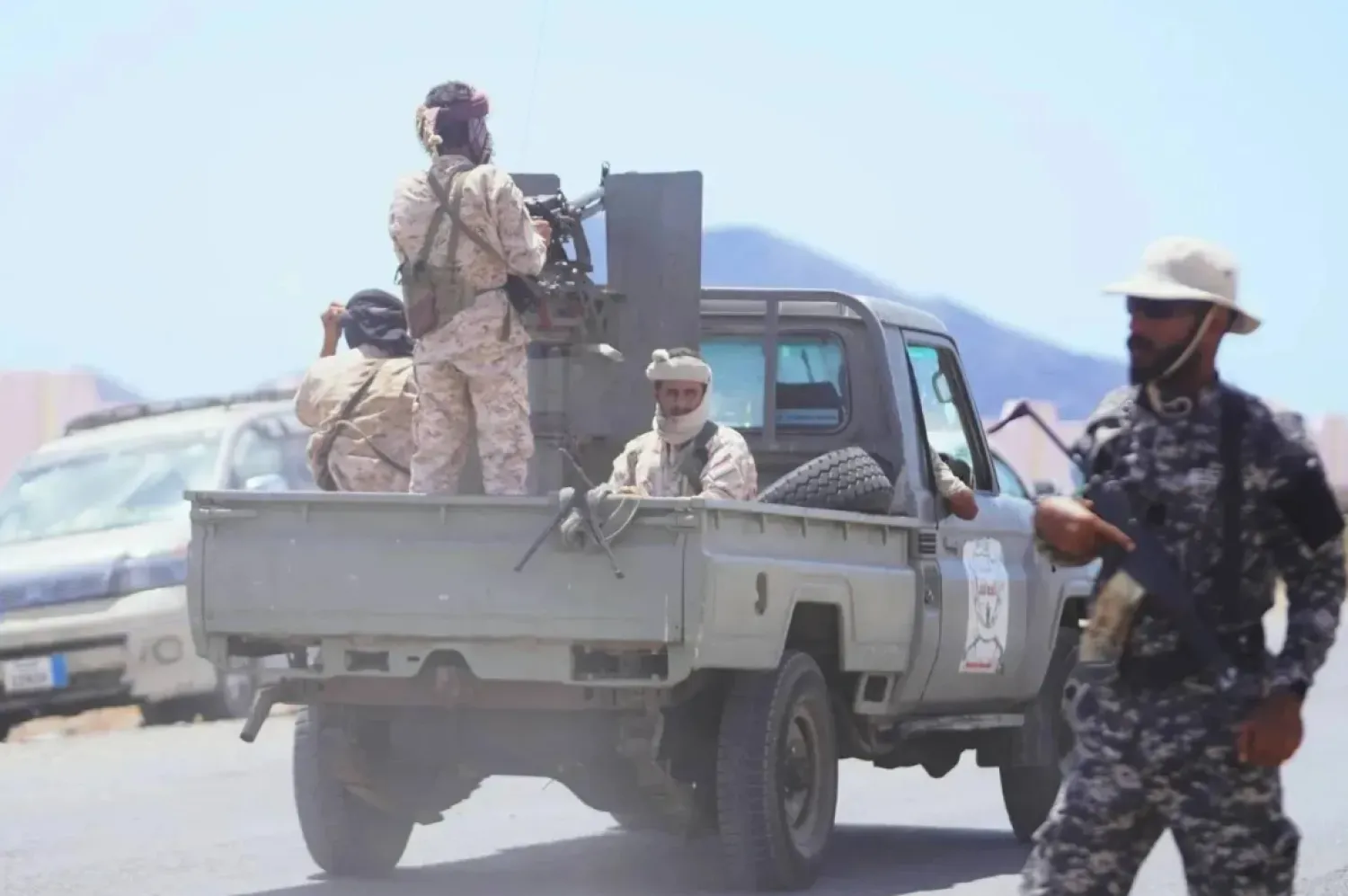
Members of Yemen's Southern Giants Brigades near the Bab Al-Mandab Strait (AP)
TT

Yemeni Presidency: Redeployment of Forces Near Bab Al-Mandab a 'Calculated Military Move'

Members of Yemen's Southern Giants Brigades near the Bab Al-Mandab Strait (AP)

A source in the Yemeni presidency told Asharq Al-Awsat that the Southern Armed Forces' redeployment around Bab Al-Mandab and Dhubab was a calculated military move aimed at achieving three main objectives: protecting Aden, reinforcing the fronts in Lahj and creating the conditions to break the siege of Taiz and liberate the province.

Jaber Mohammed, a media adviser to the Yemeni presidency and former director of the office of Abu Zara'a Al-Muharrami, explained that the redeployment from the vicinity of Bab Al-Mandab and Dhubab should not be interpreted as a withdrawal in the military sense, but rather as a move to redistribute troops and reinforce positions with greater influence over the course of the fighting.

He described the redeployment as a calculated military move intended to protect Aden, strengthen the fronts in Lahj and create the conditions for lifting the siege of Taiz.

Yemeni Armed Forces spokesman Col. Majed Abdullah Al-Nazili said the Southern Forces' commitment to breaking the siege of Taiz represented a national stance at a particularly sensitive stage, stressing that protecting the capital, Aden, and lifting the siege of Taiz were national and moral responsibilities aimed at confronting the threat posed by Houthi militia violations.

According to observers, Aden and its neighboring provinces constitute a strategic hinterland and a major political, economic and population center. Reinforcing defensive lines around the city is therefore closely linked to protecting state institutions and preventing the fighting from spreading toward the capital.

Jaber noted that deploying troops along the exposed coastal strip made them more vulnerable to attack, while the greatest danger lay in the mountainous heights overlooking Bab Al-Mandab, Dhubab and Mayyun Island.

Control of those heights, he explained, would allow the occupying force to threaten the coastline and outflank troops stationed along it.

He added that the Southern Forces had repositioned themselves in the Al-Suqyah area, approximately six to eight kilometers from Bab Al-Mandab, keeping them within the operational area of the front.

A Southern military commander warned that losing the heights overlooking the coast could open the way for an advance toward Lahj and Aden, particularly given the proximity of Ras Al-Arah and Al-Mudaribah to the Al-Buraiqah district of Aden.

He said securing the elevated positions would help protect the coastal strip and allow troops to operate in more militarily advantageous terrain, reducing the strain of maintaining exposed positions.

In a statement, the Southern Armed Forces said the redeployment was a response to changing battlefield priorities and did not represent an abandonment of the fight against the Houthis or efforts to lift the siege of Taiz.

The statement emphasized that protecting Aden, its institutions and its residents remained a priority, alongside reinforcing the front lines and confronting existing threats.

The forces reaffirmed their commitment to continuing operations with the support of the Saudi-led Coalition to Support Legitimacy in Yemen until state institutions were restored and enabled to carry out their responsibilities.

The presidential media adviser said that since the launch of Operation Fajr Yemen on October 5, Southern Forces had advanced toward Dhubab Airport and parts of Bab Al-Mandab and Kahbub.

He noted that Al-Wazi'iyah and the highlands overlooking the coast remained strategically important, adding that, in his assessment, the Kahbub mountains were still under the control of forces affiliated with the Yemeni government.

Jaber Mohammed said assessing the terrain, troop positions, the enemy's weapons and methods of attack was essential to operational planning.

He added that expanding the fighting across multiple fronts could disperse Houthi forces and ease pressure on individual battlefronts.

Meanwhile, Yemeni military sources stressed that Aden's security was nonnegotiable and that any threat to the temporary capital would be met with a firm response.

They said the developments involved more than the redeployment of military units, describing them as part of efforts to prevent new realities from being imposed by force and to safeguard state institutions and national resources.

Yemeni Armed Forces spokesman Al-Nazili had previously emphasized that liberating Bab Al-Mandab and the western coast was an inherent right of the armed forces.

He called on the international community to fulfill its responsibilities by contributing to the liberation efforts, given the strait's vital importance to maritime security and international trade.

Al-Nazili said the armed forces remained united in carrying out their duties to protect the Yemeni people and their resources and confront threats from the Houthi militia.

He reaffirmed that Operation Fajr Yemen would continue pursuing its stated objectives until the threat posed by the Houthis was eliminated.