
Israel's defense minister on Friday hailed the capture of a strategic highland from Hezbollah as solidifying Israel's "security zone" in occupied parts of southern Lebanon and vowed that troops would not leave it.
"The capture of the Ali Tahar ridge marks the completion of the phase of securing control in the security zone in southern Lebanon," Defense Minister Israel Katz said in a statement.
The Israeli military "will now complete the neutralization of the tunnels and prepare in the appropriate tactical manner to hold the ridge and prevent the enemy from re-establishing itself in the area", Katz said.
He said he and Prime Minister Benjamin Netanyahu, who faces close-fought elections on October 27, will pursue a "clear and uncompromising line" on Lebanon.
"Israel will not withdraw from the security zone in Lebanon until Hezbollah is disarmed throughout Lebanon and the threats over the residents of the Galilee are removed," Katz said, referring to Israel's northern region.
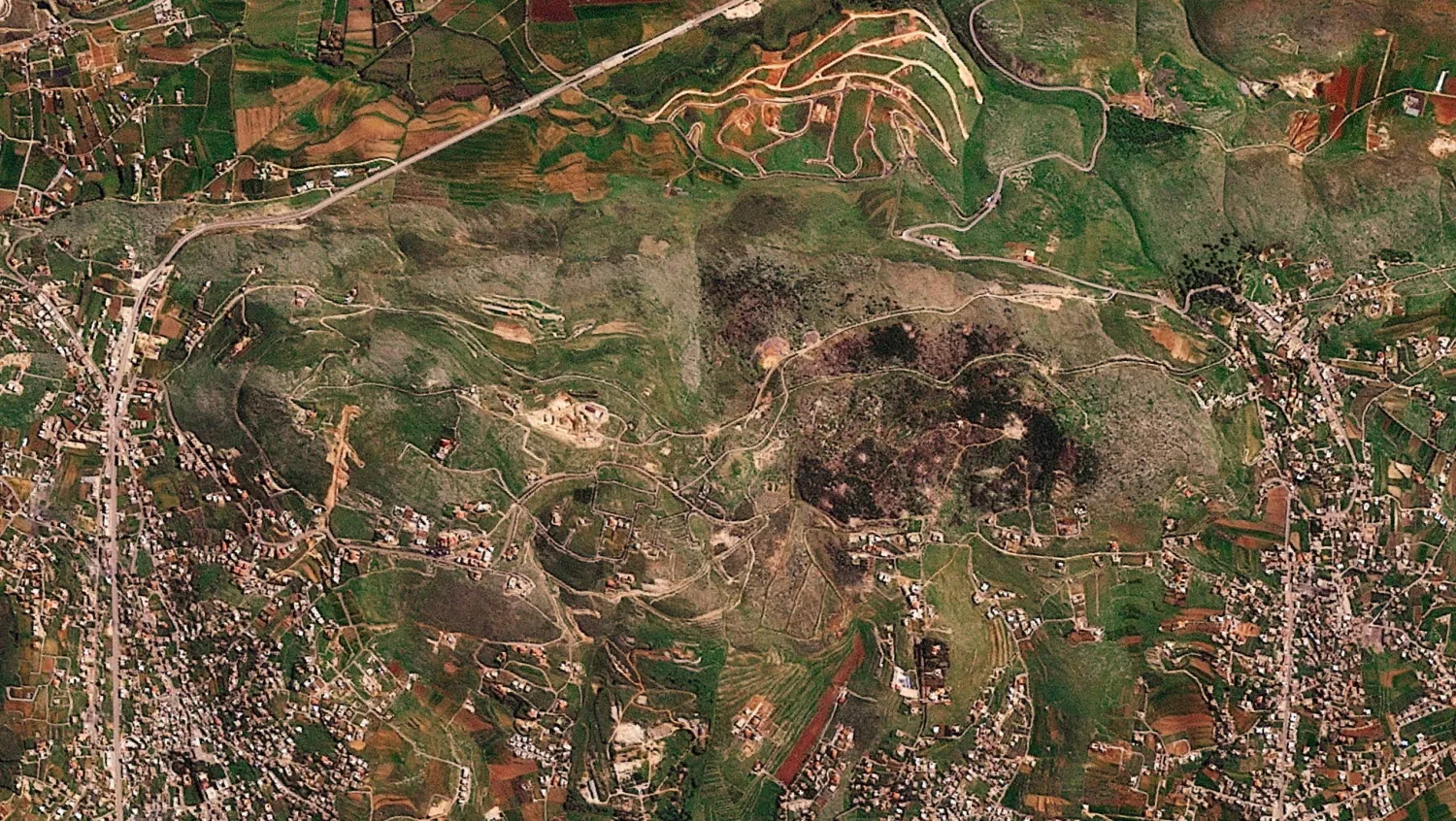
Israel's military said on Thursday it had taken "operational control" of the Ali al-Taher area, the site of sporadic clashes between Israeli forces and Hezbollah in recent weeks. It is where Hezbollah is believed to have an extensive underground military facility.
The military said troops had cleared Hezbollah fighters from two underground routes, killing some while others fled. It said operations were ongoing.
Operations aimed at neutralizing underground infrastructure, after clearing them of Hezbollah operatives, are ongoing, with the military set to redeploy defensively following the completion of the activity, based on a situational assessment, it added.
The military accused the fighters inside the facilities of working to carry out plots against Israel and army forces. It noted that operations in the area in recent weeks have neutralized the capability to launch attacks against Israelis and army forces from it.
The Israeli army stated that inside the underground infrastructure, it discovered operations rooms, rooms designated for combat gear, and others for generators and accommodation, in addition to showering facilities and a kitchen, allowing Hezbollah fighters to manage combat and remain inside for extended periods.
It described these facilities as "strategic infrastructure" built over two decades, saying they were planned and funded by the Iranian regime.
There was no immediate comment from Hezbollah.
The Israeli army said its forces will continue to clear the occupied "security zone" in southern Lebanon of Hezbollah, saying it will not allow the party to carry out plots against it.
Any attempt by Hezbollah to launch attacks against the army "will be met with force," warned Israel, while saying it was committed to the ceasefire agreement in Lebanon.
The Ali al-Taher hill overlooks several villages as well as main roads leading to the city of Nabatieh. Losing control of it would disrupt Hezbollah’s presence and supply lines in the area.
Israel and Hezbollah have been trading fire since early March when the group dragged Lebanon into the wider Middle East war by firing rockets at Israel in retaliation for the killing of Iran's supreme leader Ali Khamenei in US-Israeli strikes.
Israel has since carried out a massive campaign of airstrikes and a ground invasion that have killed more than 4,300 people, according to Lebanese authorities.
The conflict has calmed since a US-Iran memorandum of understanding and a framework agreement between Lebanon and Israel’s government agreed in June, but the deal between Tehran and Washington has been shaky, with US forces this week resuming attacks on Iran.