Oslo Accords After 33 Years: Neither Alive Nor Dead — What Remains?

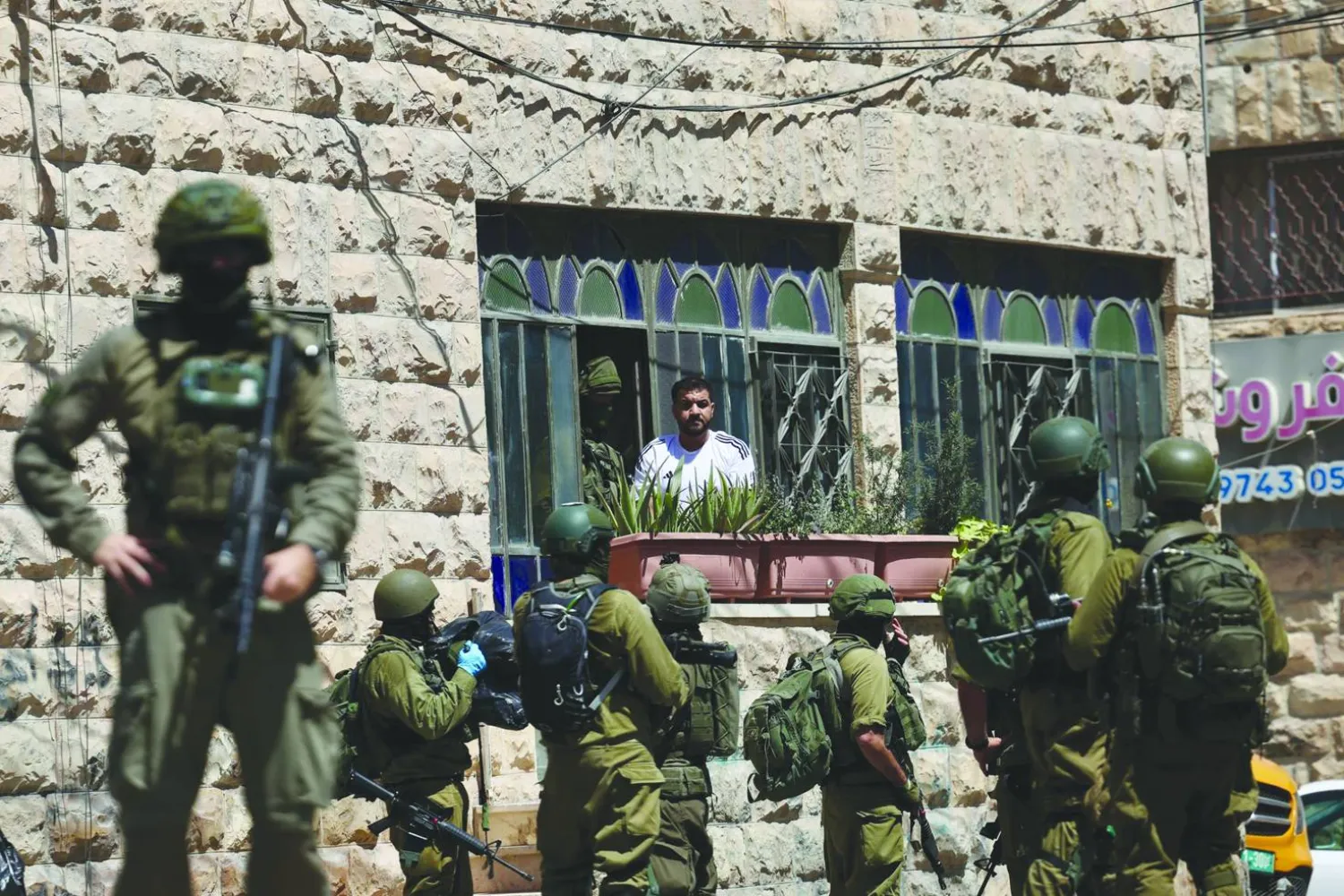
FILED - 08 September 2026, Palestinian Territories, Anata: Israeli forces raid the town of Anata in the West Bank. Photo: Jamal Awad/dpa
TT

Oslo Accords After 33 Years: Neither Alive Nor Dead — What Remains?

FILED - 08 September 2026, Palestinian Territories, Anata: Israeli forces raid the town of Anata in the West Bank. Photo: Jamal Awad/dpa

Perhaps all that remains of the Oslo Accords, signed 33 years ago between the Palestinians and Israelis, is an authority without real authority in the West Bank, widespread chaos, destruction and bloodshed in the Gaza Strip, and an East Jerusalem resembling West Jerusalem, both under full Israeli control.

All three — the West Bank, Gaza and East Jerusalem — were supposed to constitute the Palestinian state just five years after the agreement was signed in 1993, or so Palestinians believed and hoped at the time.

Yet Oslo’s main problem cannot simply be considered its failure to deliver the hoped-for state. Since it was signed, the Palestinian Authority’s ability to govern has declined, while the territory under its control has shrunk day by day.

The PA’s role has changed considerably. Israeli governments have left it besieged, powerless and nearly bankrupt, facing numerous financial and security problems and countless internal problems affecting it and all Palestinians — in politics, security, public safety, salaries, health, the economy, electricity, water, fuel and the banking system.

Today, 33 years after the agreement, Palestinians find themselves in a central struggle to prevent the liquidation of the Palestinian cause and their displacement from their land. After Oslo, their struggle had been to establish a state.

All the blame can be placed on Oslo, its course and the decision to pursue it, as many Palestinians do. But its other party cannot be overlooked: Israel, which did not sign the agreement for it to succeed. This was precisely what then-Israeli Prime Minister Yitzhak Shamir had promised: negotiations that would begin but never end, until nothing remained to negotiate over.

Nor can it be overlooked that a large segment of Palestinians themselves did not want the agreement either. Armed factions worked relentlessly to thwart it to the end, using all the power and weapons at their disposal.

Many on both sides regarded it as a dagger in their side and openly said they did not want it. In reality, it gave them neither peace nor security. Yet it has remained alive, refusing to die, even after Hamas launched the Al-Aqsa Flood attack in October 2023, sweeping away many things but not what remained of Oslo.

What is the Oslo agreement?

The Declaration of Principles on Interim Self-Government Arrangements was signed on Sept. 13, 1993. It provided for the phased withdrawal of Israeli forces from the West Bank and Gaza Strip and the establishment of a Palestinian Interim Self-Government Authority during a five-year transitional period, culminating in a permanent settlement based on UN Security Council Resolutions 242 and 338.

The agreement spoke of ending “decades of confrontation and conflict” and recognizing each side’s “mutual legitimate and political rights.”

The agreement clearly addressed the transitional period and permanent-status negotiations. The five-year transitional period was to begin with the withdrawal from the Gaza Strip and Jericho area. Permanent-status negotiations between the Israeli government and representatives of the Palestinian people were to begin as soon as possible, but no later than the beginning of the third year of the transitional period.

It also stipulated that those negotiations would cover the remaining issues, including Jerusalem, refugees, settlements, security arrangements, borders, relations and cooperation with other neighbors, and other matters of common interest.

The agreement also resulted in the establishment of a Joint Israeli-Palestinian Liaison Committee to address issues requiring coordination, other matters of common interest and disputes.

The Oslo agreement divides the West Bank into Areas A, B and C. Area A includes the main Palestinian population centers and is under Palestinian security and administrative control, comprising 18% of the West Bank. Area B, comprising 21%, is under Palestinian administrative control and Israeli security control. Area C, comprising 61%, is under Israeli security and administrative control.

After October 2023, Israel no longer recognized these divisions.

What happened after Oslo?

A few years after the signing, Israel stopped completing the scheduled withdrawal of its forces. Instead, it repeatedly entered Area A, territory under full Palestinian security jurisdiction, and took measures that disrupted the transitional phase intended to achieve independence.

Israel carried out assassinations and killings, raided Area A, built more settlements and tightened political, security and economic pressure on the PA as though Oslo did not exist, while demanding greater security coordination from the PA under the agreement.

Israelis who opposed Oslo did not formally abolish it. They wanted it in intensive care — neither alive nor dead. Palestinians did not like Oslo either, but struggled to keep it alive even though they repeatedly declared it finished.

The Palestinians could not rid themselves of it because they simply could not maintain the PA without Oslo. That would mean a return to occupation — a thousand steps backward. For the Israelis, declaring themselves free of Oslo would mean dissolving the PA and returning to the occupation of the West Bank, the last outcome they wanted.

In short, everyone despised Oslo, but they wanted it. It continued to constrain them and produce further agreements.

Oslo’s extensions

It can be said that for many years, Palestinians and Israelis found themselves tied to Oslo. In an effort to keep it alive, the Palestinians concluded further agreements with Israel that could be described as extensions of Oslo.

Israel did not abide by any agreement it signed. Instead, it brought the PA to an unprecedented level of weakness after significantly changing its role. The PA entered one of the worst periods in its history, with the territory under its control shrinking, no political or economic horizon, a crippling financial crisis and another security crisis.

The Israeli left-wing group Peace Now has said that the Oslo agreement contributed significantly to increasing the number of settlements and settlers in the Palestinian territories.

Whether this amounted to marking time or moving backward, it was the reality Israel wanted, and it continued until the Al-Aqsa Flood war that began on Oct. 7, 2023.

After the war, everything changed. Israel began what resembled a war against the PA, the Palestinians and the dream of statehood. Israel appeared to want to reverse Oslo altogether and erase it, and no longer wanted the Palestinians or an agreement binding it to them.

Oslo, Netanyahu and Oct. 7

Israeli Prime Minister Benjamin Netanyahu has made no secret of his opposition to Oslo. Months into the Gaza war, Netanyahu called the Oslo agreement Israel’s great mistake, claiming that “the Palestinian Authority in the West Bank and Hamas in Gaza want to destroy Israel. One side says so openly, while the other does so through education and the International Criminal Court.”

Netanyahu’s attack on the PA was not new, but it was the clearest in revealing part of his plan to undermine the authority.

Since Oct. 7, 2023, Israel has begun treating the PA as though it did not exist. Israel escalated in the West Bank, with the army attacking cities, refugee camps and towns and permanently occupying some of them. It killed Palestinians in airstrikes, arrested them and destroyed infrastructure, while settlers were given free rein to kill, attack and seize vast areas by force.

At the same time, Israel advanced a plan to expand existing settlements and establish new ones, linking them through contiguous settlement belts. The plan served to expand settlement activity on the one hand, and to encircle and fragment the West Bank and create a barrier between the West Bank and Israel on the other.

PA remains committed to Oslo’s peaceful approach

After 33 years, what remains of Oslo is an Israel that continues to expand, with greater powers, and a Palestinian Authority with a president, security forces and ministries, but no state and fewer powers — along with more settlers, a devastated Gaza and a Jerusalem under Israeli control.

Yet the PA, now going through one of the worst periods in its history, remains fully committed to the Oslo agreement.

In May, Palestinian President Mahmoud Abbas said he remained committed to Oslo and subsequent agreements, the Palestine Liberation Organization and its program based on the unity of the Palestinian political system and a single legitimate weapon, as well as reforms and presidential and legislative elections, reaffirming his commitment to a peaceful approach amid a series of bloody wars in the region.

Contrary to what many believe or demand, Abbas told Fatah’s Eighth General Conference in Ramallah in May that inflicting a new Nakba on Gaza, killing and wounding more than 270,000 Palestinians there, making the territory uninhabitable, working to annex the West Bank through laws aimed at stealing land, unleashing settler terrorism in the West Bank, continuing to withhold Palestinian funds, besieging the economy, committing violations against Muslim and Christian holy sites in Jerusalem and attempting to divide Al-Aqsa Mosque required a return to implementing the signed agreements.

These included the Oslo Accords, the Paris Protocol on Economic Relations and the 2023 Aqaba and Sharm el-Sheikh understandings, as well as an end to unilateral measures that violate international law.

“We want the ‘treacherous’ Oslo agreement. We want to preserve it,” Abbas said sarcastically, mocking criticism of the agreement.

Abbas immediately attacked Hamas’s Oct. 7 assault.

“Whatever the assessment of what happened on Oct. 7 — the ‘glorious’ Oct. 7,” he said sarcastically, “things are judged by their outcomes.”

“We were slaughtered, displaced and our country was destroyed because of this act,” he added.

It was as though Abbas wanted to voice what many of his supporters and Fatah members say: “Oslo brought the Palestinians back to their homeland, laid the foundations of the state and brought an airport and a seaport to Gaza, while Oct. 7 destroyed everything and displaced Palestinians abroad.”

Opponents of Abbas and Fatah respond to that argument by asking: “Why is Israel ravaging the West Bank, which did not carry out Oct. 7? And why does Oslo not protect you?”

The confrontation between the two arguments does not appear close to being resolved. History remains the judge between the two experiences, while Israel continues to encroach on the dream of a Palestinian state.

Türkiye Renews Offer to Sign Maritime Boundaries Agreement with Egypt

From a meeting between Erdogan and Sisi in Ankara (File - Turkish Presidency)
TT

Türkiye Renews Offer to Sign Maritime Boundaries Agreement with Egypt

From a meeting between Erdogan and Sisi in Ankara (File - Turkish Presidency)

Türkiye has once again expressed willingness to sign a maritime boundary delimitation agreement with Egypt that would "serve the common interests of both countries," despite Cairo's firm rejection of the Turkish-Libyan memorandum of understanding on maritime jurisdiction zones signed in late 2019 and ratified by Libya's House of Representatives last week.

A Turkish Defense Ministry official said that the Libyan parliament's approval of the memorandum signed between Türkiye and Libya on October 20 represented “an important development supporting our approach based on international law, the principles of equity, and respect for the legitimate rights and interests of the coastal states concerned."

Responding to a question during the ministry's weekly press briefing regarding objections to the memorandum, the official reiterated Türkiye's readiness to conclude a maritime delimitation agreement with Egypt "in line with mutual interests."

He added that, according to Turkish estimates, if Egypt were to sign such an agreement with Türkiye, it would gain an additional maritime area of more than 15,000 square kilometers compared with a potential agreement with Greece.

He stressed that Türkiye would continue to protect its legitimate rights and interests in the Eastern Mediterranean within the framework of international law while contributing to regional peace, security, and stability.

Turkish Effort to Preserve Relations

The official's remarks echoed comments previously made by Turkish Defense Minister Yasar Guler, who said that an agreement with Egypt would grant Cairo an additional 15,000 square kilometers of maritime jurisdiction in the Eastern Mediterranean.

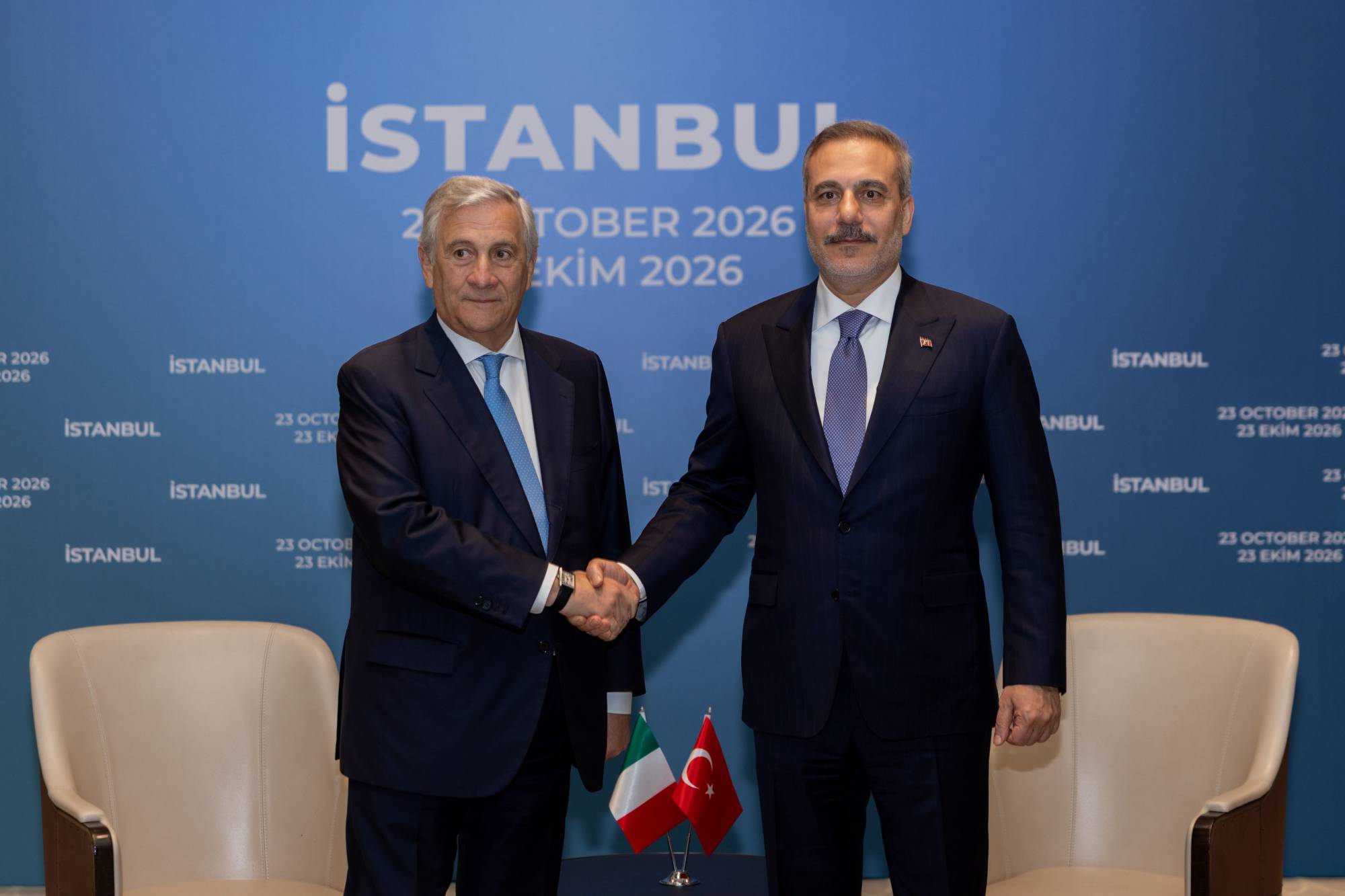
From Fidan's meeting with his Italian counterpart Antonio Tajani on the sidelines of the Istanbul meeting last week (Turkish Foreign Ministry)

During a Euro-Middle East meeting held in Istanbul last Friday and attended by the foreign ministers of Saudi Arabia, Egypt, Türkiye, Pakistan, Germany, Britain, and France, as well as Italian Foreign Minister Antonio Tajani, Egyptian Foreign Minister Badr Abdelatty reaffirmed Cairo's categorical rejection of Libya's parliamentary ratification of the Turkish-Libyan memorandum.

Abdelatty stated that the ratification would have "no legal effect" on Egypt.

Türkiye refrained from publicly criticizing Egypt's position, whether through official channels or media outlets, including those critical of the government.

Türkiye has sought to continue improving relations with Egypt and avoid another diplomatic dispute. This approach was reflected in remarks by President Recep Tayyip Erdogan following a cabinet meeting on Monday, when he stressed that Ankara does not seek to harm any party in the Eastern Mediterranean, advocates dialogue with all countries in the region, and intends to maintain relations with all influential actors in Libya.

Overtures to Greece

Following Libya's ratification of the Turkish-Libyan memorandum, Greece sent a letter to UN Secretary-General Antonio Guterres reiterating its objections.

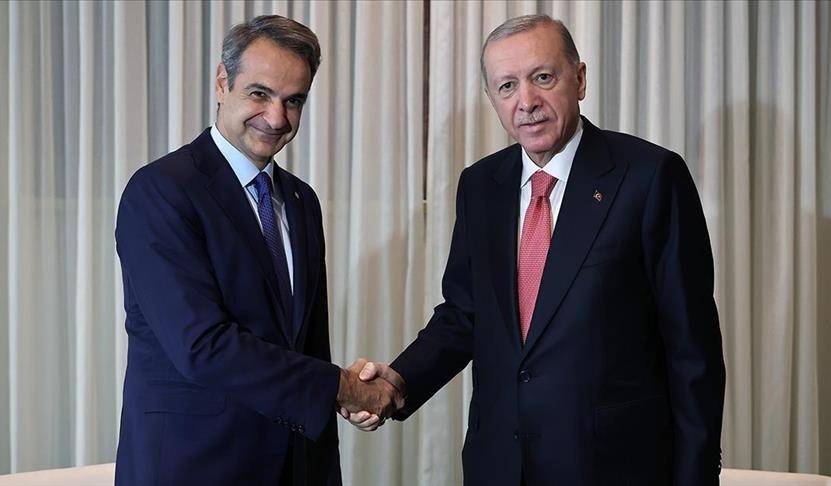
Meeting between Erdogan and Mitsotakis on the sidelines of the UN General Assembly meetings in 2024 (Turkish Presidency)

Athens argued that the ratification does not alter the memorandum's legal status, cannot create new legal obligations for third countries, conflicts with the 1982 UN Convention on the Law of the Sea (which Ankara has not signed), and lacks a valid legal foundation because of the geographical configuration of the coastlines between Türkiye and Libya.

Meanwhile, Turkish Foreign Minister Hakan Fidan revealed in Brussels last week that Erdogan had made an energy-related proposal to Greek Prime Minister Kyriakos Mitsotakis during the UN General Assembly meetings in September.

Erdogan reportedly suggested that Greece purchase electricity from Türkiye rather than spend more than €2 billion in European funds to transport electricity over a distance of 2,000 kilometers to Cyprus.

The proposal referred to the "Great Sea Interconnector" project, which aims to link Greece, Cyprus, and Israel through an undersea electricity cable in the Eastern Mediterranean, a project Türkiye insists requires its approval.

According to Fidan, Erdogan told Mitsotakis: "It would be better to buy electricity from Türkiye, which is only 70 miles away from you. We can also supply you with water, electricity, and natural gas."

A New Eastern Mediterranean Equation

For Italy, the ratification of the Turkish-Libyan memorandum has raised political and economic concerns, particularly regarding Türkiye's expanding influence in Libya and its implications for Italian interests in the Eastern Mediterranean.

From Fidan's meeting with his Italian counterpart Antonio Tajani on the sidelines of the Istanbul meeting last week (Turkish Foreign Ministry)

Some political circles in Rome have questioned whether Italy moved too quickly in supporting US-backed efforts to unify Libya under a framework that could place Saddam Haftar at the head of the Presidential Council.

They argue that such a course could strengthen ties between eastern Libya and Türkiye, a direct competitor to Italy in Libya, particularly after Italy's support for Khalifa Haftar helped increase Russia's influence there.

Türkiye has also floated the possibility of negotiations involving Egypt, Italy, and Libya as part of what observers describe as an effort to establish a new framework for the Eastern Mediterranean, one that could undermine the model promoted by Greece, Israel, and Cyprus.

Turkish political analyst Ahmet Erdi Ozturk noted that despite Egypt's continued objections, Cairo's ongoing direct contacts with both Ankara and Libya suggest that diplomatic options have not yet been exhausted.

He pointed in particular to a phone conversation last Saturday between Egyptian intelligence chief Major General Hassan Rashad and Libyan Prime Minister Abdul Hamid Dbeibeh, during which Dbeibeh expressed readiness to discuss Egypt's concerns regarding maritime jurisdiction.

Ozturk also cited Fidan's proposal for talks involving Türkiye, Egypt, Italy, and Libya as part of the same diplomatic context.

Ozturk adding that it would not be surprising if Greece and Israel eventually adjusted their positions as circumstances change.


1,400 Killed in Two Months as Yemen’s Dhamar Pays the Price of Houthi Attrition

A previous exhibition of photographs of fallen fighters staged by the Houthis in Dhamar (X).
TT

1,400 Killed in Two Months as Yemen’s Dhamar Pays the Price of Houthi Attrition

A previous exhibition of photographs of fallen fighters staged by the Houthis in Dhamar (X).

Yemen's Houthis have lost more than 1,400 fighters from Dhamar province in just two months, local sources said, exposing a mounting human toll as the group steps up recruitment and turns photographs of its dead into tools for mobilizing fresh fighters.

The Iran-aligned group has staged exhibitions of fallen fighters across Dhamar, about 100 km south of Sanaa, and its 12 districts, seeking to turn mounting battlefield losses into recruitment opportunities and replenish its depleted ranks.

Informed local sources told Asharq Al-Awsat that the fighters were killed on several fronts, particularly in Taiz, Dhalea, Jawf, the western coast and Marib.

The sources said the exhibitions and funeral processions sweeping the province offered a stark picture of the group's losses, even as it continued sending more local men to the front lines to replace those killed.

In recent days, the Houthis have intensified exhibitions displaying photographs of their dead across Dhamar as part of an annual week commemorating fallen fighters.

The group has used the events to reinforce its recruitment rhetoric and normalize death on the battlefield, rather than confront the heavy human cost of its military campaigns and the suffering they have inflicted on Yemeni families, the sources said.

Streets turned into memorials

In Dhamar city, the Houthis have transformed neighborhoods, main streets, schools, mosques and government buildings into open-air galleries displaying photographs of hundreds of dead fighters, including children and minors, according to local sources.

The exhibitions have spread to Wisab al-Ali, Anis, Duran Anis, Wisab al-Safil, Maghrib Anis, Jabal al-Sharq, Jahran, Mayfa'at Anis, Al-Hada, Al-Manar and Utmah, where tents and displays bearing photographs of the dead have become part of the group's broader mobilization campaign.

The scale of the displays underscores the extent of the losses and the group's efforts to channel them into its military and recruitment agenda, the sources said.

The photographs extend beyond frontline fighters to people involved in general mobilization, recruitment and security operations, as well as government employees, education workers and students whom the Houthis had sent into battle.

But the campaign has struggled to attract public support.

Local sources said the Houthis had pressured residents in several parts of Dhamar to organize group visits to the exhibitions, only to face what they described as "lackluster" attendance despite attempts to compel participation.

Funeral processions and fresh recruits

Alongside the exhibitions, the Houthis have continued staging funeral processions, filling streets, neighborhoods and alleyways across Dhamar with photographs of their dead and sectarian slogans.

The campaign seeks to project an image of widespread public mobilization, even as residents face pressure to participate while grappling with severe economic hardship.

Activists from Dhamar said the surge in memorial exhibitions laid bare the scale of the group's human losses.

Rather than acknowledge the toll on families and communities, they said, the Houthis were exploiting their annual commemorations to renew recruitment efforts, particularly among minors and public employees under their authority.

The activists warned that turning the dead into recruitment symbols risked fueling further losses, as more young men were sent to the front lines to fill the gaps left by fallen fighters.

Such efforts, they said, threatened to deepen families' suffering and keep the province trapped in a relentless cycle of battlefield deaths.

Meanwhile, as millions in Houthi-controlled areas struggle with worsening living and humanitarian conditions, informed Yemeni sources estimated that the group had spent billions of Yemeni rials on printing photographs, mounting exhibitions and organizing related events across its territory.

The dollar trades at 535 Yemeni rials, according to the exchange rate cited in the original report.

The spending comes as families struggle to afford basic necessities amid deepening poverty and declining purchasing power.

The expenditures highlight the group's priorities: pouring substantial resources into propaganda and recruitment campaigns while living standards deteriorate and residents struggle to meet their most basic needs.


From Gaza to Ramallah, Palestinians See Little Hope in Israeli Vote

Palestinians walk past buildings destroyed during the Israel-Hamas war in Gaza City Wednesday, Oct. 28, 2026. (AP)
TT

From Gaza to Ramallah, Palestinians See Little Hope in Israeli Vote

Palestinians walk past buildings destroyed during the Israel-Hamas war in Gaza City Wednesday, Oct. 28, 2026. (AP)

In war-ravaged Gaza and the occupied West Bank, many Palestinians were less focused on who would win Israel's election than on whether anything would really change.

Whether Benjamin Netanyahu clings to power with his far-right allies or centrist rival Gadi Eisenkot comes out on top, few see much reason for hope in the Tuesday vote.

"We fear these elections could bring an even worse leader," said Huda al-Houli, a displaced resident of Khan Younis in southern Gaza.

Such an outcome, she said, would only bring "more destruction and devastation" to the Palestinian territory.

Still, Houli said she hoped a more "human voice" would emerge in Israeli society and demand an end to the conflict, regardless of who forms the next government.

In Ramallah, in the West Bank, Ahmed Awad, 67, was equally skeptical.

"Whatever the result, and even if the politicians change, I don't think there will be any radical or dramatic shift in policies towards the Palestinian-Israeli conflict," he told AFP.

With 85 percent of ballots counted from Tuesday's vote, Netanyahu's camp remained ahead but without a clear majority, leaving uncertainty over Israel's next government.

The first election since Hamas's October 7, 2023 attack comes after years of right-wing and far-right rule marked by the war in Gaza and rising settler violence in the West Bank.

For Netanyahu, fighting for his political survival, several paths remain open: renewing his alliance with the far right, building a broader coalition or facing yet another political deadlock.

Far-right minister Itamar Ben-Gvir has already signaled that, if the current coalition survives, he would seek the defense portfolio and push for the expulsion of Gaza's population.

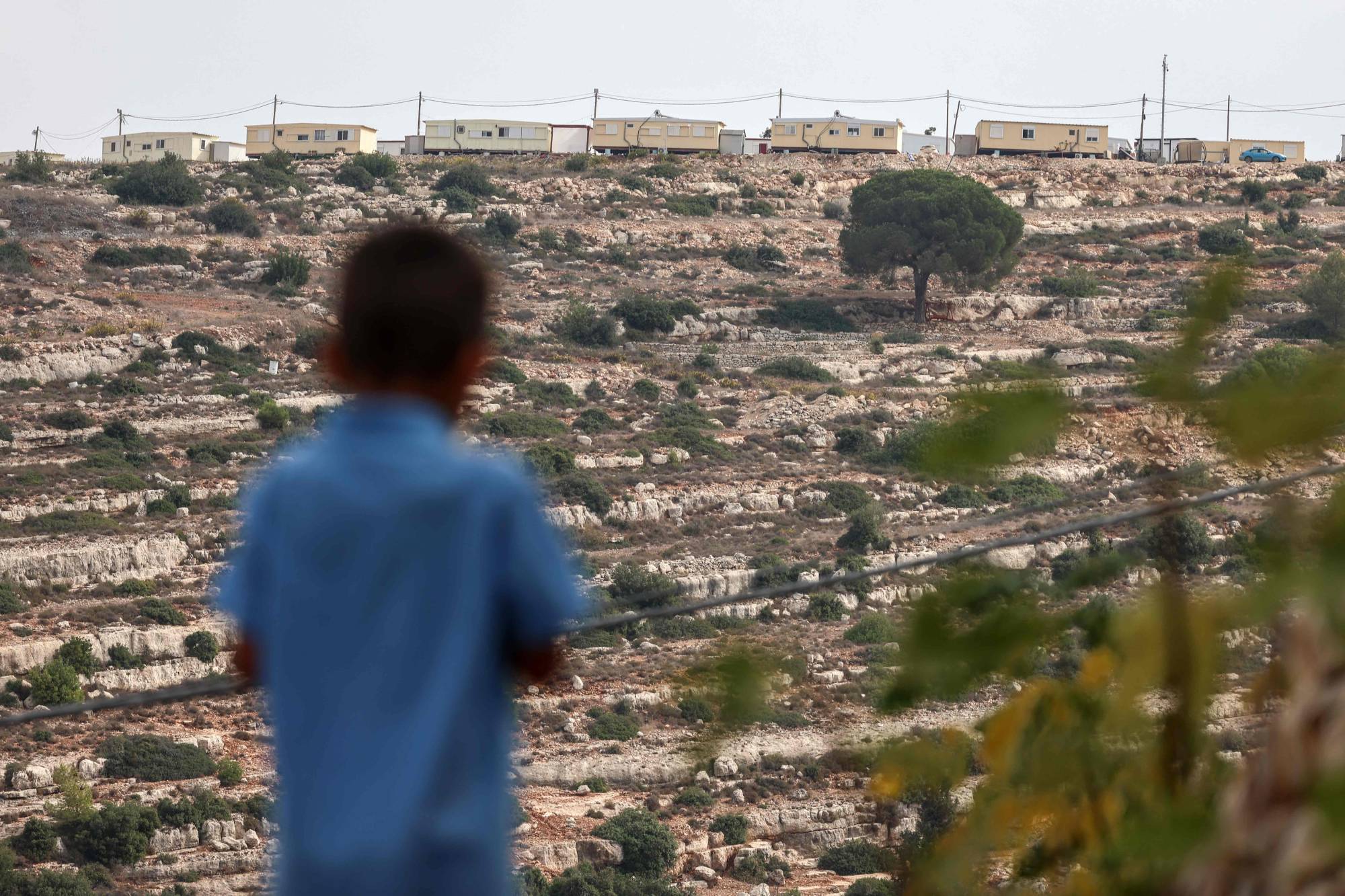
A Palestinian boy looks at an Israeli outpost on a hill overlooking the village of Umm Safa, northwest of Ramallah in the Israeli-occupied West Bank, on October 27, 2026, following a reported attack by Israeli settlers. (AFP)

- More of the same -

Not everyone has given up hope.

"Whatever happens, it will surely be better than what we've lived through in recent years," said Abdallah Abu Rahma, 54, from Ramallah.

But if Netanyahu remains in office, he added, "any coalition he forms, he will continue down the same path".

A government led by Eisenkot, a former army chief, could rein in the influence of the pro-settlement far right, said researcher Beth Oppenheim of the European Council on Foreign Relations.

It could also ease pressure on the Palestinian Authority and take a more flexible approach on aid and a ceasefire in Gaza.

But she warned against expecting too much.

There would be "nothing transformative", she said, and certainly no major shift on Palestinian statehood or the peace process, issues that have largely disappeared from Israeli political debate since October 7.

A renewed Netanyahu coalition with far-right partners would likely mean more of the same, including settlement expansion and impunity for settler violence, Oppenheim added.

"I think we need to have quite low expectations when it comes to seeing any major changes in policy from a different government," she said.

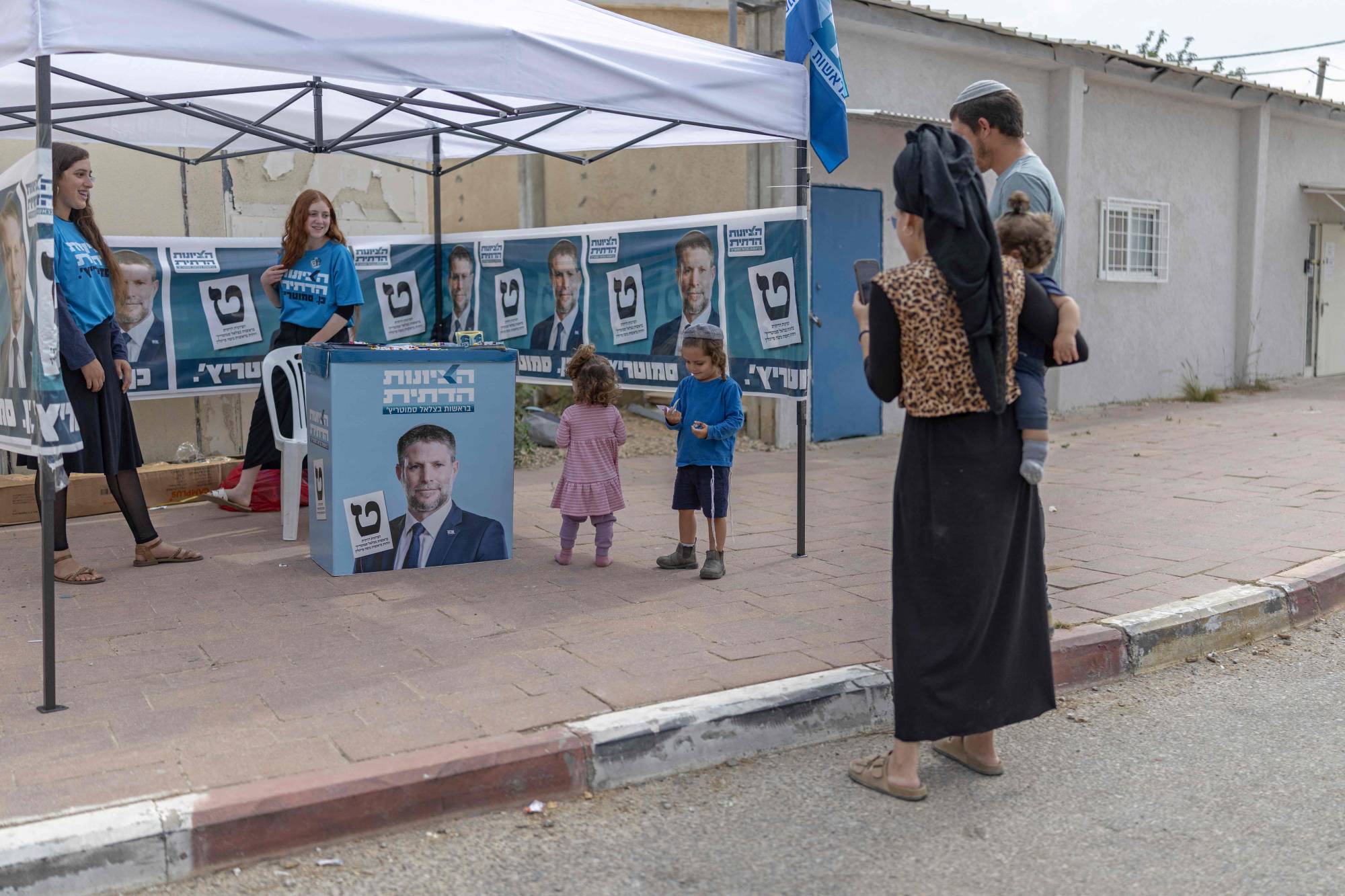
Israeli right-wing settlers stand at a polling station in the settlement of Adora in the occupied West Bank on October 27, 2026, amid Israel's legislative election. (AFP)

- Fears of escalation -

Even a Netanyahu defeat could leave Palestinians worse off in the short term, argued Yousef Munayyer, head of the Palestine-Israel program at the Arab Center Washington.

"There is every reason for Palestinians to be concerned," he said.

Eisenkot himself served in Israel's wartime cabinet during the Gaza offensive, Munayyer noted.

A fragile alternative coalition under constant attack from Netanyahu and the right could try to prove it was tough enough by taking a harder line on Palestinian issues.

In the West Bank, violence could rise if the far right loses power, with settlers potentially acting out against a new government, he explained.

"It's important to understand that most settler violence in the West Bank is structural. It's not about the government in charge," Munayyer said.

"Settlers live in places that surround the Palestinian population. The Palestinian population is vulnerable to the settlers, who are armed, whereas the Palestinians overwhelmingly are not."

In Gaza, Adnan Al-Assar said he harbored few illusions.

"Netanyahu may win," he said. "But whatever happens, they all follow the same overarching policy, directed against the Palestinian people."