Araghchi Aide in Beirut Assesses Concerns of Shiite Duo

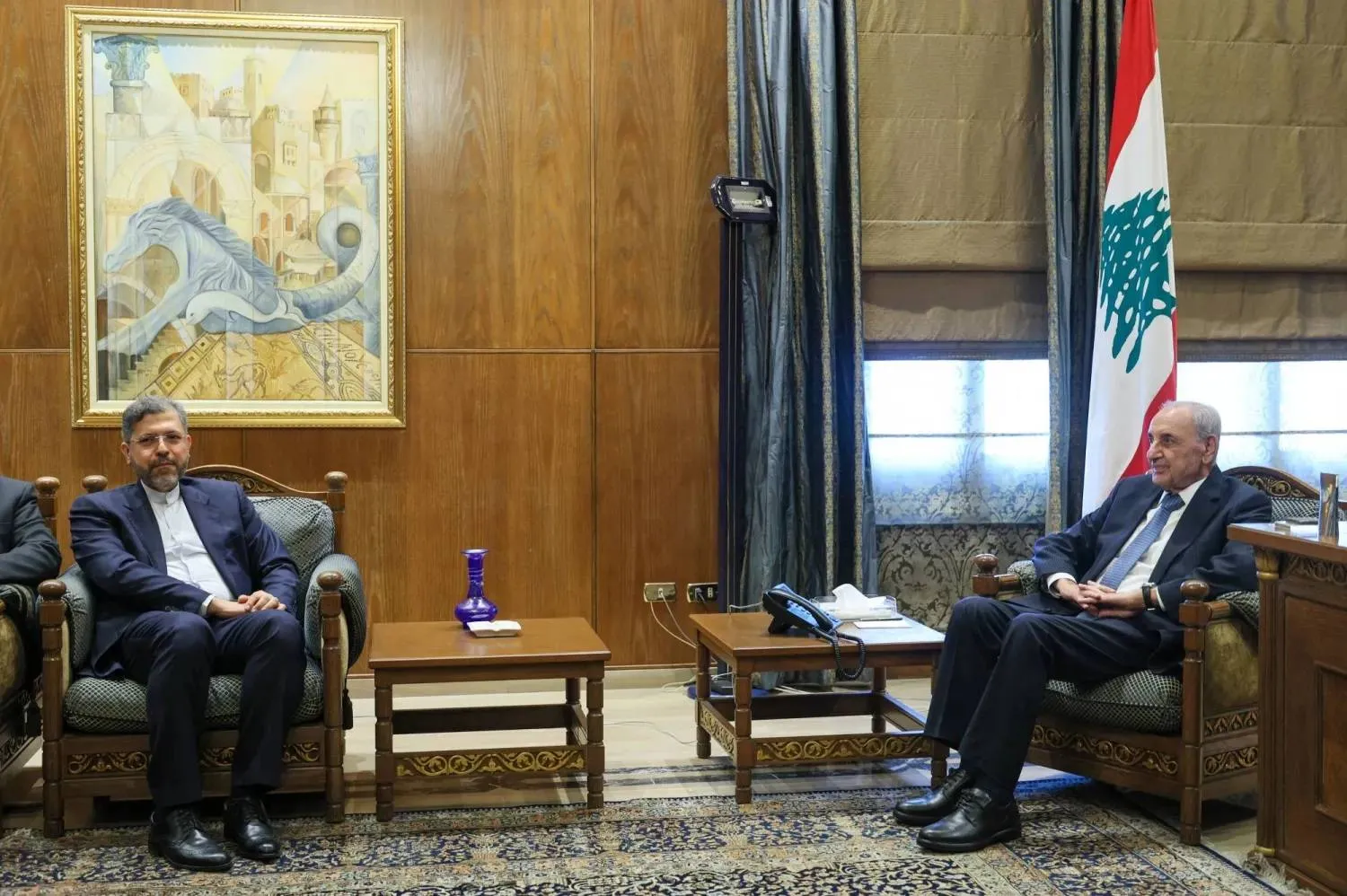
Lebanese Parliament Speaker Nabih Berri receives Iranian Deputy Foreign Minister Saeed Khatibzadeh in Beirut (EPA)
TT

Araghchi Aide in Beirut Assesses Concerns of Shiite Duo

Lebanese Parliament Speaker Nabih Berri receives Iranian Deputy Foreign Minister Saeed Khatibzadeh in Beirut (EPA)

Iranian Foreign Minister Abbas Araghchi’s call with Lebanese President Joseph Aoun coincided with the arrival in Beirut of his aide, Saeed Khatibzadeh, as Tehran moved to reassert its presence in Lebanon after a prolonged absence.

Well-informed Lebanese sources said the Iranian push came amid differences with Aoun and Prime Minister Nawaf Salam over their approach to Lebanon, while Tehran also sought to contain tensions caused by the withdrawal of Mohammad Reza Sheibani’s credentials as Iran’s ambassador to Lebanon.

Araghchi and Aoun agreed on the need to support diplomatic solutions as the best way to end conflicts in the region, according to the Lebanese presidency.

The sources told Asharq Al-Awsat that Araghchi told Aoun Iran remained committed to the Iranian-American “memorandum of understanding” and to implementing all its provisions, including one calling for an end to wars on all fronts, Lebanon among them.

He blamed the United States for the failure to implement the agreement, accusing Washington of imposing “impossible conditions whenever we come close to implementing it” and saying mediators had continued trying to persuade it to return to negotiations rather than threaten renewed war.

Political message

The sources said Araghchi’s call was intended to send a political message that Tehran remained present in the Lebanese file and that “the tension caused by the withdrawal of Ambassador Sheibani’s credentials is now behind us.”

They said the issue no longer blocked renewed contact with Aoun, who, along with most Lebanese political forces, remains committed to the “framework agreement” and has no intention of replacing it with the Iranian-American “memorandum of understanding.”

Hezbollah’s opponents, meanwhile, viewed Khatibzadeh’s Beirut visit as primarily Shi’ite-focused and aimed at assessing the concerns of the “Shiite duo,” Hezbollah and the Amal Movement.

The sources said that explained his meetings with Parliament Speaker Nabih Berri and Hezbollah’s leadership.

The contrast in tone was clear.

Diplomacy dominated Araghchi’s call with Aoun. Khatibzadeh, by contrast, spoke in much harsher terms.

He was quoted as telling journalists that “negotiations are pointless, and we are preparing for the worst-case scenarios,” and that direct talks between Lebanon and Israel would lead nowhere because Israel was “an occupying entity.”

He said Israel wanted to use negotiations as a first step toward expanding its dominance across the region and ultimately achieving what is known as “Greater Israel.”

“As long as the Israeli occupation remains in southern Lebanon, the resistance will remain, weapons will continue to be necessary, and anyone who cares about Lebanon’s interests should support this approach,” he was quoted as saying.

Asked about ties between Iran and Hezbollah, Khatibzadeh said the relationship was “not hierarchical, from the top down,” and that Iran did not interfere in Lebanese affairs, which were “left to the Lebanese themselves.”

He also claimed that “Hezbollah does not ask us what it should do, but it sometimes asks us how it can be more steadfast and tougher in confronting the enemy, while avoiding asking us about Lebanon’s internal affairs.”

Iran-US negotiations

Khatibzadeh also addressed Iranian-American negotiations, saying there was little prospect of an agreement.

“The chances of reaching an agreement are, so far, nonexistent, as shown by previous experience when Washington launched a war against us while negotiations were still underway,” he was quoted as telling journalists.

He also pointed to differences within the United States, saying one camp did not want to implement the provisions of the “memorandum of understanding,” while another had sought an agreement.

“The administration of US President Donald Trump is suffering from internal fragmentation. Otherwise, had it honored its commitments, we would have reached an agreement,” Khatibzadeh said.

He added that the United States’ power had been broken and would be broken again.

Asked about the direction of events in the region, he said “Political realism requires us to say that, until further notice, we have the right to prepare for the worst-case scenarios in the face of American threats.”

Iran’s relations with Syria

On Syria, Khatibzadeh said Iran was “in no hurry.”

“We are ready to communicate with Syria when it decides to do so. It is currently going through a sensitive and dangerous phase, and Türkiye committed a strategic mistake and contributed to the Israeli-American ‘puzzle,’ one result of which was that Syria handed Israel a gift,” he said.

The sources said, therefore, that Khatibzadeh’s meetings in Beirut reflected no change in Iran’s position.

His remarks, they said, were meant to stress Tehran’s adherence to its existing stance, which largely aligns with Hezbollah Secretary-General Naim Qassem’s rejection of the “framework agreement.”

The sources asked whether Khatibzadeh had carried a message aimed largely at stirring opposition to the “framework agreement,” without naming it directly, in contrast with Araghchi’s emphasis to Aoun on diplomatic solutions.

Araghchi’s diplomacy was thus met by a much harder line from his aide, raising the question of whether Khatibzadeh was conveying a message closer in substance to the position of Iran’s Revolutionary Guards than to that of the political camp Araghchi represents within the Iranian establishment.

Otherwise, the sources said, he would not have needed to make statements amounting to interference in Lebanese affairs, the kind of positions that have fueled the tensions still weighing on Lebanese-Iranian relations.

Those positions have been firmly rejected by a majority of Lebanese who support the “framework agreement” and back Aoun’s diplomatic approach after Hezbollah pursued the military option, leaving the country with incalculable human and material costs.


Terrorist Attack on Church in Jordan's Karak Leaves Dozens Dead, Wounded

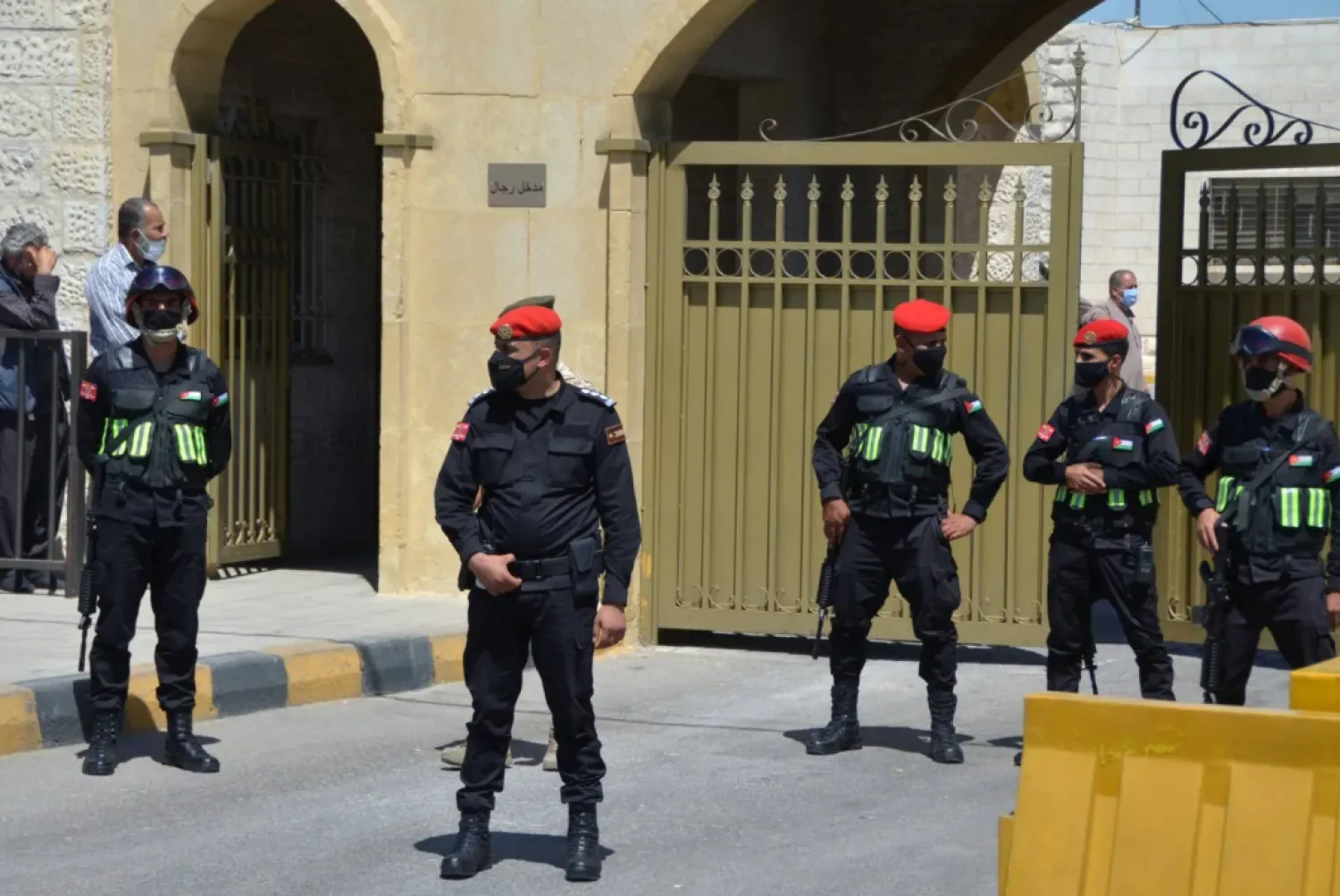
Jordanian security personnel in the capital, Amman (Reuters/File Photo)
TT

Terrorist Attack on Church in Jordan's Karak Leaves Dozens Dead, Wounded

Jordanian security personnel in the capital, Amman (Reuters/File Photo)

Jordan's King Abdullah II vowed to impose the "harshest penalties" on those responsible for an attack on a church in Karak, southern Jordan, that left dozens of people dead and wounded.

The king visited people injured in the "terrorist attack" and checked on their condition, according to the Jordan News Agency.

The Jordanian monarch stressed the need to confront the perpetrators of the terrorist attack in Karak with the harshest penalties, expressing confidence that those who believed their treacherous bullets could divide Jordanians would see their efforts fail. He reaffirmed the strength and unity of the Jordanian people.

In a post on X, the king said: "All Jordanians, from the north of the country to the south, share the same land and stand united, and no act of treachery will divide them."

King Abdullah offered condolences to the families of those killed and wished the wounded a speedy recovery.

"Every Jordanian life is precious, and we will deal with an iron fist with anyone who attacks this country," he said.

In Hamoud village in Karak Governorate, about 150 kilometers south of the capital, Amman, two gunmen opened fire indiscriminately with automatic rifles, killing several people and wounding dozens, some critically.

The village is home to the Christian Al Halasa clan, one of the largest Christian clans in the governorate.

Surveillance footage from outside the church, widely circulated online, showed the two gunmen carrying out the attack. A third armed man also appeared in the footage but apparently did not manage to fire his weapon.

Eyewitness Account

An eyewitness described to Asharq Al-Awsat the horrifying scenes experienced by people near the church.

At approximately 2:15 p.m. local time in Amman, two armed men entered and opened fire. Bloodshed quickly engulfed the area, with bodies lying outside the church before the scene of the massacre extended into the church's nave.

One eyewitness, who had been standing at the church entrance, said he initially struggled to comprehend what was happening.

He realized the gravity of the attack only when a bullet missed him and struck his cousin, who was standing beside him, in the chest. His cousin died in his arms.

The witness described being overwhelmed by shock and confusion as his cousin died in his arms while his mother remained inside the church.

Realizing that death surrounded the building, he rushed through gunfire coming from every direction in an attempt to rescue his mother, even if it meant sacrificing his own life.

"The shooting went on for a long time, and no one managed to stop the two gunmen," he said.

The scenes described by the eyewitness were documented in dozens of videos circulated on social media.

The attack was unprecedented in Jordan, targeting members of the Christian community in Karak, a governorate known for its tradition of coexistence between Muslims and Christians.

Who Were the Attackers?

Jordanian Interior Minister Mazin Al Farrayeh subsequently declared that the country was confronting "a terrorist operation carried out by a group of extremists who committed a horrific act."

Public Security Director Maj. Gen. Obaidallah Maaytah later announced that the death toll had risen to seven, with 27 people wounded.

The church had been receiving mourners attending a funeral service for a member of the clan and was crowded with people paying their respects.

The gathering made it easier for the attackers to inflict a large number of casualties among villagers who traditionally come together for such occasions.

Sources told Asharq Al-Awsat that the two attackers, who fled the scene, were residents of Karak Governorate and adherents of extremist takfiri ideology.

They were reportedly aware of the location and timing of the funeral service, indicating that the attack had been premeditated.

The sources confirmed that the identities of the two attackers had been established and that security forces were continuing to search for them and other suspects believed to be involved in a terrorist cell.

They added that entrances and exits to the governorate had been secured to prevent the suspects from escaping.

Maj. Gen. Maaytah confirmed that authorities possessed information about the perpetrators of the terrorist attack but said it was premature to disclose the suspects' names.

He also declined to set a deadline for their arrest.

"We cannot specify a timeframe for concluding the operation because it depends on the nature of the situation," he said.

This is not the first time Karak has experienced a terrorist attack.

Residents still recall the events at Karak Castle in December 2016, when security forces pursued ISIS members who subsequently barricaded themselves inside the historic fortress, where weapons had been concealed.

During that incident, hostages were held inside the castle, and the operation lasted more than 15 hours.

According to the account, 14 people, including security personnel, civilians and a foreign tourist, were killed, while many others near the castle were wounded. All four militants involved in the attack were also killed.


Lebanon: Judicial Warrants Target Suspects in Hezbollah Explosives Case

Lebanon’s Military Court (National News Agency)
TT

Lebanon: Judicial Warrants Target Suspects in Hezbollah Explosives Case

Lebanon’s Military Court (National News Agency)

The investigation into a Hezbollah explosives shipment has widened, with Lebanese authorities issuing search notices for two people who went into hiding after being summoned for questioning.

Lebanese Army intelligence and the Internal Security Forces' Information Branch are also examining data extracted from phones linked to the case. Meanwhile, authorities have been unable to bring in two Hezbollah officials previously ordered to appear for questioning, as the group refuses to hand over wanted members and demands the return of the truck and its cargo.

Search notices issued as new suspects emerge

Judicial authorities have taken further action as preliminary investigations uncover new information.

A judicial source told Asharq Al-Awsat that Judge Claude Ghanem, the government commissioner to the Military Court, had issued search notices for the wife of detainee Haitham Amhaz and the owner of the truck that transported the explosives.

The two were summoned for questioning by the Lebanese Army's Intelligence Directorate but failed to appear and went into hiding, the source said.

The source added that investigators had made progress in identifying additional people suspected of involvement in the shipment.

The move marks a new development in the security investigation, which continues to examine evidence related to the shipment and those involved in transporting it.

It also adds two names to the list of wanted individuals, while orders to bring in two Hezbollah officials known as "Sajed" and "Zulfiqar" remain unenforced.

Hezbollah refuses to hand over suspects, demands explosives returned

Despite developments in the investigation, Hezbollah continues to demand that the Lebanese state return the truck and its cargo of explosives, while refusing to allow wanted officials and members to appear for questioning.

The group has also escalated its challenge to the Lebanese state, declaring that it would treat "any attempt to arrest one of its officials or members as an Israeli act of aggression."

The judicial source said the preliminary investigation was continuing on two parallel tracks, led by Lebanese Army intelligence and the Internal Security Forces' Information Branch, despite the failure of those summoned to appear.

The source stressed that the investigation would continue regardless of whether the wanted individuals were handed over, saying the procedures would run their course.

Investigators examine phones and communications

The source said data extracted from the phones of detainees Ali al-Kurdi and Haitham Amhaz, as well as Amhaz's wife's phone, had yielded information that investigators were verifying and cross-checking against other findings.

The information remains under review, with no final conclusions or decisions on possible further action, the source said.

The examination of phone data has become particularly important because investigators have been unable to question the wanted individuals.

The source said investigators were focusing on the content of communications and the nature of the connections revealed by the data.

"Important information has undoubtedly emerged and is being examined to determine the responsibility of everyone connected in some way to this shipment," the source said.


Baghdad Fears Armed Factions Could Join Potential US-Iran War

Two Iraqi security personnel flash victory signs in Baghdad on September 30 to mark the withdrawal of US forces (EPA)
TT

Baghdad Fears Armed Factions Could Join Potential US-Iran War

Two Iraqi security personnel flash victory signs in Baghdad on September 30 to mark the withdrawal of US forces (EPA)

Iraq's push to bring armed factions under state control faces a critical test as fears mount of renewed war between the United States and Iran, raising the prospect of militia involvement that could drag Baghdad into a regional conflict it is determined to avoid.

The concerns come amid US and Israeli reports of plans to resume strikes on Iran after the November 3 US midterm elections, with efforts to cement a ceasefire at an impasse.

The prospect leaves Prime Minister Ali al-Zaidi's government facing a delicate balancing act: keeping Iraq out of another war while preserving ties with Washington, even as armed factions retain military capabilities and the freedom to act independently of Baghdad, observers say.

Al-Zaidi outlined a phased disarmament plan in a September interview with The New York Times during a visit to New York, setting June 30, 2027, as the new deadline for bringing all weapons under state control. The previous deadline was September 30, 2026.

The plan begins with a 90-day period during which factions would halt attacks on US interests and neighboring countries in return for US forces refraining from targeting them. A gradual handover of weapons would follow over the next six months.

But setting a deadline has done little to settle disputes over how the plan would work. Powerful factions remain unwilling to disarm, with some insisting that foreign troops must leave first. Nor do public pledges to accept state control necessarily amount to binding commitments to surrender heavy weapons, missiles or drones.

Risks of escalation

Talib Mohammed Karim, a political science professor at Mustansiriyah University, said the scale of any US strike and Israel's role in it would largely determine how far Iraqi factions become involved.

Direct Israeli strikes on Iran, he told Asharq Al-Awsat, would make it "more serious" for some factions to shift from attacking US interests and bases in the region to striking deep inside Israel, potentially setting off retaliatory attacks and widening the conflict.

Karim said Baghdad's responsibility went beyond restraining armed factions. It must also prevent Iraqi territory from being drawn into the war and safeguard the country's sovereignty and national interests under the constitution.

Factions tied to Iran's supreme leader

Ghalib al-Daami, a media professor at Mustansiriyah University, expects any initial involvement by Iraqi factions to be indirect, most likely through attacks on US interests.

The factions have already declared their readiness to fight alongside Iran if war resumes, Daami told Asharq Al-Awsat. But openly entering the conflict could leave them in a "predicament," he said.

Abdulrahman al-Jubouri, a specialist in US affairs, said the factions do not necessarily share Baghdad's priorities, pointing to Kataib Hezbollah, whose ideology is directly tied to Iran's supreme leader.

"Al-Zaidi's position is not binding on these groups. Some say they remain committed to the truce, but they have not changed their view of the United States as an enemy," Jubouri said.

No united front among factions

Basil Hussein, head of the Kluadha Center for Political Studies, does not expect Iraqi factions to respond in unison to another US-Iran war.

Groups most closely aligned with Iran's Revolutionary Guards, particularly Kataib Hezbollah and the Nujaba Movement, could follow Tehran's calculations and expand their attacks to US interests and energy facilities across the region, Hussein told Asharq Al-Awsat.

Others, including Asaib Ahl al-Haq and Kataib al-Imam Ali, which have declared their support for bringing weapons under state control, are more likely to stay out of the fighting. But those declarations offer no guarantee of how they would respond if the war spreads, he said.

For al-Zaidi's government, Hussein said, the stakes are especially high. Renewed fighting could hand factions resisting disarmament another reason to keep their weapons while exposing Iraq to US and regional retaliation.

Researcher and academic Abbas Abboud outlined two paths for the factions: honor an agreement with the government to place weapons first under the commander-in-chief of the armed forces and then surrender them in stages, or join attacks on US interests inside or outside Iraq.

The second path could unravel the government's central program, Abboud warned.

If the factions join Iran in a war against the United States, he said, Baghdad could face severe political and security fallout, with Iraq dragged into the fighting "against its will and political decision."

Economic strain and sovereignty

Political researcher Hani Ashour said al-Zaidi's insistence that weapons remain under state control and decisions on war and peace rest with constitutional institutions reflects Baghdad's official determination to avoid another regional conflict.

A renewed US-Iran war could upend the regional landscape, Ashour told Asharq Al-Awsat, as Iraq struggles to shield itself from the fallout while grappling with difficult economic conditions.

Ashour believes the government will not allow factions to join the fighting under any pretext, noting that several have already pledged to place their weapons under state control.

Whether Baghdad can enforce that position, however, depends on turning political pledges into action. Factions remain divided over disarmament, with the timing and terms of any handover still in dispute.

Political researcher Falah al-Mishal said government warnings against those promoting weapons outside state control were in line with al-Zaidi's government program. Under existing laws, he noted, penalties for incitement or terrorist acts can extend to the death penalty.