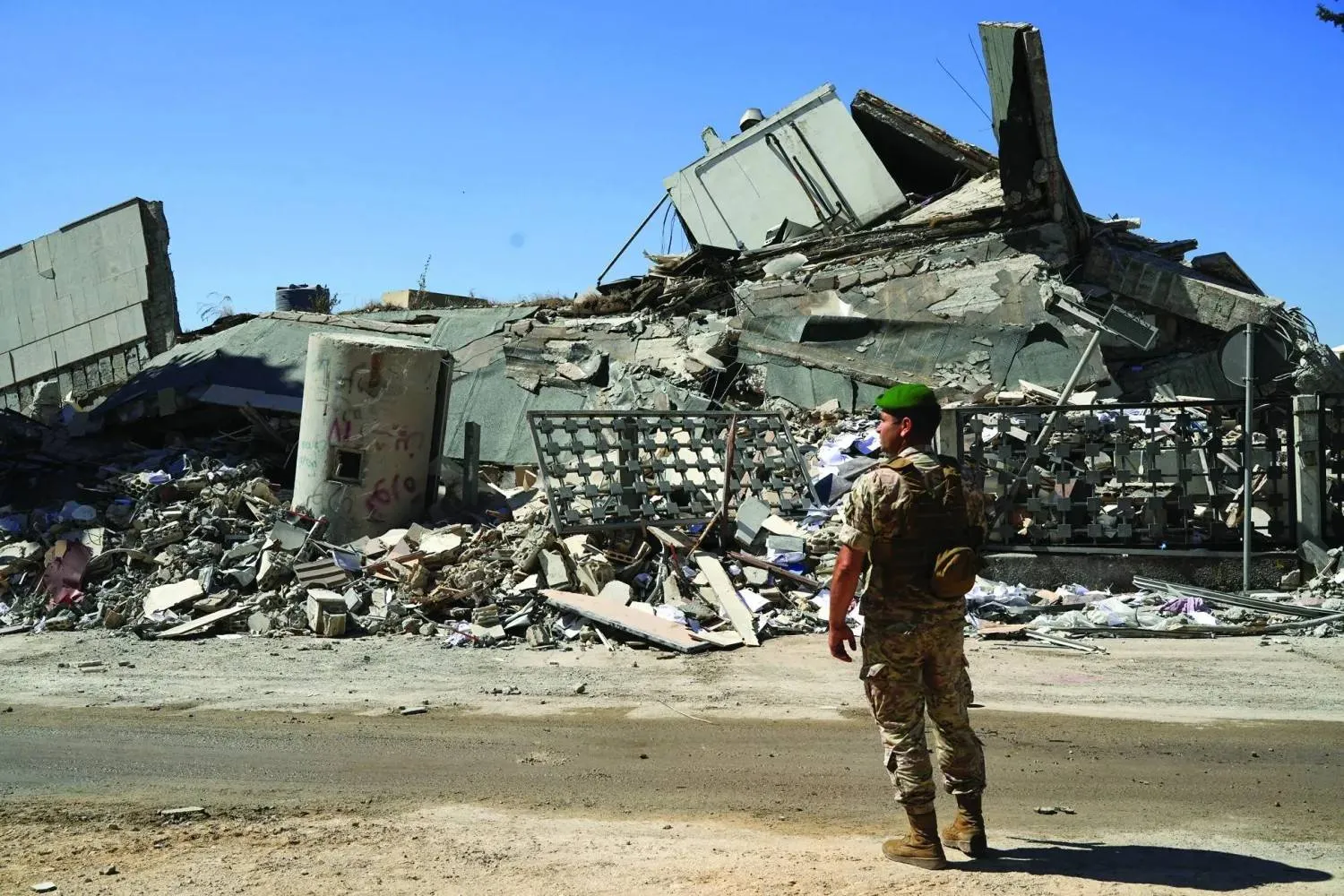

The financial assistance Hezbollah said it would provide to people displaced from southern Lebanon and Beirut’s southern suburbs because of the war with Israel has sparked dismay within its southern support base, with some describing the sums as “meager” and saying they “do not even cover six months’ rent.”
Others have criticized the payments as “unfair” and said they reinforce disparities between residents of the southern suburbs and those of southern Lebanon.
Ali Damoush, head of Hezbollah’s Executive Council, announced on Tuesday a housing assistance program for displaced people and for those whose homes have been destroyed or severely damaged by Israel and are no longer habitable. He set the maximum assistance at $14,000 for housing units in Beirut and its southern suburbs, and $12,000 for homes outside those areas.
Damoush said the money would be paid in four installments, with each payment amounting to $3,500 for displaced residents in Beirut and the southern suburbs and $3,000 for those in other areas.
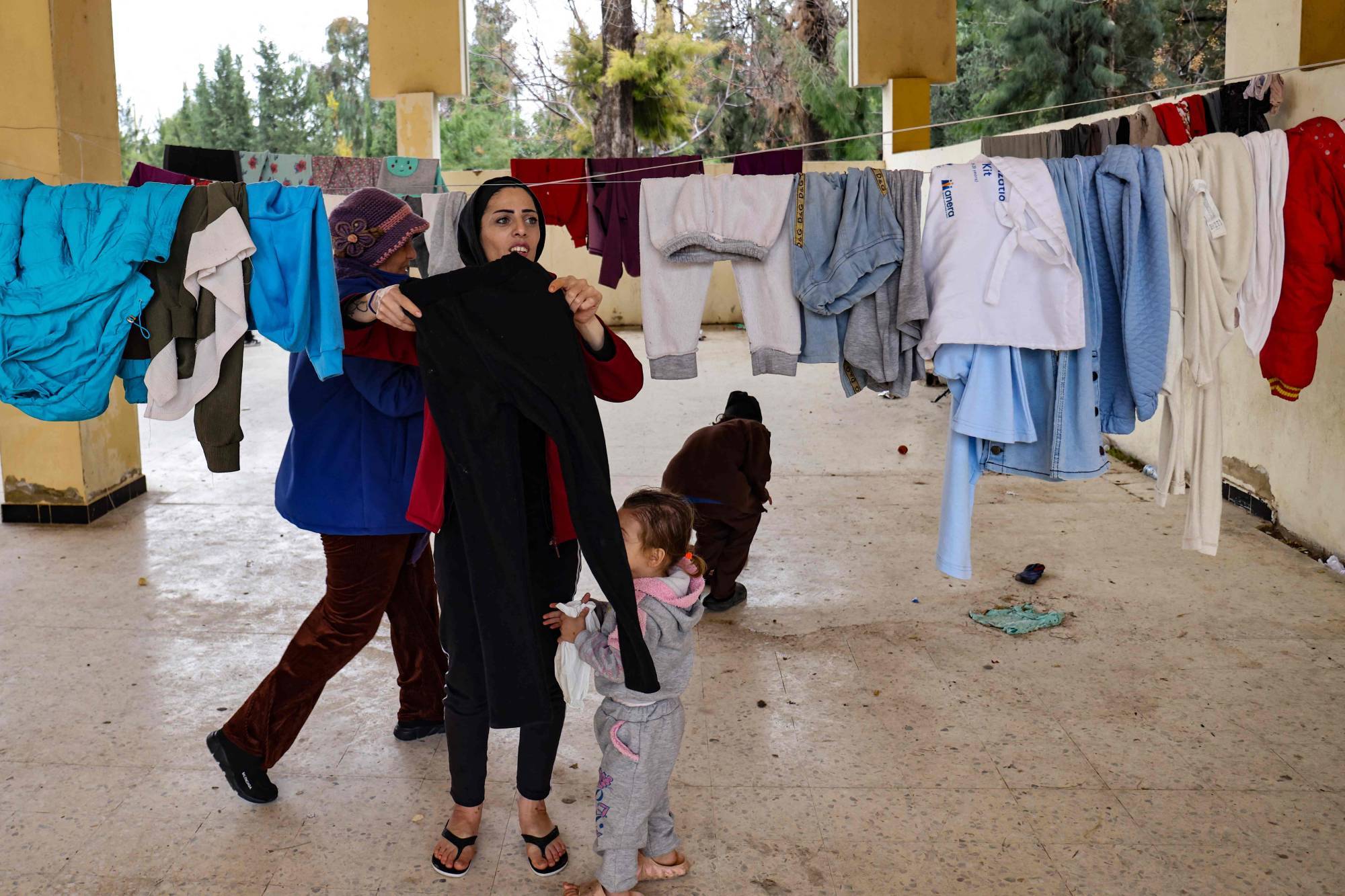
Rent Payments Fall Short
No sooner had Damoush announced the payments than discontent spread among residents of southern Lebanon, who described the amounts as “unfair.”
A local source in Nabatieh told Asharq Al-Awsat that the money would “barely cover six months of monthly rent.”
“At the very lowest estimate, rent for a house outside the city is $500 a month, while anyone wishing to rent in the city will have to pay $800,” the source said. “Is this amount enough to cover rent?”
“We waited six months. The state paid nothing and paid no attention to us, while Hezbollah has now announced meager payments that would not even be enough to buy a bed or a refrigerator,” the source added, describing the announced assistance as essentially pointless.
The United Nations Development Programme estimates that around 17,900 housing units have been completely destroyed in southern Lebanon, while approximately 5,200 buildings have been damaged by the war.
Heavy Losses
The same source in Nabatieh said war-related losses were “extremely heavy,” ranging from destroyed buildings and rental costs to businesses and livelihoods brought to a halt. This comes on top of six months during which residents have had to pay rent out of their own pockets without receiving assistance.
“The initiative undertaken by Hezbollah cannot be relied upon because the amount is extremely small and does not take into account people’s suffering and needs,” said the source, who requested anonymity.
The frustration extends to residents currently living in the city of Tyre after being displaced from occupied and destroyed border villages, particularly Naqoura, Aita al-Shaab, Marwahin, Umm al-Tout and Tayr Harfa.
One displaced resident living in Tyre told Asharq Al-Awsat that they have been paying rent for nearly three years, “and now we will receive a payment that does not even cover three months’ rent in the city,” where average residential rents stand at around $700.
“Hezbollah is applying double standards to displaced people,” he said. “We live in a city, and residents of the southern suburbs live in a city too. Why are they receiving $3,500 while people from the south are receiving $3,000?”
He described the proposed payments as “meager,” saying they appeared to represent “an attempt to shirk responsibility while promoting assistance that falls short of people’s growing needs.”
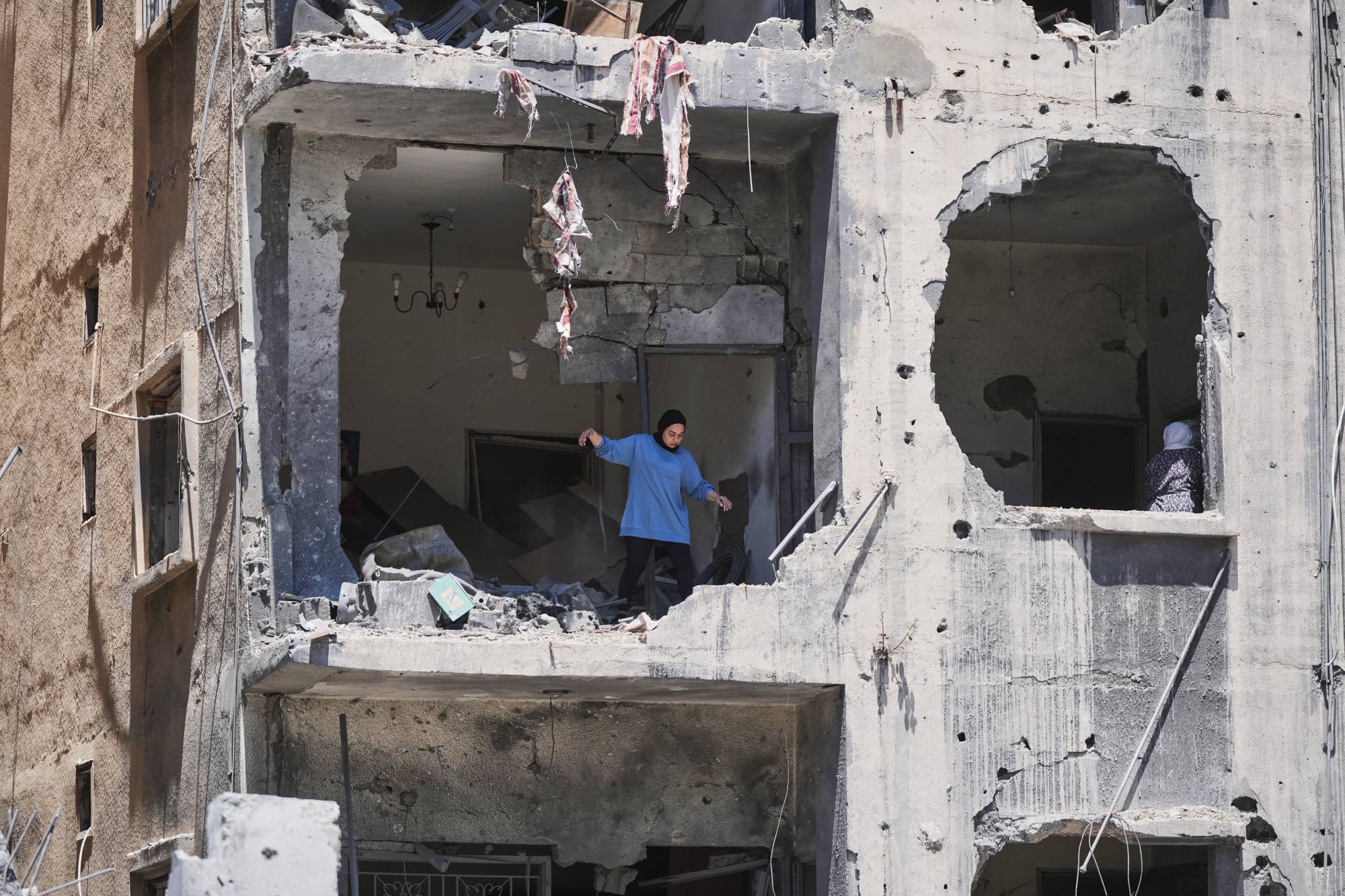
No Compensation for Repairs
Hezbollah is facing financial difficulties as a result of restrictions imposed on the flow of funds from Iran. Its supporters, however, say the group “is doing what it can under the current circumstances,” noting that the money to be distributed now is only a first payment and that additional payments will follow.
That has done little to dispel the frustration repeatedly expressed by displaced southerners.
Their dissatisfaction is not limited to the modest sums involved or what they describe as “discrimination between the south and the southern suburbs.” It also extends to thousands of people whose homes were damaged in the war but who will receive no money from Hezbollah to repair them.
A resident of a village in the Tyre area told Asharq Al-Awsat: “For four months, I kept plastic sheeting over the windows, hoping Hezbollah would provide repair assistance so I could install glass windows, but that did not happen. With winter approaching, I will have to borrow $1,000 to install glass windows to replace those shattered during the war.”
“It seems Hezbollah has its priorities, and those of us whose homes were damaged by the war are at the bottom of its list,” the source added. “If money is being provided to people displaced from their homes, why is there no money for those whose homes have been damaged?”
Discontent in Beirut’s Southern Suburbs as Well
Despite the frustration in southern Lebanon, residents of Beirut’s southern suburbs also appear dissatisfied. A significant number of buildings surrounding those that were destroyed have themselves sustained heavy damage, yet Hezbollah will not provide any financial assistance to their residents, unlike what happened following the 2024 war.
Residents of the southern suburbs say Hezbollah has not provided any payments, preventing hundreds of families from returning to their damaged homes. Other families have been forced to pay for repairs out of their own pockets, while some have opted to cover shattered windows with plastic sheeting and carry out only “the bare minimum of repairs needed to allow us to return home.”
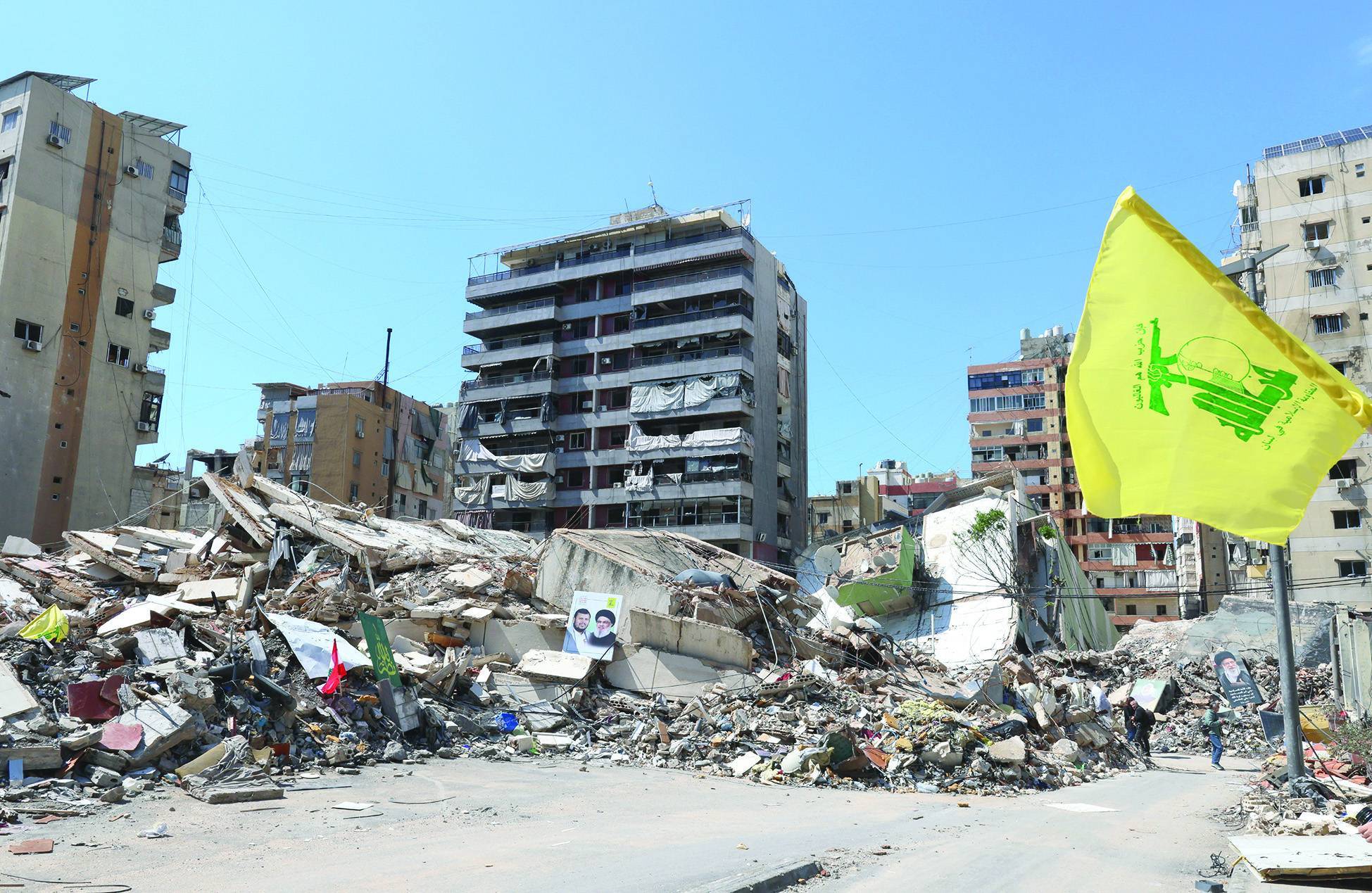
A study conducted by the United Nations Development Programme in coordination with Lebanon’s National Council for Scientific Research, and in cooperation with the Lebanese Army and the United Nations Department of Safety and Security, found that 146 buildings were completely destroyed in the Beirut and Mount Lebanon governorates, while 264 buildings were partially damaged.
At the housing-unit level, the study recorded the complete destruction of 3,168 residential units, while another 4,437 units sustained partial damage.