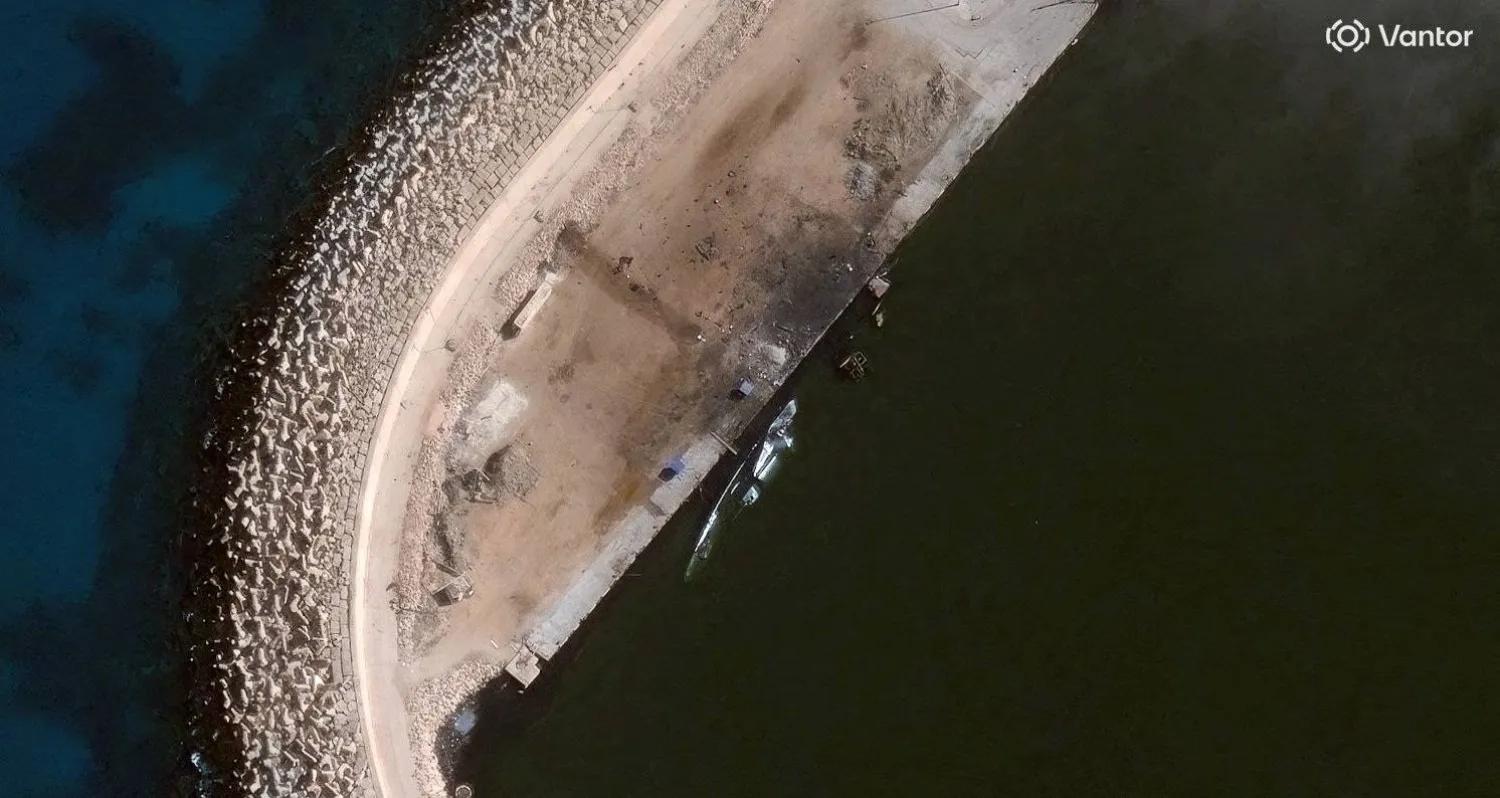

Authorities in eastern Libya have avoided commenting on a media report claiming that an Iranian cargo vessel was attacked by a drone at Benghazi port earlier this week.
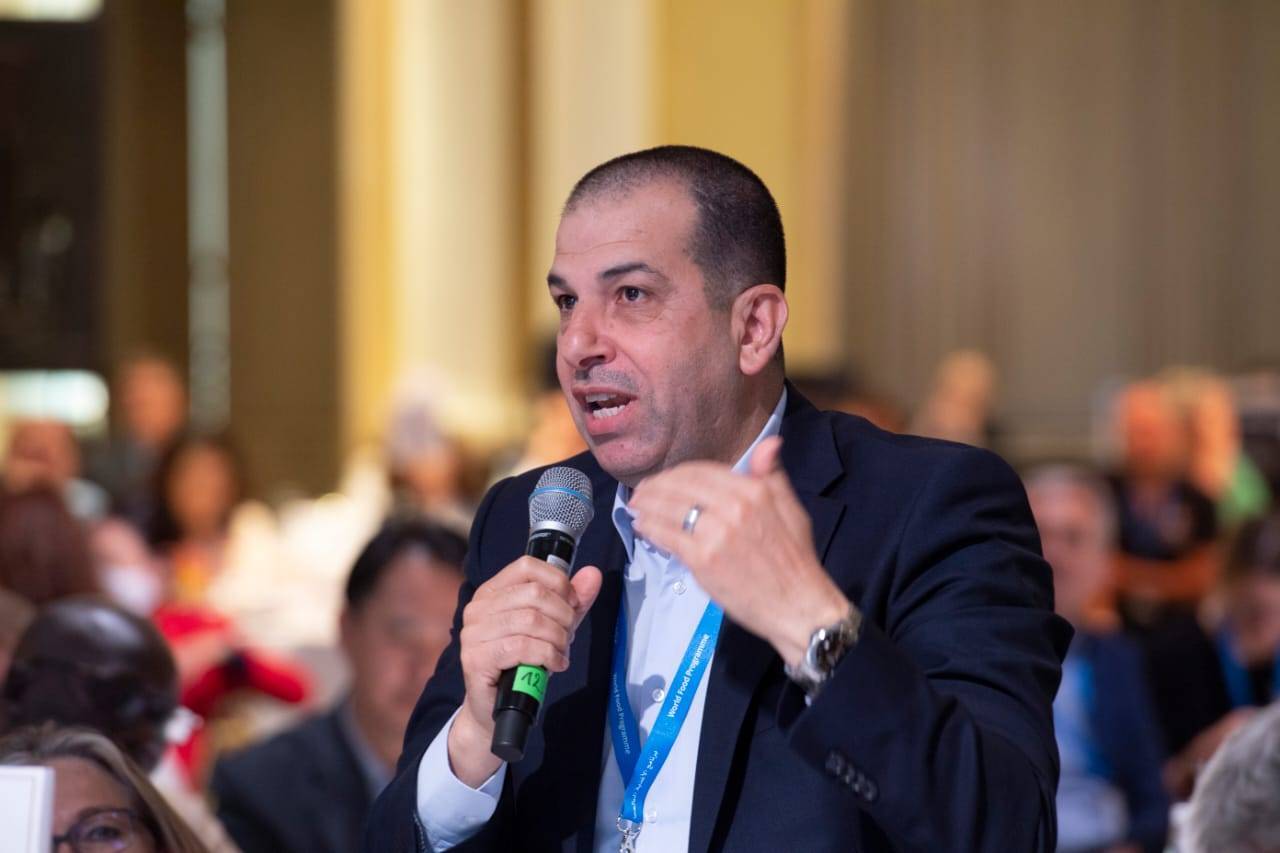
While two Libyan sources, one military and the other a former diplomat, denied that any such incident had occurred, the director of Russia’s JSM Center for Research and Studies confirmed the report.
An Italian newspaper alleged that the Iranian ship Alvan was struck by a drone attack that did not sink it. The vessel was reportedly carrying electronic equipment from China and India suspected of being intended for military use in operating drones belonging to the Libyan National Army (LNA) led by Field Marshal Khalifa Haftar.
The newspaper cited observers as suggesting that a Ukrainian unit may have carried out the attack on behalf of the United States as part of Washington’s efforts to pressure eastern Libyan authorities into halting the delivery of military equipment shipments from Iran.
The Iranian Shipping Line
A military source in eastern Libya told Asharq Al-Awsat that the country has suffered from the circulation of false and leaked reports in international media, particularly in recent months, denying that any attack had taken place against an Iranian vessel in Benghazi.
The source questioned why the United States had not publicly announced the incident if it had indeed ordered the strike.
However, the Italian newspaper said satellite images showed the vessel on the morning after the alleged attack conducting a slow maneuver from an outer anchorage area to a berth inside the port, suggesting it may have sustained damage preventing it from remaining in its previous position.
Former Libyan ambassador to Syria Mohammed Al-Merdas told Asharq Al-Awsat that the report was “entirely fabricated,” arguing that recent attacks in the area had been carried out using unmanned boats rather than drones.
Al-Merdas said that Iran’s commercial shipping line IRISL has operated through Libya since its establishment and that the presence of one of its vessels in Benghazi port would be entirely normal. He stressed, however, that there was no Iranian-Libyan cooperation concerning weapons or military matters.
Kyiv has not claimed responsibility for targeting the Iranian vessel, unlike attacks on two Russian ships that Ukrainian President Volodymyr Zelenskyy publicly acknowledged on November 23.
Zelenskyy announced that Ukraine had sunk the Russian cruiser Merkury off the Libyan coast, describing the action as a “model response to Russian aggression.”
Writing on X after the operation, Zelenskyy said Ukrainian forces used seven unmanned naval boats and succeeded in sinking the Merkury, one of Russia’s newest warships, commissioned in 2023.
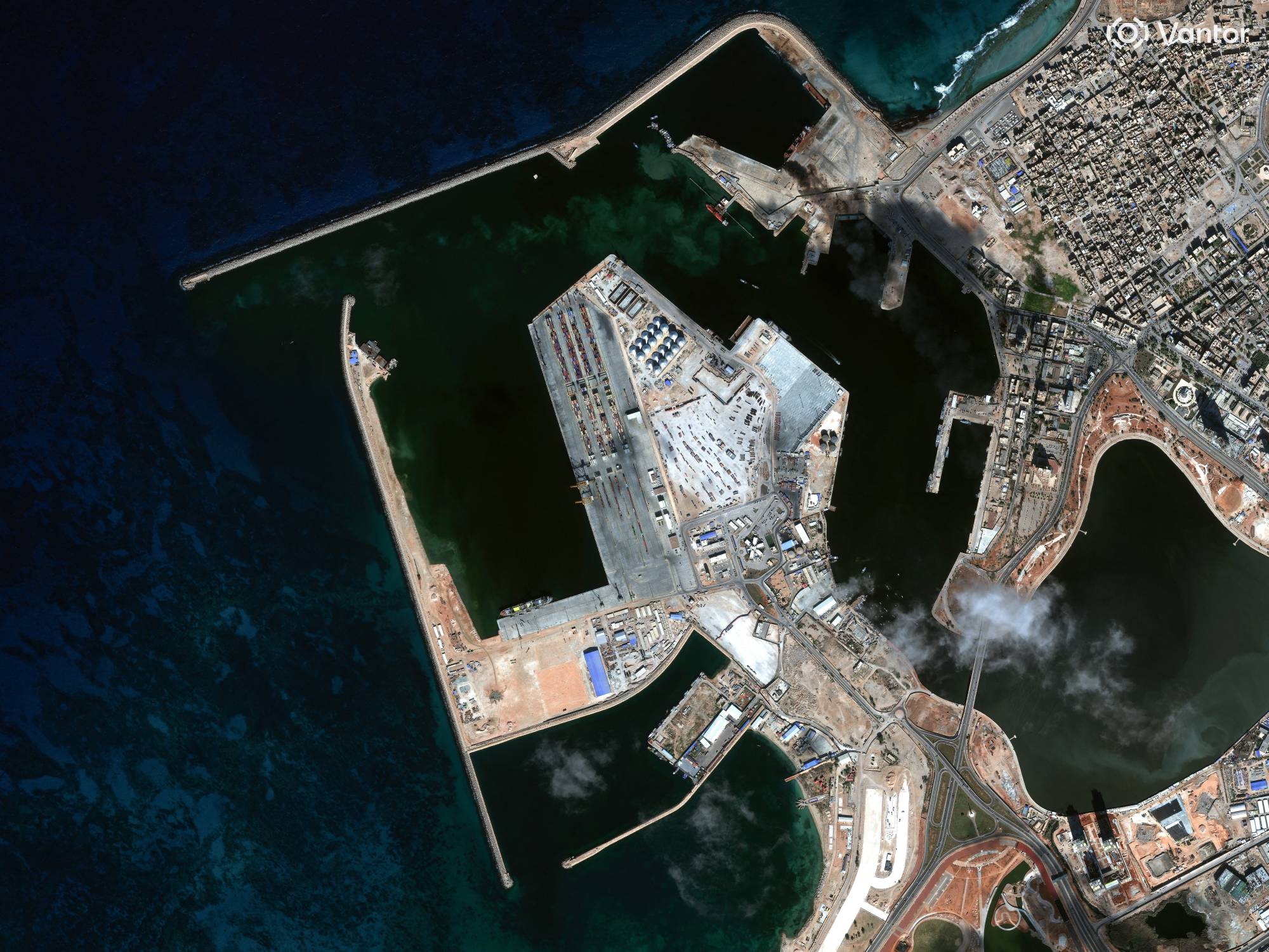
The Vessel “Alvan”
Dr. Assef Molhem, director of the Russian JSM Center for Research and Studies, believes the Iranian vessel Alvan was targeted shortly after attacks on the Russian cruiser Merkury and the Russian cargo ship Angara. He said no injuries had been reported.
Molhem said the ship belongs to the Iranian state-owned shipping company IRISL, carries IMO number 9165798, is 167 meters long, and was built in 1998. He noted that it has long been listed under US sanctions.
He added that since late October the ship had remained anchored near Tenedos Island at the entrance to the Dardanelles Strait for nearly a month. American observers monitoring the Iranian fleet reportedly believed it was waiting for an opportunity to enter a Russian port and hesitating to cross the Black Sea because of Ukrainian military activity. Instead, it turned back and anchored off Benghazi.
Molhem also referred to a similar incident on July 25, when long-range Ukrainian drones struck the Caspian Sea, damaging the cargo ship Anna, which was carrying iron and anchored near the mouth of the Volga River. One sailor was killed in that attack.
The Libyan military source again rejected all reports of an attack on an Iranian vessel in Benghazi’s seaport, saying only that various local and regional actors were targeting the General Command through information campaigns.
A Reflection of Global Events
Libyan politicians and legal experts had previously told Asharq Al-Awsat that the bombing of a Russian vessel in Benghazi signaled a dangerous development and reflected wider global conflicts.
They warned that unless Libya succeeds in unifying its national institutions, it risks becoming another arena in a broader international confrontation.
According to Al-Merdas, there is no formal diplomatic relationship or declared alliance between Iran and Haftar’s Libyan National Army.
Haftar’s known regional and international partnerships primarily involve Egypt, the UAE, Russia, and the United States, whose interests often diverge from Iranian policies.
Libya remains divided between competing external alignments. Authorities in western Libya have sought closer relations with Ukraine, while eastern Libya maintains ties with Russia that include military and logistical cooperation.
Abdulhadi Al-Huwaij, foreign minister in the Libyan government appointed by the House of Representatives, announced plans to file an official complaint with the United Nations and the UN Security Council over attacks claimed by Ukraine.
Italian Prime Minister Giorgia Meloni described the Ukrainian attack on vessels in Benghazi port and Libya’s territorial waters as “unacceptable,” warning of its potential repercussions for regional security and stability.