


Iraq Tallies Smuggling Losses from Kurdistan Amid Moves to 'Correct Course'

متظاهرون كرد يلوّحون يوم 26 نوفمبر 2026 بالأعلام بإقليم كردستان خارج قلعة أربيل خلال مظاهرة ضد قرارات الحكومة الاتحادية في بغداد (أ.ف.ب)
TT

Iraq Tallies Smuggling Losses from Kurdistan Amid Moves to 'Correct Course'

متظاهرون كرد يلوّحون يوم 26 نوفمبر 2026 بالأعلام بإقليم كردستان خارج قلعة أربيل خلال مظاهرة ضد قرارات الحكومة الاتحادية في بغداد (أ.ف.ب)

The Iraqi government estimated Friday that oil exports from the Kurdistan Region outside federal channels caused more than $100 billion in losses between 2008 and 2025, as US President Donald Trump voiced support for Prime Minister Ali al-Zaidi's efforts to stop oil smuggling, assert state authority, combat corruption and bring all weapons under government control.

The US position comes amid an escalation in Baghdad's efforts to assert control over oil resources and border crossings, following decisions issued by al-Zaidi on Tuesday ordering the Federal Border Ports Authority to assume control of all border crossings in the Kurdistan Region and granting the federal Oil Ministry exclusive authority to approve exports of crude oil and petroleum products.

Government spokesperson Haider al-Aboudi told the Iraqi News Agency (INA) that the Federal Board of Supreme Audit had established that losses resulting from the Kurdistan Region's oil exports outside the State Organization for Marketing of Oil (SOMO) exceeded $100 billion over 17 years.

He said the closure of border crossings and deployment of forces along international borders were aimed at smugglers, adding that legal action would be taken against anyone found responsible for wasting the country's oil wealth.

Al-Aboudi stressed that any oil exports bypassing SOMO constitute smuggling as long as the proceeds do not enter the state treasury.

He did not explain how the estimated losses were calculated or specify whether the figure included oil revenues not transferred to the federal treasury or other damages associated with the exports.

Trump Backs Al-Zaidi

In a significant development, Trump announced Friday his support for al-Zaidi's efforts to strengthen state authority across Iraq.

In a post on Truth Social, Trump wrote: "We support Iraqi Prime Minister Ali al-Zaidi’s efforts to assert state authority throughout Iraq, stop the smuggling of Iraqi oil, end corruption, and bring all weapons under the exclusive control of the state."

He added: "We support Prime Minister al-Zaidi’s efforts to build a united, prosperous, and strong Iraq that makes its own political decisions."

Unified Kurdish Position

Alongside the government's measures, Iraq's two main Kurdish parties are preparing to participate in a national dialogue scheduled for early December in Baghdad with a unified position, potentially creating an opportunity to reopen disputed issues between the federal government and the Kurdistan Region through negotiations.

Majid Shankali, a former lawmaker from the Kurdistan Democratic Party (KDP), said the KDP and the Patriotic Union of Kurdistan (PUK) would attend the dialogue convened by Supreme Judicial Council President Judge Faiq Zidan.

Shankali told Asharq Al-Awsat that the Kurdish delegation would present a unified document representing the region as a constitutional entity, despite differences over certain details.

He said Kurdish political forces intend to discuss the measures taken by al-Zaidi's government, including the statement issued by the General Command of the Armed Forces and the rulings of the Federal Supreme Court.

According to Shankali, recent developments have helped bring the positions of the two main Kurdish parties closer together, despite their continuing political disagreements.

He said there was "a genuine intention this time to reach a solution and agree on a real roadmap for implementing the constitution."

Shankali emphasized the need to enact legislation that has long been disputed or delayed, including laws governing oil and gas, the Federal Supreme Court, the Federation Council and customs administration.

The announcement of a unified Kurdish position follows a period of political divisions between the two parties, as relations between Baghdad and Erbil face a new test over federal decisions concerning oil and border crossings.

Kurdish Opposition's Proposal

The Kurdish position, however, remains divided among political factions.

Kurdish opposition lawmakers presented al-Zaidi with a proposal outlining a roadmap for resolving outstanding disputes, while Ali Hama Salih, rapporteur of the National Stance Movement, announced that the document would be submitted to other official parties ahead of further discussions.

The groups behind the proposal include the National Stance Movement, the Kurdistan Islamic Union and the Kurdistan Justice Group.

Neither the Kurdistan Regional Government nor the two main Kurdish parties have issued an official response to the opposition initiative.

In a statement following al-Zaidi's meeting with the Kurdish delegation, the prime minister's office said he had warned that certain parties were seeking to drag the Kurdish population into the oil-smuggling crisis to protect their influence and interests from legal accountability.

Al-Zaidi stressed that the Iraqi army, which includes members of the country's various communities, would deploy along international borders rather than inside cities.

According to the statement, the prime minister affirmed his government's understanding of the Kurdistan Region's distinctive status, stressing that its revenues should not benefit specific groups but should instead be distributed among Iraqis.

Baghdad-Erbil Relations Face a Test

As preparations continue for the national dialogue, Iraqi President Nizar Amidi visited Najaf province Friday and met local officials.

He said Iraq was entering a long-awaited phase of correcting its course and that joint efforts had succeeded in preventing the country from being drawn into the conflict.

The visit's direct connection to the Baghdad-Erbil dispute remained unclear, particularly as the announced agenda did not include meetings with senior Shiite religious authorities or influential cleric Muqtada al-Sadr, leader of the Sadrist Movement.

Legal and political affairs researcher Amir al-Daami believes the Supreme Judicial Council's national dialogue initiative offers an opportunity to reorganize relations between federal institutions and the Kurdistan Region on the basis of constitutional partnership and the national interest.

Speaking to Asharq Al-Awsat, al-Daami said the initiative's importance extends beyond resolving the dispute between Baghdad and Erbil.

He argued that it raises the broader question of how political differences should be managed through constitutional and legal mechanisms rather than allowed to escalate into national crises.

Political researcher Falah al-Mishal, however, believes the dialogue is intended to inform the Kurdish side of the need to comply with decisions and policies issued by Baghdad.

He noted that the Federal Supreme Court's statement used the term "central" rather than "federal," arguing that the choice of wording carries political significance.

Al-Mishal told Asharq Al-Awsat that al-Zaidi's policies aim to consolidate the central government's authority, with US backing and support from neighboring countries, and to end the existence of multiple centers of power in Iraq, including the influence of armed factions.



Iraq Tallies Smuggling Losses from Kurdistan Amid Moves to 'Correct Course'

متظاهرون كرد يلوّحون يوم 26 نوفمبر 2026 بالأعلام بإقليم كردستان خارج قلعة أربيل خلال مظاهرة ضد قرارات الحكومة الاتحادية في بغداد (أ.ف.ب)
TT

Iraq Tallies Smuggling Losses from Kurdistan Amid Moves to 'Correct Course'

متظاهرون كرد يلوّحون يوم 26 نوفمبر 2026 بالأعلام بإقليم كردستان خارج قلعة أربيل خلال مظاهرة ضد قرارات الحكومة الاتحادية في بغداد (أ.ف.ب)

The Iraqi government estimated Friday that oil exports from the Kurdistan Region outside federal channels caused more than $100 billion in losses between 2008 and 2025, as US President Donald Trump voiced support for Prime Minister Ali al-Zaidi's efforts to stop oil smuggling, assert state authority, combat corruption and bring all weapons under government control.

The US position comes amid an escalation in Baghdad's efforts to assert control over oil resources and border crossings, following decisions issued by al-Zaidi on Tuesday ordering the Federal Border Ports Authority to assume control of all border crossings in the Kurdistan Region and granting the federal Oil Ministry exclusive authority to approve exports of crude oil and petroleum products.

Government spokesperson Haider al-Aboudi told the Iraqi News Agency (INA) that the Federal Board of Supreme Audit had established that losses resulting from the Kurdistan Region's oil exports outside the State Organization for Marketing of Oil (SOMO) exceeded $100 billion over 17 years.

He said the closure of border crossings and deployment of forces along international borders were aimed at smugglers, adding that legal action would be taken against anyone found responsible for wasting the country's oil wealth.

Al-Aboudi stressed that any oil exports bypassing SOMO constitute smuggling as long as the proceeds do not enter the state treasury.

He did not explain how the estimated losses were calculated or specify whether the figure included oil revenues not transferred to the federal treasury or other damages associated with the exports.

Trump Backs Al-Zaidi

In a significant development, Trump announced Friday his support for al-Zaidi's efforts to strengthen state authority across Iraq.

In a post on Truth Social, Trump wrote: "We support Iraqi Prime Minister Ali al-Zaidi’s efforts to assert state authority throughout Iraq, stop the smuggling of Iraqi oil, end corruption, and bring all weapons under the exclusive control of the state."

He added: "We support Prime Minister al-Zaidi’s efforts to build a united, prosperous, and strong Iraq that makes its own political decisions."

Unified Kurdish Position

Alongside the government's measures, Iraq's two main Kurdish parties are preparing to participate in a national dialogue scheduled for early December in Baghdad with a unified position, potentially creating an opportunity to reopen disputed issues between the federal government and the Kurdistan Region through negotiations.

Majid Shankali, a former lawmaker from the Kurdistan Democratic Party (KDP), said the KDP and the Patriotic Union of Kurdistan (PUK) would attend the dialogue convened by Supreme Judicial Council President Judge Faiq Zidan.

Shankali told Asharq Al-Awsat that the Kurdish delegation would present a unified document representing the region as a constitutional entity, despite differences over certain details.

He said Kurdish political forces intend to discuss the measures taken by al-Zaidi's government, including the statement issued by the General Command of the Armed Forces and the rulings of the Federal Supreme Court.

According to Shankali, recent developments have helped bring the positions of the two main Kurdish parties closer together, despite their continuing political disagreements.

He said there was "a genuine intention this time to reach a solution and agree on a real roadmap for implementing the constitution."

Shankali emphasized the need to enact legislation that has long been disputed or delayed, including laws governing oil and gas, the Federal Supreme Court, the Federation Council and customs administration.

The announcement of a unified Kurdish position follows a period of political divisions between the two parties, as relations between Baghdad and Erbil face a new test over federal decisions concerning oil and border crossings.

Kurdish Opposition's Proposal

The Kurdish position, however, remains divided among political factions.

Kurdish opposition lawmakers presented al-Zaidi with a proposal outlining a roadmap for resolving outstanding disputes, while Ali Hama Salih, rapporteur of the National Stance Movement, announced that the document would be submitted to other official parties ahead of further discussions.

The groups behind the proposal include the National Stance Movement, the Kurdistan Islamic Union and the Kurdistan Justice Group.

Neither the Kurdistan Regional Government nor the two main Kurdish parties have issued an official response to the opposition initiative.

In a statement following al-Zaidi's meeting with the Kurdish delegation, the prime minister's office said he had warned that certain parties were seeking to drag the Kurdish population into the oil-smuggling crisis to protect their influence and interests from legal accountability.

Al-Zaidi stressed that the Iraqi army, which includes members of the country's various communities, would deploy along international borders rather than inside cities.

According to the statement, the prime minister affirmed his government's understanding of the Kurdistan Region's distinctive status, stressing that its revenues should not benefit specific groups but should instead be distributed among Iraqis.

Baghdad-Erbil Relations Face a Test

As preparations continue for the national dialogue, Iraqi President Nizar Amidi visited Najaf province Friday and met local officials.

He said Iraq was entering a long-awaited phase of correcting its course and that joint efforts had succeeded in preventing the country from being drawn into the conflict.

The visit's direct connection to the Baghdad-Erbil dispute remained unclear, particularly as the announced agenda did not include meetings with senior Shiite religious authorities or influential cleric Muqtada al-Sadr, leader of the Sadrist Movement.

Legal and political affairs researcher Amir al-Daami believes the Supreme Judicial Council's national dialogue initiative offers an opportunity to reorganize relations between federal institutions and the Kurdistan Region on the basis of constitutional partnership and the national interest.

Speaking to Asharq Al-Awsat, al-Daami said the initiative's importance extends beyond resolving the dispute between Baghdad and Erbil.

He argued that it raises the broader question of how political differences should be managed through constitutional and legal mechanisms rather than allowed to escalate into national crises.

Political researcher Falah al-Mishal, however, believes the dialogue is intended to inform the Kurdish side of the need to comply with decisions and policies issued by Baghdad.

He noted that the Federal Supreme Court's statement used the term "central" rather than "federal," arguing that the choice of wording carries political significance.

Al-Mishal told Asharq Al-Awsat that al-Zaidi's policies aim to consolidate the central government's authority, with US backing and support from neighboring countries, and to end the existence of multiple centers of power in Iraq, including the influence of armed factions.


Yemen's Private Sector Held Hostage by Houthi Extortion, Threats

A Houthi campaign targeted shops in Sanaa's Maeen district (Asharq Al-Awsat)
TT

Yemen's Private Sector Held Hostage by Houthi Extortion, Threats

A Houthi campaign targeted shops in Sanaa's Maeen district (Asharq Al-Awsat)

The Houthi militia has intensified its campaign against businesses in the Houthi-held Yemeni capital Sanaa, its surrounding areas and Ibb province, raiding commercial establishments, attempting to seize properties by force and targeting warehouses in an apparent effort to intimidate business owners and compel them to pay levies to finance its military activities.

The escalation coincides with a campaign that has continued for nearly three weeks, during which the group has deployed supervisors and loyalists to raid and shut down dozens of businesses while imposing additional levies under various pretexts, most notably what it calls "support for the frontlines."

The campaign reflects growing pressure on the private sector, with commercial establishments increasingly being treated as sources of compulsory funding.

In the latest incident, Yemeni businessman Abdulghani Qatran accused Houthi leader Faris al-Habbari, who claims the position of governor of Raymah province, of storming his commercial center in Sanaa with armed men and attempting to seize it by force after he refused to pay illegal levies.

Qatran said al-Habbari and his associates exploited their influence and positions to turn his commercial center into a scene of intimidation and threats, seeking to impose control over the property by force.

In a Facebook post, he said he and his sons had previously been attacked in an incident that left one of his sons dead. He added that the group continued attempting to seize his property through armed intimidation and outside legal procedures.

In Ibb province, a food warehouse belonging to a businessman identified as Dirham was reportedly targeted by a Houthi drone in the Al-Suhul area several days ago, causing substantial material losses, according to activists on social media.

The activists said it was the second warehouse belonging to the same businessman to be targeted in less than two weeks, after a Houthi drone fell near another of his warehouses in the province.

They described the repeated incidents as part of pressure exerted by the group on traders and business owners to force them to contribute money to finance its military activities.

42 Shops and Companies Shut Down

Alongside the direct attacks, the Houthis have intensified field inspections by teams affiliated with the Ministry of Industry and Trade in their unrecognized government.

Since the beginning of the month, the teams have shut down more than 30 shops and around 12 food production and import companies, while issuing violation reports and warnings to dozens of shopping centers, wholesalers and retailers in Sanaa, its outskirts and Ibb province, according to sources.

The sources said the group cites pricing violations and businesses' refusal to meet financial demands to justify the closures, subsequently allowing some establishments to reopen after forcing their owners to pay money.

According to the sources, the practice demonstrates how commercial oversight measures are being used to extract funds and impose levies rather than regulate markets and protect consumers.

Houthi officials in the industry and trade sector have threatened to continue deploying approximately 60 inspection committees and field teams to commercial establishments.

The campaign raises the prospect of further closures and arbitrary measures, amid fears that restrictions on the private sector will expand and that remaining economic activity will be increasingly subjected to Houthi financial demands and influence.

Traders in Sanaa, its surrounding areas, Ibb and other cities told Asharq Al-Awsat that they continue to face financial extortion and harassment.

They said the group has routinely imposed compulsory payments since its takeover, using various justifications, including financing military operations, ideological and military mobilization campaigns, and sectarian events.

Economists in Sanaa believe the escalating attacks on commercial establishments are part of a broader strategy to bring the private sector under the group's control, undermine business owners' independence and expand the influence of Houthi leaders and their associates over markets and sources of funding.

They argue that the group is increasingly using financial levies and threats as instruments to control commercial activity in areas under its authority.


Was an Iranian Ship Carrying Electronic Equipment for Haftar Targeted in Benghazi?

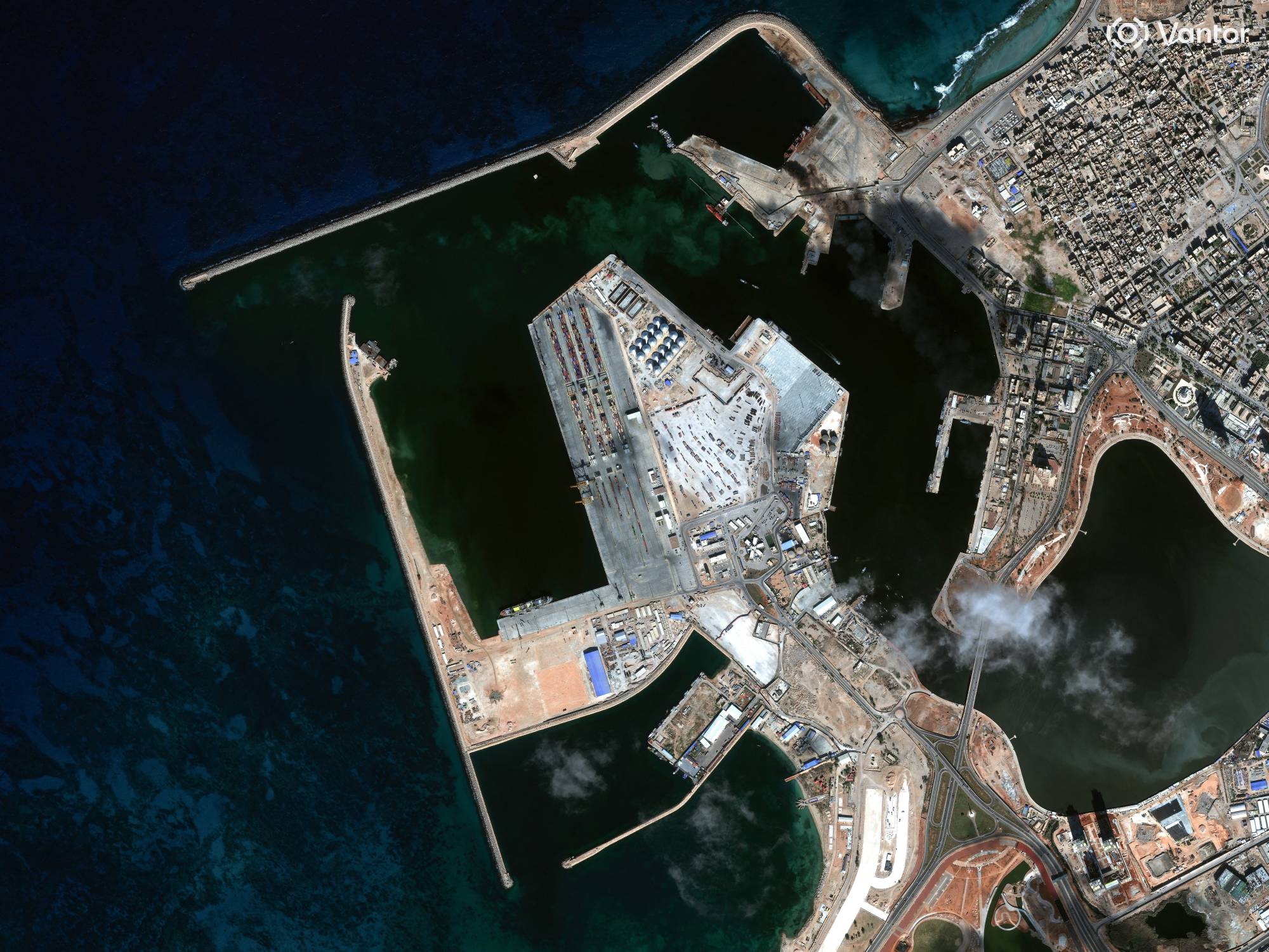
A satellite image shows a closer view of a capsized Russian corvette, Merkury, following reported Ukrainian drone attacks, in Benghazi, Libya November 23, 2026. Vantor/Handout via REUTERS
TT

Was an Iranian Ship Carrying Electronic Equipment for Haftar Targeted in Benghazi?

A satellite image shows a closer view of a capsized Russian corvette, Merkury, following reported Ukrainian drone attacks, in Benghazi, Libya November 23, 2026. Vantor/Handout via REUTERS

Authorities in eastern Libya have avoided commenting on a media report claiming that an Iranian cargo vessel was attacked by a drone at Benghazi port earlier this week.

While two Libyan sources, one military and the other a former diplomat, denied that any such incident had occurred, the director of Russia’s JSM Center for Research and Studies confirmed the report.

An Italian newspaper alleged that the Iranian ship Alvan was struck by a drone attack that did not sink it. The vessel was reportedly carrying electronic equipment from China and India suspected of being intended for military use in operating drones belonging to the Libyan National Army (LNA) led by Field Marshal Khalifa Haftar.

The newspaper cited observers as suggesting that a Ukrainian unit may have carried out the attack on behalf of the United States as part of Washington’s efforts to pressure eastern Libyan authorities into halting the delivery of military equipment shipments from Iran.

The Iranian Shipping Line

A military source in eastern Libya told Asharq Al-Awsat that the country has suffered from the circulation of false and leaked reports in international media, particularly in recent months, denying that any attack had taken place against an Iranian vessel in Benghazi.

The source questioned why the United States had not publicly announced the incident if it had indeed ordered the strike.

However, the Italian newspaper said satellite images showed the vessel on the morning after the alleged attack conducting a slow maneuver from an outer anchorage area to a berth inside the port, suggesting it may have sustained damage preventing it from remaining in its previous position.

Former Libyan ambassador to Syria Mohammed Al-Merdas told Asharq Al-Awsat that the report was “entirely fabricated,” arguing that recent attacks in the area had been carried out using unmanned boats rather than drones.

Al-Merdas said that Iran’s commercial shipping line IRISL has operated through Libya since its establishment and that the presence of one of its vessels in Benghazi port would be entirely normal. He stressed, however, that there was no Iranian-Libyan cooperation concerning weapons or military matters.

Kyiv has not claimed responsibility for targeting the Iranian vessel, unlike attacks on two Russian ships that Ukrainian President Volodymyr Zelenskyy publicly acknowledged on November 23.

Zelenskyy announced that Ukraine had sunk the Russian cruiser Merkury off the Libyan coast, describing the action as a “model response to Russian aggression.”

Writing on X after the operation, Zelenskyy said Ukrainian forces used seven unmanned naval boats and succeeded in sinking the Merkury, one of Russia’s newest warships, commissioned in 2023.

A satellite view shows the port of Benghazi after an explosion aboard a Russian ship docked at the Benghazi naval base, in Benghazi, Libya, November 22, 2026. Vantor/Handout via REUTERS

The Vessel “Alvan”

Dr. Assef Molhem, director of the Russian JSM Center for Research and Studies, believes the Iranian vessel Alvan was targeted shortly after attacks on the Russian cruiser Merkury and the Russian cargo ship Angara. He said no injuries had been reported.

Molhem said the ship belongs to the Iranian state-owned shipping company IRISL, carries IMO number 9165798, is 167 meters long, and was built in 1998. He noted that it has long been listed under US sanctions.

He added that since late October the ship had remained anchored near Tenedos Island at the entrance to the Dardanelles Strait for nearly a month. American observers monitoring the Iranian fleet reportedly believed it was waiting for an opportunity to enter a Russian port and hesitating to cross the Black Sea because of Ukrainian military activity. Instead, it turned back and anchored off Benghazi.

Molhem also referred to a similar incident on July 25, when long-range Ukrainian drones struck the Caspian Sea, damaging the cargo ship Anna, which was carrying iron and anchored near the mouth of the Volga River. One sailor was killed in that attack.

The Libyan military source again rejected all reports of an attack on an Iranian vessel in Benghazi’s seaport, saying only that various local and regional actors were targeting the General Command through information campaigns.

A Reflection of Global Events

Libyan politicians and legal experts had previously told Asharq Al-Awsat that the bombing of a Russian vessel in Benghazi signaled a dangerous development and reflected wider global conflicts.

They warned that unless Libya succeeds in unifying its national institutions, it risks becoming another arena in a broader international confrontation.

According to Al-Merdas, there is no formal diplomatic relationship or declared alliance between Iran and Haftar’s Libyan National Army.

Haftar’s known regional and international partnerships primarily involve Egypt, the UAE, Russia, and the United States, whose interests often diverge from Iranian policies.

Libya remains divided between competing external alignments. Authorities in western Libya have sought closer relations with Ukraine, while eastern Libya maintains ties with Russia that include military and logistical cooperation.

Abdulhadi Al-Huwaij, foreign minister in the Libyan government appointed by the House of Representatives, announced plans to file an official complaint with the United Nations and the UN Security Council over attacks claimed by Ukraine.

Italian Prime Minister Giorgia Meloni described the Ukrainian attack on vessels in Benghazi port and Libya’s territorial waters as “unacceptable,” warning of its potential repercussions for regional security and stability.