


Saudi Arabia Jumps to 16th Spot on UNCTAD Maritime Connectivity Index

This achievement contributes to promoting economic growth, by reducing the time required for import and export. (Asharq Al-Awsat) 
TT

Saudi Arabia Jumps to 16th Spot on UNCTAD Maritime Connectivity Index

This achievement contributes to promoting economic growth, by reducing the time required for import and export. (Asharq Al-Awsat) 

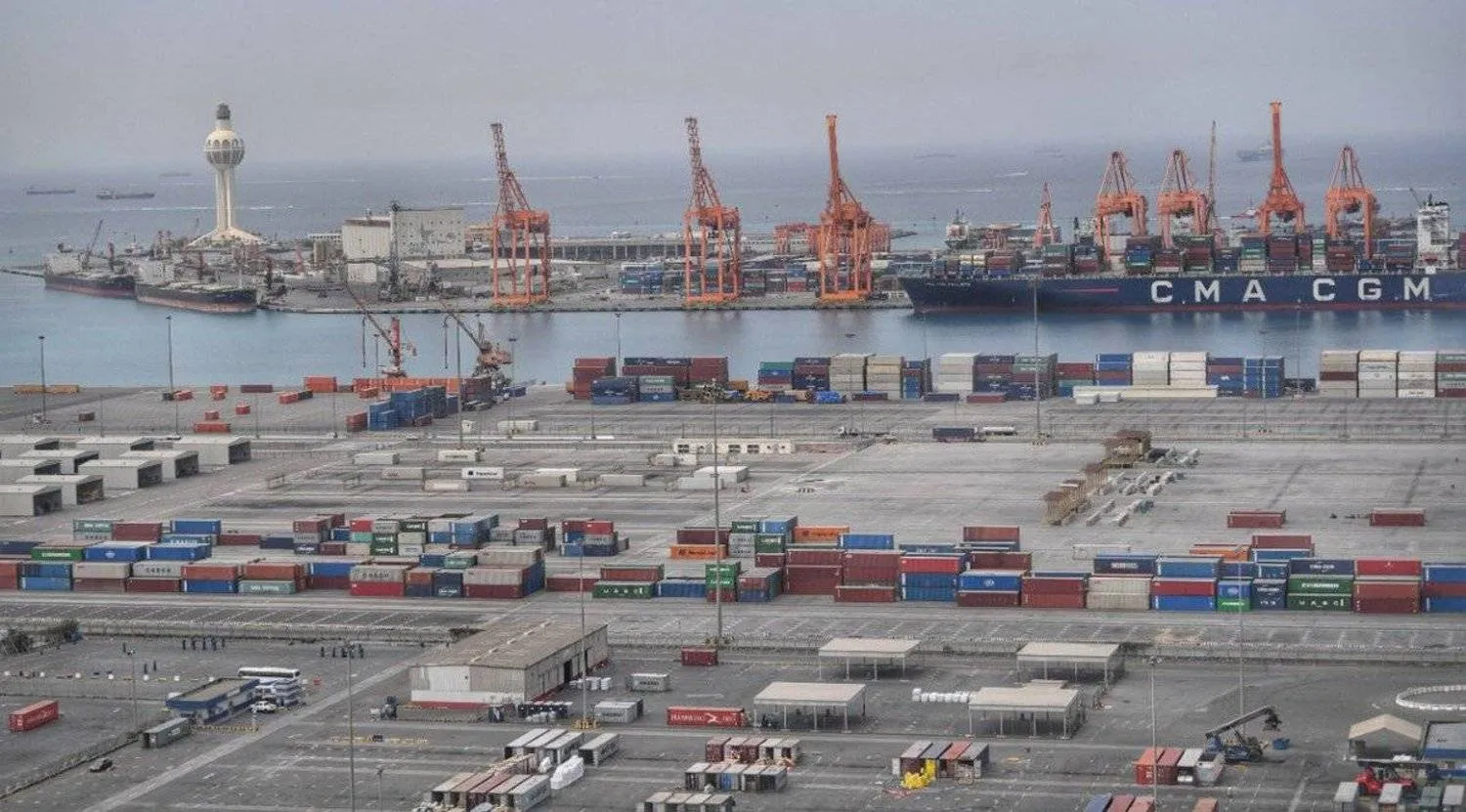
Saudi Arabia jumped to rank 16 on the maritime connectivity index issued by the United Nations Conference on Trade and Development (UNCTAD) for the second quarter of 2023.

Saudi Arabia scored 76.16 points within 187 countries this quarter, according to the UN Conference on Trade and Development Liner Shipping Connectivity Index.

The report said that 97 Saudi ports linked the Kingdom with approximately 348 ports around the world.

The Saudi Minister of Transport and Logistics Services, Saleh bin Nasser Al-Jasser, who is also chairman of Saudi Ports Authority (Mawani) board of directors, said that this qualitative national achievement comes in light of the great support offered by The Custodian of the Two Holy Mosques, King Salman Bin Abdulaziz Al Saud and Crown Prince Mohammed bin Salman to the transport and logistics system and the ports sector.

It also helps consolidate Saudi Arabia’s position on the global maritime map, added Al-Jasser.

He also noted that this leap contributes to promoting economic growth, by reducing the time required for import and export as well as cutting the cost of shipping to and from the Kingdom's ports.

The Minister said Mawani increased the number of shipping services with major international shipping lines. The Ports Authority added 20 new shipping services during the first half of 2023, a move that significantly contributed to consolidating the attractiveness and competitiveness of Saudi ports and raising their operational efficiency, he added.

Lately, the Kingdom has advanced 17 places in the global Logistics Performance Index (LPI) issued by the World Bank. Among 160 countries, the Kingdom has advanced to the rank 38th in the World Bank's Logistics Performance Index after achieving wide leaps in performance efficiency through several sub-indicators.


IMF Reaches Staff Deal with Pakistan, Potentially Unlocking $1.2 Bn

FILE - The logo of the International Monetary Fund is visible on its building, April 5, 2021, in Washington. (AP Photo/Andrew Harnik, File)
TT

IMF Reaches Staff Deal with Pakistan, Potentially Unlocking $1.2 Bn

FILE - The logo of the International Monetary Fund is visible on its building, April 5, 2021, in Washington. (AP Photo/Andrew Harnik, File)

The International Monetary Fund has reached a staff-level agreement with Pakistan on reviews of some of its lending programs, potentially unlocking about $1.21 billion in financing pending board approval, the fund said on Wednesday.

If the board approves the deal, Pakistan could access about $1 billion under the ⁠Extended Fund Facility ⁠and $210 million under the climate-focused Resilience and Sustainability Facility, bringing total disbursements under the two programs to around $5.7 billion.

Pakistan remains reliant on external financing to bolster foreign ⁠exchange reserves and meet debt repayments.

"Supported by the EFF, the authorities have successfully navigated the impact of the Middle East conflict, and strong policies have helped preserve macroeconomic stability," Reuters quoted the fund as saying.

Risks remain elevated, however, due to geopolitical tensions, volatile energy prices, tighter global financial conditions ⁠and ⁠trade disruptions, the IMF said.

Pakistan is the most vulnerable major Asia-Pacific economy to a prolonged Middle East conflict, given its dependence on Gulf energy imports, remittances and financing support from the region, Ahmad Mobeen, principal economist at S&P Global Market Intelligence, said earlier this year.


Taiwan’s Foreign Minister Welcomes Partnership with Saudi Arabia to Support Vision 2030 and High-Tech Industries

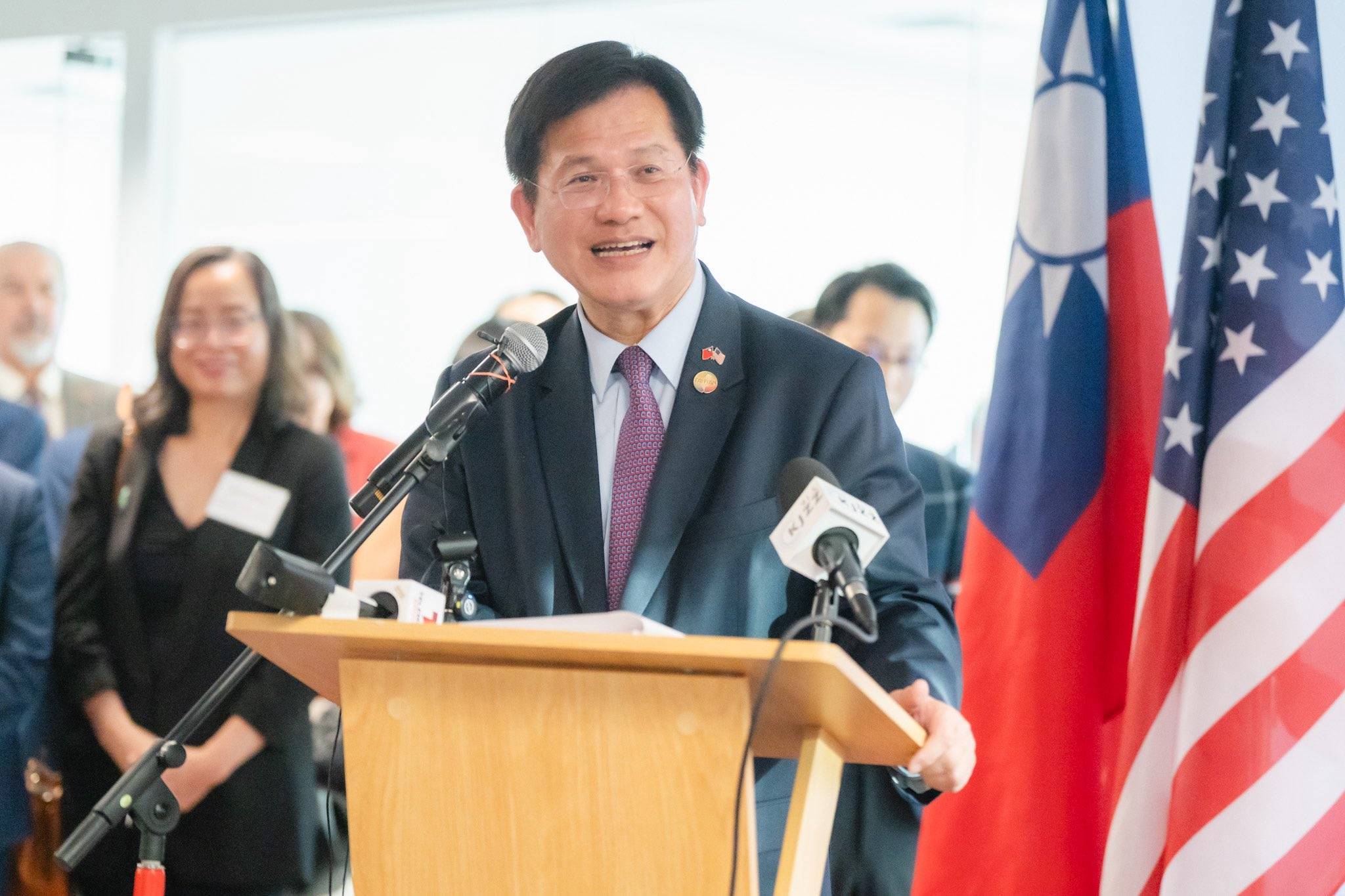
Taiwanese Minister of Foreign Affairs Lin Chia-lung (X)
TT

Taiwan’s Foreign Minister Welcomes Partnership with Saudi Arabia to Support Vision 2030 and High-Tech Industries

Taiwanese Minister of Foreign Affairs Lin Chia-lung (X)

Taiwanese Minister of Foreign Affairs Lin Chia-lung emphasized that Taiwan attaches great importance to fostering strong economic and investment partnerships with Saudi Arabia and the broader Middle East.

He praised major regional development initiatives, led by Saudi Arabia's Vision 2030, and renewed Taiwan’s readiness to deploy its technological capabilities and resources to foster sustainable cooperation in advanced industries.

Lin made his remarks in response to questions posed by Asharq Al-Awsat newspaper, which covered prospects for economic and technological collaboration, investment opportunities under Vision 2030, Taiwan’s economic performance, as well as its position on regional geopolitical challenges and global energy security.

The Taiwanese Foreign Minister during the opening of a new Taiwan office in the city of Phoenix, Arizona (X)

Economic Cooperation with Saudi Arabia & Vision 2030

In response to a question regarding economic, industrial, and technological ties with the Kingdom, Lin highlighted the global transition from traditional oil-based economies toward digital technology, semiconductors, and artificial intelligence (AI).

"We are aware that Saudi Arabia is actively pushing forward with Vision 2030 and transitioning toward modern technologies. We believe Taiwan is the ideal partner for Middle Eastern nations in these sectors," Lin stated.

Addressing future investment plans, Lin noted: "We are currently looking for partner countries in the Middle East that are willing to engage in normal exchanges and interactions with us.”

“Whenever such engagement is established, we stand fully prepared to invest and allocate our resources—whether in Saudi Arabia, Oman, Qatar, or other friendly nations that maintain strong relations with our international allies,” he added.

Robust Economic Performance and Market Growth

Regarding Taiwan’s economic trajectory and challenges, Lin strong growth indicators, noting that Taiwan’s economy grew by 8.68% last year, with projections expected to exceed 11% this year, fueled by technological innovation and surging global demand for semiconductors and AI technology.

The minister further pointed out that Taiwan’s stock exchange has become the fourth largest in the world, outperforming major G7 economies such as France, the UK, and Italy.

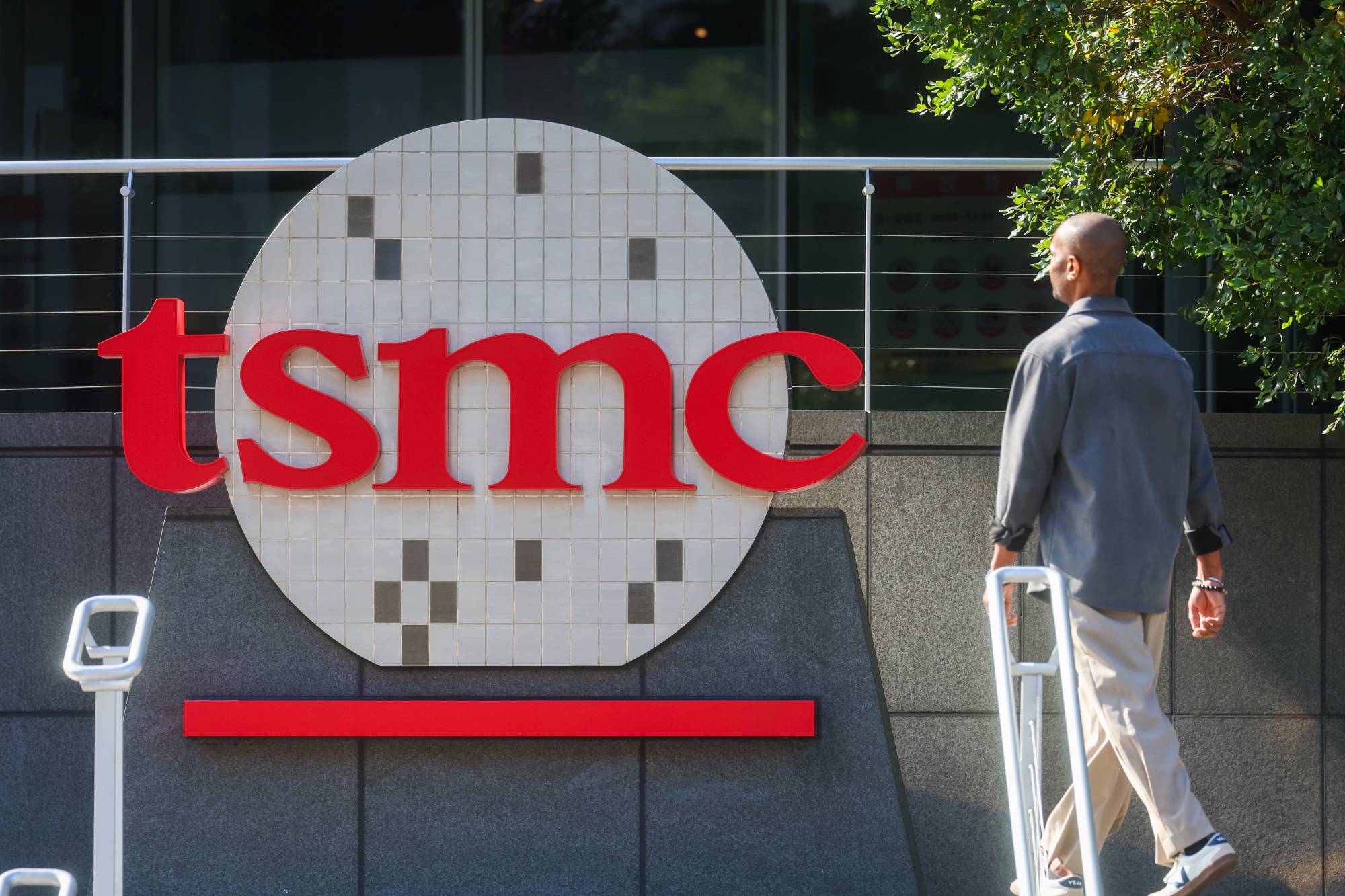
In the semiconductor sector, he noted that major Taiwanese tech firms (such as TSMC) have secured orders stretching over the next five years, exceeding their current manufacturing capacity.

FILE - A worker walks past the logo of TSMC or Taiwan Semiconductor Manufacturing Corp., a Taiwanese multinational semiconductor contract manufacturing and design company, in Hsinchu, Taiwan, on Jan. 29, 2026. (AP Photo/Daniel Ceng, File)

Middle East Crises and Energy Security

Addressing questions regarding regional instability and energy supply routes through the Strait of Hormuz, Lin acknowledged that Middle Eastern conflicts affect Taiwan due to its reliance on imported energy.

However, he emphasized that Taiwan has taken proactive measures to diversify its energy sources by increasing purchases and investments from the United States and Australia, while expanding domestic investments in renewable energy to safeguard national energy security.

Lin reiterated that Taiwan has built significant resilience in risk management amidst geopolitical challenges, expressing the country’s eagerness to share these experiences and forge robust economic bonds with partners around the world.


Gold Pauses Decline after Two-month Low as Traders Weigh US Fed Move

A 1000-gram gold bar at a gold and silver refinery in Vienna (AFP)
TT

Gold Pauses Decline after Two-month Low as Traders Weigh US Fed Move

A 1000-gram gold bar at a gold and silver refinery in Vienna (AFP)

Gold prices steadied on Thursday after sliding to a two-month low in the previous session, as investors assessed the likelihood of another US Federal Reserve interest rate hike before year-end.

Spot gold was little changed at $4,116.67 per ounce by 0625 GMT. On Wednesday, bullion prices touched their lowest level since August 5 as a ‌firmer dollar and ‌higher US Treasury yields weighed on the ‌market.

US ⁠gold futures were ⁠flat at $4,140.70.

"The short-term investment case for gold remains challenged... We would need to see a break above $4,275 to become more constructive on the near-term upside," said Chris Weston, head of research, Pepperstone.

"If markets begin treating rising long-end yields as a reflection of sovereign credit and fiscal risk rather than stronger economic fundamentals, gold ⁠could start to diverge positively from bond yields ‌and the debasement trade could return ‌with greater force."

Fed policymakers were divided last month over the rationale for ‌raising interest rates, with "some participants" seeing a hike as needed ‌to keep the impact of energy and other price shocks at bay, but a more hawkish core viewing it as necessary to guard against emerging demand-driven inflation, minutes showed.

Traders see only a 19% chance ‌of a rate hike later this month, but are pricing in an 86% likelihood of ⁠an increase ⁠in December, according to CME's FedWatch tool.

Higher rates diminish the appeal of non-yielding gold.

The global economy is under threat from persistently high energy prices, record public debt and risks from the AI investment boom, International Monetary Fund Managing Director Kristalina Georgieva warned, urging governments to implement protective fiscal and monetary policy measures.

Among other metals, spot silver fell 1.9% at $59.01, platinum added 1.6% to $1,657.18 and palladium climbed 1.1% to $1,136.80.

"We see silver on a downward trajectory given the deteriorating chart patterns and expect a test of the 2026 lows in the mid to high $50s," Marex analyst Edward Meir said in a note.
