

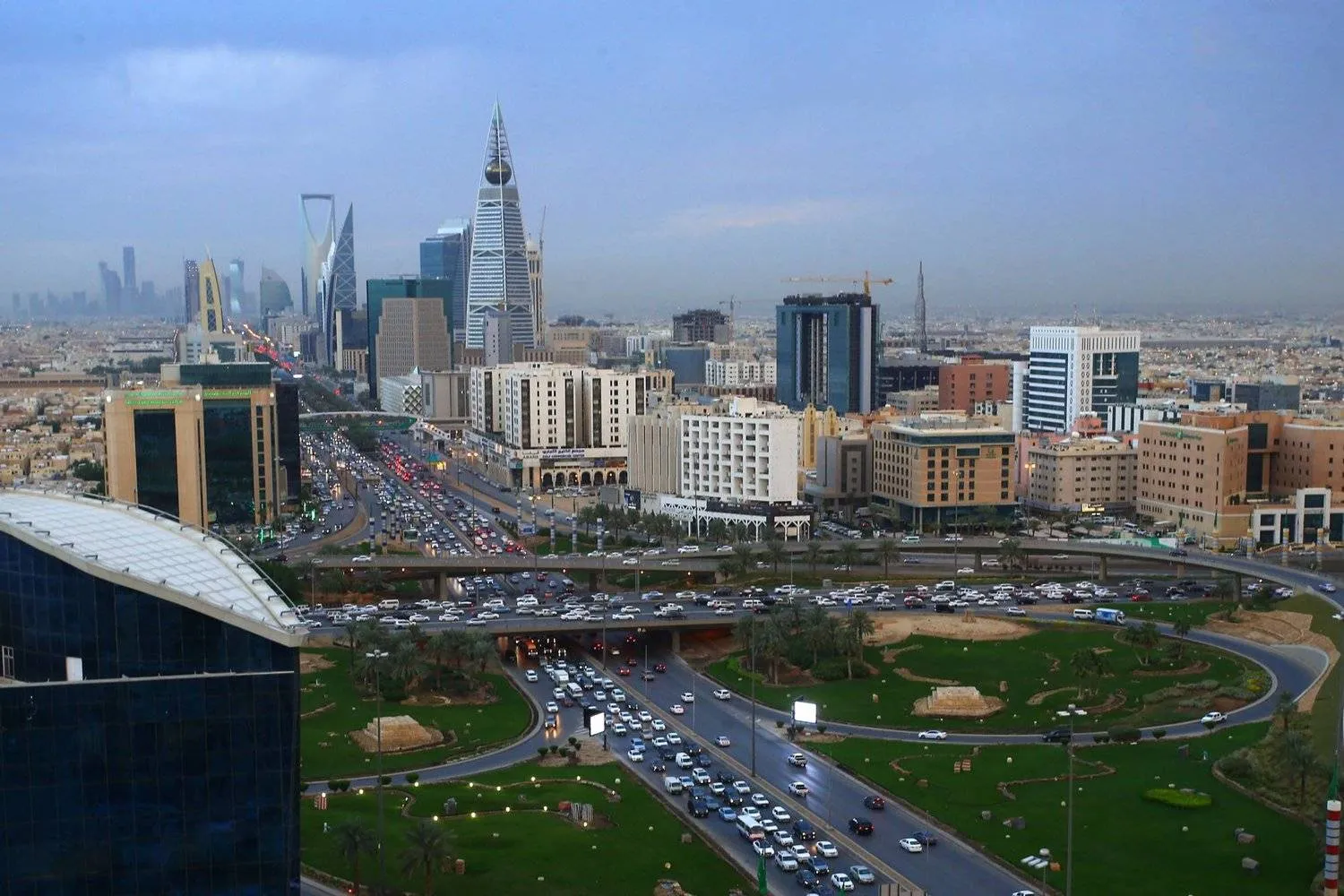

Global Financial Company Northern Trust Moves its Regional Headquarters to Riyadh

The regional headquarters program has so far attracted 200 foreign companies. (Asharq Al-Awsat)
TT

Global Financial Company Northern Trust Moves its Regional Headquarters to Riyadh

The regional headquarters program has so far attracted 200 foreign companies. (Asharq Al-Awsat)

Northern Trust Corp. has become one of the first major global financial institutions to establish its regional headquarters in Riyadh, which strengthens the Saudi government’s efforts to have international companies manage their operations in the Middle East from the Kingdom.
The American financial services company, which manages assets worth $1.3 trillion, obtained a license from the Saudi Ministry of Investment to establish its Middle Eastern base in Riyadh.
Speaking to Bloomberg, a company spokesman said that Northern Trust continues to achieve “significant growth” throughout the region through its offices in Abu Dhabi and Riyadh, explaining that the establishment of the regional headquarters for the Middle East and North Africa region in Saudi Arabia reflects the continued investment in infrastructure, capabilities and expertise in the region.
The Kingdom announced on Tuesday that it would provide a new tax incentive package for a period of 30 years to foreign companies whose regional headquarters are located in the Kingdom, including exemption from income tax.
The Saudi News Agency (SPA) said that the Ministry of Investment - in coordination with the Ministry of Finance and the country’s Zakat, Tax and Customs Authority - announced “the provision of a new tax incentive package, for a period of 30 years, to support the program to attract the regional headquarters of international companies.”
This step comes to “encourage and facilitate the procedures for international companies to open their regional headquarters in the Kingdom of Saudi Arabia,” the agency added.
The Regional Headquarters Program was launched in 2021, which is a joint initiative between the Ministry of Investment and the Royal Commission for the City of Riyadh, which calls on international companies to move their regional headquarters to Saudi Arabia, to transform the country into a leading regional hub for multinational companies.


GCC GDP Jumps to $2.3 Trillion

GCC countries continued to record GDP growth, supported by economic diversification programs and fiscal reforms (Oman News Agency).
TT

GCC GDP Jumps to $2.3 Trillion

GCC countries continued to record GDP growth, supported by economic diversification programs and fiscal reforms (Oman News Agency).

A statistical report published on Sunday showed that the economies of the Gulf Cooperation Council countries recorded growth in gross domestic product, supported by economic diversification programs and fiscal reforms. Combined GDP reached $2.3 trillion, ranking ninth globally, with a growth rate of 2.2 percent.

The report revealed that GCC countries achieved qualitative advances in 2024 across competitiveness, energy, trade, and digitization, driven by growth in non-oil sectors, improved quality of life, the development of digital infrastructure, and a stronger regional and international presence.

In the “GCC in Numbers” report issued by the Statistical Center for the Cooperation Council for the Arab Countries of the Gulf, it was emphasized that GCC states continue to record real GDP growth “thanks to economic diversification programs and fiscal reforms, with GDP reaching $2.3 trillion, ranking ninth globally, and posting growth of 2.2 percent.”

The report also showed improvement in global economic indicators, including competitiveness, resilience, and economic dynamism.

GCC countries ranked first globally in oil reserves at 511.9 billion barrels, third worldwide in natural gas production at 442 billion cubic metres, and second globally in natural gas reserves at 44.3 billion cubic metres.

GCC countries ranked 10th globally in total exports valued at $849.6 billion, 11th in imports at $739.0 billion, 10th in total trade at $1.5895 trillion, and sixth worldwide in trade balance surplus at $109.7 billion.


Algeria Tenders to Buy Nominal 50,000 Metric Tons Soft Milling Wheat

Mature spring wheat awaits harvest on a farm near Beausejour, Manitoba, Canada August 20, 2020. REUTERS/Shannon VanRaes/File Photo
TT

Algeria Tenders to Buy Nominal 50,000 Metric Tons Soft Milling Wheat

Mature spring wheat awaits harvest on a farm near Beausejour, Manitoba, Canada August 20, 2020. REUTERS/Shannon VanRaes/File Photo

Algeria's state grains agency OAIC has issued an international tender to buy soft milling wheat to be sourced from optional origins, European traders said on Sunday.

The tender sought a nominal 50,000 metric tons but Algeria often buys considerably more in its tenders than the nominal volume sought, Reuters reported.

The deadline for submission of price offers in the tender is Tuesday, February 24, with offers having to remain valid until Wednesday, February 25. The wheat is sought for shipment in three periods from the main supply regions including Europe: April 16-30, May 1-15 and May 16-31. If sourced from South America or Australia, shipment is one month earlier.

Algeria is a vital customer for wheat from the European Union, especially France, but Russian and other Black Sea region exporters have been expanding strongly in the Algerian market.


Brazil's Lula Urges Trump to Treat All Countries Equally

Brazilian President Luiz Inacio Lula da Silva gestures during a press conference in New Delhi, India, February 22, 2026. REUTERS/Adnan Abidi
TT

Brazil's Lula Urges Trump to Treat All Countries Equally

Brazilian President Luiz Inacio Lula da Silva gestures during a press conference in New Delhi, India, February 22, 2026. REUTERS/Adnan Abidi

Brazil's President Luiz Inacio Lula da Silva on Sunday urged Donald Trump to treat all countries equally after the US leader imposed a 15 percent tariff on imports following an adverse Supreme Court ruling.

"I want to tell the US President Donald Trump that we don't want a new Cold War. We don't want interference in any other country, we want all countries to be treated equally," Lula told reporters in New Delhi.

The conservative-majority Supreme Court on Friday ruled six to three that a 1977 law Trump has relied on to slap sudden levies on individual countries, upending global trade, "does not authorize the President to impose tariffs".

According to AFP, Lula said he would not like to react to Supreme Court decisions of another country, but hoped that Brazil's relations with the United States "will go back to normalcy" soon.

The veteran leftist Brazilian leader is expected to travel to Washington next month for a meeting with Trump.

"I am convinced that Brazil-US relation will go back to normalcy after our conversation," Lula, 80, said, adding Brazil only wanted to "live in peace, generate jobs, and improve lives of our people".

Ties between Brazil and the United States appear to be on the mend after months of animosity between Washington and Brasilia.

As a result, Trump's administration has exempted key Brazilian exports from 40 percent tariffs that had been imposed on the South American country last year.

"The world doesn't need more turbulence, it needs peace," said Lula who arrived in India on Wednesday to attend a summit on artificial intelligence.

On Saturday, India and Brazil agreed to boost cooperation on critical minerals and rare earths and signed a raft of other deals after a meeting between Lula and Prime Minister Narendra Modi.
