


‘Sports Boulevard’ Establishes Private Real Estate Investment Fund for Riyadh’s Arts District

Officials during the signing ceremony. (SPA)
TT

‘Sports Boulevard’ Establishes Private Real Estate Investment Fund for Riyadh’s Arts District

Officials during the signing ceremony. (SPA)

In its inaugural private sector partnership, the Sports Boulevard Foundation (SBF) signed an agreement with Ajdan real estate development company, and Albilad Capital to establish a private mixed-use real estate fund valued at SAR 1 billion for the development of the private plots within the Arts District, one of the eight districts of the Sport Boulevard project.

Structured as a private closed-ended real investment estate fund, managed by Albilad Capital, the collaboration aligns the interests of both the project and the private sector. The Sports Boulevard Development Company will be the major unitholder in the Fund, Ajdan Real Estate Development Company as a developer and co-investor, and Albilad Capital as the fund manager.

The project aims to develop a diverse range of residential, retail, office, and entertainment spaces. The development will span over a 20,000 sqm area within the Sports Boulevard located on Prince Mohammed bin Salman Road and boast a built-up area (BUA) exceeding 120,000 sqm.

All aspects of the development will be guided and informed by the Sports Boulevard’s Design Code, inspired by Salmani principles, and the project will encompass approximately 60,000 sqm of gross leasable areas, promising a dynamic and immersive experience for occupants and visitors alike.

Jayne McGivern, CEO of the Sports Boulevard Foundation, said: “This strategic partnership marks a significant step forward in Riyadh’s urban development, and we are excited to work alongside our partners Ajdan Real Estate Development Company and Albilad Capital to introduce world-class facilities into Sports Boulevard’s Art District.”

“From job creation to enabling the city’s residents to make healthier and more sustainable lifestyle choices, our partnership will have a positive impact on every aspect of society. It will truly support in redefining Riyadh’s landscape into one of the most liveable cities in the world, as part of the Kingdom’s ambitious Saudi Vision 2030 goals,” she added.

Eng. Mohammed, Al-Otaibi, CEO of Ajdan Real Estate Development said: “We are proud to announce the establishment of the Real Estate Fund through our strategic partnerships with the Sports Boulevard Development Company and Albilad Capital. This investment will support Sports Boulevard in its mission to provide world-class facilities to the people of Riyadh and will be key in supporting the Kingdom to deliver its Saudi Vision 2030 objectives.”

Zaid Almufarih, CEO of Albilad Capital, said: “The new fund announced today by the Sports Boulevard Development Company and Ajdan Real Estate Development Company marks a vital step forward in Riyadh’s transformation into one of the world’s top 10 most livable cities, as part of the Kingdom’s ambitious Saudi Vision 2030 and Quality of Life goals.”

“We look forward to working with both the Sports Boulevard Development Company and Ajdan Real Estate Development Company to turn this vision into a reality, along with this unique project’s objectives as we will invest in our technical and human capabilities to maintain excellence in managing high-quality products and leverage our expertise to accomplish the fund's goals and benefit its investors,” he stressed.

Within the Arts District, located at the intersection of Prince Mohammed bin Salman bin Abdulaziz Road with Prince Turki bin Abdulaziz Al Awwal Road, the project extends beyond the private development parcels, sitting on an area of 184,000 sqm and offering an enchanting public realm distinguished by recreational activities. With pedestrian and cyclist-friendly paths and trails, the Arts District is set to become a haven for efficient mobility while featuring distinguished artworks all seamlessly connected to the Promenade and cycling bridge

The Sports Boulevard is one of Riyadh’s mega projects launched by Custodian of the Two Holy Mosques, King Salman bin Abdulaziz on March 19, 2019. Supported by Prince Mohammed bin Salman bin Abdulaziz, the project extends more than 135km on Prince Mohammed bin Salman bin Abdulaziz Road connecting Wadi Hanifah in the West with Wadi Al Sulai in the East through a grid of safe green pathways for pedestrians, cyclists, athletes, and horse-riders. The project boasts 4.4 million square meters of greenery and open spaces, and up to 50 multidisciplinary sports facilities.


BP Wins US Approval for Kaskida Project in Gulf of Mexico

FILE PHOTO: 3D-printed oil pump jacks and the British Petroleum (BP) logo appear in this illustration taken March 2, 2026. REUTERS/Dado Ruvic/Illustration/File Photo
TT

BP Wins US Approval for Kaskida Project in Gulf of Mexico

FILE PHOTO: 3D-printed oil pump jacks and the British Petroleum (BP) logo appear in this illustration taken March 2, 2026. REUTERS/Dado Ruvic/Illustration/File Photo

British energy major BP has received approval from the Trump administration to advance its Kaskida project in the Gulf of Mexico, a company spokesperson told Reuters in an emailed statement late ⁠on Friday.

The $5 billion ⁠investment would unlock 10 billion barrels of resources that BP has discovered in the Paleogene fields of the US Gulf, the spokesperson said.

The US Department of ⁠the Interior's approval of Kaskida follows a year-long review of the company's development plan, the statement said, according to Reuters.

Bloomberg News first reported on Friday that the Kaskida project is scheduled to start crude production in 2029. The Kaskida project will follow BP’s 2023 start-up of the Argos project, which ⁠was ⁠its first platform launch in the US. Gulf since 2008 and the first since the Deepwater Horizon disaster.

The explosion of BP's Deepwater Horizon rig in April 2010 killed 11 rig workers and caused $70 billion in damages in the largest oil spill in US history.


S&P: Saudi Arabia’s Robust Economy Guarantees its Ability to Withstand Regional Conflict

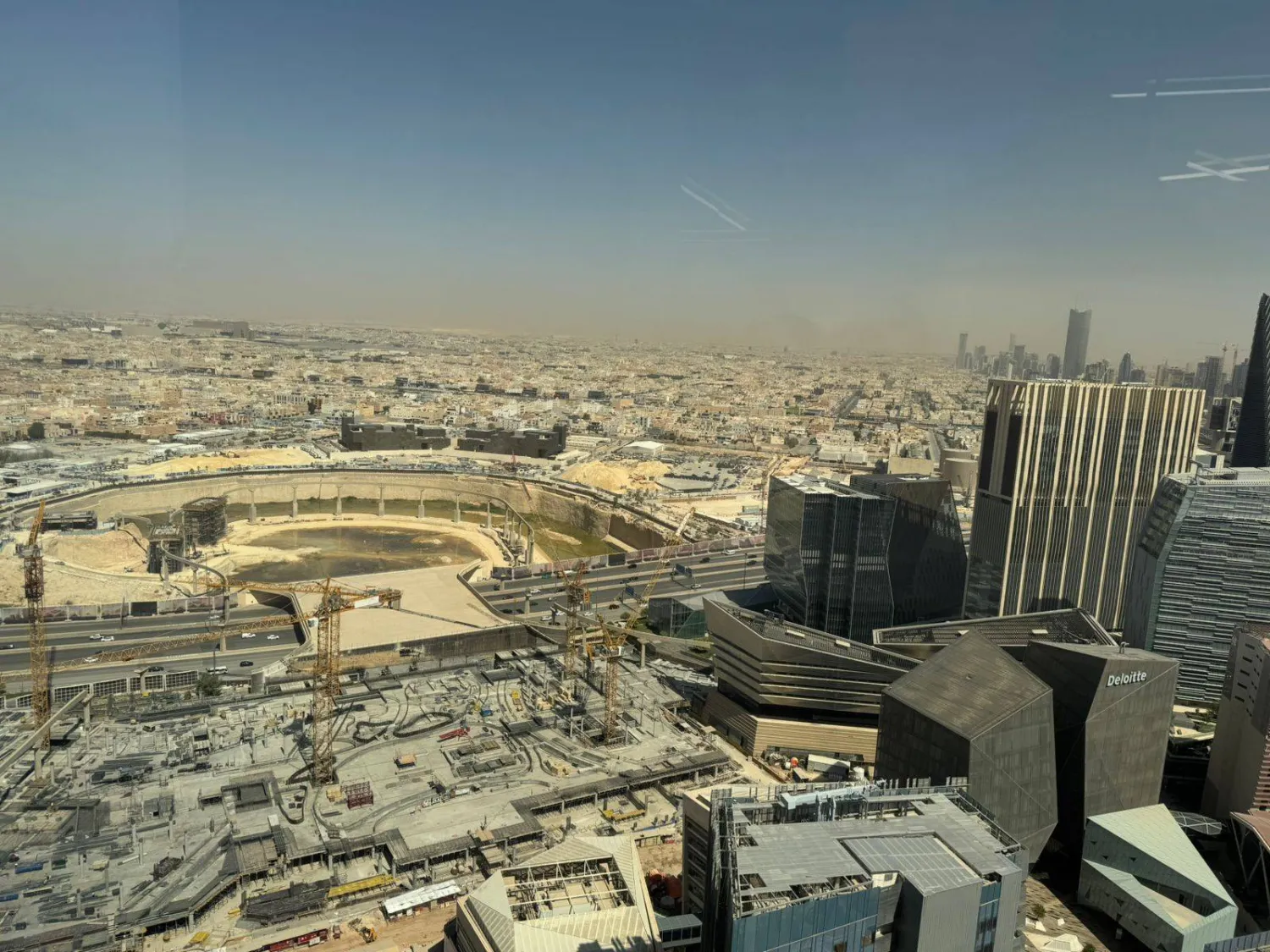
King Abdullah Financial District in Riyadh (Asharq Al-Awsat)
TT

S&P: Saudi Arabia’s Robust Economy Guarantees its Ability to Withstand Regional Conflict

King Abdullah Financial District in Riyadh (Asharq Al-Awsat)

Credit ratings agency S&P Global affirmed Saudi Arabia’s sovereign credit rating at “A+/A-1,” with a “stable outlook” on Friday.

The agency said that the Kingdom was well-positioned to withstand the ongoing conflict in the Middle East.

S&P stated in a press release that “the outlook reflects the Kingdom’s ability to redirect oil exports to the Red Sea port via the East-West oil pipeline, utilize its large oil storage capacity, and its ability to increase oil production post-conflict.”

It noted that “the outlook also reflects our view that non-oil growth momentum and associated non-oil revenues, as well as the government’s ability to calibrate investment expenditure tied to Vision 2030, should support the economy and fiscal trajectory.”

S&P forecast real GDP growth of 4.4% for 2026, saying real GDP growth will average 3.3% per year for 2027-2028.

It said the government diversifying away from oil, economic volatility is starting to decrease--albeit sensitivity to oil remains. “The non-oil sector (including government activities) now accounts for about 70% of GDP, up from 65% in 2018. This structural shift is a key objective of Vision 2030,” the agency noted.

It added that “Saudi Arabia’s substantial asset position should remain a key strength over our forecast period even as gross debt rises.”

The ratings agency noted that before the conflict, the government in Riyadh had already been looking at adjusting spending on diversification projects tied to Vision 2030 to manage plans more in line with available resources.

Saudi Arabia's Vision 2030, the Kingdom's “long-term transformation” plan, has a fiscal policy that is expansive to encourage economic diversification. This has been done despite oil price volatility which has put pressure on public finances.

The agency said: “We expect the authorities will continue to adopt a prudent and flexible approach in this regard, having stressed a commitment to achieving Vision 2030 goals without jeopardizing public finances.”

The US and Israeli war on Iran is causing the Strait of Hormuz to be close to shutting down, forcing regional producers to reduce oil output.


Iraq Studies Alternative Options for Oil Exports

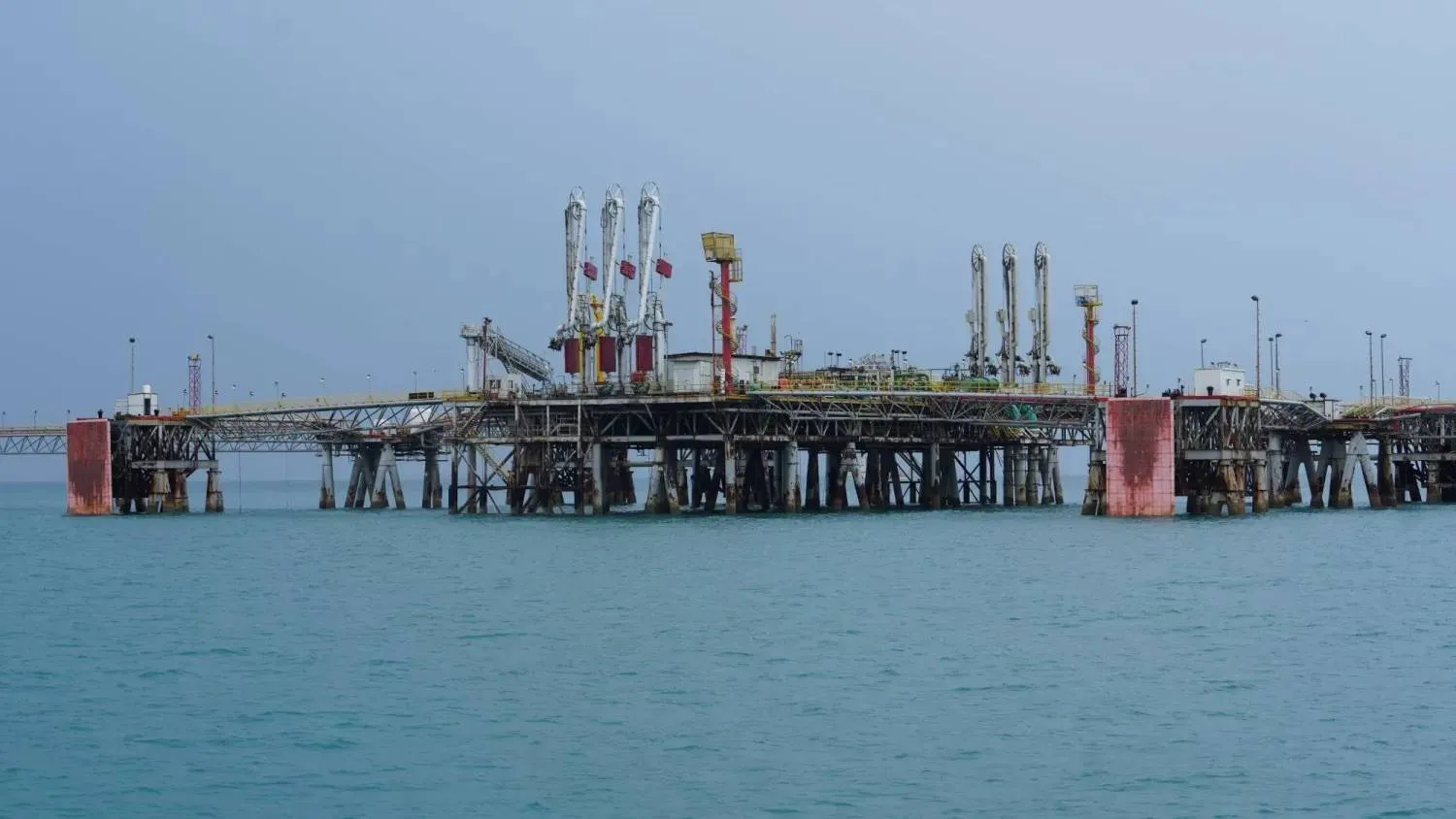
Floating oil export loading platforms at the Basra Oil Port, Iraq, March 12, 2026. REUTERS/Mohammed Aty
TT

Iraq Studies Alternative Options for Oil Exports

Floating oil export loading platforms at the Basra Oil Port, Iraq, March 12, 2026. REUTERS/Mohammed Aty

Iraq is studying alternative measures to export crude oil after disruptions to the process amid the US-Israeli war against Iran. At the same time, the country intends to continue producing crude oil at a level of 1.4 million barrels per day.

Iraqi Oil Minister Hayyan Abdul Ghani told the official television channel Al-Iraqiya News that oil exports account for 90 percent of Iraq’s revenues, and that the ministry has decided to continue producing crude oil at 1.4 million barrels per day.

He emphasized that the production and supply of petroleum products to meet domestic demand have not stopped.

He added that refineries are operating at full design capacity to cover local needs, and that sufficient quantities of liquefied gas are available to fully meet domestic needs.

Regarding exports, he explained that the export process has stopped in the south, prompting the government to search for possible alternatives to export crude oil. He revealed that an agreement is close to being signed to export oil through the Turkish Ceyhan pipeline.

Abdul Ghani added that the ministry has prepared a comprehensive plan to manage the current phase, particularly after the new circumstances in the Strait of Hormuz, noting that a plan has been activated to transport 200,000 barrels per day by tanker trucks through Türkiye, Syria, and Jordan.

In a separate context, the oil minister denied that tankers targeted in Iraqi waters belonged to Iraq, explaining that they were not Iraqi vessels and were carrying naphtha.

Iraq recently lost its entire oil export capacity of 3.35 million barrels per day after Iran closed the Strait of Hormuz following escalating conflict in the region.

Iraq relies on crude oil sales for about 95 percent of its revenues to meet the needs of the country’s annual federal budget. This means that the country would face a critical situation if the conflict in the Gulf region and the Strait of Hormuz continues.