


IBM President Highlights Saudi Arabia’s Rapid Rise in AI

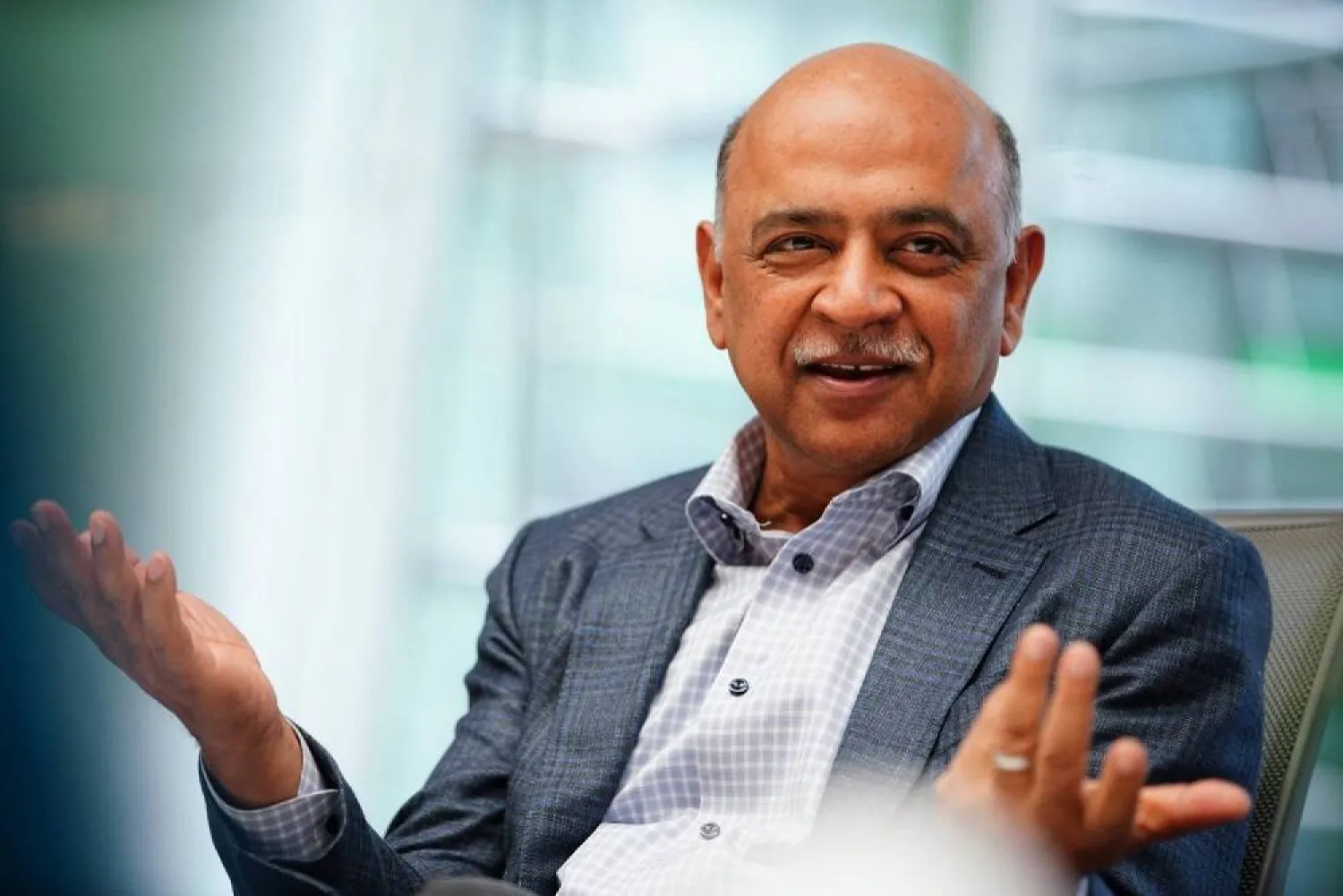
IBM Chairman and CEO Arvind Krishna. (Getty Images)
TT

IBM President Highlights Saudi Arabia’s Rapid Rise in AI

IBM Chairman and CEO Arvind Krishna. (Getty Images)

IBM Chairman and CEO Arvind Krishna said Saudi Arabia was rapidly emerging as a global leader in the field of artificial intelligence.

In an exclusive interview with Asharq Al-Awsat, Krishna noted that his company, a global leader in the field of hybrid cloud, artificial intelligence, and consulting services, announced plans to invest more than $200 million in talent and infrastructure by establishing a new software center in Riyadh, in support for Saudi Vision 2030, which aims to transform the Kingdom into a leading global technology hub.

Krishna pointed out the strategic importance of artificial intelligence, explaining that its economic impact in the Middle East is estimated at about $320 billion by 2030. He stressed that Saudi Arabia would reap great benefits, with gains reaching $135.2 billion, which represents more than 42 percent of the size of the economy related to new technology.

He also underlined the “regional benefits” of establishing the new software center in Riyadh, saying that Saudi Arabia “is rapidly emerging as a world leader in the field of artificial intelligence, and the new IBM center represents a major achievement.”

The center will work to drive innovation in the fields of data, AI, and sustainability programs, with the aim of accelerating skills development and creating high-quality jobs for young IT professionals in Saudi Arabia. The center’s focus on digital innovation, product development, management and design will stimulate the creation of globally exportable solutions, enriching the technological infrastructure in the Kingdom.

IBM's recent projects in Saudi Arabia also include expanded cooperation with Riyadh Air and Salam Telecom. Krishna promised that the cooperation with Riyadh Air aims to “revolutionize travel experiences” and support the company’s inaugural flight in 2025 with advanced solutions.

The IBM president pointed out that Watsonx, the company’s latest data and AI platform, is designed to improve productivity, simplify workflow, and automate tasks across industries. He noted that introducing Arabic language models into the new platform represented an important step towards enhancing the use of large Arabic language models in various sectors.

According to Krishna, the rapid technological development has decreased the lifespan of skills acquired today by half within seven years, which highlights the importance of continuous learning.

For this reason, IBM’s work in Saudi Arabia includes partnerships aimed at raising the skills of up to 100,000 Saudis in the digital sector, he stated.

He added that his company, through its cooperation with educational and governmental bodies, was able to provide training courses and research accelerators, to support the Kingdom’s goals of becoming a global digital leader.

Krishna said he was confident that IBM’s significant investment in the new software center in Riyadh not only reflects a long-term commitment to technological advancement in the Kingdom, but also paves the way for pioneering innovations that could shape the future of the global technology landscape.



Venture Capital Records Two Historic Milestones, Reinforces Saudi Arabia’s Regional Leadership

Venture Capital Records Two Historic Milestones, Reinforces Saudi Arabia’s Regional Leadership
TT

Venture Capital Records Two Historic Milestones, Reinforces Saudi Arabia’s Regional Leadership

Venture Capital Records Two Historic Milestones, Reinforces Saudi Arabia’s Regional Leadership

The Saudi Venture Capital Company (SVC) announced on Sunday that Saudi Arabia’s venture capital ecosystem achieved two historic leaps in 2025, in terms of total investment value and number of transactions, further reinforcing the Kingdom’s position as the leading venture capital market in the Middle East for the third consecutive year.

This performance reflects the tangible impact of Saudi Vision 2030 and the structural economic transformation taking place across the Kingdom.

In a statement, the SVC said that the Saudi market recorded its highest-ever number of venture capital transactions, reaching 254 deals in 2025, alongside a record investment value of $1.66 billion during the year.

This compares to approximately $60 million in 2018, representing a 25-fold increase in venture capital investment since the establishment of SVC and the emergence of its role as a market maker within the ecosystem.

CEO and Board Member of SVC Dr. Nabeel Koshak said: “What we are witnessing today in Saudi Arabia’s venture capital sector is the direct result of the unlimited support provided by the Kingdom’s wise leadership across all sectors.”

“This support has been translated into a deliberate and well-calibrated economic transformation, moving private capital into a more mature and impactful phase. These figures reflect the strength of the Saudi economy, the clarity of national vision, and the growing confidence of investors, confirming that venture capital has become a core pillar of growth and economic diversification,” he added.

He stressed that the 25-fold growth in investment since 2018, together with the record-breaking figures for both investment value and deal volume, underscores the maturity of the Saudi venture capital market.

“Venture capital today is enabling the creation of scalable companies, generating high-quality jobs, and transforming innovation into sustainable economic value, fully aligned with the objectives of Saudi Vision 2030,” he said.


Türkiye to Ink 33 bcm Natural Gas Import Deal with Azerbaijan, Minister Says

Türkiye's Energy Minister Alparslan Bayraktar talks during a meeting in Ankara, Türkiye, September 14, 2023. (Turkish Energy Ministry Press Office/PPO/Handout via Reuters)
TT

Türkiye to Ink 33 bcm Natural Gas Import Deal with Azerbaijan, Minister Says

Türkiye's Energy Minister Alparslan Bayraktar talks during a meeting in Ankara, Türkiye, September 14, 2023. (Turkish Energy Ministry Press Office/PPO/Handout via Reuters)

Türkiye has reached a new long-term agreement to import a total of 33 bcm natural gas from Azerbaijan, Energy ‌Minister Alparslan ‌Bayraktar ‌said ⁠on Sunday in ‌a televised interview.

Under the deal, Türkiye will receive 2.25 billion cubic meters of ⁠gas per year ‌for 15 ‍years ‍from Azerbaijan's Absheron field, ‍totaling 33 billion cubic meters, Bayraktar said. Deliveries via pipeline are set to begin in ⁠2029.

He added that final negotiations were concluded on Friday and that the agreement was expected to be signed shortly.


Saudi Arabia Approves Annual Borrowing Plan with $58 Billion Financing Needs

The logo of Saudi Arabia’s Ministry of Finance (Asharq Al-Awsat)
TT

Saudi Arabia Approves Annual Borrowing Plan with $58 Billion Financing Needs

The logo of Saudi Arabia’s Ministry of Finance (Asharq Al-Awsat)

Saudi Arabia has approved its annual borrowing plan for the 2026 fiscal year, setting projected financing needs at about $58 billion as the Kingdom seeks to fund its budget deficit while maintaining long-term debt sustainability.

The plan was endorsed by Finance Minister Mohammed Al-Jadaan, who also chairs the board of the National Debt Management Center, following approval by the center’s board. It outlines key developments in public debt during 2025, initiatives to deepen the domestic debt market, and the financing strategy and guiding principles for 2026. It also includes the issuance calendar for the kingdom’s local riyal-denominated sukuk program for 2026.

According to the plan, total financing requirements for 2026 are estimated at around SAR 217 billion ($57.9 billion). These will be used to cover the projected budget deficit of about SAR 165 billion ($44 billion), as set out in the Ministry of Finance’s budget statement for the year, as well as the repayment of maturing debt principal amounting to roughly SAR 52 billion ($13.9 billion).

In a statement, the National Debt Management Center said the strategy prioritizes preserving public debt sustainability, expanding the investor base, and diversifying funding sources at home and abroad. This will be pursued through a combination of public and private channels, including the issuance of bonds and sukuk and the use of loans at competitive and reasonable costs.

The plan also points to an expanded use of alternative government financing tools, including project and infrastructure financing, and greater reliance on export credit agencies in 2026 and over the medium term. These measures will be implemented within carefully structured risk-management frameworks to support the Kingdom’s broader economic and fiscal objectives.