UK is 'Broke and Broken,' New Government Says

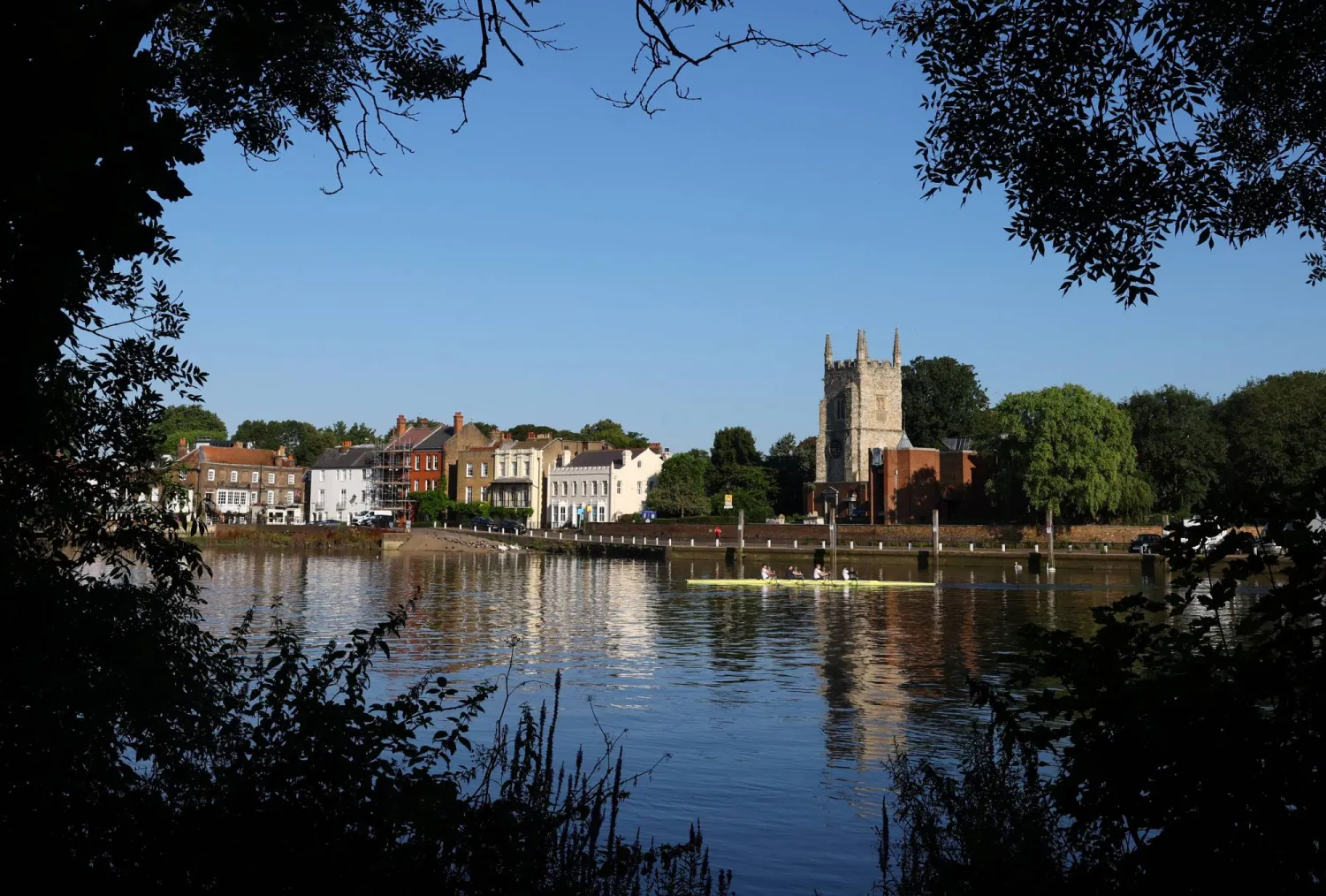
Rowers train during warm summer weather on the River Thames at Isleworth in London, Britain, July 28, 2024. REUTERS/Toby Melville
TT

UK is 'Broke and Broken,' New Government Says

Rowers train during warm summer weather on the River Thames at Isleworth in London, Britain, July 28, 2024. REUTERS/Toby Melville

Britain’s new left-leaning government said Sunday that the nation is “broke and broken,” blaming the situation on its predecessors ahead of a major speech on the state of the public finances that is widely expected to lay the groundwork for higher taxes.
In a sweeping assessment three weeks after taking power, Prime Minister Keir Starmer’s office professed shock at the situation they inherited after 14 years of Conservative Party rule, while releasing a department-by-department analysis of the perceived failures of the previous government.
The critique comes a day before Treasury chief Rachel Reeves is expected to outline a 20-billion-pound ($26 billion) shortfall in public finances during a speech to the House of Commons.
“We will not shy away from being honest with the public about the reality of what we have inherited,’’ Pat McFadden, a senior member of the new Cabinet, said in a statement. “We are calling time on the false promises that British people have had to put up with and we will do what it takes to fix Britain,” The Associated Press quoted him as saying.
Starmer’s Labour Party won a landslide election victory earlier this month following a campaign in which critics accused both major parties of a “conspiracy of silence” over the scale of the financial challenges facing the next government.
Labour pledged during the campaign that it wouldn’t raise taxes on “working people,” saying its policies would deliver faster economic growth and generate the additional revenue needed by the government. The Conservatives, meanwhile, promised further tax cuts in the autumn if they were returned to office.
As proof that the previous government wasn’t honest about the challenges facing the country, Starmer’s office pointed to recent comments from former Treasury chief Jeremy Hunt confirming that he wouldn’t have been able to cut taxes this year if the Conservatives had been returned to power.
Those comments came in an interview with the BBC in which Hunt also accused Labour of exaggerating the situation to justify raising taxes now that they’ve won the election.
“The reason we’re getting all this spin about this terrible economic inheritance is because Labour wants to raise taxes,” Hunt said on July 21. “If they wanted to raise taxes, all the numbers were crystal clear before the election. ... They should have levelled with the British public.”
The government on Sunday released an overview of the spending assessment Reeves commissioned shortly after taking office. She will deliver the complete report to Parliament on Monday.
Those findings led the new government to accuse the Conservatives of making significant funding commitments for this financial year “without knowing where the money would come from.’’
It argued that the military had been “hollowed out’’ at a time of increasing global threats and the National Health Service was “broken,’’ with some 7.6 million people waiting for care.
And despite billions spent to house migrants and combat the criminal gangs ferrying migrants across the English Channel on dangerous inflatable boats, the number of people making the crossing is still rising, Starmer’s office said. Some 15,832 people have crossed the Channel on small boats already this year, 9% more than during the same period in 2023.
“The assessment will show that Britain is broke and broken — revealing the mess that populist politics has made of the economy and public services,” Downing Street said in a statement.
The quandary the government finds itself in should be no surprise, said Paul Johnson, the director of the Institute for Fiscal Studies, an independent think tank focused on Britain’s economic policies.
At the start of the election campaign, the institute said that the UK was in a “parlous fiscal position” and the new government would have to either raise taxes, cut spending or relax the rules on public borrowing.
“For a party to enter office and then declare that things are ‘worse than expected’ would be fundamentally dishonest,” the IFS said on May 25. “The next government does not need to enter office to ‘open the books.’ Those books are transparently published and available for all to inspect.”



UK Economy Surged Ahead of Iran War, but Energy Shock to Test Resilience

Buses pass in front of the Bank of England building in London (Reuters)
TT

UK Economy Surged Ahead of Iran War, but Energy Shock to Test Resilience

Buses pass in front of the Bank of England building in London (Reuters)

Britain's economy put on a burst of growth in February, suggesting it was in slightly better shape before the start of the Iran war than many economists had feared, official figures showed on Thursday.

Gross domestic product expanded 0.5% month-on-month in February, the biggest increase since January 2024, the Office for National Statistics said. Economists polled by Reuters had forecast a much more modest reading of 0.2%.

While the figures are likely to cheer finance minister Rachel Reeves, economists said Britain remained ⁠vulnerable to the fallout from ⁠the Middle East conflict, being highly dependent on imported energy and prone to higher inflation than peers.

"Unfortunately, the latest energy price shock has likely pulled the rug on this momentum, with another year of above-target inflation and a softening labour market likely to come," said Fergus Jiminez-England, associate economist from the National Institute for Economic and Social Research.

Britain suffered the sharpest cut to economic growth forecasts for large rich economies by the International ⁠Monetary Fund due largely to the Iran war, in forecasts published on Tuesday.

"Growth increased further in the three months to February led by broad-based increases across services," ONS chief economist Grant Fitzner said.

"Meanwhile car production recovered from the effects of the autumn cyber incident."

Economic growth for the three months to February was 0.5%, the ONS said, putting Britain's economy on track for a conspicuously strong first quarter, for a third year running.

That pattern has led to suspicions among some economists that the ONS' process of seasonal adjustment has gone awry following unusually large swings in output during the COVID-19 pandemic - something the ONS rejects.

"We're confident in our figures and seasonal adjustment processes," ⁠an ONS spokesperson ⁠said on Thursday, adding that statisticians had looked thoroughly at the issue.

James Smith, economist at ING, said he still doubted whether the ONS had fully accounted for the influence of the last period of high inflation in its seasonal adjustment process, and the timing of price increases.

"We wrote in our reaction to the January data that February or March could see a strong bounce back for exactly this reason," Smith said.

"Suffice to say, all of this is old news anyway, given the crisis we find ourselves in today."

Separate ONS data showed Britain's total trade deficit, excluding the volatile movements of precious metals, rose in inflation-adjusted terms in February to 5.627 billion pounds ($7.62 billion), its highest since November 2024.

The widening was driven by imports rising to their second-highest reading on record, after December 2022.


Oil Little Changed on Skepticism US-Iran Peace Talks Will Ease Hormuz Disruption

FILE PHOTO: A map showing the Strait of Hormuz, also known as Madiq Hurmuz, and 3D printed oil barrels are seen in this illustration taken March 26, 2026. REUTERS/Dado Ruvic/Illustration//File Photo
TT

Oil Little Changed on Skepticism US-Iran Peace Talks Will Ease Hormuz Disruption

FILE PHOTO: A map showing the Strait of Hormuz, also known as Madiq Hurmuz, and 3D printed oil barrels are seen in this illustration taken March 26, 2026. REUTERS/Dado Ruvic/Illustration//File Photo

Oil prices were little changed on Thursday, reversing earlier declines, on skepticism that peace talks between the US and Iran will reach a deal to end the war that has bottled up oil output from the key Middle East producing region.

Brent crude futures were down 26 cents to $94.67 a barrel at 0611 GMT. US West Texas Intermediate crude futures climbed 14 cents to $91.43 a barrel. Both benchmarks settled little changed on Wednesday but traded in a wide range. The US-Israeli war on Iran has ‌resulted in the ‌largest-ever disruption of global oil and gas supplies due ‌to ⁠Iran's interruption of traffic ⁠through the Strait of Hormuz, which typically carries about 20% of the world's oil and liquefied natural gas flows.

"While there are hopes for de-escalation, many investors remain skeptical, given that US-Iran talks have repeatedly broken down even after appearing to make progress," said Toshitaka Tazawa, an analyst at Fujitomi Securities.

"Until a peace deal is reached and free navigation through the strait is restored, WTI prices are expected to continue fluctuating between $80 and $100," ⁠he added.

Analysts from ING estimate that roughly 13 million barrels ‌per day of oil flow has been disrupted ‌by the closure of the strait, after taking into consideration pipeline diversions and the trickle of ‌tankers that have passed through the gateway, they said in a note on ‌Thursday.

With the US blockade on Iranian ports announced after the collapse of peace talks over the weekend, the disruption could increase.

"The physical market is becoming tighter every day that passes without a restart of oil flows through the Strait of Hormuz," the ING analysts said.

A source ‌briefed by Tehran told Reuters that Iran could consider allowing ships to sail freely through the Omani side of the ⁠Strait of Hormuz ⁠if a deal was reached to prevent renewed conflict after a two-week ceasefire started on April 8.

US and Iranian officials were weighing a return to Pakistan for further talks as early as the coming weekend. Pakistan's army chief arrived in Tehran on Wednesday as a mediator to try to prevent a renewal of the conflict.

US Treasury Secretary Scott Bessent said on Wednesday that Washington will not be renewing the waivers that allowed the purchase of some Iranian and Russian oil without facing US sanctions.

Underscoring the tightness of global crude and oil product supply, US inventories of oil, gasoline and distillate fuels fell last week, the Energy Information Administration said on Wednesday, as imports declined and exports jumped to meet the needs of countries searching for barrels to replace the disrupted flows.


TotalEnergies: Strong Trading, High Oil Prices Will Boost Q1 Earnings

(FILES) This illustrative photograph shows screens displaying the logo of the French company TotalEnergies, listed on the CAC 40, the main stock market index of the Paris Stock Exchange, in Toulouse on March 31, 2026. (Photo by Lionel BONAVENTURE / AFP)
TT

TotalEnergies: Strong Trading, High Oil Prices Will Boost Q1 Earnings

(FILES) This illustrative photograph shows screens displaying the logo of the French company TotalEnergies, listed on the CAC 40, the main stock market index of the Paris Stock Exchange, in Toulouse on March 31, 2026. (Photo by Lionel BONAVENTURE / AFP)

TotalEnergies expects a significant increase in first-quarter earnings from a strong trading performance, as well as in its upstream production and oil sales due to higher prices caused by the war in Iran, even as the conflict shut down 15% of the French group's overall production, it said on Thursday.

The group's margin on refining fuel in Europe during the quarter stood at $11.40 per barrel, up 192% from $3.90 a ⁠year earlier, and flat ⁠compared to the fourth-quarter 2025 margin of $11.40, it said in an earnings outlook.

It is due to report first-quarter earnings on April 29.

Benchmark Brent crude futures climbed to multi-year highs near $120 a barrel after US-Israeli strikes on Iran began in late February, followed by Tehran’s closure of the Strait of Hormuz and its attacks on Gulf neighbors.

Despite losing output of about 100,000 barrels of oil-equivalent per day in the Middle East, additional production in other geographies helped keep overall production flat compared to the fourth quarter of 2025.

That led to a significant rise in first-quarter upstream income due to oil price gains, Total said, while downstream results also increased due to refineries running above 90% and "strong performance from crude oil and petroleum product trading activities in March."

According to Reuters, Total said strong trading around market volatility also significantly boosted its liquefied natural gas earnings.

British rivals BP and Shell have said the oil price volatility caused by the ⁠war significantly boosted ⁠their trading profits.

US peers Chevron and Exxon said higher prices boosted their upstream earnings, but hit their downstream business due to financial hedging transactions undertaken around cargoes that could not be delivered due to the Strait of Hormuz's closure.

Total's Integrated Power results are expected to be around $500 million, roughly flat compared to a year ago.

Marketing and Services will also be in line with results a year ago.

The company expects a working capital build of $5 billion for the quarter — about $2.5-3 billion of which Total attributed to the seasonality of the business, with the remainder related to the impact of oil and product price rises on Total's inventories.

Shares of TotalEnergies SE were down 0.8% at 76.04 euros at 0702 GMT, paring losses after falling as much as 3.2%.