Bank of England Rate Cut Boosts Comeback Factor for UK Markets

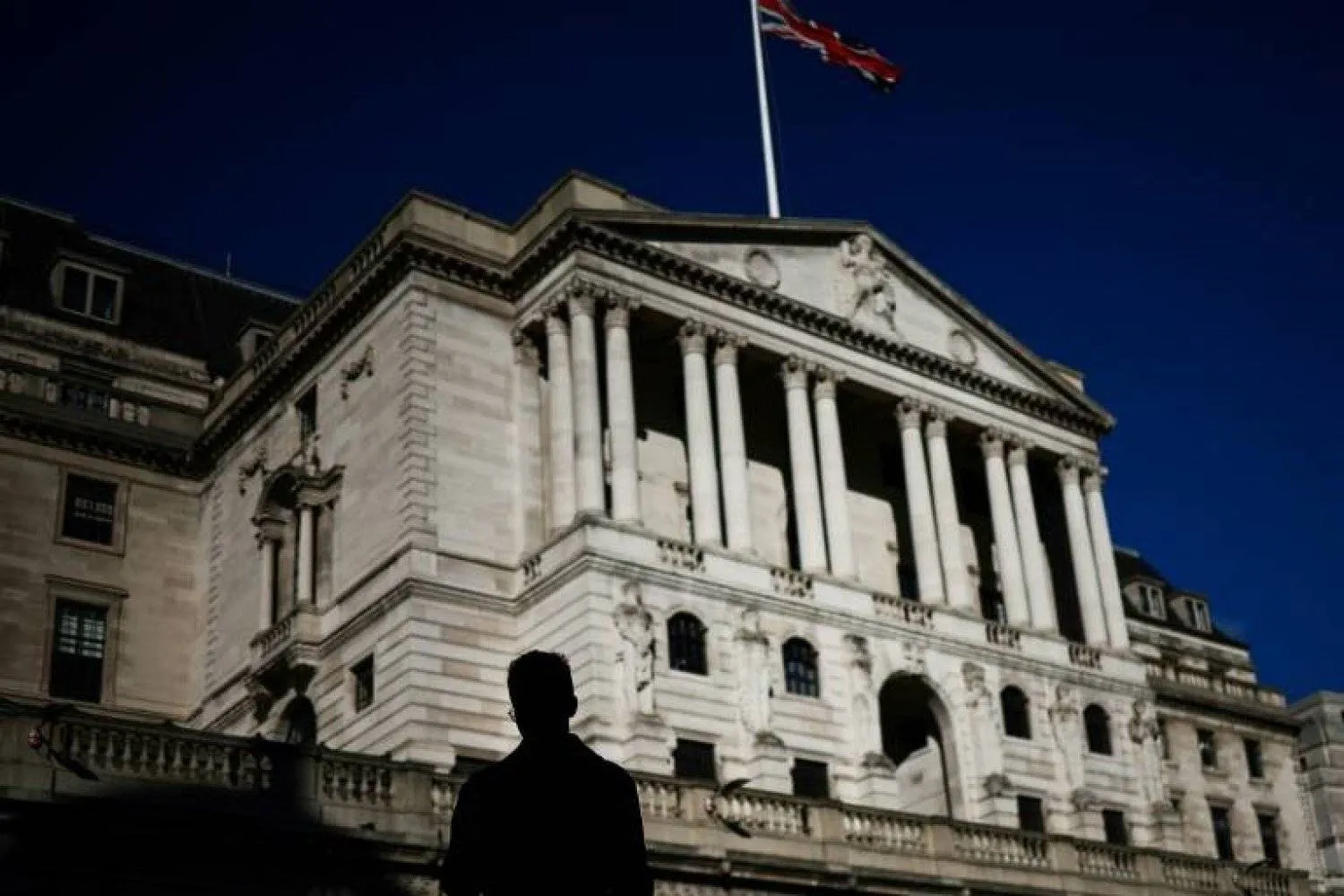
The risk of a resurgence in inflation and the July 4 election are seen as keeping the Bank of England from starting to cut rates at its Thursday meeting ( AFP)
TT

Bank of England Rate Cut Boosts Comeback Factor for UK Markets

The risk of a resurgence in inflation and the July 4 election are seen as keeping the Bank of England from starting to cut rates at its Thursday meeting ( AFP)

Big investors are growing more confident about a comeback for neglected UK assets, with the Bank of England's move to cut interest rates from a 16-year high, burnishing the feel-good factor from the new British government's landslide election win.
The BoE cut rates by a quarter point to 5.0% on Thursday, in a decision markets had thought was on a knife-edge, Reuters reported Thursday.
The result, money managers said, signaled Britain's battle with weak growth and high inflation might be coming to an end just as an era of political turmoil and uncertainty was also potentially over.
Shaken for years by Brexit, successive leadership changes under the former Conservative government and by ex-Prime Minister Liz Truss' disastrous 2022 mini-Budget, UK stocks are weakly valued and government bonds are trailing US peers.
But while the BoE's policymakers voted 5-4 for a cut, showing deep division over whether inflation has been tamed, they also cheered investors by raising their economic growth projections.
"The unusual combination of a rate cut and an upgraded growth forecast should be a clear positive for markets," Principal Asset Management chief global strategist Seema Shah said.
"The UK today has fiscal policy that looks much more normal than in periods of crisis during the recent past and the macro (economic) backdrop looks better given growth is picking up," Lombard Odier macro strategist Bill Papadakis said.
"This development in monetary policy is really the cherry on the cake."
Papadakis said he had turned positive on UK stocks around the time former Prime Minister Rishi Sunak called the election in late May and would hold the position, predicting signs of weakness in British markets on Thursday were temporary.
Sterling briefly fell to its lowest in nearly a month after the decision, before recouping much of those losses to trade around 0.7% down on the day at $1.2772. Two-year gilt yields, the most sensitive to BoE policy, fell 11 basis points to 3.703%, while the FTSE 250 dipped 0.65% but was still close to its highest since early 2022.
BACK IN BUSINESS?
Investors have yanked money out of British equity funds for at least two years, according to Lipper data.
Although the FTSE 250 mid-cap share index has risen as much as Wall Street's mighty S&P 500 in the last three months, with an 8% gain, it is still valued at close to a record discount to the benchmark US index.
The international bond markets that price government's creditworthiness minute-by-minute have warmed to the UK, however, with the benchmark 10-year gilt yield almost a full percentage point lower year to-date at 3.874% as the security's price has risen.
Gilts are continuing their long-term trend of underperforming US Treasuries, but are starting to attract more interest.
Harry Richards, fixed income investment manager at Jupiter Asset Management, said he added UK government bonds to the largest funds he manages around three months ago, for the first time since the 2008 financial crisis.
"It was never something we found that attractive," he said, adding that he changed his view because he believed UK inflation would fall quickly and longer-dated gilts were undervalued.
International investors, he predicted, would come back to UK debt markets.
"The Liz Truss debacle led to a lot of foreign investors saying they didn’t want anything to do with UK fixed income," he said.
"International investors can now feel more comfortable."
CHAOS NO MORE
Labor leader Keir Starmer achieved a historic election majority for his the left-of-center party in July after pledging to rebuild wealth and crumbling infrastructure.
Starmer and his finance minister Rachel Reeves have also promised not to increasing borrowing for day-to-day spending, having inherited a national debt pile approaching 100% of economic output.
"Reeves is treading very carefully and the gilt markets like that," said Jason Simpson, fixed income strategist at State Street's SPDR ETF business.
He added that this situation was febrile, with bond investors still twitchy about the cautious tone changing.
Shamil Gohil, a fixed income manager at Fidelity International, said he was positive on UK gilts, but viewed Reeves' first Budget in October as a major risk event.
STERLING SHIMMERS
In terms of short-term currency speculation at least, bullishness on Britain is high. Sterling is this year's top performing currency against the US dollar and hedge funds and other traders are sitting on their largest ever derivatives bet that the pound will rise, data from the US markets regulator showed.
Thursday's rate cut was unlikely to dent sterling's allure, because UK rates at 5% remained relatively high and Britain's political, growth and inflation outlooks were better, said April LaRusse, head of investment specialists at Insight Investment.
"I don’t think this is the beginning of some repricing of sterling. I think on the whole the UK looks pretty attractive.”



Microsoft Arabia: Saudi Arabia Accelerates AI Adoption, Turns It Into Competitive Edge

A Microsoft logo is seen a day after Microsoft Corp's $26.2 billion purchase of LinkedIn Corp, in Los Angeles, California, US, June 14, 2016. REUTERS/Lucy Nicholson
TT

Microsoft Arabia: Saudi Arabia Accelerates AI Adoption, Turns It Into Competitive Edge

A Microsoft logo is seen a day after Microsoft Corp's $26.2 billion purchase of LinkedIn Corp, in Los Angeles, California, US, June 14, 2016. REUTERS/Lucy Nicholson

Saudi Arabia has cemented its global standing in artificial intelligence after pouring significant investments into the sector in 2025, accelerating digital transformation and expanding real-world applications across government and the wider economy.

From education and manufacturing to energy and public services, AI is being deployed to advance the diversification goals of Saudi Vision 2030.

Turki Badhris, president of Microsoft Arabia, said the kingdom is experiencing unprecedented momentum in adopting AI as a strategic lever to raise competitiveness and improve performance across vital sectors.

Artificial intelligence has become central to the national transformation journey, he told Asharq Al-Awsat.

Linking transformation

Saudi Arabia’s overhaul spans digital government modernization, the construction of megacities and large-scale projects, industrial development, and the creation of new economic sectors, Badhris said.

AI, he added, is the connective tissue binding these efforts together by enabling smarter infrastructure and more efficient public services.

In 2025, Microsoft expanded cooperation with government and regulatory bodies, as well as major companies, to accelerate the adoption of AI and cloud computing across education, industry, financial services, and government operations.

Turning point year

Badhris described 2025 as a watershed for AI in the kingdom, marked by a shift to broad, sector-wide deployment.

In digital government, training programs implemented with the Digital Government Authority aim to equip more than 100,000 public sector employees with cloud and AI skills, enhancing service delivery and user experience.

In education, AI literacy initiatives have been scaled up in partnership with the Ministry of Education and the Ministry of Communications and Information Technology, alongside the rollout of generative AI tools and digital learning technologies in schools.

Manufacturers have adopted AI-driven predictive maintenance and real-time operational data analysis, cutting downtime and improving efficiency and reliability.

In energy and sustainability, AI solutions are being used to optimize water and energy asset management, including predictive maintenance and intelligent process control, delivering operational savings while supporting emissions reduction and sustainability targets.

Sovereign cloud push

Badhris said the launch of Microsoft’s cloud region in Saudi Arabia, planned for 2026, will mark a qualitative leap by allowing government entities and regulated sectors to run critical workloads in a secure local environment, ensuring data sovereignty and enabling low-latency innovation.

He added that regulatory frameworks developed by relevant authorities have bolstered trust in AI adoption by balancing individual protection with incentives for innovation.

From tools to partners

Looking ahead, Badhris said 2026 will see AI evolve from support tools into “work partners” capable of collaboration and initiative in complex tasks.

The shift will be felt across government services, industry, megaprojects such as Qiddiya and The Red Sea Project, and healthcare.

Advanced AI systems, he said, will sharpen operational efficiency, lift productivity, and enhance service quality, while moving from reactive oversight to proactive governance frameworks that ensure safe and responsible use.

Saudi Arabia, Badhris said, is not simply adopting AI but helping shape its future, investing in sovereign infrastructure, building national capabilities, and embedding responsible-use principles to drive sustainable economic growth and entrench its position as a global technology power.


Lockheed Martin: Saudi Arabia Is Strategic Choice for Global Defense Hub

Lockheed Martin took part in the recent World Defense Show in Riyadh. (Asharq Al-Awsat)
TT

Lockheed Martin: Saudi Arabia Is Strategic Choice for Global Defense Hub

Lockheed Martin took part in the recent World Defense Show in Riyadh. (Asharq Al-Awsat)

Saudi Arabia’s push to localize half of its defense spending under Vision 2030 is drawing deeper commitments from US defense giant Lockheed Martin, which says it will expand local manufacturing, transfer advanced technologies, and further integrate the Kingdom into its global aerospace and defense supply chains.

Building Saudi partnerships

Steve Sheehy, vice president for international business development at Lockheed Martin’s aeronautics division, said the company is stepping up efforts to partner with both established and emerging Saudi aerospace firms.

Lockheed Martin is looking to build partnerships across maintenance, repair and overhaul, as well as component manufacturing and repair, particularly in advanced avionics, Sheehy told Asharq Al-Awsat.

Speaking after the company’s participation in the World Defense Show in Riyadh, he said Lockheed Martin is also targeting emerging fields such as additive manufacturing, from plastics to metals, and advanced composite materials.

The goal, he said, is twofold: plug gaps in the company’s global supply chain while transferring know-how and strengthening local capabilities in a mutually beneficial model.

Sheehy described the Saudi aerospace sector as established and growing. He also noted that it has a solid base in maintenance and manufacturing, as well as a clear shift toward advanced technologies, creating room for deeper collaboration between national firms and global industry leaders.

Alignment with Vision 2030

Retired Brigadier General Joseph Rank, chief executive of Lockheed Martin in Saudi Arabia and Africa, said the company’s strategy in the Kingdom is rooted in a long-term partnership aligned with Vision 2030, especially the target of localizing 50 percent of defense spending.

Lockheed Martin, he said, is focused on transferring knowledge and advanced technologies, developing local industrial capabilities and building an integrated defense ecosystem that positions Saudi Arabia firmly within global supply chains.

Rank said the company is working closely with government entities and national companies to strengthen local manufacturing, empower Saudi talent and establish a sustainable industrial base that supports innovation and creates high-quality jobs.

Lockheed Martin is advancing manufacturing and repair work on defense equipment, including components of the THAAD air defense system, missile launch platforms, and interceptor missile canisters, in cooperation with Saudi partners, Rank said.

The company has also opened a maintenance center in Riyadh for the Sniper Advanced Targeting Pod system, the first of its kind in the Middle East, to enhance maintenance and technical support capabilities.

Beyond hardware, Lockheed Martin is investing in transferring and localizing advanced technologies in air defense, command and control, and digital manufacturing. It is also supporting science, technology, engineering and mathematics programs and hands-on training in cooperation with national universities.

Broad local network

Rank said the company relies on a wide network of partners in the Kingdom. At the forefront are the General Authority for Military Industries, the main government partner in localization agreements, and Saudi Arabian Military Industries, a key manufacturing and technology transfer partner.

Other collaborators include the Advanced Electronics Company for advanced systems maintenance, the Middle East Propulsion Company and AIC Steel for producing THAAD components and platforms, and the National Company for Mechanical Systems for advanced manufacturing technologies.

Academic partnerships extend to King Abdullah University of Science and Technology, King Saud University, King Fahd University of Petroleum and Minerals, and Princess Nourah bint Abdulrahman University, supporting research and developing national talent.

Localizing aerospace manufacturing

Rank said localizing aerospace manufacturing is a strategic priority. Lockheed Martin has launched projects to produce interceptor missile launch platforms and canisters inside the Kingdom and awarded contracts for key components to Saudi companies, qualifying them to join its global supply network beyond the US.

The company is evaluating and qualifying hundreds of Saudi firms to produce defense equipment to international standards, focusing on technology transfer and building local expertise as a step toward manufacturing more integrated systems in the future.

Company officials said the approach goes beyond supplying systems. It centers on technology transfer, digital manufacturing, and command-and-control systems, laying the groundwork for the production of integrated systems in the Kingdom and strengthening Saudi Arabia’s position as a regional hub for aerospace and defense.


Türkiye TPAO, Shell Sign Deal to Carry out Exploration Work offshore Bulgaria

A Shell logo is seen at a gas station in Buenos Aires, Argentina, March 12, 2018. (Reuters)
TT

Türkiye TPAO, Shell Sign Deal to Carry out Exploration Work offshore Bulgaria

A Shell logo is seen at a gas station in Buenos Aires, Argentina, March 12, 2018. (Reuters)

Türkiye Petrolleri (TPAO) has signed a partnership agreement with Shell to carry out exploration work in Bulgaria's maritime zone, the Turkish energy ministry and British oil major said on Wednesday.

European Union member Bulgaria, which had been totally dependent on Russian gas until 2022, has been seeking to diversify its gas supplies and find cheaper sources, Reuters reported.

TPAO and Shell will jointly explore the Khan Tervel block, located near Türkiye's Sakarya gas field, and will hold a five-year licence in Bulgaria's exclusive economic zone, Minister Alparslan Bayraktar said.

Shell will continue as operator of the block, while TPAO will take a 33% interest in the licence, a Shell spokesperson said.

Since the start of this year, TPAO has signed energy cooperation agreements with ExxonMobil, Chevron and BP for possible exploration work in the Black Sea and the Mediterranean.

In April, Shell signed a contract with Bulgaria's government to allow the oil major to explore 4,000 square metres in the block.