Saudi Arabia and China Explore Promising Tourism Opportunitieshttps://english.aawsat.com/business/5072889-saudi-arabia-and-china-explore-promising-tourism-opportunities
Saudi Arabia and China Explore Promising Tourism Opportunities
Tourism Minister Ahmed Al-Khateeb met with a number of Chinese investors in Beijing (Asharq Al-Awsat)
Saudi Tourism Minister Ahmed Al-Khateeb met with the Chinese Tourism Association to explore investment opportunities and means to strengthen bilateral ties in the sector. Al-Khateeb also discussed with several investors in Beijing investment prospects in the Kingdom’s tourism industry.
On Thursday, Al-Khateeb launched a global promotional campaign in Beijing, inaugurating the Saudi Travel Expo at the renowned Tian Tan Park, which will run until Oct. 26.
The Saudi delegation, led by Al-Khateeb, included top officials and key partners from the Saudi tourism ecosystem, aiming to elevate Saudi Arabia’s global presence and demonstrate its readiness to welcome Chinese tourists. The delegation held multiple bilateral meetings with China’s Civil Aviation Authority, the Chinese Tourism Association, airlines, and representatives from major companies like Trip.com, Tuniu, Alibaba, Huawei, and Klook.
Several Memorandums of Understanding (MoUs) were signed with prominent Chinese companies, including H World Group and Jin Jiang Group. Al-Khateeb emphasized that this global campaign is part of Saudi Arabia’s efforts to foster closer collaboration with China through strategic partnerships aimed at developing the tourism sectors in both countries. He expressed enthusiasm about welcoming Chinese tourists, particularly following Saudi Arabia’s designation as an official key destination for Chinese travelers.
Fahd Hamidaddin, CEO and board member of the Saudi Tourism Authority, stressed that China is one of the most important international markets for Saudi Arabia. He highlighted the growing interest among Chinese tourists in experiencing the country’s unique and inspiring travel offerings.
The Saudi Travel Expo features interactive exhibits showcasing the beauty of key Saudi destinations such as Diriyah, AlUla, and Al-Baha. Visitors can enjoy photo opportunities against backdrops of famous Saudi landmarks and witness live demonstrations of traditional crafts like sadu weaving, as well as local musical performances. Saudi tourism partners are also offering special travel packages to major destinations like Jeddah, Neom, and the Red Sea, along with the chance to participate in world-class events such as Riyadh Season and MDL Beast.
Specialty Products Chart a New Path for Growth for Saudi Petrochemicalshttps://english.aawsat.com/business/5342235-specialty-products-chart-new-path-growth-saudi-petrochemicals
Specialty Products Chart a New Path for Growth for Saudi Petrochemicals
An engineer carries out his work at a SABIC plant. (SABIC)
The Saudi petrochemicals industry is entering a phase that requires reorienting its growth compass amid persistent global oversupply and shrinking margins on basic products, even as opportunities expand in specialty products and materials linked to advanced industries.
Growing demand for energy infrastructure supplies, power grids, and data centers is opening up new avenues for Saudi producers, who are capitalizing on the Kingdom's advantages in feedstock availability, industrial infrastructure, and operational expertise, in addition to opportunities to develop more diversified value chains and boost production value-add.
Helder Santos, Managing Director and Head of Infrastructure and Capital Projects in the Middle East at Alvarez & Marsal, believes that the petrochemicals sector is undergoing a transitional phase that coincides with its usual industrial cycle.
He explained that the advantages enjoyed by producers in Saudi Arabia and Gulf countries provide a foundation for improving returns, even though shifts in feedstock costs and global supply make operational performance and product selection all the more critical.
In an interview with Asharq Al-Awsat, Santos said that rising feedstock costs and substantial additions to production capacities require companies to place greater focus on operational efficiency and investment decisions.
Analyses by Alvarez & Marsal indicate that global ethylene plant operating rates remain below pre-2019 levels and are expected to stay at these levels until the end of the current decade amid capacity expansions, particularly in China, which is projected to account for roughly half of global ethylene capacity additions through 2028.
Santos said that persistently low operating rates reflect uneven recovery prospects across products and markets, depending on demand growth, capacity additions, and operating levels, meaning the rebound will not reach all products at the same pace.
However, producers do not need to wait for a market-wide recovery to boost profitability. They can enhance returns by improving operational reliability, increasing capital efficiency, and carefully developing their investment portfolios, as well as optimizing maintenance efficiency, managing working capital, and expanding into higher value-added applications and products.
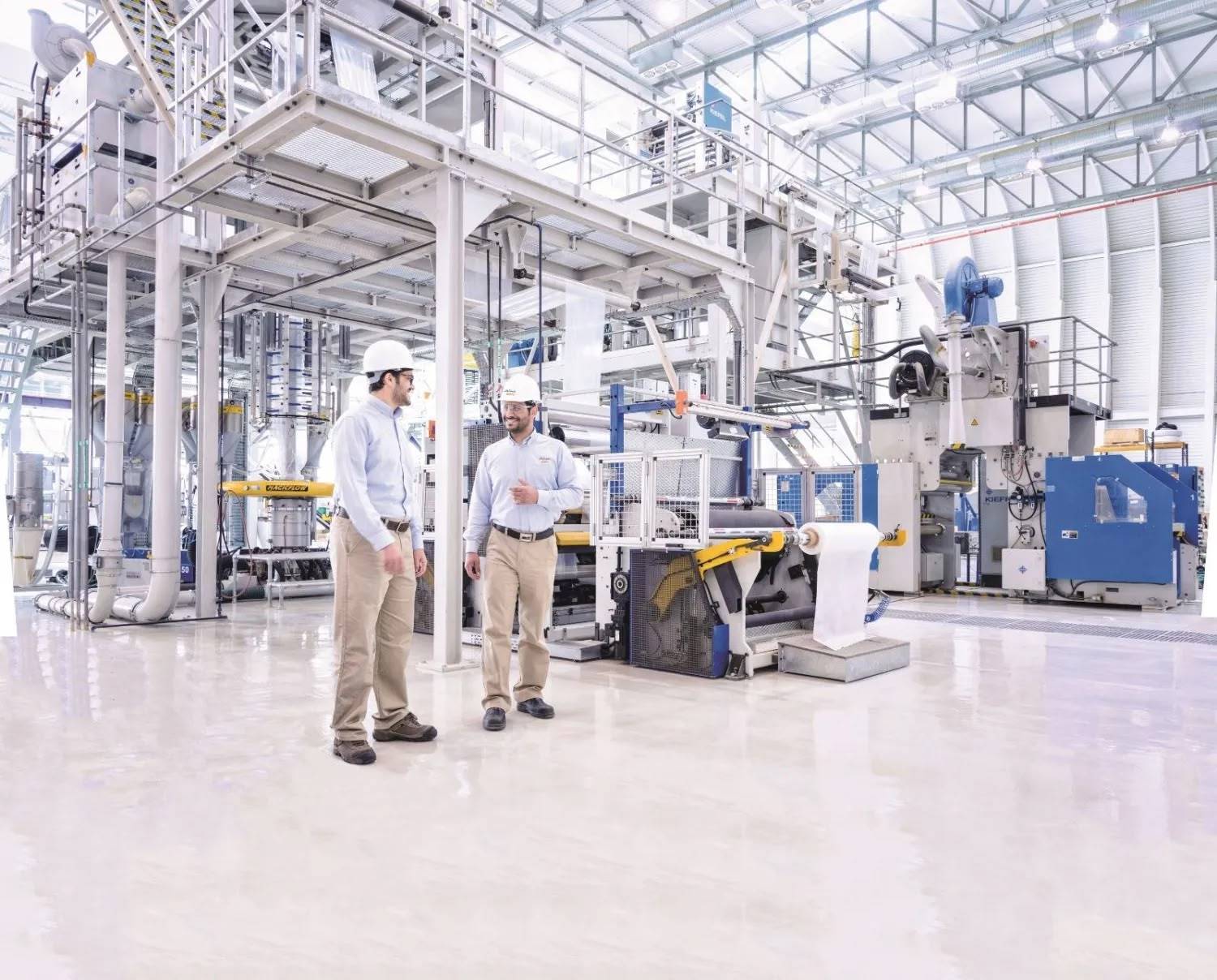
Engineers at a Yansab plant. (Yansab)
71% surge in ethane prices
On feedstock costs, analysis data from Alvarez & Marsal showed that ethane prices in Saudi Arabia rose from $1.75 per million British thermal units (MMBtu) in 2023 to $3 in January 2025, an increase of nearly 71%.
Despite this increase, Santos stressed that Saudi producers continue to enjoy a competitive advantage in feedstock costs. He explained that comparisons in the firm's analysis demonstrate that Gulf ethane remains competitive with US ethane and is significantly cheaper than the naphtha used in cracking units across Asia and Europe.
He noted that this advantage can be strengthened by boosting operational efficiency and capital productivity, improving production reliability, developing maintenance programs, effectively planning turnarounds and periodic maintenance, and aligning manufacturing schedules with customer needs.
Santos also highlighted the importance of directing investments toward products that generate the highest commercial returns from available feedstock sources and extending the operational lifespan of assets whenever technically feasible, as well as building technical partnerships and expanding into downstream industries to develop higher value-added applications and products.
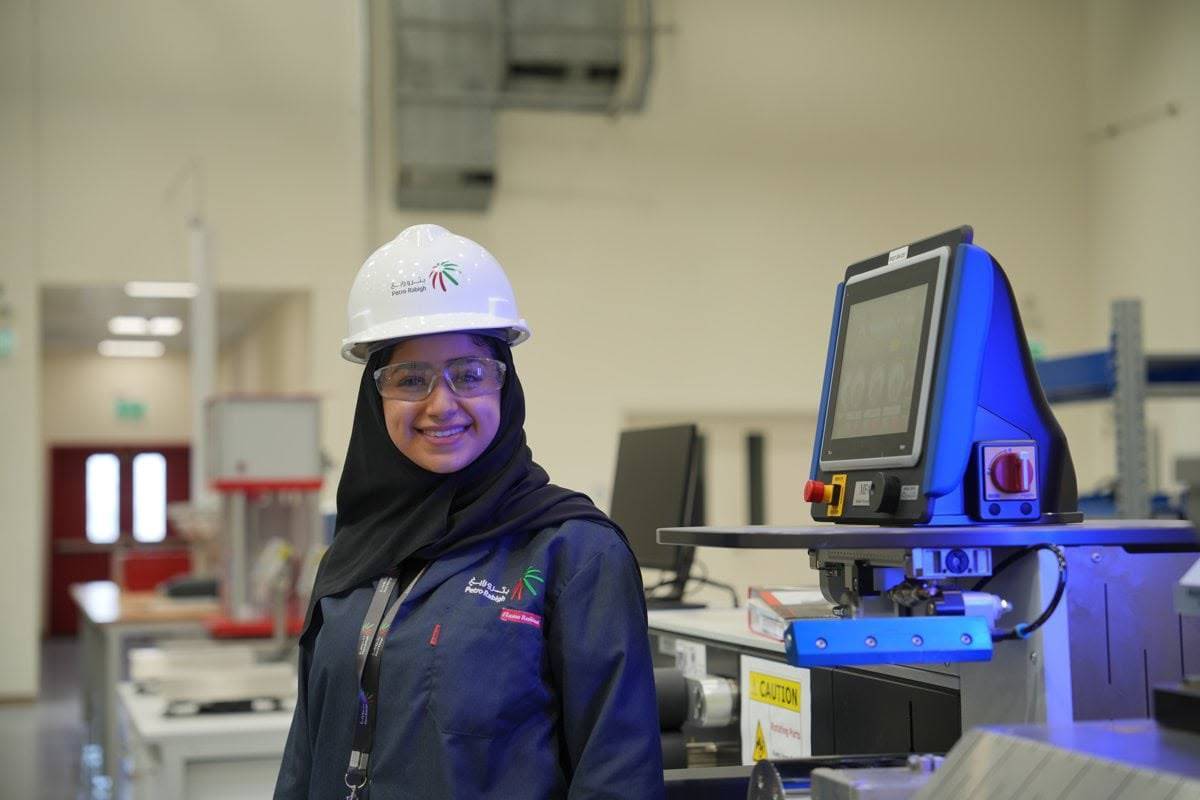
An engineer carries out her duties at Petro Rabigh. (Petro Rabigh)
New markets support expansion opportunities through 2027
On the international competition front, Santos said that Saudi and Gulf producers possess strong fundamentals to strengthen their presence in global markets in the coming phase, capitalizing on production cost advantages, industrial infrastructure, and operational expertise.
However, he noted that certain basic products, foremost among them ethylene, will continue to face pressure from abundant supply and pricing through 2027.
He explained that maintaining and boosting a presence in export markets requires combining competitive production costs with delivery reliability and building sustainable commercial relationships with customers.
Conversely, shifts in the global demand landscape present new opportunities for Gulf producers, particularly in Asian markets.
Santos cited the firm's analysis of forecasts published in 2025, which point to Indian demand for polyolefins growing at an annual rate of between 7.5% and 8.5% over the next decade. He also noted that announcements regarding the closure of several cracking units in Europe could open the door for Gulf suppliers to expand their share in those markets.
Seizing these opportunities requires adopting export strategies tailored to the nature of each product and market, adhering to customer-approved specifications, ensuring logistics efficiency, and aligning commercial terms, he added.
Data centers and power grids open new markets
In the context of the shift toward specialty products, Santos identified chemicals linked to energy infrastructure, electronics, and advanced technologies as among the most promising growth areas over the next five years, driven by the expansion of energy projects, power grid development, and growing investments in data centers.
He explained that compounds for manufacturing high-voltage cables, insulation materials, transformer fluids, and certain composite materials represent opportunities directly tied to energy infrastructure expansion, while additional opportunities are emerging in electronics and data center applications through specialized cooling fluids, ultra-pure chemicals, and specialty gases.
According to the firm's analysis, demand for these specialty chemicals within data center programs in Saudi Arabia and the UAE reaches thousands of tons, while power grid expansion is expected to boost demand for chemicals used in grid components and equipment.
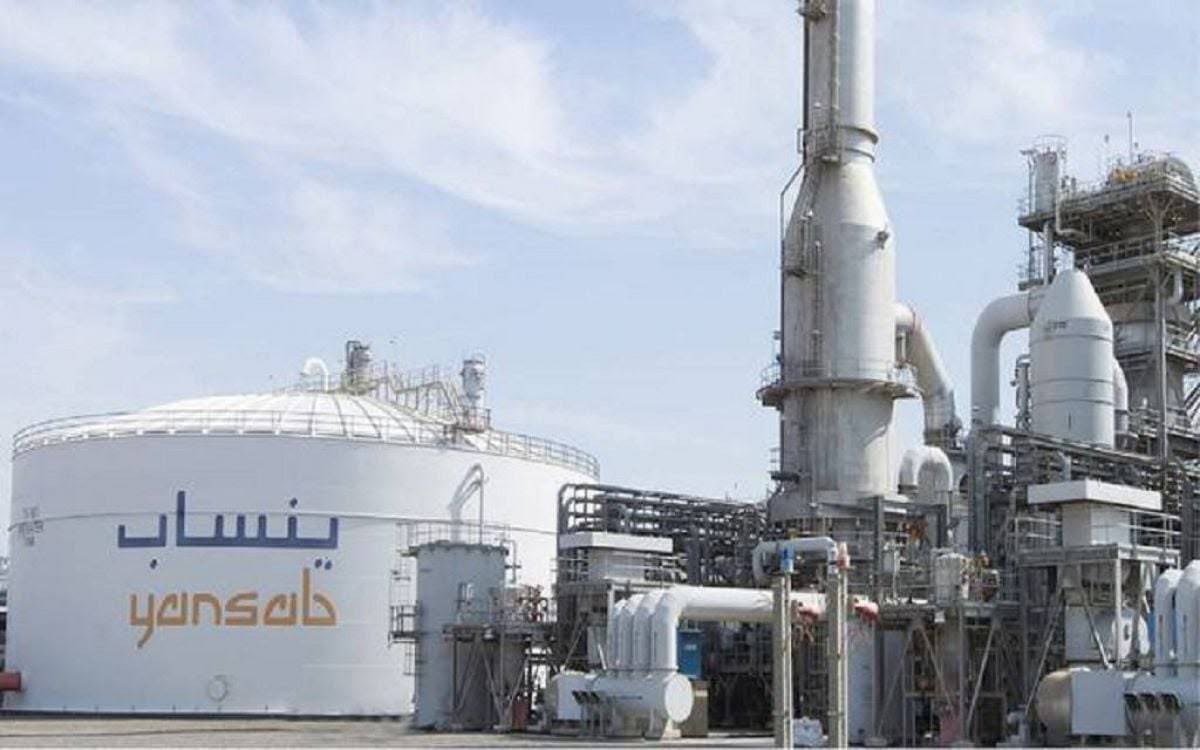
One of Yansab's plants. (Yansab)
Operational efficiency frees up $20 million to $50 million for investment
Opportunities to develop the petrochemicals industry are not limited to expanding into new products and promising markets, but also include improving the efficiency of existing assets and tapping into their available financial resources to provide additional funding for future investments.
Santos said that enhancing the performance of current operations can unlock significant opportunities to bolster companies' liquidity and investment capacity.
He explained that estimates point to the potential to reduce net working capital by 10% to 20%, generating a one-time liquidity boost depending on a company's baseline performance, in addition to achieving recurring savings in overhead and controllable expenditure items.
Investment appeal
On the investment appeal of the Saudi petrochemicals sector amid profitability challenges and rising project costs, Santos stressed that the Kingdom continues to possess strong fundamentals for attracting investments, capitalizing on competitive production economics, a developed industrial ecosystem, and opportunities to expand value chains in downstream industries.
Integration between the refining and petrochemicals sectors reinforces these advantages by providing broader options for feedstock sources and enabling the development of diverse products, he went on to say.
Ethane cracking typically yields between 75% and 80% ethylene, whereas naphtha cracking produces a wider mix that includes propylene, butadiene, and aromatics, creating greater opportunities to develop derivative products and broaden the manufacturing base, he told Asharq Al-Awsat.
He expected companies to increasingly shift toward producing derivatives and composite materials, developing specialized applications, and strengthening customer relationships, while basic product capacities will remain important in projects that demonstrate cost competitiveness and sustained demand.
Santos said that industrial integration broadens options for investors, though achieving viable returns still depends on sound product selection, the availability of necessary technical and manufacturing capabilities, and access to target markets.
He underlined the importance of evaluating investment projects based on returns generated across the entire value chain rather than focusing on the production economics of a single material, while leveraging product qualification arrangements and offtake agreements when making major capital expenditure decisions.
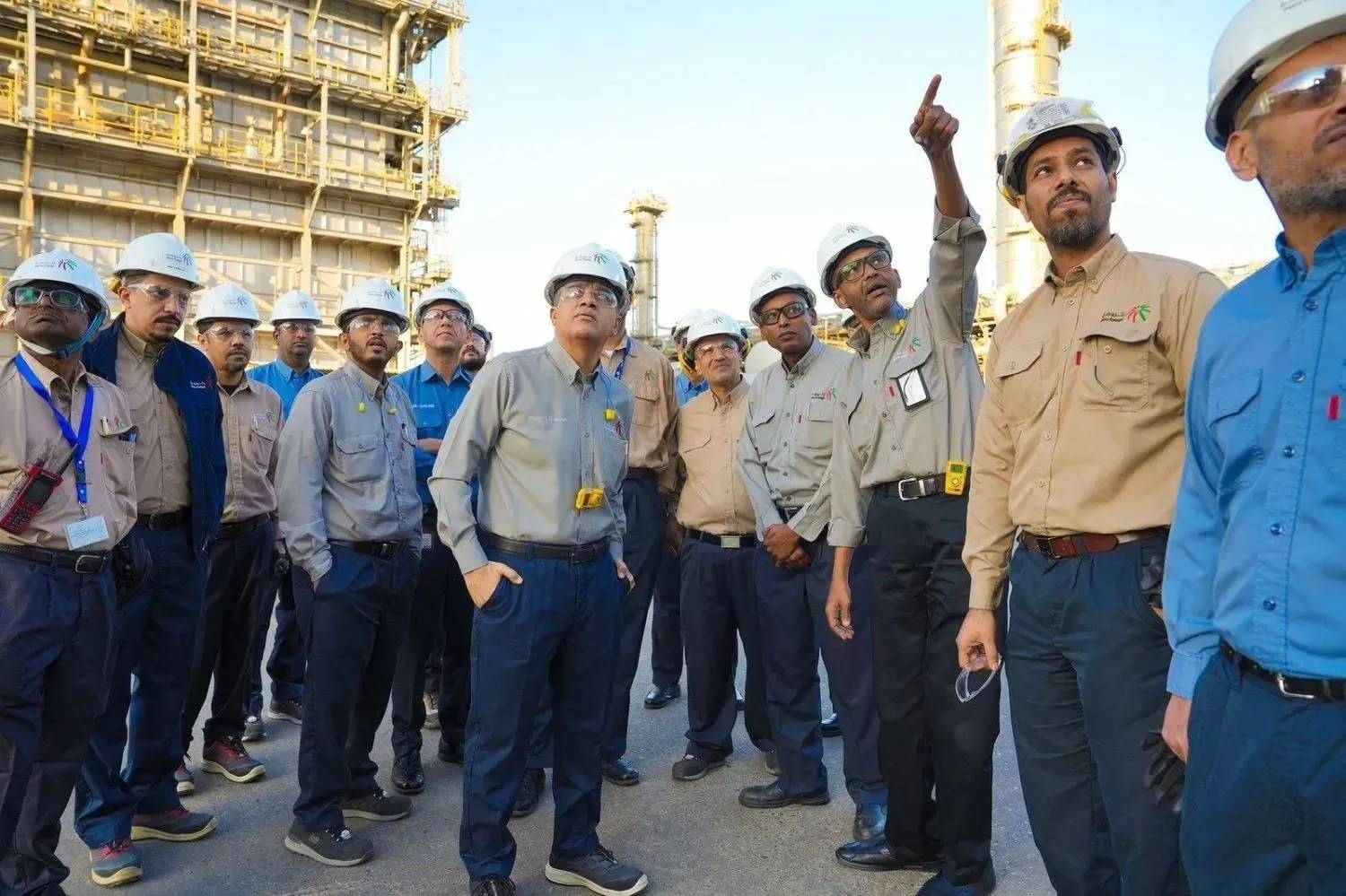
Engineers at a Petro Rabigh plant. (Petro Rabigh)
2030: A more diversified and specialized industry
Looking ahead to 2030, Santos projected that the Gulf petrochemicals industry will move toward greater diversification and specialization by combining highly competitive basic material production with expansion into derivative products, composite materials, and advanced chemical applications.
He said that Saudi Arabia's existing petrochemicals base provides a strong foundation to strengthen the Kingdom's presence in advanced chemical industries, noting that expanding this role requires linking production capabilities with applied expertise and specialized technologies, as well as building long-term customer relationships and securing their product qualifications.
He stressed that early investment in laboratories, specialized material compounding testing facilities, technology licensing, and talent development are essential pillars for expanding product lines and preparing companies to enter new markets.
New product lines entering development in 2026 could begin generating revenue by 2028 at the earliest, depending on the time required to complete qualification requirements and achieve commercial readiness, he continued.
He said that the success of this transformation depends on developing technologies, specialized skills, and infrastructure in parallel with production investments.
Partnerships and selective acquisitions can accelerate the building of these capabilities and help Saudi producers establish competitive positions by 2030, launching from there into additional growth opportunities over the following decade, he said.
Bahrain Tourism Minister Sees Gulf Recovery in 2027, Outlines Joint Strategyhttps://english.aawsat.com/business/5342234-bahrain-tourism-minister-sees-gulf-recovery-2027-outlines-joint-strategy
Bahrain’s tourism minister confirmed that tourism investments continue to flow into the kingdom and that it continues to host major international events (Asharq Al-Awsat)
Bahrain Tourism Minister Sees Gulf Recovery in 2027, Outlines Joint Strategy
Bahrain’s tourism minister confirmed that tourism investments continue to flow into the kingdom and that it continues to host major international events (Asharq Al-Awsat)
Bahrain’s Tourism Minister Fatima Al Sairafi expects Gulf tourism to rebound in 2027, with visitor numbers and revenues rising despite regional challenges that have disrupted travel this year.
In an interview with Asharq Al-Awsat, she said Gulf Cooperation Council (GCC) countries are preparing a joint recovery strategy to attract international visitors and promote the region as an integrated tourism destination.
GCC tourism ministers agreed at a September meeting in Bahrain to coordinate marketing efforts and strengthen cooperation as the region seeks to recover from the crisis.
Al Sairafi said continued investment and the hosting of major international events reflected the sector’s resilience and investor confidence. Although the challenges of 2026 could affect visitor numbers, she remained confident that growth would recover next year.
Joint Gulf Tourism Strategy
The proposed strategy aims to attract more international tourists, encourage longer stays and increase visitor spending, capitalizing on improved air connectivity with China, India and Europe.
Al Sairafi also cited the Gulf’s security and stability as competitive advantages in international tourism markets.
At their September meeting, GCC ministers discussed joint destination marketing, closer coordination and ways to increase tourism’s contribution to national economies.
Boosting Intra-Gulf Tourism
Travel between GCC countries is another priority, given Gulf tourists’ strong purchasing power and spending levels, which Al Sairafi said rank among the world’s highest.
Member states have begun developing initiatives to encourage regional travel, taking advantage of geographic proximity, cultural ties and expanding transport and aviation networks.
Combining international tourism with stronger intra-Gulf travel would help diversify visitor markets and make the sector more resilient to external disruptions, she underlined.
22 Hotels and Resorts Opened Since 2022
Bahrain has opened approximately 22 hotels and resorts since launching its tourism strategy in 2022, Al Sairafi said, adding that foreign investment and project development have continued despite regional challenges.
The minister expects new investments and developments to be announced soon, supported by the Kingdom’s infrastructure and investment-friendly regulations.
She also stressed the importance of coordination among economic and service sectors to ensure the industry’s long-term sustainability.
New Investments in Coastal Tourism
Marine tourism is a major focus of Bahrain’s diversification strategy, with the country’s island geography offering opportunities to develop resorts, coastal facilities and sea-based activities.
Al Sairafi noted that Bahrain has already attracted significant investment in this segment and is pursuing additional projects with private-sector partners.
Further investment in coastal developments and marine experiences is expected to expand visitor options, encourage longer stays and strengthen the Kingdom’s regional competitiveness.
Business and Conference Tourism
The minister identified meetings, incentives, conferences and exhibitions (MICE) tourism as another pillar of Bahrain’s strategy, citing growing interest among international organizations in hosting events in the Kingdom despite regional challenges.
She highlighted the Manama Dialogue and Gateway Gulf Forum as examples of major events held in Bahrain.
The kingdom is also seeking more conferences, exhibitions, sporting events and entertainment activities through the end of the year, including the fifth edition of Bahrain Celebrations.
Inflation and Price Competitiveness
Al Sairafi acknowledged that global inflation and rising travel and accommodation costs influence tourists’ choice of destinations.
The Tourism Ministry and Bahrain Tourism and Exhibitions Authority regularly consult hotels, travel agencies and event organizers to maintain competitive prices and develop offers suited to economic conditions and visitor expectations without compromising service quality.
She said Bahrain had seen a noticeable increase in tourist arrivals over the past three months, supported by competitive offers from hotels, travel agencies and various events, reflecting sustained demand despite global economic pressures.
Looking ahead, Al Sairafi said stronger Gulf cooperation in joint marketing, tourism development and connectivity between destinations would be essential to accelerating recovery.
She expects continued investment, advanced infrastructure and closer regional coordination to help GCC countries attract more visitors and increase tourism revenues in 2027.
79 GW of Renewable Energy Projects Reshape Saudi Arabia’s Power Landscapehttps://english.aawsat.com/business/5342226-79-gw-renewable-energy-projects-reshape-saudi-arabia%E2%80%99s-power-landscape
79 GW of Renewable Energy Projects Reshape Saudi Arabia’s Power Landscape
The Sudair solar power plant is expected to be among the world’s largest and the biggest of its kind in Saudi Arabia (SPA)
Saudi Arabia’s renewable energy project pipeline has reached approximately 79 gigawatts (GW), Energy Minister Prince Abdulaziz bin Salman said, as the Kingdom targets a 50 percent renewable share of its electricity mix by 2030.
The expansion is intended to diversify electricity generation and reduce reliance on liquid fuels.
The minister announced the figure during the 31st United Nations Climate Change Conference (COP31) in Antalya, as the Saudi Power Procurement Company (SPPC) opened prequalification for developers seeking to participate in the eighth round of the National Renewable Energy Program.
The round covers three solar and wind projects with a combined capacity of 3.2 GW: the 1.3 GW Al-Muzairah wind project in the Makkah region, the 900-megawatt (MW) Tumair solar project in Riyadh province and the 1 GW East Al-Amwah solar project in Asir. Together, they represent 1.9 GW of solar capacity and 1.3 GW of wind power.
Prequalification is the first stage of the competitive procurement process. SPPC conducts preliminary studies and tenders projects before selecting developers and signing power purchase agreements. The announcement therefore does not mean construction has begun or contracts have been awarded.
Projects at Different Stages
The expansion falls under the National Renewable Energy Program, which targets between 100 GW and 130 GW of renewable capacity by 2030, according to the project tracker published by the King Abdullah Petroleum Studies and Research Center (KAPSARC).
The figures reflect the scale of Saudi Arabia’s development pipeline but also highlight the importance of distinguishing planned capacity from projects already under construction or in operation.
KAPSARC’s September 2026 data tracked approximately 70 GW across 58 renewable energy projects, including 17 operational facilities, 24 projects under development and 17 offered for competitive bidding.
Energy Storage Expansion
Saudi Arabia’s renewable energy strategy extends beyond power generation to battery energy storage systems, which store electricity for later use, improve the utilization of renewable output and support grid stability.
According to the Kingdom’s second nationally determined contribution submitted under the United Nations Framework Convention on Climate Change, Saudi Arabia has tendered approximately 30 gigawatt-hours (GWh) of energy storage capacity.
Of that total, 8 GWh is operational and connected to the grid, while the remaining 22 GWh is at various stages of development.
$8.2 Billion in Investments
Saudi renewable energy projects involve domestic developers and companies affiliated with the Public Investment Fund (PIF), including Acwa and Badeel, alongside Saudi Aramco Power Company (SAPCO).
On July 14, 2025, SPPC signed power purchase agreements for seven projects totaling 15 GW, with initial investments estimated at $8.3 billion. The projects involve a consortium led by ACWA Power and including Badeel and SAPCO.
In November 2025, Acwa announced financial close for the seven projects, valued at $8.2 billion (SAR 31 billion), securing financing for their development.
The portfolio comprises five photovoltaic solar plants totaling 12 GW — Bisha, Al-Humaij, Khulais, Afif 1 and Afif 2 — and two wind farms, Starah and Shaqra, with a combined capacity of 3 GW.
Spread across several regions of the Kingdom, the facilities are scheduled to enter service in phases during the second half of 2027 and the first half of 2028.
The projects form part of the National Renewable Energy Program overseen by the Energy Ministry, while the PIF aims to develop 70 percent of Saudi Arabia’s targeted renewable energy capacity by 2030.
لم تشترك بعد
انشئ حساباً خاصاً بك لتحصل على أخبار مخصصة لك ولتتمتع بخاصية حفظ المقالات وتتلقى نشراتنا البريدية المتنوعة