



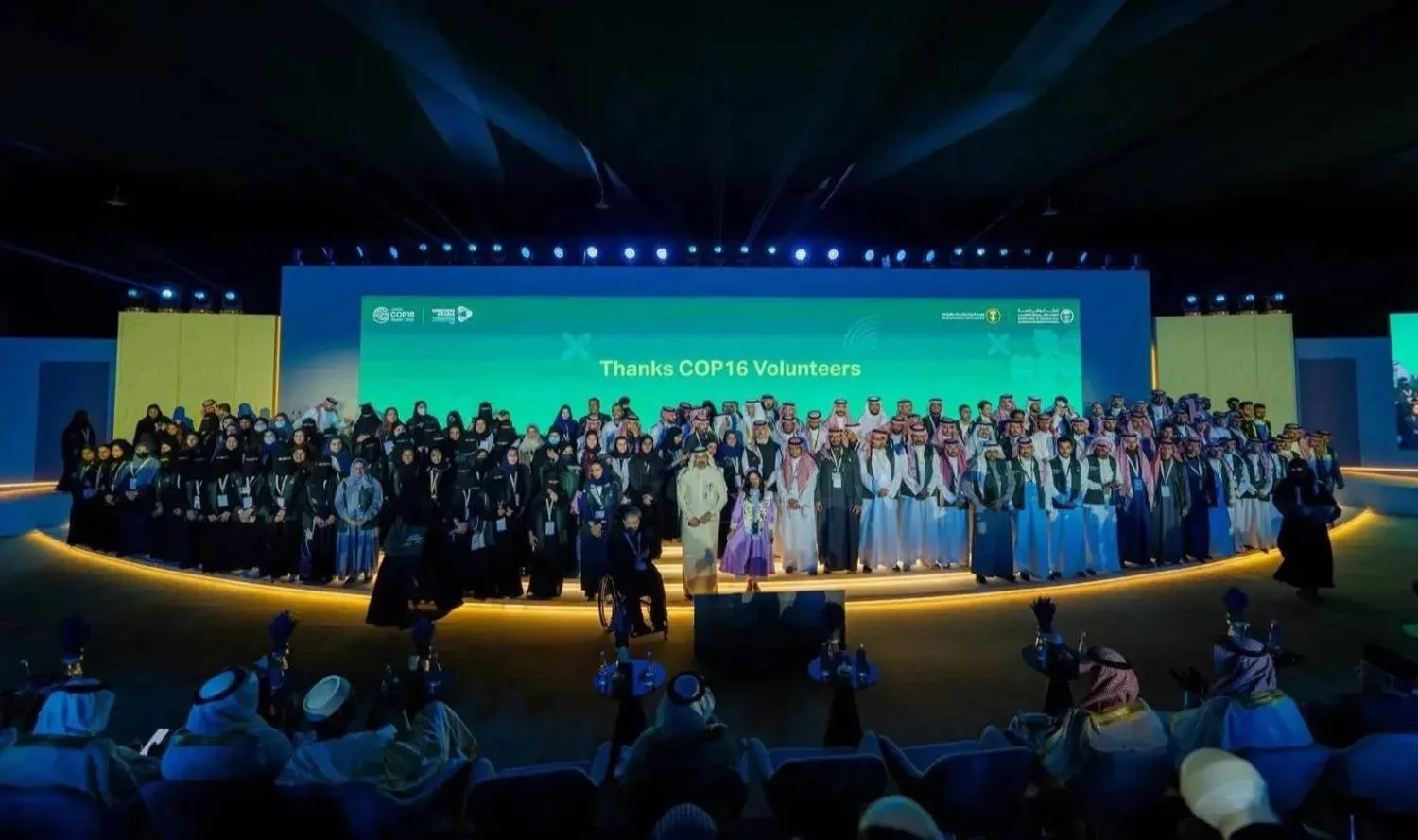

The 16th session of the Conference of the Parties to the United Nations Convention to Combat Desertification (COP16), held in Riyadh, concluded with the adoption of 35 resolutions addressing critical issues such as land degradation, drought, migration, sand and dust storms, and the promotion of science, research, and innovation.
The decisions also emphasized empowering women, youth, civil society, and indigenous communities to tackle environmental challenges. Additionally, new themes, including sustainable agricultural food systems and rangeland management, were incorporated into the Convention’s activities.
In his closing remarks, Abdulrahman Al-Fadley, Saudi Arabia’s Minister of Environment, Water, and Agriculture and President of COP16, reaffirmed the Kingdom’s dedication to preserving ecosystems, enhancing international cooperation, and combating desertification, land degradation, and drought during its presidency of this conference cycle.
Held from December 2 to 13, COP16 marked a historic milestone as the first conference of its kind to be hosted in the Middle East and North Africa. This underscores Saudi Arabia’s leadership in environmental protection at both regional and international levels. The conference saw the announcement of several major international partnerships to advance land restoration and resilience to drought. It also successfully secured over $12 billion in funding commitments from prominent international organizations, significantly bolstering the role of financial institutions and the private sector in addressing desertification and land degradation.
Al-Fadley expressed gratitude to the Custodian of the Two Holy Mosques and the Crown Prince for their unwavering support in hosting this pivotal international event, which reflects Saudi Arabia’s ongoing commitment to environmental preservation and sustainable development. The conference witnessed remarkable participation, with over 85,000 attendees, including representatives of international organizations, private sector stakeholders, civil society, research institutions, and indigenous groups. More than 900 events were held across the Blue and Green Zones, making this session a historic turning point in advancing global momentum toward the Convention’s goals.
Saudi Arabia unveiled three major environmental initiatives during the conference. Those include the Early Warning System for Dust and Sandstorms, the Riyadh Global Partnership for Drought Resilience, aimed at supporting 80 of the world’s most drought-prone countries, and the Business for Land Initiative, designed to enhance private sector involvement globally in sustainable land management
Al-Fadley welcomed the announcement of $12 billion in funding from regional donors to support projects combating land degradation and drought. He called on the private sector and international financial institutions to follow suit, emphasizing the importance of collective action to address global environmental challenges that affect water and food security worldwide.
He expressed hope that the outcomes of COP16 would serve as a transformative step in global efforts to preserve land, reduce degradation, and build capacity to combat drought, contributing to the well-being of communities around the globe. The minister reiterated Saudi Arabia’s commitment to collaborative international efforts to tackle environmental challenges through innovative and sustainable solutions, expanding green spaces, and fostering partnerships between governments, private sectors, and local communities.
Al-Fadley underscored the importance of leveraging modern technology, sharing knowledge, and launching initiatives to strengthen partnerships across sectors, including NGOs and financial institutions.


