South Korea, US, to Hold Trade Talks This Week, Seoul Says

 Shoppers walk with their bags at the Dongmyo Flea Market in Seoul on April 15, 2025. (AFP)
Shoppers walk with their bags at the Dongmyo Flea Market in Seoul on April 15, 2025. (AFP)
TT

South Korea, US, to Hold Trade Talks This Week, Seoul Says

 Shoppers walk with their bags at the Dongmyo Flea Market in Seoul on April 15, 2025. (AFP)
Shoppers walk with their bags at the Dongmyo Flea Market in Seoul on April 15, 2025. (AFP)

South Korea and the United States will hold trade consultations this week in Washington at the suggestion of the United States, Seoul's trade ministry said on Sunday.

Finance Minister Choi Sang-mok and Trade Minister Ahn Duk-geun will meet with Trade Representative Jamieson Greer and Treasury Secretary Scott Bessent on the sidelines of the spring meetings of the International Monetary Fund and World Bank, the ministry said in a statement.

South Korea hopes to lower the 25% "reciprocal" tariff that President Donald Trump has announced for the country, which he has since paused along with high tariffs slapped on a string of countries.

Ahn will leave on Wednesday, the statement said. It did not specify the agenda or give other details.


Governor: Indonesia Central Bank Has Sufficient Foreign Reserves to Stabilize Rupiah

A man walks past Bank Indonesia headquarters in Jakarta, Indonesia, September 2, 2020. REUTERS/Ajeng Dinar Ulfiana
TT

Governor: Indonesia Central Bank Has Sufficient Foreign Reserves to Stabilize Rupiah

A man walks past Bank Indonesia headquarters in Jakarta, Indonesia, September 2, 2020. REUTERS/Ajeng Dinar Ulfiana

Indonesia's central bank has sufficient foreign exchange reserves to make the strong market interventions required to stabilize the rupiah, Governor Perry Warjiyo said on Thursday.

The central bank will intervene not only in domestic but also offshore markets around the clock, he added, according to Reuters.

The rupiah slid to a fresh record low on Tuesday, falling to 17,445 per dollar, as markets reacted to rising tensions linked ⁠to the war in Iran.

The drop prompted Bank Indonesia to renew its pledge to defend the currency by intervening consistently and measurably, and it was trading 0.3% stronger on Thursday.

Warjiyo said that rupiah's depreciation was due to rising tensions in the Middle East, high rates from the US Federal Reserve, and the exit of many global investors from all emerging markets.

Many companies paid off their debts in foreign currencies during April and May, which was another factor contributing to the rupiah's ⁠weakness, he added.

The central bank announced on Tuesday that it would tighten domestic FX rules by lowering the threshold at which dollar purchases would require documentation, cutting it to $25,000 per party per month to curb speculative demand and further ⁠shore up the rupiah.

The currency was under pressure even before the Middle East conflict broke out at the end of February, with investors concerned ⁠about Indonesia's fiscal health, the independence of its central bank and transparency issues in its capital markets.

The rupiah has weakened 4% ⁠against the US dollar so far this year, making it one of the worst performing currencies in Asia.


Norway Breaks European Silence by Swiftly Raising Rates to Face War Repercussions

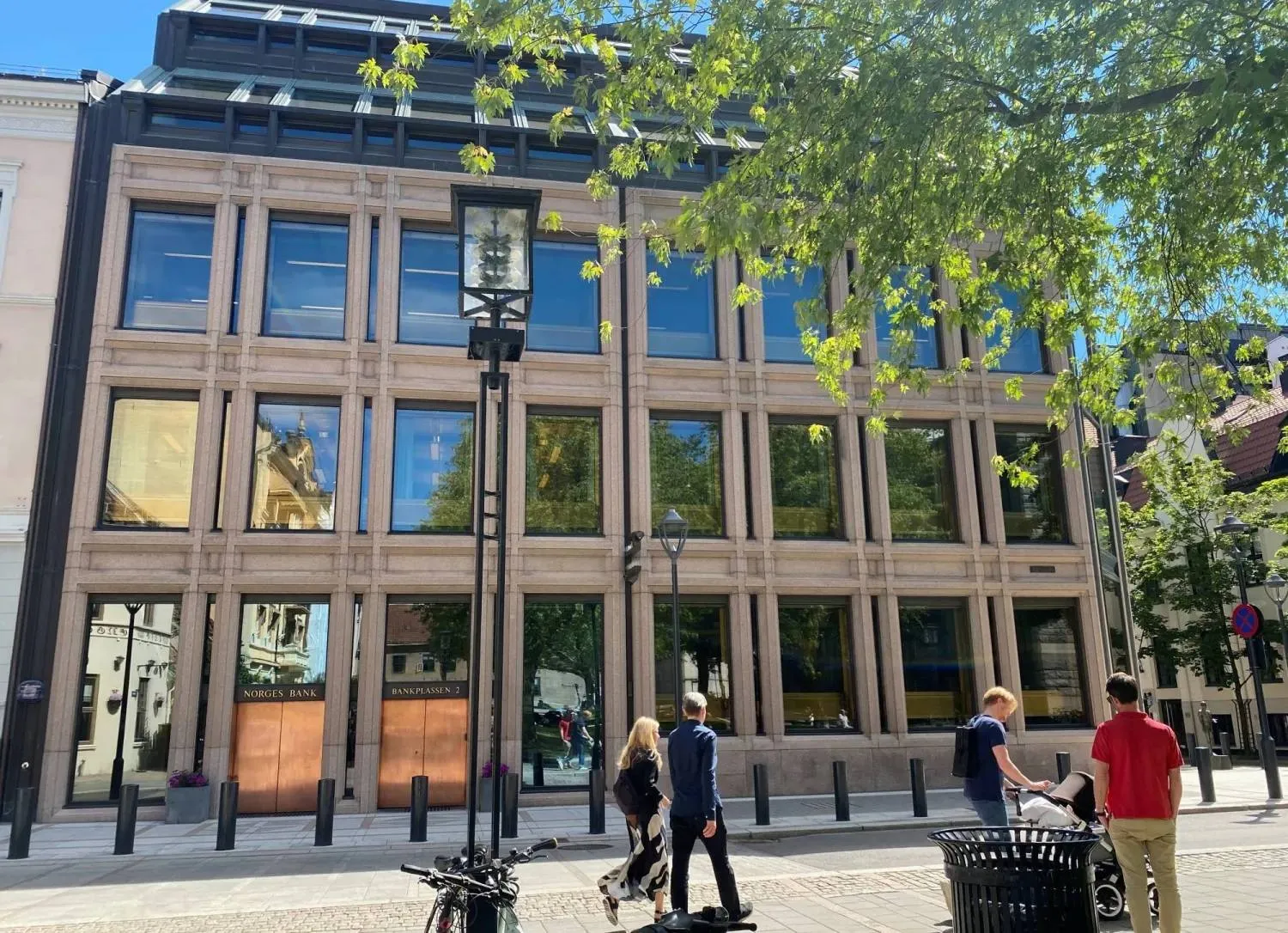
A view shows the building of Norway’s central bank (Norges Bank) in Oslo, Norway, June 23, 2022. REUTERS/Victoria Klesty/File Photo 
TT

Norway Breaks European Silence by Swiftly Raising Rates to Face War Repercussions

A view shows the building of Norway’s central bank (Norges Bank) in Oslo, Norway, June 23, 2022. REUTERS/Victoria Klesty/File Photo 

Norway’s central bank became one of the first to raise interest rates as a result of the US-Israeli attacks on Iran, warning that the conflict in the Middle East had lifted inflationary pressures as well as heightened economic uncertainty.

Meanwhile, the Swedish central bank, the Riksbank, kept its key rate unchanged and said that while the risk of higher inflation had increased somewhat due to the war in the Middle East, it could wait on developments before adjusting its policy.

On Thursday, Norway’s Norges Bank increased its policy rate by 0.25 percentage points to 4.25 %, following the lead of Australia among advanced economy central banks in raising rates.

The move was sooner than most analysts in a Reuters poll had expected.

The rich Scandinavian country is western Europe’s largest petroleum producer and has struggled to get inflation down to the central bank’s 2% target despite cutting interest rates far less in recent years than the European Central Bank, US Federal Reserve or Sweden’s Riksbank, which on Thursday held its own rates unchanged.

“The war in the Middle East is still causing substantial uncertainty about the economic outlook,” said Ida Wolden Bache, Norges Bank’s governor. She added: “Inflation is too high and has run above target for several years.”

Norway's annual core inflation rate came in at 3.0% in March, slightly lower than forecast but well above the central bank's target of 2.0%.
Norges Bank said that the Iran conflict meant “external price pressures appear to be slightly stronger” than in March, but that the recent appreciation in the krone should damp imported inflation.

It warned that if war in the Middle East changed the economic outlook, it would be forced to revise its rate forecast.

Norges Bank estimated in March that mainland GDP in Norway — stripping out the effects of oil and gas — would increase by 1.6% this year, lower than in 2025.

A majority ‌of respondents, 15 of the 23 economists in a Reuters poll conducted ahead of the announcement, had said Norges Bank would keep the policy rate ⁠on hold today, while the remaining eight expected a 25-basis-point hike.

The Norwegian crown strengthened to 10.85 against the euro by 0948 GMT, from 10.92 just before the announcement.

The bank’s statement points to a further rate hike this year, Sparebank 1 Chief Economist Elisabeth Holvik said.

“Norges Bank will raise borrowing costs again after the summer, so that the policy rate reaches 4.5% by year-end,” Holvik said.

For its part, Sweden's central bank earlier on Thursday kept its policy rate unchanged at 1.75%, as expected, but said the risk that the war in the Middle East will lead to higher inflation had increased somewhat.

The Riksbank has been in wait-and-see mode since cutting interest rates by a quarter percentage point in September last year, according to Reuters.

“There is scope to wait until there is a clearer picture of the effects of the war and the supply shocks it entails,” the central bank said in a statement.

In Poland, the central bank Governor Adam Glapinski said the likelihood of interest rate increases has grown over the past month although a hike is not a forgone conclusion for policymakers.

“Rate hikes are likely but they may not occur,” Glapinski told a news conference on Thursday. On the other hand, “rate cuts are very unlikely.”



Saudi Arabia to Establish Int’l Center for Digital Governance in Riyadh

A letter of intent was signed between the DGA and the UN on the sidelines of the Science, Technology and Innovation Forum held in New York this week. (SPA)
TT

Saudi Arabia to Establish Int’l Center for Digital Governance in Riyadh

A letter of intent was signed between the DGA and the UN on the sidelines of the Science, Technology and Innovation Forum held in New York this week. (SPA)

Saudi Arabia’s Digital Government Authority has said it held discussions with the United Nations Department of Economic and Social Affairs (UN-DESA) to host in Riyadh a digital government center affiliated with the UN to enhance international cooperation, exchange expertise, and develop best practices.

A letter of intent was signed between the DGA and the UN on the sidelines of the Science, Technology and Innovation Forum held in New York this week.

DGA Governor Ahmed bin Mohammed Al-Suwaiyan said that choosing Riyadh as the center’s headquarters reflects Saudi Arabia’s leadership and global role as a model in building an integrated digital ecosystem that is human-centric and future-oriented.

He added that the center represents a pivotal milestone in advancing digital government practices globally, supporting member states, enhancing knowledge exchange, and leveraging artificial intelligence and modern technologies.

Al-Suwaiyan stressed that this step is a result of the support that digital government receives from the Saudi leadership in line with the objectives of Vision 2030.

Bjorg Sandkjaer, Assistant Secretary-General for Policy Coordination in DESA, indicated that the current discussions are an extension of the ongoing cooperation between Saudi Arabia and the UN, and lay the foundation for a long-term partnership aimed at supporting digital government and strengthening the public sector.

She said the center will work on developing frameworks, standards, and best practices to help member states build comprehensive and sustainable digital strategies that contribute to achieving the sustainable development goals and enhancing their inclusiveness globally.

Saudi Arabia launched the Riyadh Declaration during the 19th session of the Internet Governance Forum (IGF 2024), which was held in Riyadh. The forum is organized annually by the UN and brings together global experts to discuss and shape international policies in internet governance.