


Saudi-GCC Non-Oil Trade Surplus Achieves 203% Annual Growth

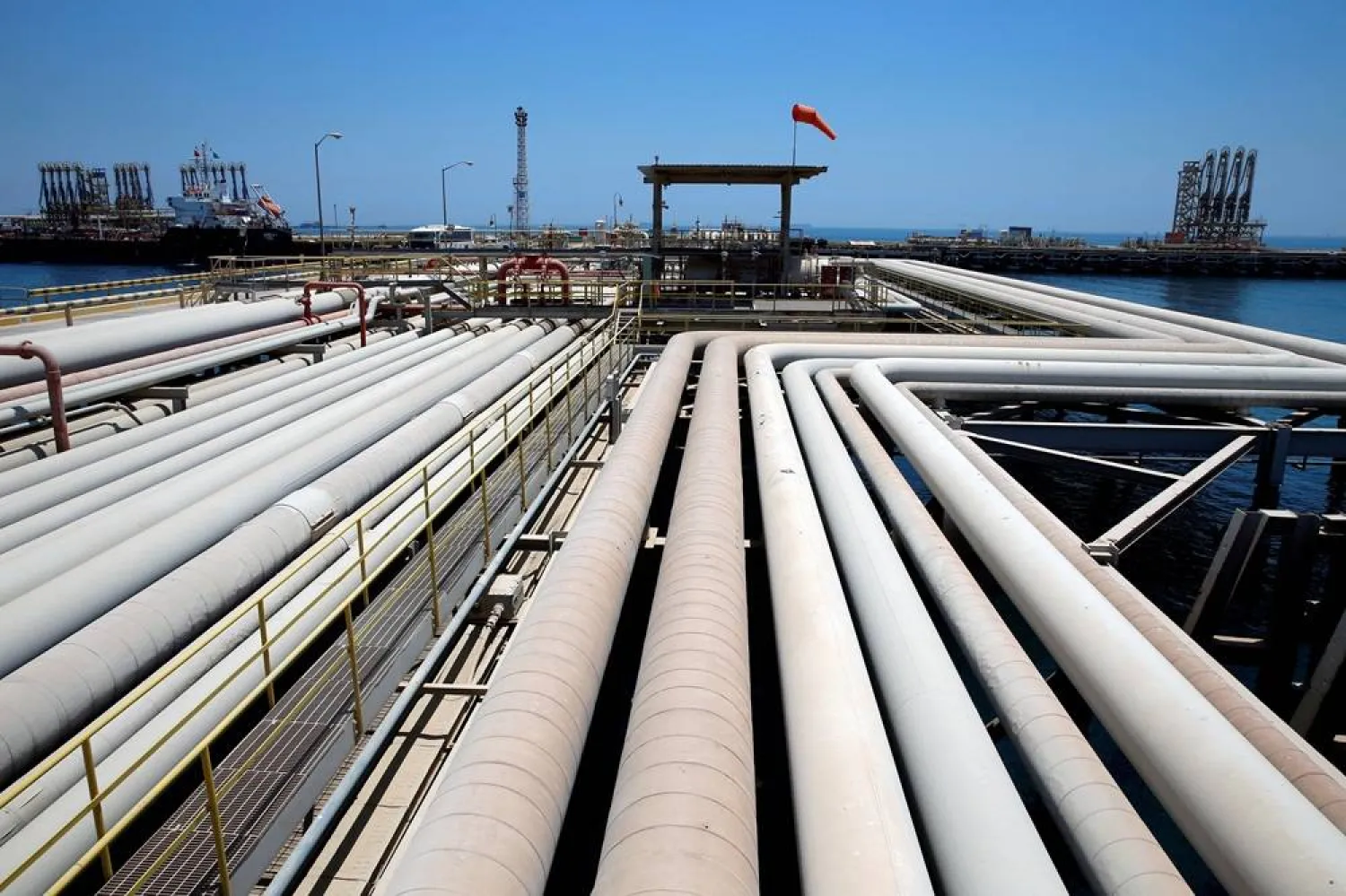
An oil tanker is being loaded at Saudi Aramco's Ras Tanura oil refinery and oil terminal in Saudi Arabia May 21, 2018. (Reuters)
TT

Saudi-GCC Non-Oil Trade Surplus Achieves 203% Annual Growth

An oil tanker is being loaded at Saudi Aramco's Ras Tanura oil refinery and oil terminal in Saudi Arabia May 21, 2018. (Reuters)

The non-oil trade surplus of Saudi Arabia with the Gulf Cooperation Council (GCC) countries recorded an annual growth rate of 203.2% to more than SAR2 billion in April, reported the Saudi Press Agency on Friday. It soared to around SAR3,511 million from SAR1,158 million in the same month last year.

According to preliminary data from the International Trade Bulletin for April, published by the General Authority for Statistics (GASTAT), the total volume of non-oil trade, including re-exports, between Saudi Arabia and GCC countries amounted to around SAR18,028 million. This reflects a year-on-year growth of 41.3%, with an increase of SAR5,271 million from SAR12,757 million in April 2024.

Non-oil commodity exports, including re-exports, rose by 55%, totaling SAR10,770 million, up from SAR6,958 million in April of the previous year, an increase of over SAR3,812 million.

Meanwhile, the value of national non-oil commodity exports reached around SAR3,031 million, compared to SAR2,675 million in April 2024, achieving a year-on-year growth rate of 13.3%, with an increase estimated at SAR356 million.

Additionally, the value of re-exports surged by 81%, reaching SAR7,738 million compared to SAR4,282 million, an increase of SAR3,456 million.

Saudi Arabia’s imports from GCC countries stood at SAR7,258 million in April 2025, compared to SAR5,799 million last year, achieving a year-on-year growth of 25.2%, with an increase of SAR1,459 million.

The data indicated that the United Arab Emirates ranked first in terms of non-oil trade volume with Saudi Arabia, amounting to SAR13,533 million, representing about 75.1% of the total.

Bahrain followed in second place with a trade value of SAR1,798 million (10%), while Oman ranked third with SAR1,454 million (8.1%). Kuwait was fourth with SAR819.9 million (4.5%), and Qatar came next with a value of SAR422.1 million (2.3%).



Cluster2 Company Launches Direct Flights from Muscat to Saudi Arabia's Taif

 Three direct flights will take place per week between Muscat and Taif via Oman Air - SPA
Three direct flights will take place per week between Muscat and Taif via Oman Air - SPA
TT

Cluster2 Company Launches Direct Flights from Muscat to Saudi Arabia's Taif

 Three direct flights will take place per week between Muscat and Taif via Oman Air - SPA
Three direct flights will take place per week between Muscat and Taif via Oman Air - SPA

The Cluster2 Company, operator of Taif International Airport, announced the launch of three direct flights per week between Muscat and Taif via Oman Air, starting January 31, SPA reported.

The launch of international flights through the cluster’s airports comes as part of its ongoing commitment to improving the passenger experience and expanding international travel options, while continuing to build strategic partnerships with global airlines to enhance air connectivity in the Kingdom.


Oil Prices Rise as US Ramps up Action against Venezuela Tankers

A view shows an oil pump jack outside Almetyevsk, in the Republic of Tatarstan, Russia July 14, 2025. REUTERS/Stringer
TT

Oil Prices Rise as US Ramps up Action against Venezuela Tankers

A view shows an oil pump jack outside Almetyevsk, in the Republic of Tatarstan, Russia July 14, 2025. REUTERS/Stringer

Oil prices rose on Monday after the US intercepted ​an oil tanker in international waters off the coast of Venezuela and tensions in Russia's war against Ukraine remained high, with both developments raising fears of supply disruption.

Brent crude futures gained $1.31, or 2.17%, to $61.78 a barrel by 1316 GMT. US West Texas Intermediate crude rose by $1.25, or 2.2%, to $57.77.

Market participants now see a risk of disruption to Venezuelan oil exports because of the US ‌embargo, having previously ‌been complacent in that regard, said ‌UBS ⁠analyst Giovanni ​Staunovo.

Venezuelan crude ‌accounts for about 1% of global supply.

Growing supply from the US and the OPEC+ producer group have largely offset worries over supply disruption elsewhere to keep Brent futures around $65 a barrel in the second half of 2025, though prices have eased in the past month because of oversupply concerns.

Oil prices have been supported by developments off Venezuela while ⁠Russia-Ukraine tensions simmer in the background in an otherwise very bearish market, said June ‌Goh, analyst at Sparta Commodities.

The US Coast ‍Guard is pursuing an oil ‍tanker in international waters near Venezuela in what would be the ‍second such operation over the weekend and the third in less than two weeks if successful, officials told Reuters on Sunday.

A rebound in oil prices has been sparked by US President Donald Trump's announcement of a "total ​and complete" blockade of sanctioned Venezuelan oil tankers and subsequent developments there, followed by reports of a Ukrainian drone strike ⁠on a Russian shadow fleet vessel in the Mediterranean, said IG analyst Tony Sycamore.

The Brent and WTI benchmarks fell by about 1% last week.

US special envoy Steve Witkoff said on Sunday that talks between US, European and Ukrainian officials in Florida over the past three days in an effort to end Russia's war in Ukraine had focused on aligning positions. Those meetings and separate talks with Russian negotiators had been productive, he said.

However, the top foreign policy aide of Russian President Vladimir Putin said that changes made by the Europeans ‌and Ukraine to US proposals had not improved prospects for peace.


GASTAT: Construction Costs in Saudi Arabia Rose 1% in November

The monthly Construction Cost Index survey results showed price stability in November 2025 compared with October 2025. SPA
TT

GASTAT: Construction Costs in Saudi Arabia Rose 1% in November

The monthly Construction Cost Index survey results showed price stability in November 2025 compared with October 2025. SPA

The Construction Cost Index in Saudi Arabia rose 1% in November 2025 compared with the same month last year, driven by equal 1% increases in both residential and non-residential construction costs, according to data released by the Kingdom’s General Authority for Statistics (GASTAT).

The monthly Construction Cost Index survey results showed price stability in November 2025 compared with October 2025.

The Construction Cost Index bulletin is part of GASTAT’s ongoing efforts to develop statistical products for vital sectors and provide a reliable and effective reference with accurate estimates to support decision-making by contractors, real estate developers, and relevant entities.

These efforts contribute to drawing a clear roadmap for residential and non-residential construction projects in the building and construction sector.