


Trump Says US to Hit India with 25% Tariff Starting August 1

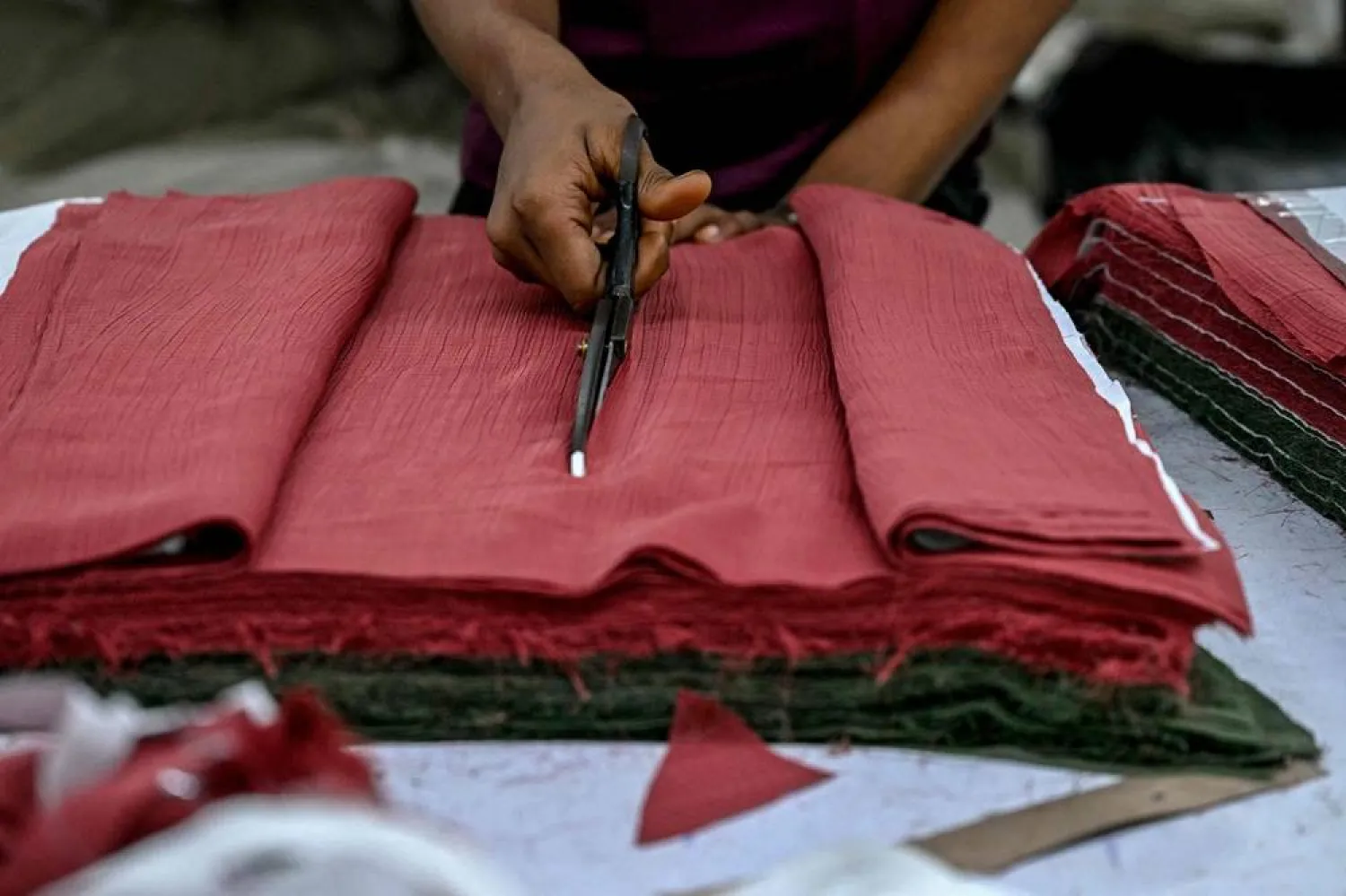
An employee cuts clothing material for dresses at the apparel manufacturing unit at Bhiwandi in the Thane district of India's Maharashtra state on July 30, 2025. (AFP)
TT

Trump Says US to Hit India with 25% Tariff Starting August 1

An employee cuts clothing material for dresses at the apparel manufacturing unit at Bhiwandi in the Thane district of India's Maharashtra state on July 30, 2025. (AFP)

US President Donald Trump on Wednesday imposed a 25% tariff on goods imported from India starting August 1, as well as an unspecified penalty for buying Russian arms and oil - moves that could strain relations with the world's most populous democracy.

The US decision singles out India more severely than other major trading partners, and threatens to unravel months of talks between the two countries, undermining a key strategic partner of Washington’s and a counterbalance to China.

"While India is our friend, we have, over the years, done relatively little business with them because their Tariffs are far too high, among the highest in the World, and they have the most strenuous and obnoxious non-monetary Trade Barriers of any Country," Trump wrote in a Truth Social post.

"They have always bought a vast majority of their military equipment from Russia, and are Russia’s largest buyer of ENERGY, along with China, at a time when everyone wants Russia to STOP THE KILLING IN UKRAINE — ALL THINGS NOT GOOD!"

In response, the Indian government said in a statement that it was studying the implications of Trump's announcements and remained dedicated to securing a fair trade deal with the US.

"India and the US have been engaged in negotiations on concluding a fair, balanced and mutually beneficial bilateral trade agreement over the last few months. We remain committed to that objective," it said.

The White House had previously warned India about its high average applied tariffs - nearly 39% on agricultural products - with rates climbing to 45% on vegetable oils and around 50% on apples and corn.

Russia continued to be the top oil supplier to India during the first six months of 2025, making up 35% of overall supplies.

The United States, the world's largest economy, currently has a $45.7 billion trade deficit with India, the fifth largest.

White House economic adviser Kevin Hassett said Trump has been frustrated with the progress of trade talks with India and believed the 25% tariff announcement would help the situation. Hassett said more information on the additional penalty would be made "shortly."

The new US tax on imports from India would be higher than many other countries that struck a deal with the Trump administration recently. Vietnam's tariff is set at 20% and Indonesia's at 19%, while the levy for Japan and the European Union is 15%.

"This is a major setback for Indian exporters, especially in sectors like textiles, footwear and furniture, as the 25% tariff will render them uncompetitive against rivals from Vietnam and China," said S.C. Ralhan, president of the Federation of Indian Export Organization.

The news pushed the Indian rupee down 0.4% to around 87.80 against the US dollar in the non-deliverable forwards market, from its close at 87.42 during market hours. Gift Nifty futures were trading at 24,692 points, down 0.6%.

CONTENTIOUS ISSUES

US and Indian negotiators have held multiple rounds of discussions to resolve contentious issues, particularly over market access into India for US agricultural and dairy products.

In its latest statement, India said it attached the utmost importance to protecting and promoting the welfare of its farmers, entrepreneurs and small businesses.

"The government will take all steps necessary to secure our national interest, as has been the case with other trade agreements," it said.

The setback comes despite earlier commitments by Prime Minister Narendra Modi and Trump to conclude the first phase of a trade deal by autumn 2025 and expand bilateral trade to $500 billion by 2030, from $191 billion in 2024.

Since India's short but deadly conflict with arch South Asian rival Pakistan, New Delhi has been unhappy about Trump's closeness with Islamabad and has protested, which cast a shadow over trade talks.

"Politically the relationship is in its toughest spot since the mid-1990s," said Ashok Malik, partner at advisory firm The Asia Group. "Trust has diminished. President Trump's messaging has damaged many years of careful, bipartisan nurturing of the US-India partnership in both capitals."

Besides farm products access, the US had flagged concerns over India's increasingly burdensome import-quality requirements, among its many non-tariff barriers to foreign trade, in a report released in March.

The new tariffs will impact Indian goods exports to the US, estimated at around $87 billion in 2024, including labor-intensive products such as garments, pharmaceuticals, gems and jewelry, and petrochemicals.



Abu Dhabi Ports Signs MoU to Develop, Operate Shuaiba Container Terminal in Kuwait

Containers are seen at Abu Dhabi's Khalifa Port, UAE, December 11, 2019. REUTERS/Satish Kumar
TT

Abu Dhabi Ports Signs MoU to Develop, Operate Shuaiba Container Terminal in Kuwait

Containers are seen at Abu Dhabi's Khalifa Port, UAE, December 11, 2019. REUTERS/Satish Kumar

Kuwait Ports Authority (KPA) said on Monday it had signed a memorandum of understanding with Abu Dhabi Ports Group to develop and operate the container terminal at Kuwait’s Shuaiba port under a concession agreement.

Shuaiba port, established in the 1960s, is Kuwait’s oldest port. It covers a total area of 2.2 million square metres (543.63 acres) and has 20 berths, while the container terminal has a storage area of 318,000 sqare metres, according to KPA’s website.

The port, located about 60 km (37.3 miles) south of the capital, handles commercial cargo, heavy equipment, raw materials and chemicals essential to various industries.

The MoU represents “the first preliminary step” toward concluding a concession contract, subject to the completion of required studies, KPA said in a statement without disclosing the value of the deal, Reuters reported.

Under the agreement, Abu Dhabi Ports Group will prepare the technical, environmental and financial studies needed for the project, including infrastructure requirements.


Iran’s Rial Currency Plummets to New Low, Sparking Fears of Higher Food Prices

An Iranian trader counts money in Tehran's Grand Bazaar. (Reuters)
TT

Iran’s Rial Currency Plummets to New Low, Sparking Fears of Higher Food Prices

An Iranian trader counts money in Tehran's Grand Bazaar. (Reuters)

Iran’s rial slid further Monday to a new record low of more than 1.3 million to the US dollar, deepening the currency’s collapse less than two weeks after it first breached the 1.2-million mark amid sanctions pressure and regional tensions.

Currency traders in Tehran quoted the dollar above 1.3 million rials, underscoring the speed of the decline since Dec. 3, when the rial hit what was then a historic low.

The rapid depreciation is compounding inflationary pressures, pushing up prices for food and other daily necessities and further straining household budgets, a trend that could be intensified by a gasoline price change introduced in recent days.

Iran on Saturday added a third gasoline price tier, raising the cost of full bought beyond monthly quotes at 50,000 rials (4 US cents). It is the first major adjustment to fuel pricing since a price hike in 2019 that sparked nationwide protests and a crackdown that reportedly killed over 300 people.

Under the revised system, motorists continue to receive 60 liters a month at the subsidized rate of 15,000 rials per liter and another 100 liters at 30,000 rials, but any additional purchases now cost more than three times the original subsidized price. While gasoline in Iran remains among the cheapest in the world, economists warn the change could feed inflation at a time when the rapidly weakening rial is already pushing up the cost of food and other basic goods.

The fall comes as efforts to revive negotiations between Washington and Tehran over Iran’s nuclear program appear stalled, while uncertainty persists over the risk of renewed conflict following June’s 12-day war involving Iran and Israel. Many Iranians also fear the possibility of a broader confrontation that could draw in the United States, adding to market anxiety.

Iran’s economy has been battered for years by international sanctions, particularly after Donald Trump unilaterally withdrew the United States from Tehran’s nuclear deal with world powers in 2018. At the time the 2015 accord was implemented — which sharply curtailed Iran’s uranium enrichment and stockpiles in exchange for sanctions relief — the rial traded at about 32,000 to the dollar.

After Trump returned to the White House for a second term in January, his administration revived a “maximum pressure” campaign, expanding sanctions that target Iran’s financial sector and energy exports. Washington has again pursued firms involved in trading Iranian crude oil, including discounted sales to buyers in China, according to US statements.

Further pressure followed in late September, when the United Nations reimposed nuclear-related sanctions on Iran through what diplomats described as the “snapback” mechanism. Those measures once again froze Iranian assets abroad, halted arms transactions with Tehran and imposed penalties tied to Iran’s ballistic missile program.

Economists warn that the rial’s accelerating decline risks feeding a vicious cycle of higher prices and reduced purchasing power, particularly for staples such as meat and rice that are central to Iranian diets. For many Iranians, the latest record low reinforces concerns that relief remains distant as diplomacy falters and sanctions tighten.


Industry Minister Inaugurates Made in Saudi Expo 2025

Industry Minister Inaugurates Made in Saudi Expo 2025
TT

Industry Minister Inaugurates Made in Saudi Expo 2025

Industry Minister Inaugurates Made in Saudi Expo 2025

Saudi Minister of Industry and Mineral Resources Bandar Alkhorayef inaugurated the third Made in Saudi Expo 2025 at the Riyadh International Convention and Exhibition Center in Malham, organized by the Saudi Export Development Authority through the Made in Saudi Program, with Syria’s Minister of Economy and Industry Dr. Mohammad Nidal al-Shaar in attendance.

The Syrian Arab Republic has been invited as the Guest of Honor at the exhibition, which has attracted strong participation from public and private sector organizations, as well as leading national manufacturers and industry leaders, SPA reported.

In his opening remarks, Alkhorayef emphasized that the exhibition serves as a key platform for showcasing advancements in Saudi industry, the quality of its products, and their competitiveness in local and international markets. He added that it is also an important venue for establishing strategic partnerships that support the growth of national industries.

He pointed out that the Made in Saudi Program, launched in 2021 under the esteemed patronage of HRH the Crown Prince, reflects the Kingdom's ambition to become a leading industrial power. Achieving this goal involves building consumer trust in its products and services in both domestic and global markets by nurturing local talent and innovation, promoting national products, and strengthening companies’ capabilities to expand internationally.

He also highlighted that Saudi non-oil exports have achieved remarkable success, reaching SAR515 billion in 2024, with historic results in the first half of 2025, demonstrating the highest half-year value of SAR307 billion. These figures underscore the industry’s vital role in diversifying the national economy in line with the objectives of Saudi Vision 2030.

The opening ceremony also welcomed the Syrian Arab Republic as this year’s Guest of Honor, highlighting the participation of more than 25 Syrian companies to present opportunities for industrial cooperation and integration, reflecting the strong fraternal ties between the two nations.

Alongside the exhibition, over 25 workshops are being conducted, while more than 50 memoranda of understanding are set to be signed.