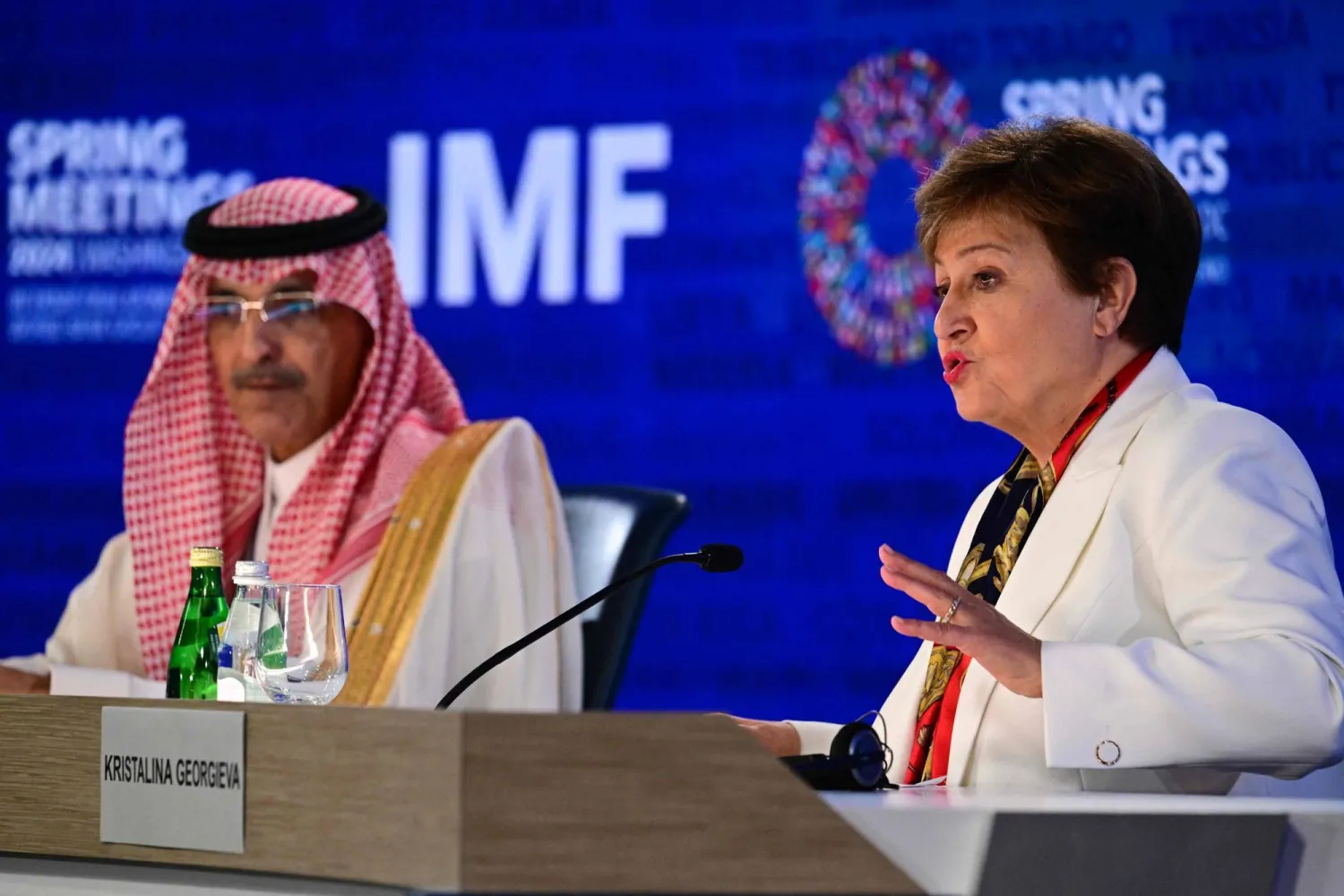

The Executive Board of the International Monetary Fund (IMF) has commended the strong performance of the Saudi economy and its resilience in the face of external shocks, highlighting the Kingdom’s prudent fiscal policies and the success of its economic diversification strategies.
Despite rising global uncertainty and declining commodity prices, the IMF affirmed that Saudi Arabia’s economic outlook remains robust.
The Fund emphasized the importance of continuing structural reforms to sustain non-oil sector growth and to drive comprehensive economic diversification, regardless of fluctuations in oil prices. This international recognition underscores the effectiveness of the Kingdom’s economic strategy in maintaining momentum toward the goals of Vision 2030, while balancing fiscal stability and structural transformation.
Saudi Finance Minister Mohammed Al-Jadaan welcomed the IMF report, noting via his official account on X that the praise reflects the strength and resilience of Saudi Arabia’s diversified economy, which continues to move steadily toward achieving Vision 2030 objectives.
According to a statement issued following the conclusion of Article IV consultations with Saudi Arabia on Monday, the Kingdom’s economy continues to show remarkable resilience, supported by strong non-oil activity, contained inflation, and a significant decline in unemployment.
The jobless rate dropped to a record low of 7% in the fourth quarter of 2024, surpassing Vision 2030 targets ahead of schedule, which had been revised to 5% by 2030.
The IMF mission, led by Amine Mati, conducted its visit to the Kingdom between May 12 and 26, 2025, as part of the annual Article IV review. The final statement was issued on June 26, with the Executive Board subsequently approving the final report.
The IMF raised its economic growth forecast for Saudi Arabia to 3.6% in 2025, up from a previous estimate of 3% in April. The growth projection for 2026 was also adjusted upward to 3.9%.
No Further Spending Cuts Needed
During a press conference presenting the key findings of the IMF’s review, Mati stated that Saudi Arabia had already made sufficient spending adjustments this year and likely would not need to implement further fiscal tightening, even if oil prices weakened.
In response to a question on the Fund’s recommendation for a counter-cyclical fiscal policy, he said: “We do not believe there is a need for additional measures to cut spending or further fiscal adjustments in 2025.”
At the end of 2024, Saudi Arabia announced a planned expenditure of SAR1.285 trillion ($342 billion) for 2025 - lower than previous targets - as part of efforts to accelerate progress on economic diversification.
The IMF expects the Kingdom’s budget deficit to widen to 4% this year, a level Mati described as “entirely appropriate” given Saudi Arabia’s substantial foreign reserves. Meanwhile, the government projects a smaller deficit of 2.3%.
Strong Non-Oil Growth and Key Fiscal Insights
The IMF report confirmed that real non-oil GDP grew by 4.5% in 2024, driven by key sectors such as retail, hospitality, and construction.
On the other hand, oil GDP declined by 4.4%, due to production cuts under the OPEC+ agreement, which pulled overall growth down to 2%. Nonetheless, inflation remained under control, aided by slowing increases in housing rents.
The trade balance shifted from a 2.9% surplus of GDP to a slight 0.5% deficit, financed through external borrowing and a slowdown in the accumulation of foreign assets. Despite this shift, the Saudi Central Bank (SAMA) maintained strong reserves, with net foreign assets at $415 billion, covering 187% of the IMF’s adequacy threshold.
Forward-Looking Projections
The IMF expects domestic demand to remain strong, helping to sustain non-oil growth above 3.5% over the medium term, supported by continued Vision 2030 projects and major international events hosted by the Kingdom.
It forecasts overall GDP growth to reach 3.9% by 2026, as oil production cuts are gradually lifted under OPEC+ agreements. Inflation is expected to remain contained, while the current account is projected to stay in deficit due to higher investment-related imports and outflows from expatriate remittances.
These deficits are expected to be covered by drawing down deposits, slowing foreign asset accumulation, and increasing external borrowing.
Debt, Borrowing, and Market Access
The IMF projects the Kingdom’s public debt-to-GDP ratio to reach 29.8% in 2025, rising to 32.6% in 2026, while emphasizing that Saudi Arabia still has ample access to international capital markets. The share of foreign currency debt is expected to increase slightly over time.
Saudi Arabia’s public debt stood at 26.2% of GDP in 2024, one of the lowest ratios among G20 nations. The IMF expects public debt to rise moderately but remain within normal levels, supported by sound fiscal management and borrowing strategies.
However, the report also warned of near-term risks such as weak global oil demand due to trade tensions, reduced public spending, and regional security concerns. Conversely, a rise in oil production or expanded Vision 2030 investments could significantly boost growth.
Banking and Structural Reforms
IMF directors praised the health of the Saudi banking sector, noting strong capital buffers, profitability, and adequate liquidity. They encouraged swift finalization of the new banking law and the implementation of a comprehensive crisis management framework.
They also welcomed SAMA’s proactive stance in monitoring risks and employing counter-cyclical capital buffers. Non-performing loans fell to 1.2% by the end of 2024, signaling sector resilience.
The Fund applauded progress in deepening the domestic capital market, an essential step toward diversifying funding sources. It also recognized increased fiscal transparency and improved risk analysis, including contingency liabilities. Narrow sovereign bond spreads were cited as a sign of growing investor confidence.
2034 FIFA World Cup and Investment Law
The report noted that Saudi Arabia is preparing to spend approximately $26 billion on infrastructure for the 2034 FIFA World Cup, aligned with Vision 2030 goals. The event is expected to add between $9 and $14 billion to the Kingdom’s GDP.
The updated investment law was also praised, particularly for ensuring equal treatment of domestic and foreign investors in terms of rights and obligations.
Sustaining Reform Momentum
The IMF concluded its statement by praising Saudi Arabia’s “impressive” structural reforms since 2016, especially improvements in the regulatory and business environments, female workforce participation, and human capital development.
It emphasized the importance of maintaining reform momentum regardless of oil price fluctuations and continuing efforts to attract private sector investment to advance economic diversification.