


US to Take 10% Equity Stake in Intel, in Trump’s Latest Corporate Move

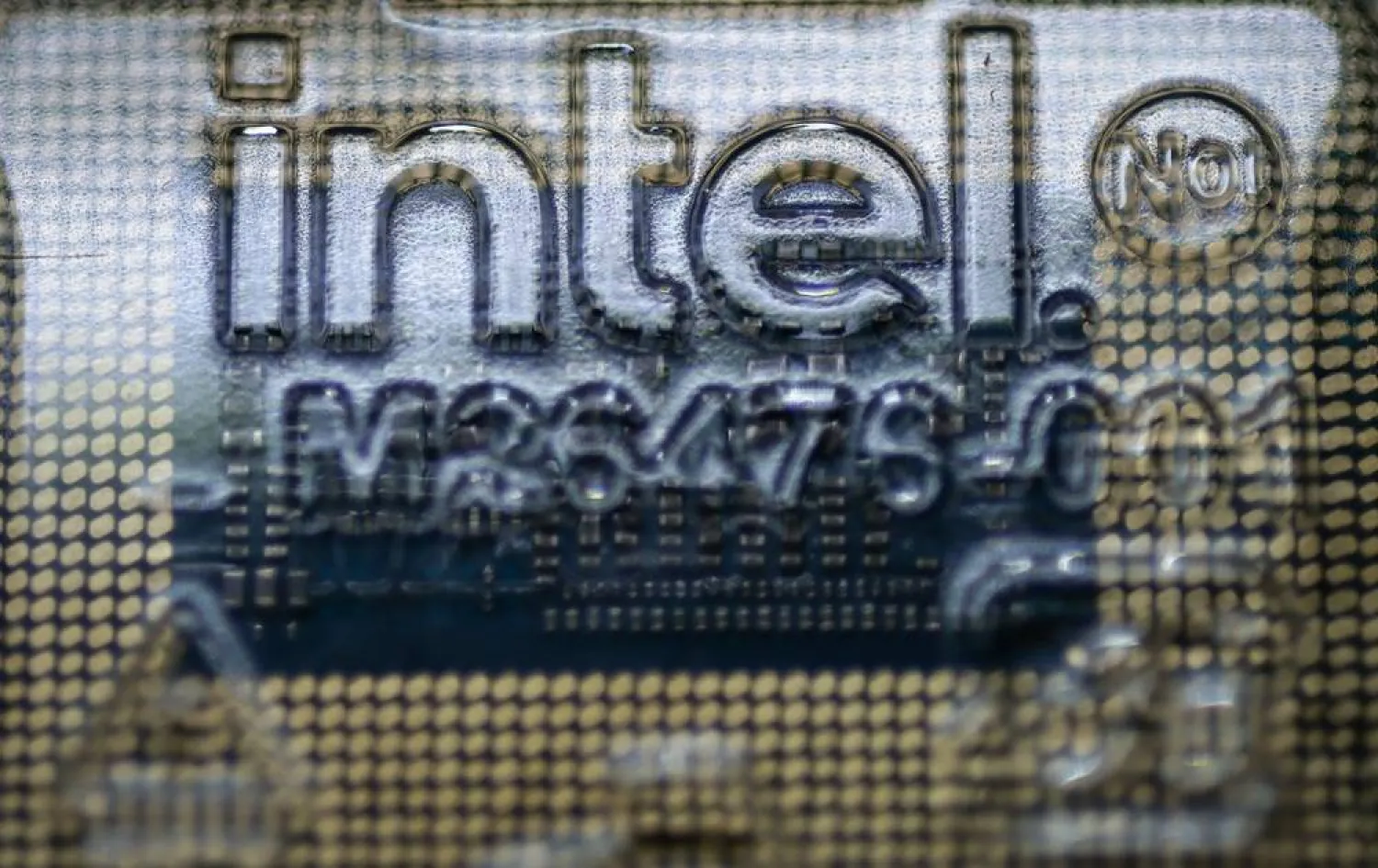
An Intel chip and a package with the logo are photographed in Berlin, Germany, 21 August 2025. (EPA)
TT

US to Take 10% Equity Stake in Intel, in Trump’s Latest Corporate Move

An Intel chip and a package with the logo are photographed in Berlin, Germany, 21 August 2025. (EPA)

President Donald Trump said on Friday the US would take a 10% stake in Intel under a deal with the struggling chipmaker that converts government grants into an equity share, the latest extraordinary intervention by the White House in corporate America.

The deal puts Trump on better terms with Intel CEO Lip-Bu Tan, after the president recently said the CEO should step down due to conflicts of interest. It will ensure that the chipmaker will receive about $10 billion in funds for building or expanding factories in the US.

Under the agreement, the US will purchase a 9.9% stake in Intel for $8.9 billion, or $20.47 per share, which represents a discount of about $4 from Intel's closing share price of $24.80 on Friday.

The purchase of the 433.3 million Intel shares will be made with funding from the $5.7 billion in unpaid grants from the Biden-era CHIPS Act and $3.2 billion awarded to Intel for the Secure Enclave program, also awarded under Trump's predecessor, Democratic President Joe Biden.

Intel stock rose roughly 1% in the extended session on Friday after closing up 5.5% during regular trading.

Trump met with Tan on Friday, a White House official said. That followed Trump's August 11 meeting with the Intel CEO after Trump demanded that Tan resign over his ties to Chinese firms.

"He walked in wanting to keep his job and he ended up giving us $10 billion for the United States. So we picked up $10 billion," Trump said on Friday.

Commerce Secretary Howard Lutnick said on X that Tan had struck a deal "that's fair to Intel and fair to the American People."

PLAYING CATCH UP

The Intel investment marks the latest unusual deal with US companies, including a US government agreement allowing AI chip giant Nvidia to sell its H20 chips to China in exchange for receiving 15% of those sales.

Other recent deals include an agreement for the Pentagon to become the largest shareholder in a small mining company, MP Materials, to boost output of rare earth magnets and the US government's winning a "golden share" with certain veto rights as part of a deal to allow Japan's Nippon Steel to buy US Steel.

The federal government's broad intervention in corporate matters has worried critics, who say Trump's actions create new categories of corporate risk.

Ahead of the US deal with Intel, Japan's SoftBank agreed to take a $2 billion stake in the chip maker on Monday.

Some industry observers still question Intel's ability to surmount its problems.

Daniel Morgan, senior portfolio manager at Synovus Trust, said Intel's problems are beyond a cash infusion from SoftBank or equity interest from the government, singling out Intel's contract chip manufacturing business, known as its foundry unit.

"Without government support or another financially stronger partner, it will be difficult for the Intel foundry unit to raise enough capital to continue to build out more Fabs at a reasonable rate," he said.

Intel "needs to catch up with TSMC from a technological perspective to attract business," he added.

The government's stake is to be passive ownership and does not include a board seat, Intel said. The government will be required to vote with Intel's board when shareholder approval is necessary, with "limited exceptions." Intel did not specify the exceptions.

The equity stake also includes a five-year warrant at $20 a share for an additional 5% of Intel stock, which the US can use if Intel loses control of the foundry business.

Federal backing could give Intel more breathing room to revive its loss-making foundry business, analysts said, but it ceded the AI market to Nvidia and has lost market share to Advanced Micro Devices in its central processor business for several years.

It has also faced challenges in attracting customers to its new factories. Tan, who became CEO in March, has been tasked to turn around the American chipmaking icon, which recorded an annual loss of $18.8 billion in 2024 - its first such loss since 1986. The company's last fiscal year of positive adjusted free cash flow was 2021.



Oil Edges Lower after Trump Signals Dialogue with Iran over Nuclear Program

A view shows a pressure gauge near oil pump jacks outside Almetyevsk, in the Republic of Tatarstan, Russia July 14, 2025. REUTERS/Stringer
TT

Oil Edges Lower after Trump Signals Dialogue with Iran over Nuclear Program

A view shows a pressure gauge near oil pump jacks outside Almetyevsk, in the Republic of Tatarstan, Russia July 14, 2025. REUTERS/Stringer

Oil prices slipped on Friday on signs that the US may engage in dialogue with Iran over its nuclear program, reducing concern over potential supply disruptions from a US attack.

Brent crude futures were down 21 cents, or 0.3%, at $70.50 a barrel by 1219 GMT. The March contract expires later on Friday. The more active April contract lost 45 cents, or 0.65%, to $69.14.

US West Texas Intermediate crude fell 38 cents, or 0.6%, to $65.04 a barrel, Reuters reported.

"President Trump’s willingness to give diplomacy a chance regarding Iran seemingly makes a US military intervention less likely than yesterday," said PVM Oil Associate analyst Tamas Varga.

Middle East tensions and oil prices had increased this week as the US strengthened its military presence in the region. US President Donald Trump urged Iran on Wednesday to make a deal on nuclear weapons or face an attack but on Thursday said he was planning to speak to the country's leaders.

Despite Friday's declines, benchmark prices remained on track for large monthly gains. Brent crude was set for its biggest monthly jump since January 2022 and WTI was poised for its largest monthly gain since July 2023.

Price pressure also came from a rise in the dollar after it hit a four-year low earlier in the week. Friday's dollar strength followed Trump's announcement that he would pick former Federal Reserve Governor Kevin Warsh to head the US central bank when Jerome Powell's leadership term ends in May.

A stronger dollar can limit demand from oil buyers paying in other currencies.

"Rising US crude oil output after shutdowns and Kazakhstan nearing the resumption of production at the Tengiz oilfield also contribute to the change in sentiment, and given the week’s bullish performance, it is reasonable to expect some profit-taking ahead of the weekend," Varga added.

Meanwhile, peak maintenance periods for Russian primary oil refining this year are expected this month and in September, based on Reuters calculations using estimates from industry sources.

A Reuters poll of 32 analysts found that most expect prices to hold near $60 a barrel this year as the prospect of oversupply offsets potential disruption from geopolitical tensions.


Syrians Decry Soaring Electricity Prices

Syria's electricity infrastructure was hammered by years of civil war © LOUAI BESHARA / AFP
TT

Syrians Decry Soaring Electricity Prices

Syria's electricity infrastructure was hammered by years of civil war © LOUAI BESHARA / AFP

When Hani Massalkhi went to pay his electricity bill in Damascus this week, he discovered that, under the new tariffs, the amount due was higher than his monthly income.

Massalkhi, a retired agricultural engineer who lives on a $70-a-month pension, left without paying.

"My bill used to vary between 15,000 and 20,000 pounds (less than $2). Now, it has surpassed 800,000 pounds", or $72, he told AFP.

In October, Syria's energy ministry hiked prices by up to 6,000 percent, sending shockwaves through a population already reeling from more than 13 years of war.

"Where are we supposed to get this money from?" Massalkhi wondered.

"People are emerging from a crisis, exhausted...they can't even put food on the table."

Authorities said the increase comes "within the framework of a project to reform the electricity sector, achieve sustainability, and improve service".

But, with most of Syria's population living below the poverty line and the minimum wage at around $75, many have found themselves unable to pay the new tariffs.

An official at the energy ministry did not respond to an AFP request for comment on the new prices.

- 'Electricity is a right' -

Since the ousting of longtime ruler Bashar al-Assad in 2024, the new Syrian authorities have repeatedly vowed to increase electricity production in a country where power cuts can last up to 20 hours a day.

Over the past year, they have signed contracts and memoranda of understanding to import gas from Turkey and Qatar to increase production.

They also hope to attract funding and investments to rehabilitate Syria's dilapidated infrastructure.

The World Bank estimates that post-war reconstruction will cost more than $216 billion.

However, citizens have yet to feel noticeable changes in their living conditions.

Damascus residents now receive up to six hours of state-provided electricity daily, but those outside the capital remain mostly in the dark.

Mohamad Ahmad, an economist and energy specialist at the Syria-focused consultancy Karam Shaar Advisory, told AFP that the price increase "primarily aims to prevent the financial collapse of the electricity sector".

"The core problem is not the tariff increase itself, but rather the erosion of wage purchasing power, particularly given that some employees earn less than $100 per month," he added.

On Thursday, a handful of people gathered outside the energy ministry in Damascus to protest the new tariffs, something unimaginable under the former government.

They held placards that read "we won't pay", condemning the widening gap between incomes and bills.

Protester Mohammed Daher, a retired public employee, told AFP that he now receives only two hours of electricity a day in the Tadamon suburb of Damascus.

He said that although he carefully rations his power use at home, he was "shocked to find out that my bill has surpassed 350,000 pounds ($31)," when it used to be less than $2.

"Where am I supposed to get that money from?" he added, saying his income was just $62 a month.

Feminist activist Sawsan Zakzak, 65, said she had been limiting her electricity consumption because she and her husband live on low pensions.

"We do not use air conditioning, and this year we did not use the boiler," she said as she held a placard that read "electricity service is a right".

"We also only watch television for a short period of time, fearing high tariffs."


Gold Tumbles Below $5,000, Dragging other Metals Lower

Gold and silver ingots at the Austrian "Ogussa" factory in Vienna (Reuters)
TT

Gold Tumbles Below $5,000, Dragging other Metals Lower

Gold and silver ingots at the Austrian "Ogussa" factory in Vienna (Reuters)

Gold prices tumbled by more than 7% to break below the $5,000 mark on Friday as the dollar strengthened on the imminent appointment of a new US Federal Reserve Chair, though the safe-haven metal remained set for its biggest monthly gain since 1999 after chalking up multiple record peaks.

Other precious metals also dropped sharply as profit-taking kicked in, said Reuters.

Spot gold lost 7.5% to $4,992.05 an ounce by 0947 GMT. US gold futures for February delivery fell 6.4% to $4,985.

Gold scaled ‌a record peak ‌of $5,594.82 on Thursday and is still on ‌track ⁠for a more ‌than 15% gain this month, heading for a sixth straight monthly gain and largest since 1999.

"I still believe several gold-supportive drivers remain in place, but after the strong rally in recent weeks a consolidation is healthy," said UBS analyst Giovanni Staunovo, adding that the likely nomination of a new Fed chair is applying immediate pressure on prices. US President Donald Trump said on Thursday ⁠that he will reveal his pick for the next Fed chair on Friday, with former ‌Fed Governor Kevin Warsh seen as a frontrunner. ‍Warsh has pushed for a smaller ‍Fed balance sheet, contrasting with Trump's inclination towards looser monetary policy.

The US ‍dollar rose on Friday, clawing back some of this week's slide to a four-year low. A stronger US currency makes dollar-priced gold more expensive for overseas buyers. Physical gold premiums in India rose to their highest in more than a decade on strong investment demand ahead of a likely duty increase. Premiums in China jumped after a pickup in investment and ⁠jewelry demand.

"We see gold dipping far lower than today but see a recovery and an average of $5,375 for 2026, reaching a peak of $6,400 during the fourth quarter," said independent analyst Ross Norman.

Among other precious metals, spot silver was down 14.1% at $99.77 an ounce after hitting a record $121.64 on Thursday. The metal has surged 42% this month, on track for its best monthly performance.

"Although a significant part of the move in the rise in silver has been based upon sound fundamentals, there was clearly a speculative excess within the market and I think that's getting blown off," Norman added.

Spot platinum lost ‌15.7% to $2,216.55 an ounce after hitting a record high of $2,918.80 on Monday. Palladium, meanwhile, plunged 13.4% to $1,737.50.