



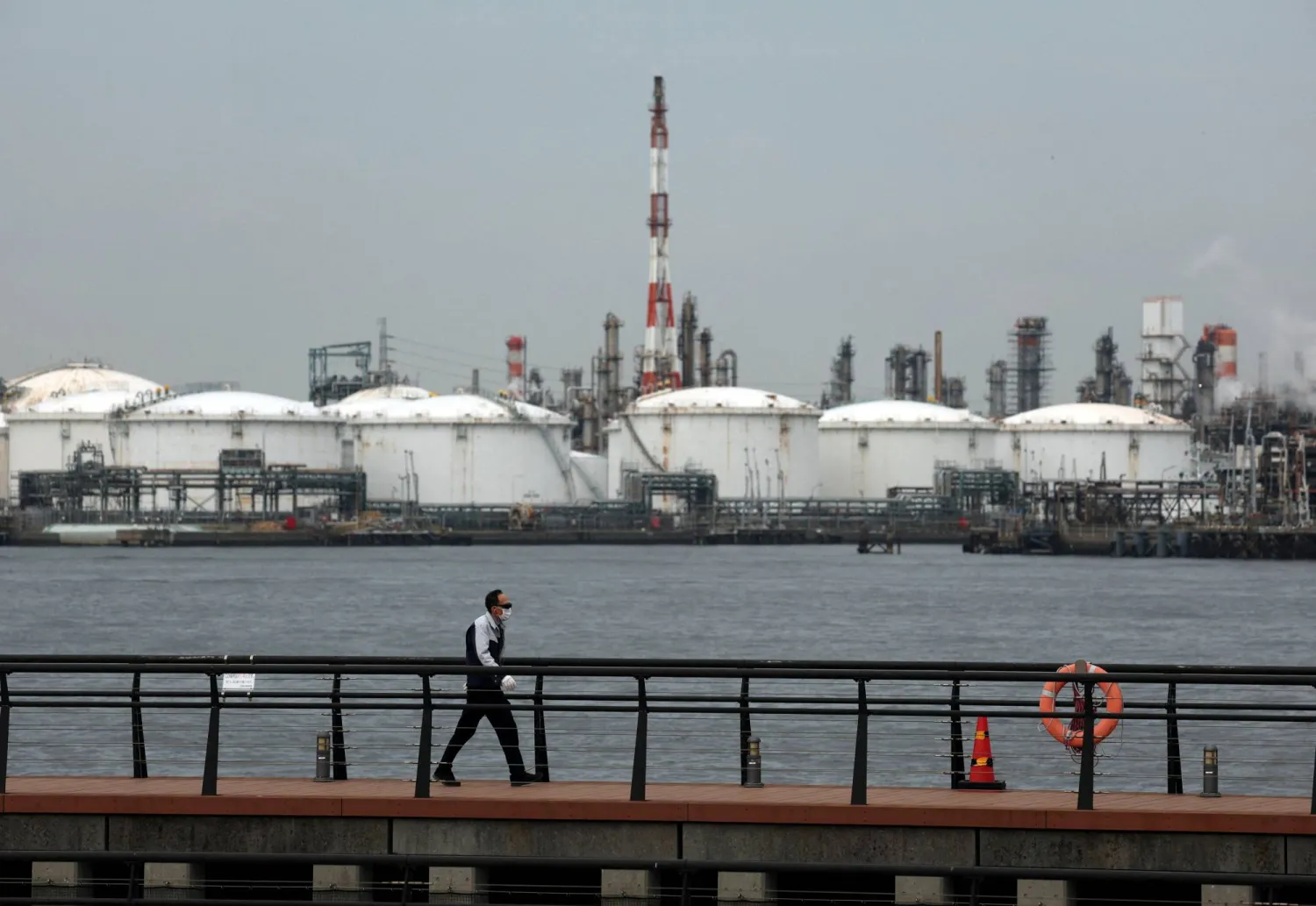

Oil prices jumped and equities fell Thursday as investors tracked developments in the Middle East amid hopes that US and Iranian officials will bring an end to a conflict that has ramped up fears of an unprecedented global energy crisis.
Markets have been buoyed since late Monday after Donald Trump backed down on a threat to destroy Iran’s energy infrastructure and said the two sides were in peace talks.
But while crude prices are down from last week and the mood on trading floors has been better than most of March, uncertainty and the virtual closure of the Strait of Hormuz -- through which around 20 percent of oil and gas passes -- continue to cast a dark shadow.
Washington presented a 15-point plan to end the war, including Iran giving up its enriched uranium and opening up the waterway, while Tehran's state-run TV reported officials had put forward their own five conditions for hostilities to end.
Trump on Wednesday threatened to "unleash hell" if Iran did not strike a deal, but Foreign Minister Abbas Araghchi said his country does not intend to negotiate.
But the US president also said Iran was taking part in peace talks and the denials were because negotiators feared being killed by their own side.
"Pressure on energy prices, shipping flows and broader financial conditions remains one of the few meaningful sources of leverage (Iran) retains," said Saxo Markets' Charu Chanana.
"There is therefore little incentive to relinquish that leverage prematurely, particularly if market stress strengthens its negotiating position.
However, she added: "It would be imprudent to assume diplomacy is absent simply because it is not visible. In conflicts of this nature, public rhetoric and private negotiation often diverge materially.
"Markets understand this dynamic, and they also tend to inflect before the political endgame is formally in place."
With investors holding on to hope that a deal can be struck, oil prices have stabilized this week, with Brent just above $100 and WTI around $90.
Both contracts rallied Thursday.
Stocks in Wall Street and Europe rose but Asian markets struggled after a two-day rally.
Tokyo, Hong Kong, Shanghai, Seoul, Sydney, Taipei, Singapore, Manila, Bangkok and Jakarta fell along with London, Paris and Frankfurt.
City Index's Fiona Cincotta said for any recovery to gain traction, "investors will want to see clearer signs of de-escalation, including the reopening of the Strait of Hormuz".
Her remarks come after the head of the International Chamber of Commerce, John Denton, warned the conflict could cause the "worst industrial crisis" in decades.
"The head of the International Energy Agency has warned that the world is facing an energy crisis more severe than the oil shocks of the 1970s," he added.
"From a business perspective, we believe this could yet become the worst industrial crisis in living memory."
Meanwhile, the World Trade Organization said disruptions to fertilizer supplies posed a double threat to global food security through scarcity and high prices, with a third of the global fertilizer supply normally transiting the Strait of Hormuz.


