


UK Economy Makes Weak Start to Second Half of the Year 

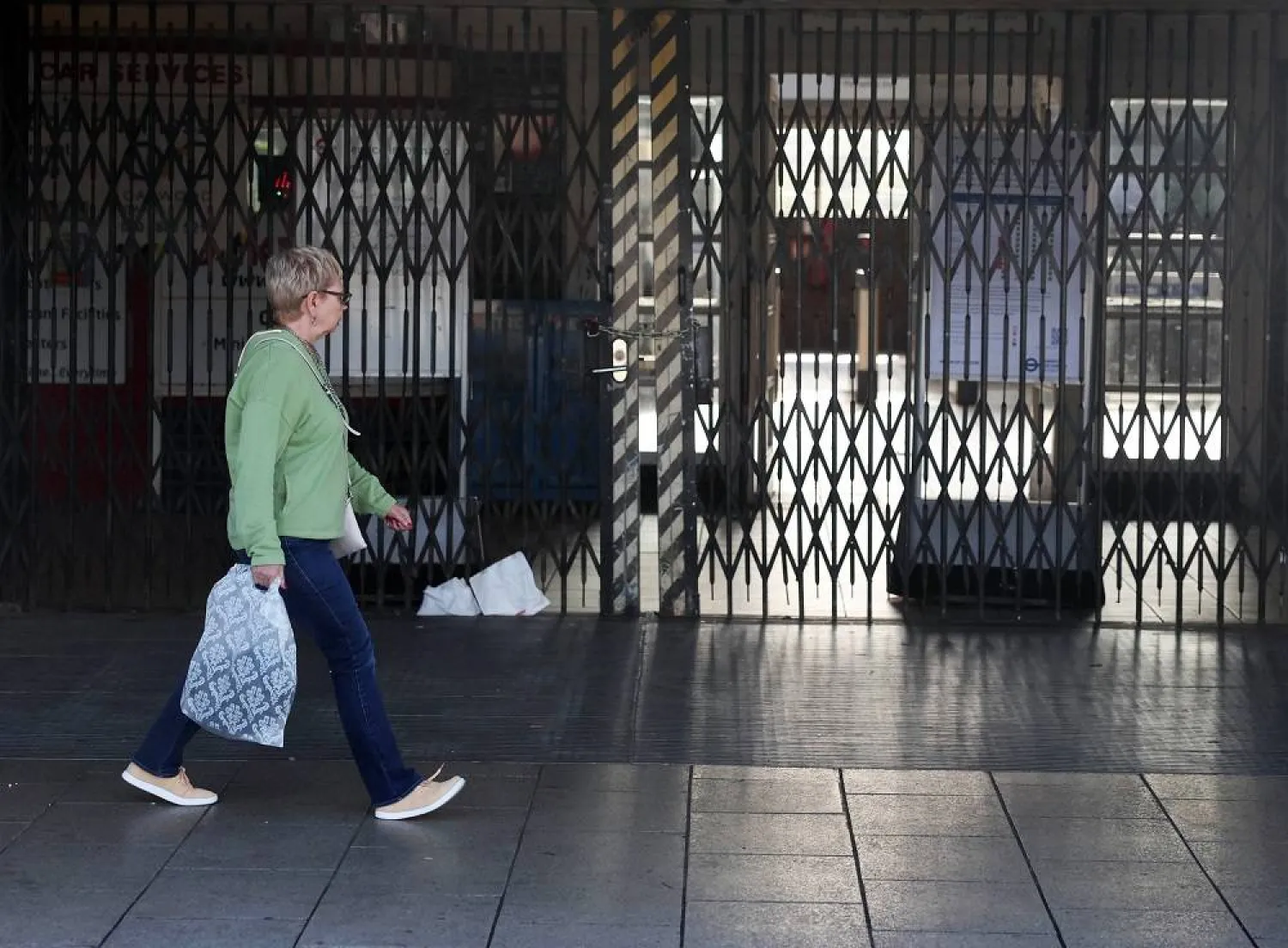
A person walks past closed shutters at an underground station on the final day of a tube strike in London, Britain, 11 September 2025. (EPA)
TT

UK Economy Makes Weak Start to Second Half of the Year 

A person walks past closed shutters at an underground station on the final day of a tube strike in London, Britain, 11 September 2025. (EPA)

Britain's economy recorded zero monthly growth in July after a sharp drop in factory output, matching expectations for a slower start to the second half of 2025 but still disappointing for the government ahead of November's budget.

After a strong first half to the year, economists expect growth to slow over the second half as a whole as US tariffs continue to weigh on the global economy and Britain faces headwinds from rising inflation and uncertainty over who will be hit by likely tax rises later this year.

Finance minister Rachel Reeves said on Thursday that the economy "isn't broken, but it does feel stuck" as she set out measures to streamline part of the tax system.

Friday's data showed that manufacturing output - which makes up 9% of the economy - dropped by a hefty 1.3% on the month in July, its biggest fall in a year led by computers, electronics and pharmaceuticals, the Office for National Statistics said.

But the much larger services sector edged up 0.1% on the month, slightly ahead of expectations in a Reuters poll.

GDP had risen 0.4% month-on-month in June and on a three-monthly basis - now the ONS' preferred way of presenting the figures - growth slowed to 0.2% in the three months to July from 0.3% in the second quarter.

"July's slowdown is probably the start of a more restrained period for the economy with higher inflation and rising job losses likely to have stifled activity in August, despite an expected uplift from the warm weather," said Suren Thiru, economics director at the ICAEW accountancy body.

Sterling weakened slightly after the data before recovering and financial markets continued to price in only around a 40% chance of another BoE rate cut this year, with inflation this month expected to hit double the BoE's 2% target.

SECOND-HALF SLOWDOWN

Britain's economy grew robustly by its recent standards in the first half of 2025, expanding by 0.7% in the first quarter of the year and 0.3% in the second - partly due to higher government spending and exporters trying to ship goods before the imposition of US tariffs.

Friday's figures showed Britain's goods trade deficit widened in July to its largest since January 2022 at 22.244 billion pounds ($30.2 billion), up from 22.156 billion pounds in June.

British goods exports to the United States remain below pre-tariff levels, although the widening in the deficit from June to July mostly reflected higher imports from the European Union.

On an annual basis, gross domestic product in July was 1.4% higher than a year earlier, unchanged from June's annual growth rate but a shade lower than the 1.5% growth forecast in a Reuters poll, official figures showed. Last month, before the release of second-quarter data, the Bank of England forecast annual growth of 1.25% for this year, well below the average of 2% between 2010 and 2019.

"The continued reluctance of consumers to open their wallets is concerning," said, Thomas Pugh, chief economist at accountants RSM UK, adding that data looked in line with a BoE forecast for 0.2% growth in the third quarter.

REEVES TO SET OUT PRO-GROWTH MEASURES

Reeves is hoping that measures to scale back regulation on things like construction permits in the run-up to her annual budget on November 26 will lead to a more favorable assessment of Britain's prospects from the Office for Budget Responsibility and lower its projections of future borrowing.

A finance ministry spokesperson blamed the weak outturn in the latest data on "years of underinvestment" which the new government, in power since July 2024, was taking steps to reverse.

But some businesses say they are keeping hiring and investment plans on hold, as they await details of tougher employment legislation and whether they will be the main target again for tax rises.

The opposition Conservative Party's would-be finance minister, Mel Stride, highlighted a rise last week in 30-year borrowing costs to their highest since 1998 which he said "makes painful tax rises all but certain".



Gold, Silver Hit Records and Stocks Fall as Trump Fans Trade Fears

(FILES) A jeweler shows gold and silver bars at his shop in downtown Kuwait City on January 12, 2026. (Photo by YASSER AL-ZAYYAT / AFP)
TT

Gold, Silver Hit Records and Stocks Fall as Trump Fans Trade Fears

(FILES) A jeweler shows gold and silver bars at his shop in downtown Kuwait City on January 12, 2026. (Photo by YASSER AL-ZAYYAT / AFP)

Gold and silver prices climbed to fresh peaks on Monday, as investors poured into safe-haven assets after US President Donald Trump threatened to impose extra tariffs on European countries over the control of Greenland.

Spot gold jumped 1.6% to $4,666.11 as of 0551 GMT, after scaling an all-time high of $4,689.39.

US gold futures for February ‌delivery advanced 1.7% ‌to $4,671.90 per ounce.

On Saturday, Trump vowed ‌to ⁠implement a wave ‌of increasing tariffs on European allies until the United States is allowed to buy Greenland, escalating a row over the future of Denmark's vast Arctic island.

European Union ambassadors are preparing retaliatory measures should the duties go ahead, EU diplomats said.

"Geopolitical tensions have given gold bulls yet another reason to push the yellow metal to new highs," StoneX ⁠senior analyst Matt Simpson said.

"With Trump throwing tariffs into the mix, it is clear ‌that his threat to Greenland is real, and ‍that we could be one ‍step closer to the end of NATO and political imbalances ‍within Europe."

US stock futures and dollar slid as Trump's latest tariff threats raised investors' appetite for safe-haven gold, yen and Swiss franc, in a broad risk-averse move across markets.

Spot silver climbed 3.6% to $93.15 per ounce, after hitting a record high of $94.08.

"On silver, the medium-term narrative remains constructive, supported by persistent physical deficits, resilient industrial demand and safe-haven ⁠demand," said Christopher Wong, a strategist at OCBC.

"But the pace of the recent extension may warrant some near-term tactical caution," Wong said, noting that the gold-silver ratio declined sharply from highs near 105 in late 2025 to low-50s, signaling silver's outsized performance versus gold.

J.P. Morgan analysts said that they have a stronger preference for gold relative to silver as any disruptive correction in silver could have some near-term contagion into gold but still presents a buying opportunity in gold which continues to have a cleaner, bullish structural story.

In other precious metals, ‌spot platinum added 0.6% to $2,341.08 per ounce, while palladium rose 0.1% to $1,801.87.


Saudi Arabia in Davos: Participation in Dialogues on World Economy, Geopolitical Changes

This photograph taken on January 18, 2026 shows a view of the Alpine resort of Davos with the Congress Center that will host the World Economic Forum (WEF) annual meeting. (Photo by Fabrice COFFRINI / AFP)
TT

Saudi Arabia in Davos: Participation in Dialogues on World Economy, Geopolitical Changes

This photograph taken on January 18, 2026 shows a view of the Alpine resort of Davos with the Congress Center that will host the World Economic Forum (WEF) annual meeting. (Photo by Fabrice COFFRINI / AFP)

The Saudi delegation led by Minister of Foreign Affairs Prince Faisal bin Farhan bin Abdullah is gearing up to participate in the World Economic Forum (WEF) Annual Meeting 2026 in Davos, Switzerland, from Monday to January 23.

This year’s forum, themed "A Spirit of Dialogue," comes amid swift changes in the world and geopolitical challenges.

Alongside Prince Saisal, the delegation includes Saudi Ambassador to the US Princess Reema bint Bandar bin Sultan bin Abdulaziz, Minister of Commerce Majid Al-Kassabi, Minister of Tourism Ahmed Al-Khateeb, Minister of Investment Khalid Al-Falih, Minister of Finance Mohammed Aljadaan, Minister of Communications and Information Technology Abdullah Alswaha, Minister of Industry and Mineral Resources Bandar Alkhorayef, and Minister of Economy and Planning Faisal Alibrahim.

Prince Faisal had said that the Kingdom’s participation demonstrates its commitment to international cooperation in addressing economic challenges.

He stressed the importance of maintaining regional peace, supporting sustainable development, and enhancing global economic partnerships.

Prince Faisal also highlighted the importance of public-private collaboration to achieve prosperity and security.

He noted that the Kingdom is broadening cooperation with international partners to better confront economic and environmental challenges while focusing on building institutional and human capacities to adapt to rapid transformations.

Al-Falih will speak in a session titled “AI Power Play, No Referees.”

Prince Faisal is set to speak in “Realignments and Surprises in the Middle East” and “All Geopolitics Is Local.”

Alkhorayef will be a speaker in a session called “Geopolitics of Materials,” while AlKhateeb will participate in the session on “Experiencing the World.”

Alibrahim will participate in the discussion panel "Economies Beyond the Shock Cycle," while Al-Kassabi will speak in a session titled “Many Shapes of Trade” and Alswaha is set to speak at “Converging Technologies to Win.”

Aljadaan and Alibrahim will also participate in the concluding “Global Economic Outlook” session.


World Markets Face Fresh Jolt as Trump Vows Tariffs on Europe Over Greenland

A photo shows containers and transshipment at Maasvlakte, an industrial area in the port of Rotterdam, on July 21, 2025. (AFP)
TT

World Markets Face Fresh Jolt as Trump Vows Tariffs on Europe Over Greenland

A photo shows containers and transshipment at Maasvlakte, an industrial area in the port of Rotterdam, on July 21, 2025. (AFP)

Global markets face a fresh bout of volatility this week after President Donald Trump vowed to slap tariffs on eight European nations until the US is allowed to buy Greenland.

Trump said he would impose an additional 10% import tariffs from February 1 on goods from Denmark, Norway, Sweden, France, Germany, the Netherlands, Finland and Britain, which will rise to 25% on June 1 if no deal is reached.

The eight European states issued a joint statement backing Greenland on Sunday, while Ireland's prime minister said the European Union will retaliate if US tariff threats against Europe materialize.

"Hopes that the tariff situation has calmed down for this year have been dashed for now - and we find ourselves in the same situation as last spring," said Berenberg chief economist Holger Schmieding.

Sweeping "Liberation Day" tariffs in ‌April 2025 sent shockwaves ‌through markets. Investors then largely looked past Trump trade threats in the second ‌half ⁠of the year, ‌viewing them as noise and responding with relief as Trump made deals with Britain, the EU and others.

While that lull might be over, market moves on Monday could be dampened by the experience that investor sentiment had been more resilient and global economic growth stayed on track.

Nonetheless, Schmieding expected the euro could come under some pressure when Asian trade begins. The euro ended Friday at around $1.16 against the dollar, having hit its lowest levels since late November.

Implications for the dollar were less clear. It remains a safe haven, but could also feel the impact of Washington being at the center of geopolitical ruptures, as it did ⁠last April.

"For European markets it will be a small setback, but not something comparable to the Liberation Day reaction," Schmieding said.

European stocks are trading near record ‌highs, with Germany's DAX and London's FTSE index up more than 3% this ‍month, outperforming the S&P 500, which is up 1.3%.

European defense ‍shares are likely to benefit from geopolitical tensions. Defense stocks have jumped almost 15% this month, as the US ‍seizure of Venezuela's Nicolas Maduro fueled concerns about Greenland.

Denmark's closely managed crown will also likely be in focus. It has weakened, but rate differentials are a major factor and it remains close to the central rate at which it is pegged to the euro and is not far from six-year lows.

"The US-EU trade war is back on," said Tina Fordham, geopolitical strategist and founder of Fordham Global Foresight. Trump's latest move came as top officials from the EU and South American bloc Mercosur signed a free trade agreement.

'UNTHINKABLE SORTS OF DEVELOPMENTS'

The dispute over Greenland is just one hot ⁠spot.

Trump has also weighed intervening in unrest in Iran, while a threat to indict Federal Reserve Chair Jerome Powell has reignited concerns about its independence.

Against this backdrop, safe-haven gold remains near record highs.

"Markets at this point are expected to reopen this week in 'risk-off' mode," said IG market analyst Tony Sycamore.

"This latest flashpoint has heightened concerns over a potential unravelling of NATO alliances and the disruption of last year’s trade agreements with several European nations, driving risk-off sentiment in stocks and boosting safe-haven demand for gold and silver."

The World Economic Forum's annual risk perception survey, released before its annual meeting in Davos, which will be attended by Trump, identified economic confrontation between nations as the number one concern replacing armed conflict.

While investors have grown increasingly wary of geopolitical risk, they have also become used to it to some extent.

"Investor sentiment has proven quite resilient in the face of the sort of continuing unthinkable sorts of developments, which probably reflects a combination of like faith that Trump just won't ‌be able to do all of the things that he talks about mixed with a sense that none of this kind of moves the needle on asset prices," said Fordham.