
US, China Reach Framework Deal on TikTok; Trump and Xi to Speak on Friday

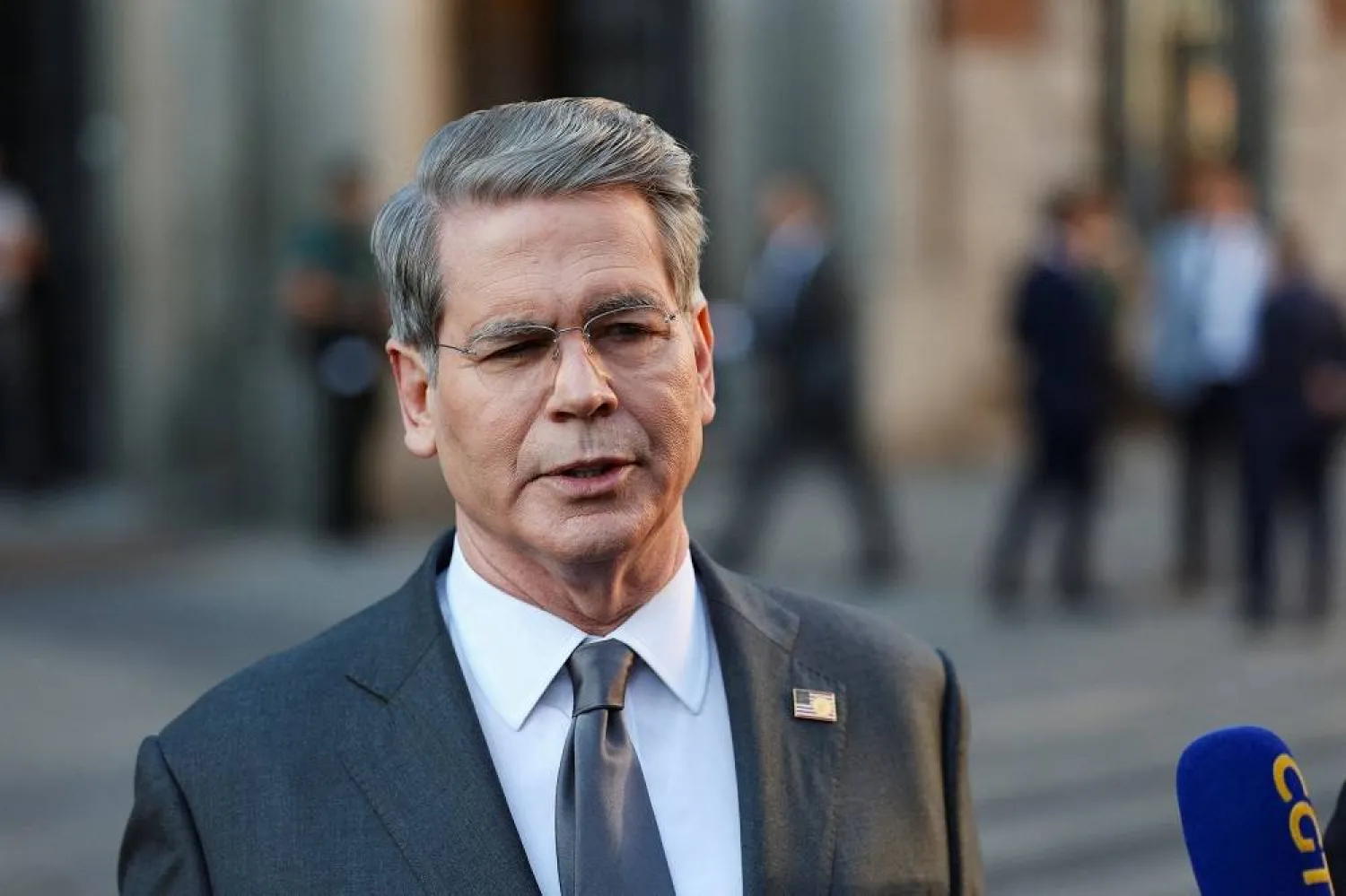
US Treasury Secretary Scott Bessent speaks to the press, on the day of US-China talks on trade, economic and national security issues, in Madrid, Spain, September 15, 2025. (Reuters)
TT

US, China Reach Framework Deal on TikTok; Trump and Xi to Speak on Friday

US Treasury Secretary Scott Bessent speaks to the press, on the day of US-China talks on trade, economic and national security issues, in Madrid, Spain, September 15, 2025. (Reuters)

The United States and China reached a framework agreement to switch short-video app TikTok to US-controlled ownership that will be confirmed in a call between President Donald Trump and Chinese President Xi Jinping on Friday, US officials said on Monday. 

US Treasury Secretary Scott Bessent said a Wednesday deadline that could have switched off the popular social media app in the US encouraged Chinese negotiators to reach a potential deal. He said that deadline could be extended by 90 days to allow the deal to be finalized. He declined to discuss specifics of the deal. 

Bessent said when commercial terms of the deal are revealed, it will preserve aspects of TikTok that Chinese negotiators care about, including its "Chinese characteristics."  

"They're interested in Chinese characteristics of the app, which they think are soft power. We don't care about Chinese characteristics. We care about national security," Bessent told reporters at the conclusion of two days of talks in Madrid.  

It is the second time this year that the two sides have said they were nearing a TikTok deal. The earlier announcement in March ultimately did not pan out. 

Any agreement could require approval by the Republican-controlled Congress, which passed a law in 2024 requiring divestiture due to fears that TikTok's US user data could be accessed by the Chinese government, allowing Beijing to spy on Americans or conduct influence operations through the app. 

But the Trump administration has repeatedly declined to force a shutdown, which could anger the app's millions of users and disrupt political communications, including those of the White House. It is not clear whether parent company ByteDance would transfer control of the app's underlying technology to the unnamed US buyer. 

Trump praised the TikTok deal on Monday. 

"The big Trade Meeting in Europe between The United States of America, and China, has gone VERY WELL! It will be concluding shortly," Trump wrote on his Truth Social platform. "A deal was also reached on a ‘certain’ company that young people in our Country very much wanted to save. They will be very happy! I will be speaking to President Xi on Friday. The relationship remains a very strong one!!!"  

The US-China negotiations at the Spanish foreign ministry's baroque Palacio de Santa Cruz were the fourth round of talks in four months to address strained trade ties as well as TikTok’s looming divestiture deadline. 

Delegations led by Bessent and Chinese Vice Premier He Lifeng have met in European cities since May to try to resolve a trade war that has seen tit-for-tat tariff hikes and a halt in the flow of rare earths to the United States. 

US Trade Representative Jamieson Greer, who was also part of the US delegation in Madrid, said the TikTok deal was an indication of good faith between the two sides. 

"It's no secret that there are serious issues on trade, economics, and national security between the United States and China. To be able to come, sit down, quickly identify the issues, narrow them down to a very granular spot, and be able to come to a conclusion, subject to the leaders’ approval, I mean, that is remarkable," Greer said. 

TRUMP, XI TO DISCUSS MEETING 

Bessent said talks on other issues would continue, probably in the coming weeks. Trump has repeatedly expressed interest in a meeting with Xi, and China is trying to woo Trump to Beijing for a summit. 

Bessent said it was up to the leaders to discuss whether to meet during Friday's call. 

Earlier on Monday a US official with knowledge of the negotiations had said that the US would press ahead with a ban on TikTok if China didn't drop its demands for reduced tariffs and technological restrictions as part of a divestiture deal. 

Speaking to reporters, Bessent and Greer said China wanted concessions on trade and technology in exchange for agreeing to divest from the popular social media app. 

"Our Chinese counterparts have come with a very aggressive ask," Bessent said, adding: "We are not willing to sacrifice national security for a social media app."  

The talks took place as Washington demands that its allies place tariffs on imports from China over Chinese purchases of Russian oil, which Beijing on Monday said was an attempt at coercion.  

Bessent said the issue of Russia was briefly discussed.  

Beijing separately announced on Monday that a preliminary investigation of Nvidia had found the US chip giant had violated its anti-monopoly law. Bessent said the announcement on Nvidia was poor timing. 

The probe is widely seen as a retaliatory shot against Washington's curbs on the Chinese chip sector.  


China Shipping Giant Cosco Resumes Bookings to Some Gulf Countries

A cargo ship operated by Cosco Shipping is docked at the foreign trade container terminal of Qingdao Port, operated by Shandong Port Group, in China's eastern Shandong province on March 25, 2026. (Photo by CN-STR / AFP)
TT

China Shipping Giant Cosco Resumes Bookings to Some Gulf Countries

A cargo ship operated by Cosco Shipping is docked at the foreign trade container terminal of Qingdao Port, operated by Shandong Port Group, in China's eastern Shandong province on March 25, 2026. (Photo by CN-STR / AFP)

Chinese shipping giant Cosco said on Wednesday that it was resuming new bookings for container shipments to some Gulf countries, after a three-week suspension in response to the Middle East war.

The state-owned, Shanghai-based firm was among several major shipping groups to pause operations in the Strait of Hormuz, a key waterway through which one-fifth of the world's oil and gas passes normally.

Tehran has said several times it was not targeting friendly nations, but transits through the Strait had nevertheless largely ground to a halt.

Iran said in a statement circulated by the International Maritime Organization on Tuesday that "non-hostile vessels" would be granted safe passage through the waterway.

Cosco "resumed new bookings for general cargo containers for shipments" from the "Far East" to the UAE, Saudi Arabia, Bahrain, Qatar, Kuwait, and Iraq "with immediate effect", according to a company statement.

It did not mention shipments travelling in the opposite direction, from the Gulf.

"New booking arrangements and the actual carriage are subject to change due to the volatile situation in the Middle East region," it added.

Cosco, which operates one of the world's largest oil tanker fleets, announced on March 4 that it would suspend new bookings for services for routes through the Strait of Hormuz owing to the "escalating conflicts in the Middle East region and resultant restrictions on maritime traffic".


Qatar Emir Makes Minor Changes to QIA Board

People visit a mall in Doha on March 23, 2026. (Photo by AFP)
TT

Qatar Emir Makes Minor Changes to QIA Board

People visit a mall in Doha on March 23, 2026. (Photo by AFP)

Qatar's Emir Sheikh Tamim bin Hamad Al Thani issued a decree on Wednesday ⁠making minor changes to ⁠the board of the ⁠Qatar Investment Authority, while keeping Sheikh Bandar bin Mohammed bin Saud Al Thani as chairman and Sheikh ⁠Mohammed ⁠bin Hamad bin Khalifa Al Thani as deputy chairman.

The decision stipulated that QIA’s Board of Directors would be restructured as follows: Sheikh Bandar bin Mohammed bin Saud Al Thani as Chairman, Sheikh Mohammed bin Hamad bin Khalifa Al Thani as Deputy Chairman, Ali bin Ahmed Al Kuwari as a member, Saad bin Sherida Al Kaabi as a member, Sheikh Faisal bin Thani bin Faisal Al-Thani as a member, Nasser bin Ghanim Al Khelaifi as a member, and Hassan bin Abdullah Al Thawadi as a member.

The decision is effective starting from its date of issue and is to be published in the official gazette.


Oil Falls More Than 5% and World Shares Gain Over Possible de-escalation of Iran War

A man fills his car with petrol at the petrol station in Port Dickson, Negri Sembilan, Malaysia, 25 March 2026. EPA/FAZRY ISMAIL
TT

Oil Falls More Than 5% and World Shares Gain Over Possible de-escalation of Iran War

A man fills his car with petrol at the petrol station in Port Dickson, Negri Sembilan, Malaysia, 25 March 2026. EPA/FAZRY ISMAIL

Oil prices fell more than 5% and world shares gained on Wednesday over the possibility of a de-escalation of the Iran war and negotiations between the United States and Iran. US futures were up 0.9%.

In early European trading, Britain's FTSE 100 rose 1% to 10,072.60. France's CAC 40 was up 1.4% to 7,855.31, while Germany's DAX was 1.6% higher at 22,989.80.

Tokyo’s Nikkei 225 was up 2.9% to 53,749.62. South Korea’s Kospi gained 1.6% to 5,642.21.

Hong Kong’s Hang Seng rose 1.1% to 25,335.95, while the Shanghai Composite index was 1.3% higher at 3,931.84. Labubu doll maker Pop Mart's Hong Kong-listed shares fell 22.5%, after it announced annual revenue for last year that was largely in line with analysts’ estimates.

Australia’s S&P/ASX 200 climbed 1.9%. Taiwan’s Taiex was up 2.5%.

US President Donald Trump's claims of progress being made from talks with Iran this week and his postponement on Monday of a deadline to “obliterate” Iran’s power plants over the reopening of the Strait of Hormuz have also fueled optimism that an end to the Iran war could come soon.

Trump's administration has offered a 15-point ceasefire plan to Iran, but an Iranian military spokesperson mocked the US’ attempt at a ceasefire deal Wednesday.

With the Strait of Hormuz being a key waterway for crude oil and liquefied natural gas transport, oil and gas prices have spiked and fluctuated in recent days.

Oil prices fell again on growing hopes for a de-escalation. Brent crude, the international standard, fell 5.2% to $94.97 per barrel. It was around $104 on Tuesday.

Benchmark US crude was down 5.3% early Wednesday to $87.44 a barrel.

While Iran has denied negotiations were taking place, and attacks in the Middle East continued, Pakistan has offered to host talks between Washington and Tehran. And as Trump raised optimism of a de-escalation of the war, at least 1,000 more American troops from the 82nd Airborne Division are said to be deployed to the Middle East in the coming days.

On Tuesday, US stocks closed lower. The S&P 500 lost 0.4% to 6,556.37. The Dow Jones Industrial Average edged down 0.2% to 46,124.06, while the Nasdaq composite was 0.8% lower to 21,761.89.

Shares of Estee Lauder sank more than 9%, following confirmation that the US-listed company is in merger talks with Spanish beauty and perfume group Puig.

In other dealings early Wednesday, gold prices resumed its rise after falling earlier. It dropped in part because of rising US Treasury yields over dimming expectations of a Federal Reserve rate cut after the spike in oil prices threatened to fuel global inflation.

The price of gold was up 3.6% early Wednesday to $4,561.90 per ounce. It was above $5,000 earlier this month.

The US dollar was at 158.84 Japanese yen, up from 158.69. The euro was trading at 1.1602, down from $1.1608.