


Japan PM Contender Koizumi Vows Wage Hikes to Counter Inflation

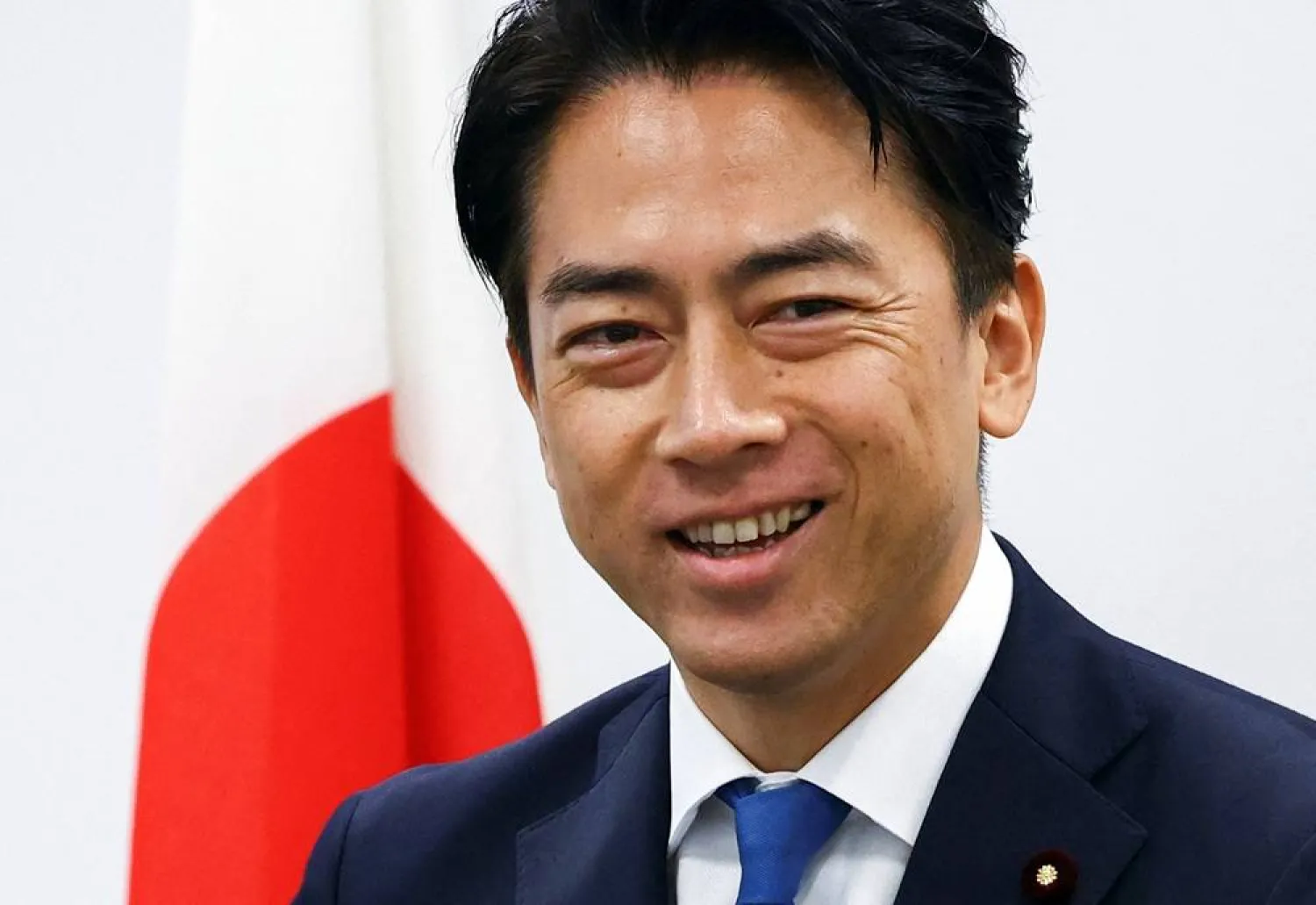
Japan's Prime Minister contender Shinjiro Koizumi, who is currently Agriculture Minister and son of the former Prime Minister Junichiro Koizumi, smiles as he attends a press conference about his running in the ruling Liberal Democratic Party leadership race in Tokyo, Japan, September 20, 2025. (Reuters)
TT

Japan PM Contender Koizumi Vows Wage Hikes to Counter Inflation

Japan's Prime Minister contender Shinjiro Koizumi, who is currently Agriculture Minister and son of the former Prime Minister Junichiro Koizumi, smiles as he attends a press conference about his running in the ruling Liberal Democratic Party leadership race in Tokyo, Japan, September 20, 2025. (Reuters)

Shinjiro Koizumi, launching a bid to become Japan's next prime minister, pledged on Saturday to focus on revitalizing the economy by boosting wages and productivity to counter rising prices.

Koizumi, seen as a frontrunner in the ruling party's leadership race, said Japan must shift the focus of economic policy from beating deflation to one better suited to an era of inflation.

"Japan's economy is in a transition phase from deflation to inflation," Koizumi told a news conference announcing his bid for president of the Liberal Democratic Party.

"We must have wage growth accelerate at a pace exceeding inflation, so consumption becomes a driver of growth," Koizumi said, adding that the economy would be his policy priority.

On monetary policy, Koizumi said he hoped the Bank of Japan would work in lock step with the government to achieve stable prices and solid economic growth.

Koizumi and veteran fiscal dove Sanae Takaichi are seen as the top contenders in the October 4 party race after Prime Minister Shigeru Ishiba's decision this month to step down.

The next LDP leader is likely to become prime minister as the party is by far the largest in the lower house of parliament, although the LDP lost its majorities in both houses under Ishiba, so the path is not guaranteed.

Koizumi said if he were to become prime minister, his government would immediately compile a package of measures to cushion the economic blow from rising prices and submit a supplementary budget to an extraordinary parliament session.

"While being mindful of the need for fiscal discipline, we can use increased tax revenues from inflation to fund policies for achieving economic growth," he said.

The LDP race has drawn strong attention from market players and led to a rise in super-long government bond yields on the view the next leader could boost fiscal spending.

Investors have also focused on the candidates' view on monetary policy, as the BOJ eyes further hikes in still-low interest rates. Takaichi had criticized the BOJ's rate hikes in the past but made no comment on monetary policy at a news conference on Friday.

Koizumi said that if chosen as prime minister, his government would slash tax on gasoline, increase tax exemptions for households and take steps to raise average wages by 1 million yen ($6,800) by fiscal 2030, Koizumi said.

He also pledged to increase government support on corporate capital expenditure to boost Japan's manufacturing capacity. "We need to build a strong economy backed by growth in both demand and supply," Koizumi said.

China's Trade Surplus Tops $1 Trillion despite Plunge in US-bound Exports

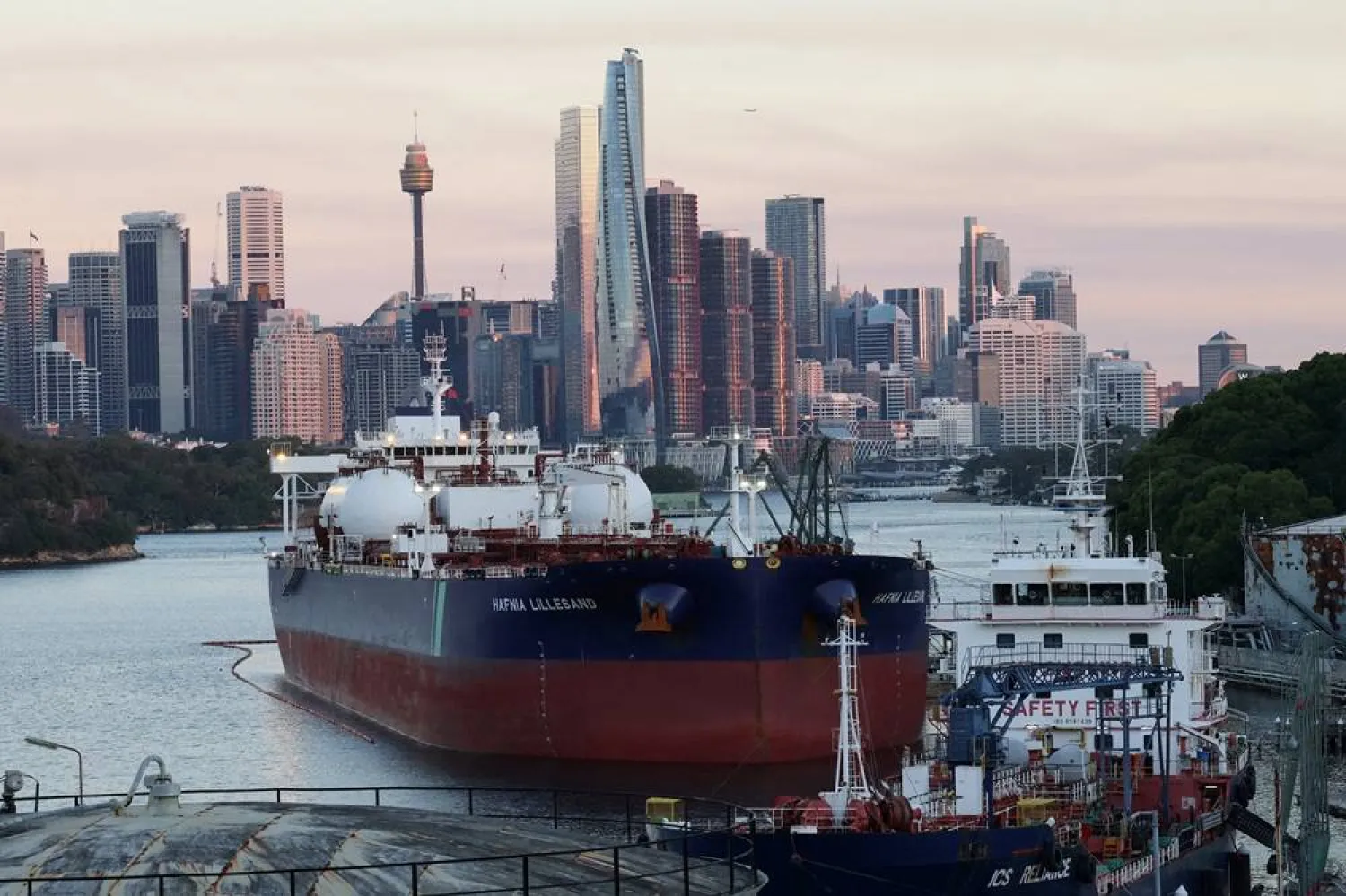
China's exports topped expectations last month and sent the trade surplus to a record above $1 trillion. AFP
TT

China's Trade Surplus Tops $1 Trillion despite Plunge in US-bound Exports

China's exports topped expectations last month and sent the trade surplus to a record above $1 trillion. AFP

China's towering annual trade surplus surpassed $1 trillion for the first time last month, data showed Monday, as a sharp drop in shipments to the United States was offset by surging exports to other major markets.

Presidents Xi Jinping and Donald Trump reached a tentative truce to their fierce trade war when they met in late October, agreeing a pause to painful measures that included lofty tit-for-tat tariffs.

Exports have served as a key economic lifeline for China as trade and relations with the United States and others have fluctuated in recent years.

That has helped temper a prolonged debt crisis in the country's vast property sector and sluggish domestic spending, which have weighed on growth and are among the most pressing issues facing Beijing.

Exports climbed 5.9 percent year-on-year in November, reversing the slight decline recorded in October, the General Administration of Customs said.

The reading was also above a Bloomberg forecast of four percent growth.

The jump came despite a continued downturn in shipments to the United States, which sank 28.6 percent to $33.8 billion in November, the data showed.

"Weakness in exports to the United States was more than offset by shipments to other markets," Zichun Huang of Capital Economics wrote in a note.

"Exports are likely to remain resilient, thanks to trade rerouting and rising price competitiveness as deflation pushes down China's real effective exchange rate," Huang said.

The surge in shipments last month added to the country's ballooning annual trade surplus for the first 11 months of the year, which the Customs data showed hit $1.08 trillion in November.

"China's trade surplus this year has already surpassed last year's level, and we expect it to widen further next year," Huang wrote.

But the imbalance has long been a sticking point for major Western trading partners.

French President Emmanuel Macron threatened in remarks published Sunday to impose tariffs on China if Beijing fails to reduce its massive trade surplus with the European Union.

Macron -- who concluded a state visit to China last week -- warned in business daily Les Echos that "Europeans will be forced to take strong measures in the coming months".

In a further sign of China's weak domestic consumption, the data showed Monday that imports rose 1.9 percent on-year in November -- slower than the three percent increase predicted by Bloomberg.

"The rebound of export growth in November helps to mitigate the weak domestic demand," Zhiwei Zhang, president and chief economist at Pinpoint Asset Management, wrote in a note.

"The economic momentum slowed in the fourth quarter partly driven by the continued weakness in the property sector," he said.

Xi and Trump agreed at the October meeting in South Korea to scale back sky-high tariffs on each other's goods and blistering export controls that had sent shockwaves across global industries.

The detente is due to expire late next year, allowing time for officials to reach a permanent deal -- though experts warn such a breakthrough will be challenging.

"There's no guarantee this uneasy truce will last that long," Lynn Song, ING chief economist for Greater China, said last week.

"A lot needs to go right for the agreement to hold for the full year," he wrote, adding that "it seems prudent to expect a softer external demand backdrop for next year."

China's leaders -- who are targeting overall growth this year of five percent -- are expected to convene a key meeting this week focused on economic planning.


King Abdulaziz Int’l Airport Records Increase in Passenger Traffic in November 2025

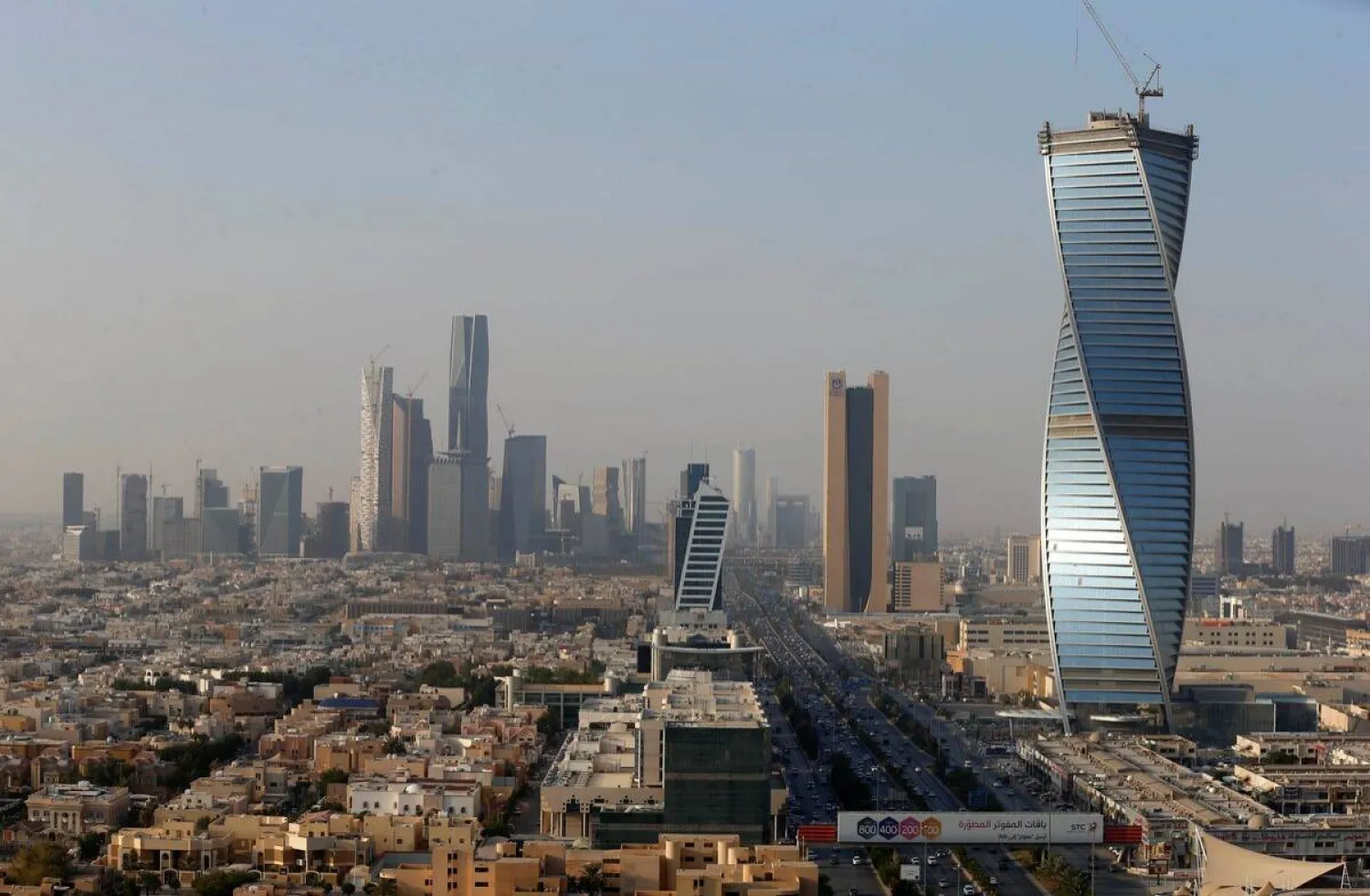
King Abdulaziz International Airport recorded notable growth in operational performance during November 2025. (SPA)
TT

King Abdulaziz Int’l Airport Records Increase in Passenger Traffic in November 2025

King Abdulaziz International Airport recorded notable growth in operational performance during November 2025. (SPA)

King Abdulaziz International Airport recorded notable growth in operational performance during November 2025 compared to the same period in 2024, the Saudi Press Agency reported on Monday.

The total number of passengers reached 4.86 million, marking an increase of 8.6 percent, while the total number of flights reached 25,900, reflecting a growth of 10.6 percent.

The airport recorded its highest operating day on November 20, 2025, serving more than 176,800 passengers in a single day, representing a 9.6 percent increase compared to the peak day recorded in November 2024. The total number of handled baggage items also rose to 5.6 million, registering a year-on-year growth of 25.4 percent.

From the beginning of 2025 through November 30, the total number of passengers reached 48 million, an increase of 8.9 percent compared to the same period in 2024. Over the same period, the number of flights reached 273,700, reflecting an increase of 8.2 percent.

These figures highlight the continued expansion of services at King Abdulaziz International Airport, one of the region's most prominent aviation hubs. They also underscore ongoing efforts to enhance operational efficiency and provide a seamless and comfortable travel experience, supporting increased travel options and contributing to the growth of tourism and trade.


French Economy Likely to Grow at Least 0.8% in 2025, Finance Minister Says

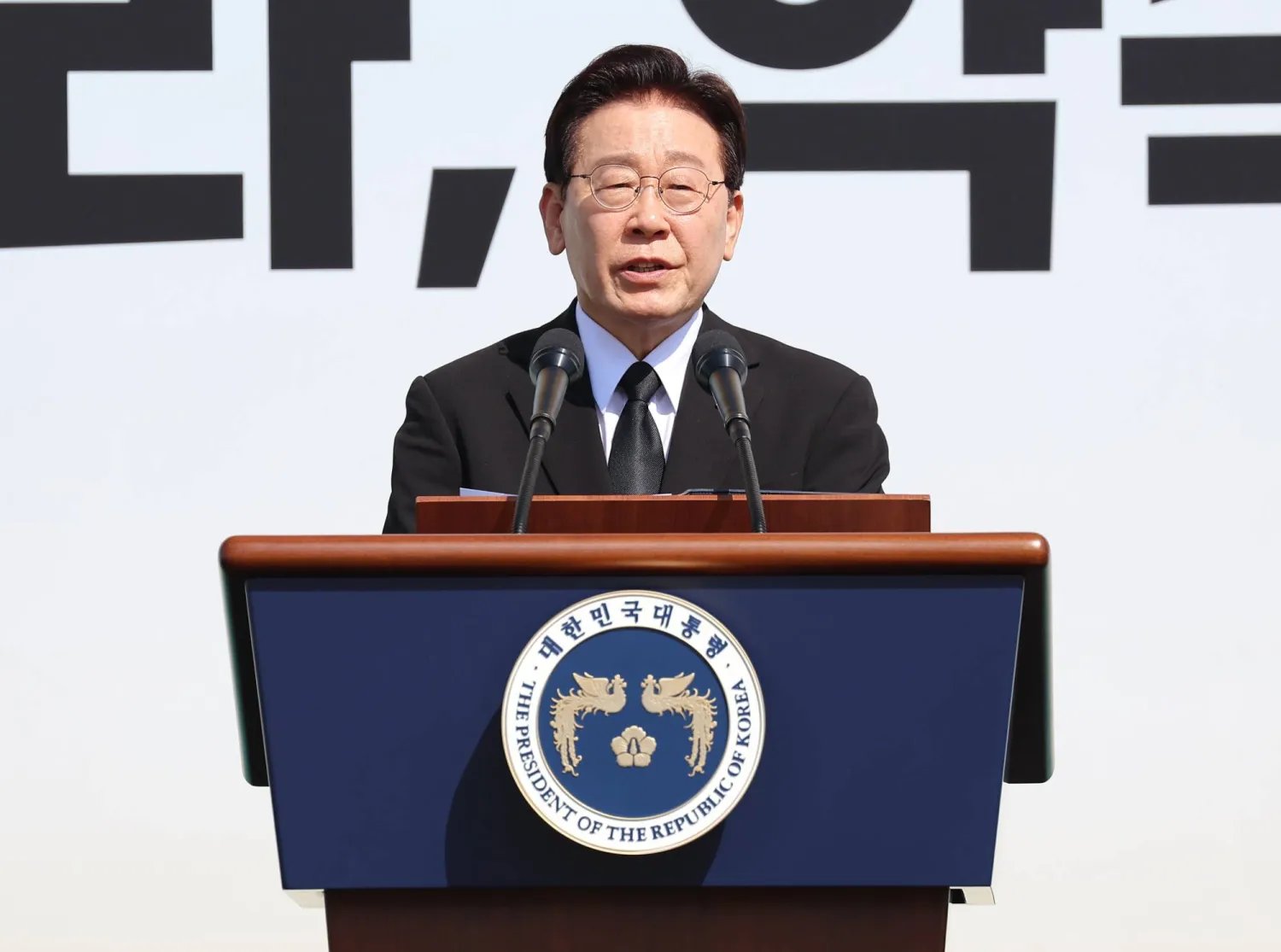
French Minister for Economy, Finance, and Industrial, Energy and Digital Sovereignty Roland Lescure attends the 7th formal meeting of the Franco-Chinese Business Council in Beijing on December 4, 2025. (Reuters)
TT

French Economy Likely to Grow at Least 0.8% in 2025, Finance Minister Says

French Minister for Economy, Finance, and Industrial, Energy and Digital Sovereignty Roland Lescure attends the 7th formal meeting of the Franco-Chinese Business Council in Beijing on December 4, 2025. (Reuters)

Unless there is a sharp reversal in the final three months of the year, the French economy is likely to grow by at least 0.8% in 2025, outpacing the 0.7% that the government had anticipated, Finance Minister Roland Lescure said on Sunday.

"We will most likely exceed the government's growth forecast for this year. We had predicted 0.7%, but I think we will have at least 0.8%. That's good news," Lescure told LCI television.

"So we would really need to have a bad fourth quarter, which I don't believe will happen, for us to be below 0.8%, so 0.8% is within reach," he added.

France's economy grew 0.5% in the third quarter, final data from statistics office INSEE showed in November, reflecting resilience in the euro zone's second-largest economy.